Snowflake Cataract: An Evidence-Based Patient Guide

Snowflake cataracts are classically associated with diabetes, especially when blood glucose is markedly elevated or poorly controlled. Blurred vision can also result from temporary blood-sugar-related changes in the eye, so a complete eye examination is important.
Key Takeaways
- Snowflake cataracts are classically associated with diabetes, especially when blood glucose is markedly elevated or poorly controlled.
- Blurred vision can also result from temporary blood-sugar-related changes in the eye, so a complete eye examination is important.
- Cataract surgery is the only established way to remove a cataract that is significantly reducing vision.
- Good diabetes management supports overall eye health but cannot reliably reverse an established cataract.
- Sudden vision loss, eye pain, redness or flashes and floaters need urgent medical assessment.
A snowflake cataract is an uncommon cataract pattern in which whitish, snowflake-like lens opacities develop, most often in people with significant or rapidly changing diabetes. It can affect vision quickly, but an ophthalmologist can assess the cause, monitor progression and recommend surgery when the cataract limits daily life.
Snowflake cataract: an overview
A snowflake cataract is a distinctive form of lens clouding. The natural lens sits behind the colored part of the eye and focuses light onto the retina. When proteins and fibers within this normally clear lens become cloudy, vision may become blurred, hazy or less vivid. In a snowflake cataract, the clouding may appear as white, flaky or snowflake-shaped opacities, often in the outer part of the lens.
This pattern is most closely associated with diabetes mellitus, particularly when blood glucose has been very high or difficult to control. It may develop more rapidly than the common age-related cataract and can occur in younger adults. However, the appearance of a cataract alone does not establish its cause; an ophthalmologist considers the person’s age, medical history, medications, injuries and eye examination findings.
The term may be encountered in ophthalmology resources such as “snowflake cataract EyeWiki,” but a person should not try to identify a cataract pattern from symptoms or photographs alone. A dilated eye examination is needed to determine whether a cataract is present and whether other diabetes-related eye conditions are contributing to visual change.
Symptoms and the most common cause of snowflake cataracts
What is the most common cause of snowflake cataracts? The classic and most common association is diabetes, especially marked or prolonged high blood glucose. Excess glucose can alter the lens’s fluid balance and metabolism, contributing to structural changes and clouding. Rapid shifts in blood glucose can also temporarily blur vision because they change the lens’s shape, even before a true cataract has developed.
Symptoms vary with the amount and location of clouding. A person may notice blurry or foggy vision, glare from headlights or sunlight, halos around lights, reduced contrast, fading colors, frequent changes in glasses prescription, or difficulty reading and driving at night. Cataracts themselves are usually painless and do not cause eye redness.
Other factors can contribute to cataracts in general, including aging, long-term corticosteroid use, eye injury, previous eye inflammation or surgery, radiation exposure, smoking and certain inherited or metabolic conditions. A snowflake cataract may rarely be described in children or newborns; a suspected snowflake cataract congenital presentation requires prompt assessment by a pediatric ophthalmologist because clear vision is essential for normal visual development.
- Diabetes-related lens changes may affect one or both eyes.
- Vision symptoms do not always match the apparent size of a cataract.
- Diabetes can also affect the retina, so retinal examination is an important part of care.
How snowflake cataracts are diagnosed

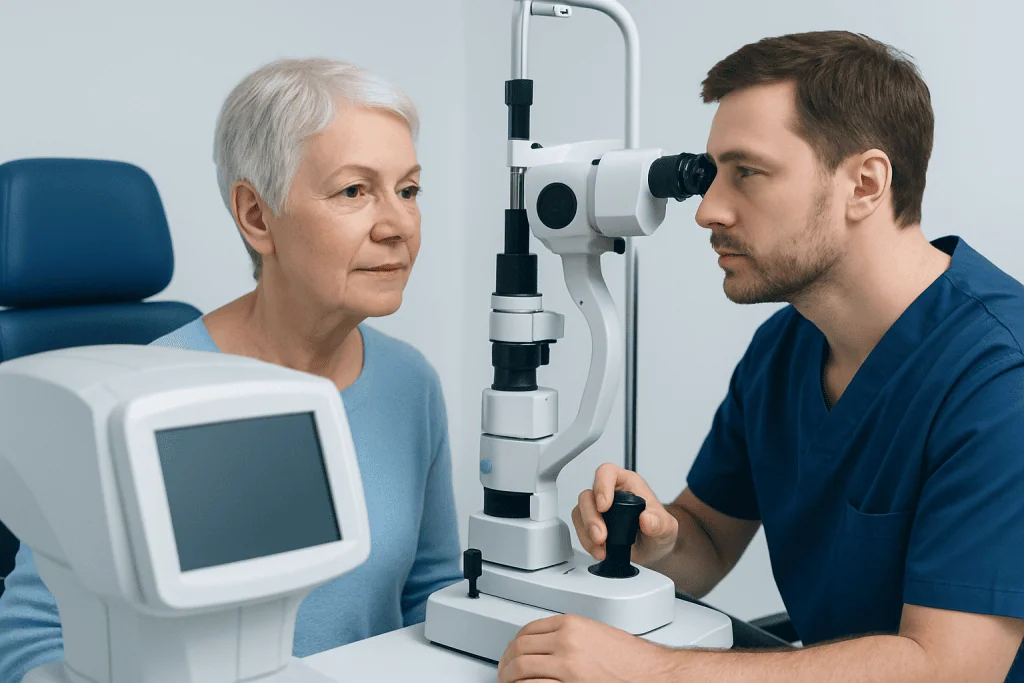
An ophthalmologist diagnoses cataracts during a comprehensive eye examination. This usually includes a discussion of symptoms, general health and diabetes history; a visual acuity test; measurement of eye pressure when appropriate; and a slit-lamp examination. After dilating the pupils, the clinician can examine the lens more closely and assess the retina and optic nerve.
For a person with diabetes, the examination also looks for diabetic retinopathy and diabetic macular edema, which can independently reduce vision. Imaging such as optical coherence tomography may be used if macular swelling or another retinal cause of blurred vision is suspected. Blood glucose control and other health information may help guide the timing and planning of treatment.
There is no single, universally useful billing label called “snowflake cataract ICD 10.” Cataracts are coded according to their documented type, cause and the affected eye under the applicable ICD-10-CM system. Coding is an administrative process and should not be used to self-diagnose an eye condition.
Snowflake cataract treatment and daily eye care
Snowflake cataract treatment depends on how much the cataract affects vision and whether other eye disease is present. Updating glasses, improving lighting, reducing glare and using sunglasses may help mild symptoms. These measures can improve comfort, but they do not remove lens clouding. Regular eye review is particularly important for people with diabetes.
Optimizing diabetes care with the person’s primary clinician or diabetes team is an important part of protecting eye health. Stable blood glucose, blood pressure and cholesterol management can lower the risk of some diabetes-related eye complications. However, once a clinically significant cataract is established, better glucose control does not reliably make it disappear.
Which vitamins prevent cataracts? No vitamin supplement has been proven to prevent or dissolve cataracts, including snowflake cataracts. A balanced eating pattern that includes vegetables, fruits, whole grains, legumes and healthy protein sources supports general health, but supplements should not replace medical care. People should discuss supplements with a clinician, especially if they have diabetes, kidney disease or take regular medicines.
Stopping smoking, protecting the eyes from ultraviolet light with appropriate sunglasses, managing chronic conditions and attending scheduled eye examinations are sensible preventive steps. These choices may support long-term eye health, although they cannot guarantee that cataracts will not develop.
Snowflake cataract surgery: how it works and who may benefit
Cataract surgery is the only established treatment that removes a cataract. It is generally considered when vision problems interfere with reading, work, driving, mobility, self-care or other meaningful activities, rather than solely because a cataract is visible on examination. The decision also takes into account retinal health, the person’s goals and their ability to use postoperative eye drops and attend follow-up visits.
During the most common procedure, phacoemulsification, the surgeon makes a very small opening in the eye, uses ultrasound energy to break up and remove the cloudy lens material, and places a clear artificial intraocular lens. The procedure is usually performed with local anesthetic and sedation when needed. Lens selection is individualized; options can include lenses designed mainly for distance vision as well as selected premium lens designs for suitable patients.
Before surgery, measurements are taken to calculate lens power, and the eye is checked for conditions that may affect expected vision. In diabetes, the surgeon may coordinate timing with retinal specialists when retinopathy or macular edema is present. A stable medical plan is helpful, but surgery should not be delayed unnecessarily when impaired vision is affecting safety or quality of life.
What doctors don’t tell you about cataract surgery? A careful eye surgeon should explain that surgery removes the cloudy lens but cannot correct every cause of blurred vision. Retinal disease, glaucoma, corneal disorders and optic nerve conditions may limit the final visual result. It is also important to understand that glasses may still be needed for some activities, and a cloudy membrane behind the artificial lens can develop later; this is commonly treatable with a laser procedure.
Procedure steps, recovery timeline, benefits and risks
On the day of surgery, the eye is prepared with cleansing and anesthetic drops. The surgeon removes the cloudy lens through a small incision, inserts the selected artificial lens and places a protective shield. Most people return home the same day and need someone else to accompany them, as vision may be blurred initially and driving is not appropriate immediately after the procedure.
Vision often begins to improve within days, although it can fluctuate during early healing. Follow-up is arranged to check healing and eye pressure. Prescribed drops are used to reduce inflammation and lower infection risk. Many routine activities can resume gradually, but the specific restrictions on rubbing the eye, swimming, heavy lifting, makeup and exercise should follow the surgeon’s instructions. Full stabilization may take several weeks, and glasses can be assessed after the eye has healed.
Potential benefits include clearer vision, improved contrast and less glare when the cataract is the main cause of symptoms. Cataract surgery is commonly performed and generally successful, but no procedure is risk-free. Possible complications include infection, inflammation, bleeding, increased eye pressure, retinal swelling or detachment, corneal swelling, lens-position problems and a need for further treatment. Diabetes may increase the importance of careful monitoring for retinal swelling after surgery.
What is the new treatment for cataracts in 2026? As of 2026, cataract surgery with removal of the cloudy lens and implantation of an intraocular lens remains the standard definitive treatment. Research continues into improved lens technologies, laser-assisted techniques, drug delivery and potential medications that could affect lens proteins, but no eye drop or tablet has replaced surgery for an established visually significant cataract. An ophthalmologist can explain which current options are appropriate for an individual eye.
When to seek medical care
Any new or worsening blurred vision deserves an eye assessment, especially in someone with diabetes or a known cataract. Schedule an ophthalmology appointment if glare, reduced night vision, trouble reading, frequent prescription changes or hazy vision begins to affect everyday activities. Children with a white pupil, unusual eye appearance or suspected congenital cataract should be assessed urgently by an eye specialist.
Seek urgent medical care for sudden vision loss, a curtain or shadow across vision, new flashes of light, a sudden shower of floaters, severe eye pain, marked redness, headache with nausea, or significant eye injury. These symptoms are not typical of an uncomplicated cataract and may indicate another eye problem requiring prompt treatment.
Acibadem International’s multidisciplinary specialists and JCI-accredited hospitals assess cataracts and related diabetes-associated eye concerns for international patients. An individual consultation can clarify whether visual changes are due to a cataract, retinal disease or another treatable condition.
Frequently asked questions
Can a snowflake cataract go away if blood sugar improves?
Blood glucose changes can cause temporary fluctuations in vision, and these may improve as glucose becomes more stable. However, a true established cataract is a physical clouding of the lens and does not usually clear with diabetes management alone. Improving diabetes care remains important for overall eye health and surgical planning.
Are snowflake cataracts only seen in people with diabetes?
They are classically associated with diabetes, particularly severe or poorly controlled hyperglycemia. Cataracts can also arise from aging, medications, injury, inflammation, inherited conditions and other causes. An ophthalmologist evaluates the full clinical picture rather than relying on cataract appearance alone.
How quickly can a snowflake cataract develop?
The pace varies considerably. Diabetes-associated cataracts may progress faster than typical age-related cataracts, particularly when blood glucose is markedly elevated. New visual symptoms should be assessed rather than assumed to be a cataract.
Is snowflake cataract surgery different from ordinary cataract surgery?
The core procedure is generally the same: removal of the cloudy natural lens and implantation of an artificial lens. Planning may require added attention to glucose management and to diabetic retinal disease, which can affect vision before and after surgery. The surgeon tailors the approach to the individual eye.
Will cataract surgery cure blurry vision caused by diabetes?
Surgery can improve vision when the cataract is the main cause of blur. It does not treat diabetic retinopathy, macular edema or other retinal conditions that may also impair sight. A detailed retinal assessment helps set realistic expectations.
Can eye drops dissolve a snowflake cataract?
No approved eye drop has been shown to dissolve an established cataract or replace cataract surgery when vision is significantly affected. Drops may be prescribed around surgery or for other eye conditions, but they do not remove lens clouding. Avoid products that claim to reverse cataracts without discussing them with an ophthalmologist.
References
- American Academy of Ophthalmology
- National Eye Institute
- American Diabetes Association
- Mayo Clinic
- World Health Organization
This article is for general information only and is not a substitute for professional medical advice. Please consult a qualified doctor about your individual situation.
Explore treatments in Turkey — costs, top hospitals & a free quote
JCI-accredited · board-certified surgeons · reply within 24h
Add us as a Preferred Source to see more of our trusted health content across Google Search, AI Overviews and Discover.