

Specialist in the Study of Cells: An Evidence-Based Patient Guide

A cytopathologist is a medical doctor who interprets cell samples collected from body fluids, needle procedures, brushings, or screening tests. Cytology can help identify cancer, infections, inflammation, and noncancerous changes, but results are interpreted alongside symptoms, imaging, and medical history.
Key Takeaways
- A cytopathologist is a medical doctor who interprets cell samples collected from body fluids, needle procedures, brushings, or screening tests.
- Cytology can help identify cancer, infections, inflammation, and noncancerous changes, but results are interpreted alongside symptoms, imaging, and medical history.
- The patient-facing part of cytology is usually the sample collection procedure; the laboratory examination itself does not require the patient to be present.
- An unclear or abnormal result does not always mean cancer and may lead to repeat testing, imaging, or a tissue biopsy.
- Preparation, recovery, and risks depend on how the sample is collected, such as a Pap test, fine-needle aspiration, or body-fluid sampling.
A specialist in the study of cells is most often a cytopathologist, a doctor trained to examine individual cells and small tissue samples for signs of disease. Cytopathologists work closely with radiologists, surgeons, oncologists, and other clinicians to help confirm diagnoses and guide care.
Overview: What Is a Specialist in the Study of Cells?
A specialist in the study of cells is generally called a cytopathologist. Cytopathology is a branch of pathology in which a physician examines cells under a microscope and may use laboratory tests to identify changes linked with cancer, infection, inflammation, or other medical conditions. The specialist provides an interpretation to the clinician responsible for the patient’s care.
Cells may be obtained in several ways: from a cervical screening sample, sputum, urine, body fluid, a brushing from an internal organ, or a needle placed into a lump or abnormal area seen on imaging. Unlike a biopsy, which usually removes a larger piece of tissue, cytology often assesses individual cells or small clusters of cells. In some situations, both cytology and tissue biopsy are needed because they answer slightly different clinical questions.
The term can also be used broadly. A pathologist may examine cells as part of routine diagnostic work, while a hematopathologist focuses on blood, bone marrow, and lymph-node disorders, and a molecular pathologist evaluates genetic and molecular features of cells. The most appropriate specialist depends on the sample and the health concern being investigated.
What Cytopathologists Look For and Why It Matters
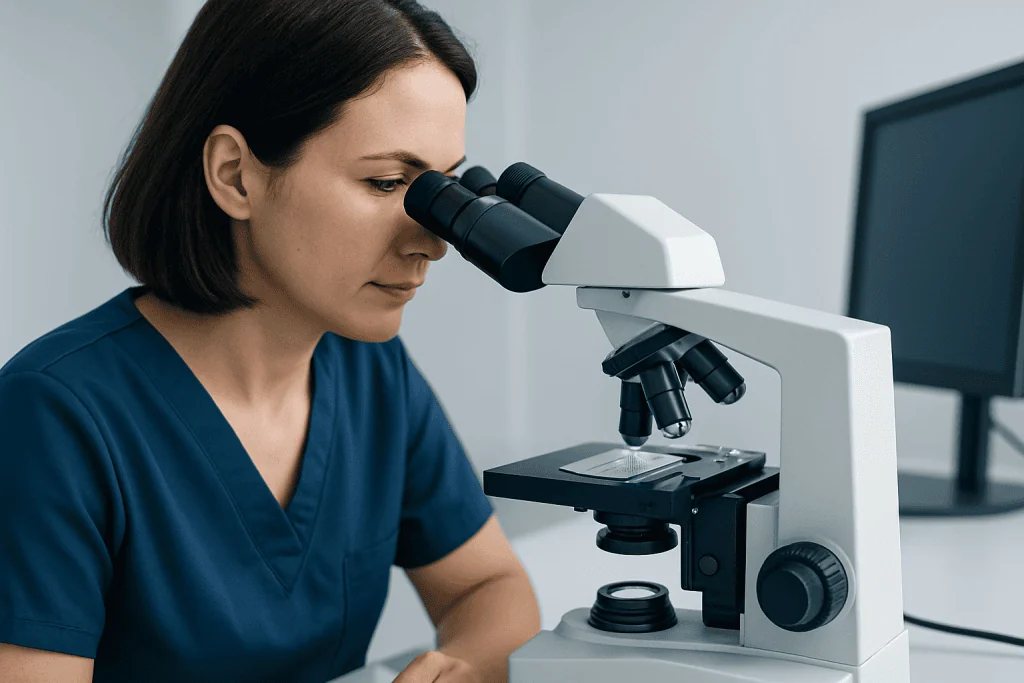
When reviewing a sample, the cytopathologist evaluates the cells’ size, shape, internal structures, arrangement, and relationship to surrounding material. These features can indicate whether cells appear normal, reactive, inflamed, infected, atypical, suspicious, or cancerous. Additional stains, immunocytochemistry, microbiology testing, or molecular tests may be requested when they can clarify the result.
Cytology is commonly used in preventive screening and in the evaluation of symptoms or abnormal scans. For example, cervical cell testing can detect precancerous changes, while a needle sample from a thyroid nodule, lymph node, breast lump, salivary gland, or lung lesion may help determine the next step. Cell examination can also assess fluid around the lungs, in the abdomen, or in other body spaces.
A cytology report is one important part of diagnosis, not a diagnosis in isolation. The treating doctor combines the report with the person’s symptoms, physical examination, laboratory results, and imaging. If cancer is suspected or confirmed, care is commonly coordinated through a multidisciplinary team that may include oncology, surgery, radiology, and pathology specialists.
How Cell Sampling Works

The laboratory assessment is performed after the sample has been collected. A clinician obtains cells and places them onto glass slides or into a preservative solution. In the laboratory, the material is processed, stained, and examined by trained laboratory professionals and a cytopathologist. The specialist then issues a report describing whether the sample is satisfactory and what the cells show.
One frequently used approach is fine-needle aspiration, in which a thin needle removes cells from a lump or lesion. Ultrasound, computed tomography, or another imaging method may guide the needle when the area cannot be felt from the outside. In certain settings, rapid on-site assessment may be used to check whether enough cells have been collected, which can reduce the need for another sampling attempt.
Cell sampling is not always a procedure involving a needle. A cervical sample is collected with a small brush, while urine, sputum, or naturally occurring body fluids may be provided in a container. During endoscopy or bronchoscopy, a clinician may collect cells with a brush or wash fluid. The exact method is selected according to the location of the suspected condition and the information needed.
- Cell sample: often less invasive and may provide a prompt, focused answer.
- Tissue biopsy: provides tissue architecture and may be needed when cytology is inconclusive or when more testing is required.
- Imaging: shows location and size of an abnormality but generally cannot determine cell type on its own.
Who May Need Cytology and What to Expect Step by Step
Cytology may be appropriate for people with an abnormal screening test, a newly detected lump, unexplained enlarged lymph nodes, fluid buildup, an abnormal imaging finding, or symptoms that require further investigation. It is also used to monitor certain conditions or assess whether a known cancer has spread to body fluids or nearby structures. The decision to collect cells should be individualized by a qualified clinician.
Before a procedure, the healthcare team reviews the person’s health history, allergies, medicines, and bleeding risk. Blood-thinning medicines may require special planning, but they should never be stopped without instructions from the prescribing clinician. Depending on the procedure, patients may be advised about eating and drinking, transportation home, or temporary activity limits.
For a typical image-guided fine-needle aspiration, the area is cleaned and may be numbed with local anesthetic. The clinician uses a thin needle to collect cells, sometimes taking more than one pass to obtain an adequate sample. Gentle pressure and a small dressing are applied afterward. The appointment is often brief, though imaging-guided procedures and samples from deeper areas can take longer.
Not everyone is an ideal candidate for every sampling method. The location of the abnormality, ability to lie still, bleeding risk, infection at the skin site, pregnancy, and previous test results may influence planning. If cytology is unlikely to provide enough information, the clinical team may recommend a core needle biopsy, surgical biopsy, or another diagnostic approach instead.
Results, Benefits, Limitations, and Risks
A cytology report may state that cells are benign or negative for malignancy, atypical, suspicious, malignant, inflammatory, infectious, or insufficient for diagnosis. “Insufficient” means there were not enough well-preserved cells to interpret reliably; it does not by itself indicate a serious condition. The clinician will explain what the wording means in the context of the person’s overall health and whether follow-up is needed.
The main benefits of cytology are that it can be minimally invasive, targeted, and useful for making timely decisions. It may help avoid more extensive procedures when a clear answer is obtained. It can also help direct further testing, including molecular analysis that may be relevant if a cancer diagnosis is being evaluated.
However, cell samples have limitations. A small sample may not represent the entire lesion, and some conditions can only be diagnosed confidently by seeing the organization of cells within a larger piece of tissue. A negative result may need further evaluation if symptoms, imaging, or examination findings remain concerning. Similarly, an abnormal result may require confirmation with repeat sampling or biopsy.
Risks depend on the collection method. Superficial needle sampling commonly causes temporary discomfort, tenderness, or bruising. Less common risks include bleeding, infection, or a non-diagnostic sample. Procedures involving deeper organs can have additional procedure-specific risks, which the clinician should discuss before consent. Urgent symptoms after a procedure, such as severe pain, fever, worsening swelling, fainting, or trouble breathing, require prompt medical assessment.
Recovery, Follow-Up, and Supporting Your Care
Recovery is usually straightforward after a simple brush sample or fine-needle aspiration. Mild soreness or bruising can often be managed with rest and the aftercare advice provided by the clinical team. Most people can return to usual daily activities quickly, although a doctor may recommend short-term restrictions after sampling from deeper areas or after sedation.
Results may be available within days, but timing varies according to the type of sample and whether special staining, cultures, or molecular tests are required. It can be helpful for patients to ask how and when results will be communicated, what a possible repeat test would mean, and which clinician will coordinate next steps. Keeping a list of medicines, prior test results, and questions can make appointments more productive.
There is no general lifestyle measure that prevents every abnormal cell finding. However, attending recommended screening appointments, not smoking, following infection-prevention guidance, and seeking assessment for persistent or unexplained symptoms support early evaluation. For cervical health, clinicians may also discuss human papillomavirus vaccination and age-appropriate screening.
When a diagnosis requires complex review, multidisciplinary care can help connect laboratory findings with imaging and treatment decisions. Acibadem International’s multidisciplinary specialists and JCI-accredited hospitals diagnose and treat a wide range of conditions for international patients, with care plans based on individual clinical needs.
When to Seek Medical Care
Medical advice is appropriate when a person notices a new or growing lump, persistent swollen lymph nodes, unexplained bleeding, ongoing hoarseness, a cough that does not improve, unexplained weight loss, persistent abdominal swelling, or another symptom that continues or worsens. These symptoms have many possible causes, and assessment helps determine whether testing is needed.
A person should contact the clinician who ordered cytology if results are delayed beyond the expected timeframe, if the report is unclear, or if symptoms continue despite a reassuring result. It is reasonable to ask whether imaging, repeat cytology, or a tissue biopsy is recommended and why.
After a sampling procedure, urgent care is appropriate for significant bleeding that does not stop with direct pressure, rapidly increasing swelling, fever, severe or worsening pain, chest pain, shortness of breath, or fainting. These complications are uncommon, but prompt evaluation is important when they occur.
Frequently asked questions
What is a specialist in the study of cells called?
A specialist in the study of cells for medical diagnosis is usually called a cytopathologist. A cytopathologist is a physician pathologist who examines cells collected from screening tests, fluids, brushings, or needle procedures. Depending on the clinical question, other pathology specialists may also be involved.
Is a cytopathologist the same as an oncologist?
No. A cytopathologist helps identify and characterize disease by examining cells, while an oncologist treats cancer and manages cancer-related care. If cancer is diagnosed or suspected, these specialists often contribute to the same multidisciplinary care team.
Does an abnormal cytology result mean cancer?
No. Abnormal cells can result from inflammation, infection, healing, benign changes, or precancerous changes, as well as cancer. The meaning of a result depends on the type of sample and is interpreted with other clinical information. Further testing may be recommended to clarify the finding.
Is fine-needle aspiration painful?
Most people feel a brief needle sensation and some pressure during fine-needle aspiration. Local anesthetic may be used depending on the site and procedure plan. Mild tenderness or bruising afterward is common and usually temporary.
How long do cytology results take?
Timing varies by the sample type, laboratory processes, and whether additional tests are needed. Some straightforward results may be available within a few days, while complex testing can take longer. The ordering clinician can provide the most accurate expected timeline.
What happens if a cell sample is insufficient?
An insufficient sample means the laboratory could not assess enough suitable cells to give a reliable interpretation. It does not automatically mean that anything serious is present. The clinician may recommend repeating the sample, using image guidance, or choosing a tissue biopsy depending on the situation.
References
- National Cancer Institute
- American Cancer Society
- College of American Pathologists
- American Society for Clinical Pathology
- World Health Organization
This article is for general information only and is not a substitute for professional medical advice. Please consult a qualified doctor about your individual situation.
Oncology care in Turkey — second opinion and treatment plan
JCI-accredited · board-certified surgeons · reply within 24h
Add us as a Preferred Source to see more of our trusted health content across Google Search, AI Overviews and Discover.

More from the Health Library


Related Specialists

Dr. Hüsnü Mert Arinalp
Anesthesiology
Dr. Hudheifa Yussuf Haji
Inpatient Clinic Physicians Clinical Service
Prof. Dr. Ozan Kocakaya
Internal Medicine
Dr. Mustafa Candan
Pediatric Surgery