

Speculum: An Evidence-Based Guide for Patients

A speculum helps a clinician examine internal tissues more clearly and safely. The term usually refers to a vaginal speculum, but speculums are also used in the ear, nose, and other parts of the body.
Key Takeaways
- A speculum helps a clinician examine internal tissues more clearly and safely.
- The term usually refers to a vaginal speculum, but speculums are also used in the ear, nose, and other parts of the body.
- A speculum exam may feel unfamiliar or briefly uncomfortable, but it should not be sharply painful.
- Patients can ask for a smaller speculum, extra lubricant, breaks, or a slower exam.
- Speculum use is common in preventive care, including pelvic exams and cervical cancer screening.
- Persistent pain, bleeding, unusual discharge, or anxiety about exams should be discussed with a qualified clinician.
A speculum is a medical instrument that gently holds an area open so a healthcare professional can see inside it during an examination or procedure. Most often, patients mean a vaginal speculum, which is used during pelvic exams, Pap tests, and some gynecologic treatments.
Overview: what a speculum is
A speculum is a medical instrument designed to gently separate tissues so a clinician can see an internal body area more clearly. The word can refer to several types of instruments, but in everyday health questions it most often means a vaginal speculum used during a pelvic examination. This instrument helps the clinician inspect the vaginal walls and cervix and perform tests such as a Pap smear or collect samples if needed.
Speculums come in different sizes and shapes. They may be made of metal and sterilized between uses, or they may be single-use plastic. The choice depends on the setting, the purpose of the exam, and patient comfort. A clinician typically selects the smallest size that still allows an adequate view.
Although many people associate a speculum with discomfort, the instrument itself is simply a tool. In skilled hands, its purpose is to make examination more accurate while minimizing unnecessary manipulation. Good communication, proper positioning, privacy, and a gentle technique all help make the experience more comfortable.
How a speculum is used in different exams
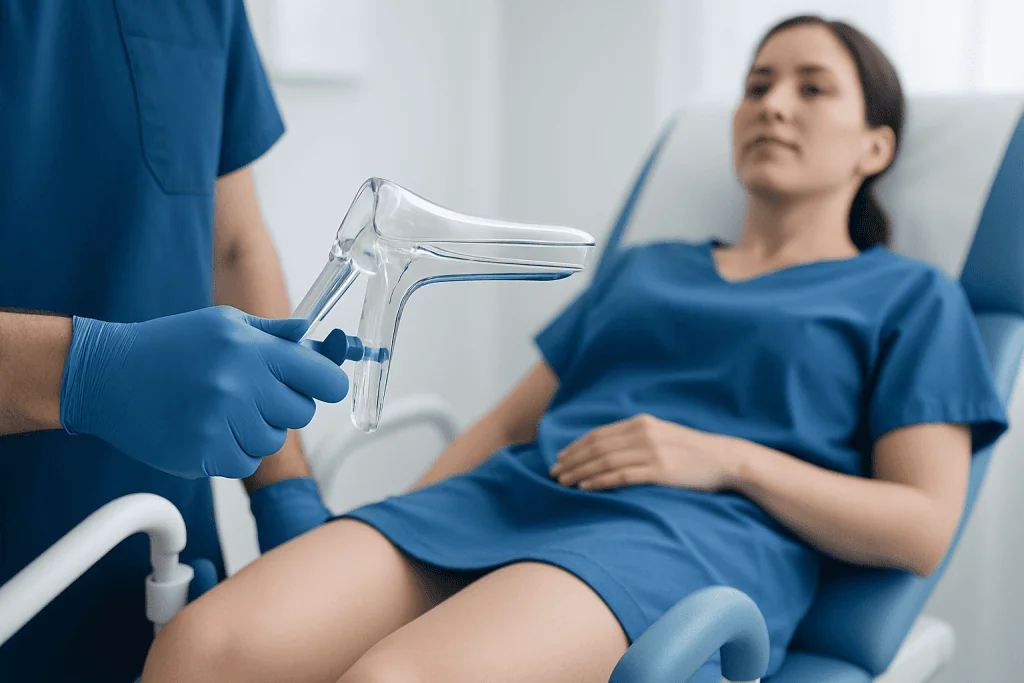
The most familiar use is in gynecology. During a pelvic exam, the vaginal speculum is inserted carefully and then opened slightly so the cervix and vaginal walls can be seen. This allows a clinician to check for irritation, bleeding, discharge, polyps, signs of infection, or structural changes. It also makes it possible to perform screening tests such as a Pap test and, when appropriate, HPV testing.
A speculum may also be used for other purposes. Ear speculums are attached to an otoscope so a doctor can look into the ear canal. Nasal speculums help examine the inside of the nose. These instruments are different in shape and function, but they share the same principle: creating a clear, safe view of an otherwise narrow space.
In women’s health, speculum exams may be part of routine preventive care, symptom evaluation, contraception visits, pregnancy care, or certain procedures. For example, a clinician may use a speculum to investigate abnormal bleeding, unusual discharge, pelvic pain, or concerns related to cervical cancer screening. Not every gynecologic concern requires a speculum exam, and the decision depends on symptoms, age, medical history, and the goal of the visit.
What to expect during a vaginal speculum exam
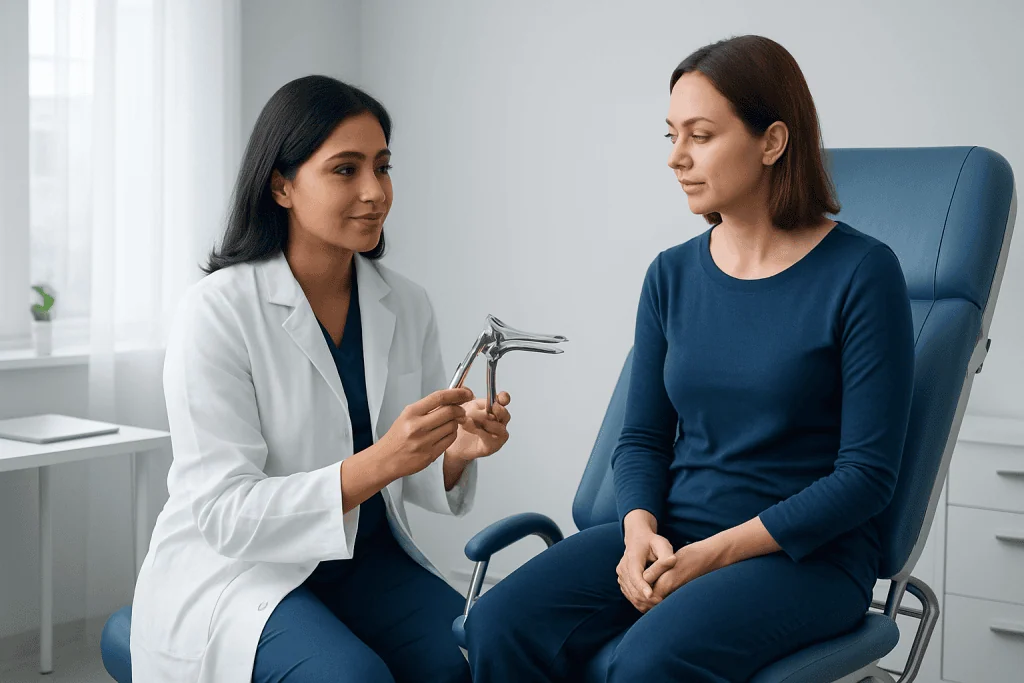
Before the exam, the clinician usually explains why the speculum is needed and what will happen. The patient lies on an examination table, often with knees bent and feet supported. A sheet or drape is usually provided for privacy. The speculum is lubricated and inserted slowly at an angle that follows the natural shape of the vagina, then opened just enough to allow a clear view.
Many patients describe the sensation as pressure, fullness, or stretching rather than pain. The exam is usually brief. If a Pap smear is being done, the clinician may use a soft brush or spatula to collect cervical cells. This can cause mild cramping or a scraping sensation for a few seconds. Light spotting afterward can happen in some people.
Comfort can often be improved with small adjustments. Patients can ask for a smaller speculum, more lubrication, a pause before insertion, or step-by-step explanation during the exam. Taking slow breaths and relaxing the pelvic floor muscles may help. If the patient has experienced pain with intercourse, pelvic floor tension, menopause-related dryness, trauma, or anxiety, it is especially helpful to mention this in advance so the clinician can adapt the approach.
- Ask what the exam is for and whether it is necessary today.
- Request the smallest suitable speculum if comfort is a concern.
- Tell the clinician right away if the exam feels painful, not just uncomfortable.
- Ask to stop at any time if needed.
Why a speculum exam may be recommended
A clinician may recommend a speculum exam for screening, diagnosis, or treatment planning. One of the most common reasons is cervical cancer screening, which may involve a Pap test and, depending on age and clinical guidance, HPV testing. The exam may also help evaluate symptoms such as vaginal discharge, odor, itching, bleeding between periods, bleeding after sex, or pelvic discomfort.
Speculum exams are also used to assess the cervix during pregnancy in selected situations, to locate the source of bleeding, or to remove a foreign object. In some cases, they are part of follow-up after an abnormal screening test. If a more detailed evaluation of the cervix is needed, a doctor may recommend colposcopy, which uses magnification to examine the cervix after speculum placement.
Sometimes the exam supports the diagnosis of common conditions such as vaginitis or changes in cervical tissue. It may also be used before certain procedures, including Pap smear testing and obtaining cultures or other laboratory samples. The exact reason should always be explained, and patients can ask whether there are alternatives or whether the test can be postponed if they are not ready.
Benefits, limits, and possible discomforts
The main benefit of a speculum exam is visibility. It lets the clinician directly inspect tissues that cannot be adequately assessed from symptoms alone. This can improve the accuracy of diagnosis, support preventive screening, and guide next steps without guesswork. It may help identify inflammation, lesions, cervical changes, retained objects, or the source of bleeding.
At the same time, a speculum exam has limits. It does not by itself diagnose every condition, and a normal-looking exam does not rule out all causes of pelvic pain or abnormal bleeding. Additional tests may be needed, such as swabs, laboratory studies, ultrasound, or biopsy. In some situations, a person may have symptoms even though the speculum exam appears normal.
Discomfort is the most common concern. Pressure is common, and mild cramping or brief spotting may occur, especially after cervical cell sampling. Sharp pain is not expected and should be reported immediately. For people with vaginal dryness, pelvic floor dysfunction, infections, skin conditions, or a history of trauma, individualized care can make a significant difference. In selected cases, treatment of the underlying issue before repeating the exam may be appropriate.
How to prepare and care for yourself afterward
Preparation is usually simple. If the exam includes a Pap test, the clinic may advise avoiding vaginal products, douching, or sexual intercourse for a short time beforehand, depending on the test and timing. It can be useful to bring a list of symptoms, menstrual dates, medications, past test results, and any concerns about pain or anxiety. If the patient has had a difficult pelvic exam before, mentioning this early helps the healthcare team plan a more supportive approach.
During the visit, patients have the right to ask questions, request a chaperone if available, or ask for another appointment if they need more time. Communication matters. A calm explanation, slower pacing, and a comfortable position can reduce tension. Some patients prefer to place a hand on their abdomen and focus on slow exhalation during insertion.
After the exam, most people can return to normal activities right away. Mild spotting can occur, especially after a Pap test or cervical sampling, but it should be limited. If symptoms such as significant bleeding, persistent pain, fever, or unusual discharge develop afterward, medical advice should be sought. When specialist evaluation or treatment is needed, centers such as Acibadem International offer care through multidisciplinary specialists in JCI-accredited hospitals for international patients.
When to seek medical care
A speculum exam itself is not an emergency, but the symptoms that lead to one may need timely assessment. Medical care is advisable for unexplained vaginal bleeding, bleeding after menopause, bleeding after sex, persistent pelvic pain, strong odor, unusual discharge, sores, or ongoing itching. Care is also important if a person has severe pain during an exam or cannot tolerate routine screening because of pain or anxiety.
Urgent evaluation may be needed for heavy bleeding, fever, severe pelvic pain, fainting, or signs of infection. A clinician can decide whether symptoms are due to a minor problem, an infection, hormonal changes, pregnancy-related issues, or a condition that needs further investigation. Follow-up matters if screening results are abnormal or if symptoms continue even after an initial normal exam.
People who avoid care because they fear the speculum should know that options exist. A doctor may be able to use a smaller instrument, change positioning, apply additional lubricant, or discuss alternatives when appropriate. If the cervix or uterus needs further assessment, tests such as hysteroscopy or imaging may sometimes be considered depending on the clinical question, but the right approach depends on individual needs.
Frequently asked questions
Is a speculum the same as a pelvic exam?
No. A speculum is one instrument that may be used during a pelvic exam. A pelvic exam can include external inspection, a speculum exam, and sometimes a bimanual exam to assess the uterus and ovaries.
Does a speculum exam hurt?
Many people feel pressure or stretching rather than pain. The exam should not cause sharp or severe pain, and patients should tell the clinician immediately if it does. A smaller speculum, extra lubrication, and a slower approach can help.
Why is a speculum used for a Pap smear?
A Pap smear requires access to the cervix, which sits at the top of the vagina. The speculum gently holds the vaginal walls apart so the clinician can see the cervix and collect a cell sample accurately.
Can a patient ask for a smaller speculum?
Yes. Patients can ask whether a smaller speculum is appropriate for their anatomy and the purpose of the exam. Clinicians often try to balance comfort with the need to see the cervix clearly.
Are there alternatives to a speculum exam?
Sometimes, but not always. The need for a speculum depends on the symptom or test being considered. In some situations, self-collected samples, imaging, or postponing the exam until pain or infection is treated may be possible, but a clinician must decide what is medically suitable.
Can someone have a speculum exam during pregnancy?
Yes, when clinically needed. A clinician may use a speculum during pregnancy to assess bleeding, discharge, infection, or the cervix. The decision is based on symptoms and pregnancy stage.
References
- American College of Obstetricians and Gynecologists
- Centers for Disease Control and Prevention
- National Cancer Institute
- World Health Organization
- MedlinePlus
This article is for general information only and is not a substitute for professional medical advice. Please consult a qualified doctor about your individual situation.
Explore treatments in Turkey — costs, top hospitals & a free quote
JCI-accredited · board-certified surgeons · reply within 24h
Add us as a Preferred Source to see more of our trusted health content across Google Search, AI Overviews and Discover.

More from the Health Library



Related Specialists

Fzt. Neslihan Yıldızdağı
Pediatric Rehabilitation
Prof. Dr. M.Faruk Köse
Gynecology & Obstetrics
Prof. Dr. Canan Ersöz
Pathology
Assoc. Prof. Dr. Filiz Gülustan
Ear Nose & Throat