Speech Therapy for 3 Year Old: How It Works, Results and What to Expect
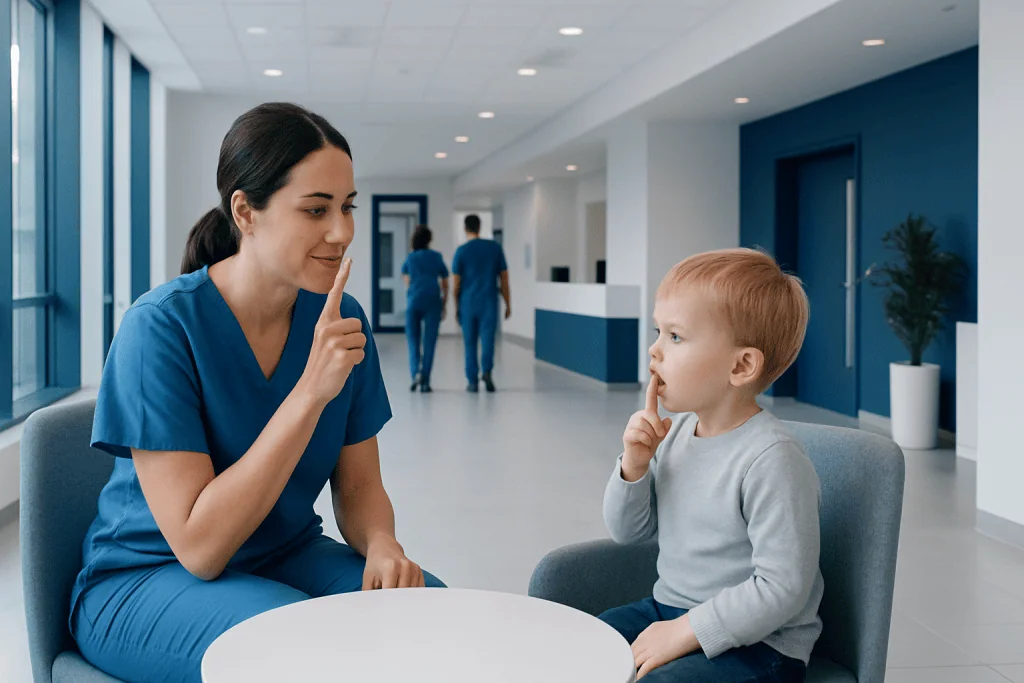
Speech therapy at age 3 is commonly play-based and tailored to the child’s communication needs. A child may need support with speech sounds, understanding language, using words, social communication, feeding, or fluency.
Key Takeaways
- Speech therapy at age 3 is commonly play-based and tailored to the child’s communication needs.
- A child may need support with speech sounds, understanding language, using words, social communication, feeding, or fluency.
- Early assessment can identify hearing, developmental, oral-motor, or environmental factors that may affect communication.
- Progress varies, but regular sessions and everyday practice with caregivers are important.
- Three years old is not too late for speech therapy; support can be helpful at any age when communication concerns are present.
Speech therapy for a 3 year old is a structured, play-based service that helps children communicate more clearly, understand language, use words and gestures, and participate in everyday interactions. An evaluation by a speech-language therapist can clarify whether a child would benefit from therapy and provide practical guidance for the family.
Overview: How Speech Therapy for a 3 Year Old Works
Speech therapy for a 3 year old helps a child develop communication skills through engaging activities that feel like play. A speech-language therapist, also called a speech-language pathologist, assesses how the child understands words, expresses ideas, makes speech sounds, plays, listens, and interacts with others. Therapy goals are then selected according to the child’s individual strengths and needs.
At this age, therapy may focus on building vocabulary, combining words into short phrases, following simple directions, improving clarity of speech, taking turns in conversation, or using gestures and other communication tools. Sessions often include toys, books, pictures, songs, movement, and routines that encourage the child to communicate naturally.
Speech therapy is not only about pronunciation. A child may speak clearly but need help understanding language or using language socially. Conversely, a child may understand well but have difficulty producing certain sounds. The assessment helps distinguish these patterns and guides appropriate support.
Should I Put My 3 Year Old in Speech Therapy?
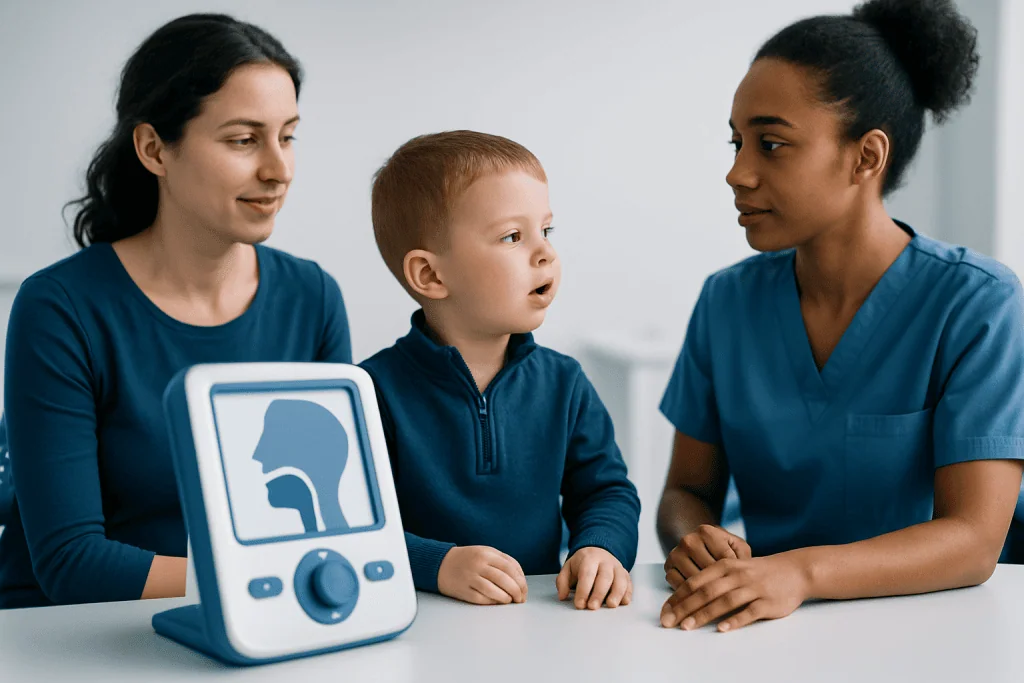
A speech-language evaluation may be appropriate when a parent, caregiver, preschool teacher, or doctor notices that a 3 year old has difficulty being understood, uses much less language than expected, does not follow age-appropriate directions, or becomes frustrated because communication is difficult. Therapy may also be helpful when the child has limited interaction with others, loses skills they previously used, stutters persistently, or has feeding and swallowing concerns.
Parents do not need to wait until they are certain that there is a problem. An evaluation can be reassuring when development is within a broad typical range, and it can provide a clear plan when support is needed. A pediatrician can review the child’s overall development and may recommend hearing testing, particularly if hearing concerns, frequent ear infections, or delayed speech are present.
Children learn at different rates, and bilingual or multilingual children may divide their language learning across more than one language. Learning more than one language does not cause a speech or language disorder. Assessment should consider all languages the child hears and uses, as well as the family’s communication environment.
Candidacy and What Happens During the Assessment

Children may be candidates for speech therapy when an assessment identifies a communication difficulty that affects daily life, learning, relationships, or confidence. A referral may come from a pediatrician, but families can often request an assessment directly through local early childhood services, schools, or qualified speech-language therapists, depending on local systems.
The assessment usually begins with a detailed conversation about pregnancy and birth history, early milestones, medical history, hearing, languages spoken at home, play skills, and the family’s concerns. The therapist observes the child communicating during play and may use structured tasks, parent questionnaires, or standardized tools appropriate for the child’s age and language background.
Hearing is an important part of evaluating speech and language concerns. Even mild or fluctuating hearing loss can affect how a child hears speech sounds and learns language. If needed, the child may be referred for an audiology assessment or an ear, nose, and throat review. Communication difficulties can also occur alongside developmental differences, so further pediatric or developmental assessment may sometimes be recommended.
Step by Step: What Happens in Speech Therapy Sessions
After assessment, the therapist discusses the findings in understandable terms and agrees on a small number of meaningful goals with the family. For example, a goal might involve using words to request help, combining two to three words, naming familiar items, improving a specific sound pattern, or participating in back-and-forth play.
During sessions, the therapist creates repeated opportunities for communication. A child may be encouraged to choose a toy, request another turn, describe a picture, imitate a sound, or follow a simple instruction. Rather than expecting a child to sit still and repeat drills for long periods, the therapist typically adapts activities to the child’s interests, attention span, sensory needs, and developmental level.
Caregiver coaching is a central part of treatment. The therapist may demonstrate strategies such as pausing to allow the child time to respond, expanding on the child’s words, reading interactively, offering simple choices, and modeling language during routine activities. These approaches allow practice to continue at home, during meals, dressing, bath time, outdoor play, and shared book reading.
Sessions may be individual, group-based, clinic-based, school-based, or delivered remotely when appropriate. The recommended frequency and format depend on the child’s needs, the family’s availability, and local services. Plans should be reviewed regularly as skills change.
How Long Does Speech Therapy Take for a 3 Year Old?
The length of speech therapy varies widely. Some children make meaningful gains after a short period of focused support and home practice, while others benefit from therapy over months or longer. The timeline depends on the type and severity of the communication difficulty, the child’s hearing and developmental profile, attendance, opportunities to practice, and how consistently strategies are used in everyday life.
Progress is usually gradual rather than immediate. Early signs of progress may include more attempts to communicate, greater attention to words, less frustration, new gestures, or more interaction during play. Clearer speech and longer sentences may develop over time as the child gains skills and confidence.
The therapist should monitor outcomes and adjust goals rather than continuing the same approach indefinitely. Some children can reduce or pause therapy when goals are met, while others need ongoing support or coordinated care from pediatric, audiology, developmental, occupational therapy, or educational professionals.
Benefits, Limitations, and Possible Challenges
The main benefit of speech therapy is improved functional communication: helping a child understand others, express needs and ideas, join play, and take part more comfortably in family and preschool life. Family-centered therapy can also help caregivers feel more confident about how to support language development without turning every interaction into a lesson.
Speech therapy does not offer a guaranteed timetable or one identical result for every child. A child’s response depends on the underlying reason for the communication concern and on their broader development. It is important to set realistic, individualized goals and to recognize gains in participation and confidence as well as changes in the number of words or speech clarity.
There are no significant physical risks from speech and language therapy. Practical challenges can include a child being shy with a new therapist, variable attention, missed sessions, or difficulty fitting practice into busy family routines. A therapist can modify activities, use familiar routines, and keep home strategies simple to make participation easier.
When speech difficulties are linked to a medical or developmental condition, therapy may be one part of a wider plan. For international patients, Acibadem International’s multidisciplinary specialists and JCI-accredited hospitals can assess communication concerns and coordinate appropriate pediatric care.
Is 3 Too Late for Speech Therapy?
No. Three years old is not too late for speech therapy. Early childhood is a valuable time to assess communication because language develops rapidly and young children often learn effectively through responsive play and daily routines. However, therapy can be beneficial at later ages as well, so families should not feel discouraged if concerns are recognized after age 3.
Starting support when concerns are noticed may help reduce frustration and provide families with practical tools sooner. It also allows clinicians to check for contributing factors such as hearing difficulties, speech sound differences, language disorder, developmental delay, or social communication needs.
Families can support development while waiting for an assessment by talking about daily activities, following the child’s interests in play, reading together, responding to communication attempts, and giving the child time to answer. Screens should not replace responsive interaction with adults and other children.
When to Worry About a 3 Year Old's Speech and When to Seek Medical Care
It is sensible to discuss a 3 year old’s speech with a pediatrician or speech-language therapist when unfamiliar adults rarely understand the child, the child uses few words or does not combine words, has difficulty understanding simple everyday instructions, or shows little interest in communicating. Concerns are also appropriate when speech is worsening, the child has lost words or social skills, or communication difficulties cause frequent distress.
A prompt medical review is particularly important if there is a loss of previously acquired language or interaction skills, concern about hearing, repeated ear infections, trouble swallowing, choking during meals, a persistently hoarse voice, or breathing difficulties. These signs do not always indicate a serious condition, but they should be assessed by a qualified clinician.
Parents can prepare for an appointment by noting examples of words and phrases the child uses, what the child understands, which languages are used at home, any changes over time, and whether others can understand the child. Short videos of everyday communication may also help clinicians understand the concern, provided they are shared securely and appropriately.
Frequently asked questions
What does speech therapy look like for a 3 year old?
Speech therapy for a 3 year old usually looks like guided play rather than a formal classroom lesson. The therapist may use toys, books, pictures, songs, and everyday routines to encourage understanding, speech sounds, words, short phrases, and turn-taking. Caregivers are often included so they can use helpful strategies at home.
Should I put my 3 year old in speech therapy?
A child may benefit from an evaluation if speech is difficult to understand, language use is limited, simple directions are hard to follow, or communication leads to frustration. An assessment does not automatically mean a child needs long-term therapy. It helps identify strengths, concerns, and whether support or monitoring is most appropriate.
How long does speech therapy take for a 3 year old?
The timeline varies because children have different communication needs and learn at different rates. Some children benefit from a short course of therapy, while others need support for months or longer. Regular attendance, caregiver involvement, hearing status, and the reason for the communication difficulty can all affect progress.
Is 3 too late for speech therapy?
No, age 3 is not too late for speech therapy. It is a useful time to assess communication because children are developing language rapidly and can learn through play and familiar routines. Support can also be effective later in childhood, so it is always reasonable to seek advice when concerns arise.
When should I worry about a 3 year old's speech?
Seek professional advice if a child uses very few words, does not combine words, is usually not understood by unfamiliar listeners, struggles to understand simple directions, or seems frustrated by communication. Prompt medical review is important if the child loses skills they previously had, has possible hearing problems, or has swallowing, breathing, or persistent voice concerns.
Can speaking two languages cause speech delay?
No. Exposure to more than one language does not cause a speech or language disorder. A bilingual child may distribute words and skills across languages, so assessment should consider all languages the child hears and uses. If a true language difficulty is present, it is generally seen across the child’s languages.
References
- American Speech-Language-Hearing Association
- Centers for Disease Control and Prevention
- National Institute on Deafness and Other Communication Disorders
- American Academy of Pediatrics
This article is for general information only and is not a substitute for professional medical advice. Please consult a qualified doctor about your individual situation.
Explore treatments in Turkey — costs, top hospitals & a free quote
JCI-accredited · board-certified surgeons · reply within 24h
Add us as a Preferred Source to see more of our trusted health content across Google Search, AI Overviews and Discover.

More from the Health Library



Related Specialists

Dr. İlkar Aydın
Radiology
Assoc. Prof. Dr. Seçkin Satılmış
Cardiology
Prof. Dr. Cihan Aksoy
Physical Medicine & Rehabilitation
Dr. Tarik Yanik
Otorhinolaryngology