

Can Yag Laser Be Done Twice: How It Works, Results and What to Expect

YAG laser capsulotomy treats clouding of the lens capsule after cataract surgery, known as posterior capsule opacification. Most people need the procedure only once because the laser opening in the capsule usually remains open.
Key Takeaways
- YAG laser capsulotomy treats clouding of the lens capsule after cataract surgery, known as posterior capsule opacification.
- Most people need the procedure only once because the laser opening in the capsule usually remains open.
- Vision may improve within hours or days, although eye drops used during the procedure and mild inflammation can temporarily blur vision.
- Persistent blur is not always caused by the capsule and may require assessment for dry eye, retinal conditions, glaucoma, or other causes.
- Sudden vision loss, increasing pain, flashes, many new floaters, or a curtain-like shadow require urgent eye care.
Can YAG laser be done twice? In most cases, no: once a YAG laser capsulotomy has created an opening in the clouded lens capsule, that opening remains permanent. If vision remains unclear or worsens later, an ophthalmologist should check for another eye condition, residual capsule material, or an uncommon need for additional laser treatment.
Overview: Can YAG Laser Be Done Twice?
Can YAG laser be done twice? Usually, a YAG laser capsulotomy is needed only once. The procedure uses focused laser energy to make a small central opening in a cloudy membrane behind an artificial lens after cataract surgery. Since the opening generally remains open, the same clouding does not usually return.
However, a second laser assessment or, less commonly, further treatment may be appropriate if the original opening is too small, if capsule material remains in the visual axis, or if another cause of reduced vision was present. An ophthalmologist should examine the eye before assuming that further YAG treatment is needed.
YAG laser capsulotomy is an outpatient procedure used for posterior capsule opacification (PCO), sometimes called a “secondary cataract.” It is not a new cataract: the natural lens has already been removed during cataract surgery, and the implanted intraocular lens remains in place. PCO can make vision seem hazy, dim, or glary again months or years after otherwise successful cataract surgery.
How YAG Laser Capsulotomy Works
During cataract surgery, the surgeon leaves part of the eye’s natural lens capsule in place to support the artificial lens implant. Over time, cells can grow or change on the back portion of this capsule. When this affects the central visual pathway, it can scatter light and cause blurred vision, glare, reduced contrast, or difficulty reading.
A neodymium:YAG laser directs very short pulses of energy through the pupil to create an opening in the cloudy posterior capsule. The laser does not remove the artificial lens, and no surgical incision is usually required. Light can then pass more freely to the retina.
The decision to treat is based on symptoms and an eye examination, rather than on the appearance of PCO alone. The eye specialist may check visual acuity, eye pressure, the implanted lens position, the retina, and the optic nerve. This helps confirm that the capsule clouding is likely to be contributing to the person’s visual difficulty.
Candidacy and the Step-by-Step Procedure

A person may be a candidate for YAG laser capsulotomy when PCO is affecting daily activities, such as reading, driving, recognizing faces, or seeing in bright light. Symptoms should be evaluated carefully because blurry vision after cataract surgery may also be related to dry eye, changes in glasses prescription, corneal problems, retinal disease, glaucoma, or other conditions.
Before treatment, the ophthalmologist reviews eye history, including retinal tears or detachment, high short-sightedness, diabetes-related eye disease, uveitis, glaucoma, and medicines that affect eye health. These factors do not always prevent treatment, but they can influence the examination, counseling, monitoring, and follow-up plan.
The procedure commonly follows these steps:
- Eye drops widen the pupil and may be used to prevent a temporary rise in eye pressure.
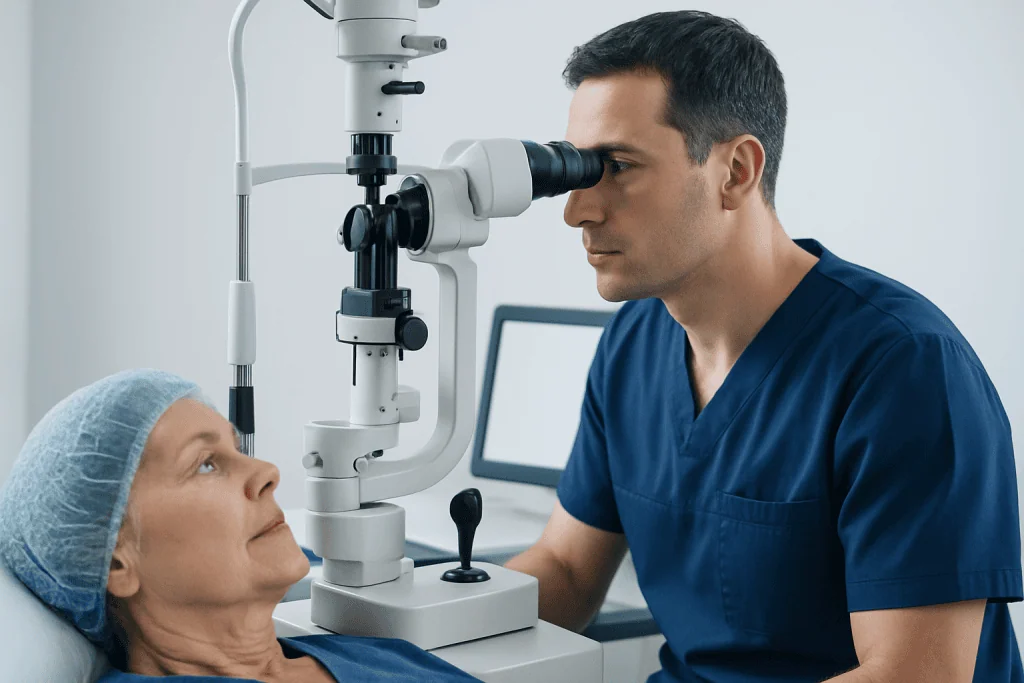
- The person sits at a laser microscope, similar to the equipment used for an eye examination.
- A special contact lens may be placed on the eye after numbing drops are given.
- The ophthalmologist applies laser pulses to make an opening in the clouded capsule.
- Vision and eye pressure may be checked shortly afterward, with follow-up arranged when needed.
The procedure is generally brief and painless, though bright lights, clicking sounds, or mild temporary discomfort can occur. For people considering treatment, YAG laser capsulotomy information can help explain how an ophthalmology team plans and follows the procedure.
How Many Times Can You Have YAG Laser Surgery?
There is no fixed number that applies to everyone, but most people have YAG laser capsulotomy once in each affected eye. The capsule opening made by the laser is typically permanent, so the same posterior capsule opacity does not ordinarily grow back across the opening.
If symptoms continue after treatment, repeating laser treatment is not automatically the answer. The specialist first checks whether the opening is adequate and whether another condition is affecting sight. In some situations, such as an incomplete opening, residual material, or a capsule opening that is not sufficiently central or large for visual needs, additional laser treatment may be considered.
Each eye should be assessed separately. A person who has cataract surgery in both eyes may develop PCO in one or both eyes at different times, and YAG treatment in one eye does not mean the other eye will necessarily require it. Individual risks, including retinal history and eye pressure, are also considered before any further procedure.
How Long After YAG Does Vision Improve?
Some people notice clearer vision within a few hours after YAG laser capsulotomy, while others need several days for vision to settle. Dilating drops can cause temporary blurred near vision and light sensitivity, often for the rest of the day. Mild inflammation or eye-surface dryness may also delay the feeling of crisp vision.
The final improvement depends on whether PCO was the main cause of visual symptoms. If the macula, optic nerve, cornea, or glasses prescription also affects vision, YAG treatment may improve clarity but may not restore vision beyond the limits set by those conditions. An updated refraction for glasses may be considered after the eye has stabilized.
A follow-up assessment is useful when blur does not improve as expected. The ophthalmologist can examine the capsule opening and look for causes such as retinal detachment, macular disease, inflammation, elevated eye pressure, or dry eye. These conditions are not the usual outcome of YAG treatment, but recognizing them promptly is important.
Why Is My Vision Still Blurry After a YAG Laser?
Blurry vision shortly after YAG laser treatment can be temporary. Dilating drops, small floating capsule particles, mild inflammation, dry eye, or brief changes in eye pressure can all affect vision in the first hours or days. The person should use prescribed eye drops exactly as directed and attend planned follow-up visits.
If blur persists, the cause may be unrelated to the capsule. Common possibilities include an uncorrected glasses prescription, corneal surface dryness, swelling in the central retina, age-related macular degeneration, diabetic retinal changes, glaucoma, or another retinal concern. The ophthalmologist may use a dilated examination and imaging tests to identify the cause.
Occasionally, the laser opening may need review if it is not providing a sufficiently clear central pathway. This is different from a true recurrence of PCO. A careful examination helps avoid unnecessary repeat treatment and directs care toward the condition most likely to improve the person’s vision.
Recovery, Benefits, Risks, and What Not to Do After YAG Surgery
The main benefit of YAG laser capsulotomy is improved clarity when posterior capsule opacification is responsible for visual symptoms. Many people experience less haze or glare and better contrast. Recovery is usually quick, but it is sensible to arrange transport home because dilating drops can temporarily affect vision and light sensitivity.
For the rest of the day, people should avoid driving or operating machinery until vision is comfortably clear and safe for these activities. They should not rub the eye, should use prescribed drops as instructed, and should protect the eyes from bright light if needed. Normal gentle daily activities can often resume promptly unless the eye specialist gives different advice.
It is usually best to avoid swimming, hot tubs, and situations where water, dust, or irritants may enter the eye until the treating clinician confirms it is appropriate. There is generally no need for strict bed rest. Strenuous activity restrictions vary according to individual eye history, so people should ask their ophthalmologist about exercise, lifting, work, and travel.
Potential complications are uncommon but can include a temporary rise in eye pressure, inflammation, floaters, swelling at the macula, damage to the intraocular lens, or retinal tear or detachment. People with particular retinal or glaucoma risks may need closer monitoring. The expected benefits and individual risks should be discussed before treatment.
When to Seek Medical Care
Contact the eye clinic promptly if vision remains substantially blurred beyond the timeframe provided by the ophthalmologist, if it becomes worse rather than better, or if there is persistent redness or discomfort. A scheduled review is also important for anyone who has been advised to have eye pressure checked after the procedure.
Urgent eye assessment is needed for sudden loss of vision, severe or increasing eye pain, a rapidly increasing number of floaters, flashes of light, or a dark curtain or shadow in the field of vision. These symptoms can have several causes and should not be attributed to routine recovery without examination.
People who have had cataract surgery and notice a gradual return of haze, glare, or reduced visual quality should arrange an eye examination rather than self-diagnosing a secondary cataract. Acibadem International’s multidisciplinary specialists and JCI-accredited hospitals diagnose and treat eye conditions for international patients, with care tailored to the findings of a comprehensive ophthalmic assessment.
Frequently asked questions
Can YAG laser be done twice?
Most people need YAG laser capsulotomy only once because the opening made in the posterior capsule usually remains permanent. If vision remains affected, an ophthalmologist should determine whether the opening needs adjustment or whether another eye condition is responsible. Additional laser treatment is considered only when clinically appropriate.
How many times can you have YAG laser surgery?
There is no routine schedule for repeat YAG laser surgery. Usually, one treatment per affected eye is enough. A further procedure may occasionally be considered after an examination shows that residual capsule material or an inadequate opening is contributing to symptoms.
Why is my vision still blurry after a YAG laser?
Blurred vision can occur temporarily from dilating drops, mild inflammation, dry eye, or floating particles after the procedure. If it does not improve, the eye specialist may assess the capsule opening, glasses prescription, cornea, retina, optic nerve, and eye pressure. Persistent or worsening blur should be reported to the treating clinic.
How long after YAG does vision improve?
Some people notice improvement within hours, while others take several days for vision to settle. Dilating drops can blur vision and increase light sensitivity for the remainder of the day. The degree of improvement depends on whether posterior capsule opacification was the main cause of reduced vision.
What not to do after YAG surgery?
Do not drive or operate machinery until vision is clear enough to do so safely, particularly on the day of treatment. Avoid rubbing the eye and use all prescribed eye drops as directed. Ask the ophthalmologist when swimming, hot tubs, strenuous exercise, and other activities are suitable for the individual situation.
Is YAG laser capsulotomy painful?
The procedure is generally not painful because numbing drops are used. A person may notice bright flashes of light, clicking sounds, or mild pressure from a contact lens used during treatment. Any significant pain after the procedure should be reported promptly.
References
- American Academy of Ophthalmology
- National Eye Institute
- Mayo Clinic
- Royal College of Ophthalmologists
This article is for general information only and is not a substitute for professional medical advice. Please consult a qualified doctor about your individual situation.
Explore treatments in Turkey — costs, top hospitals & a free quote
JCI-accredited · board-certified surgeons · reply within 24h
Add us as a Preferred Source to see more of our trusted health content across Google Search, AI Overviews and Discover.

More from the Health Library



Related Specialists

Assoc. Prof. Dr. Muhammet Ahmet Karakaya
Anesthesiology
Dyt. Nilsu Küçük
Nutrition and Diet
Dr. Ecem Yurdadoğan
Physical Medicine & Rehabilitation
Prof. Dr. İnan Anaforoğlu
Endocrinology