Spermatic Cord: An Evidence-Based Guide for Patients
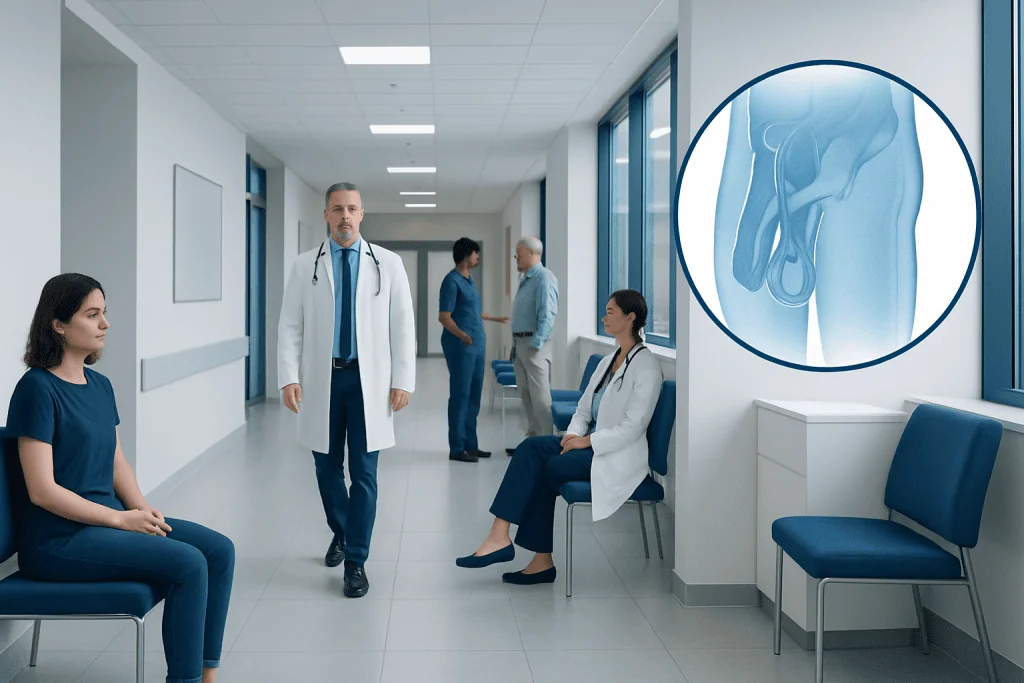
The spermatic cord supports the testicle and contains the vas deferens, blood vessels, nerves, and lymphatic channels. Pain, swelling, or a new lump in the groin or scrotum should be assessed in context, especially if symptoms are sudden or severe.
Key Takeaways
- The spermatic cord supports the testicle and contains the vas deferens, blood vessels, nerves, and lymphatic channels.
- Pain, swelling, or a new lump in the groin or scrotum should be assessed in context, especially if symptoms are sudden or severe.
- Some spermatic cord problems are harmless, while others, such as testicular torsion, need urgent evaluation.
- Doctors diagnose spermatic cord-related concerns using a physical exam, medical history, and often a scrotal ultrasound.
- Treatment depends on the cause and may range from observation and pain control to surgery.
The spermatic cord is a bundle of structures that suspends each testicle and carries blood vessels, nerves, lymphatics, and the vas deferens. Understanding what it does and what symptoms may signal a problem can help patients know when observation is reasonable and when prompt medical care is needed.
Overview: What the spermatic cord is
The spermatic cord is a rope-like bundle of tissues that runs from the lower abdomen into the scrotum and connects to each testicle. It helps hold the testicle in place and contains important structures, including the vas deferens, arteries, veins, lymphatic vessels, and nerves. In simple terms, it is the testicle’s support line and transport route.
For many patients, the term comes up only after imaging, surgery, or a doctor’s examination for groin or scrotal pain. The spermatic cord itself is not usually something a person notices in daily life, but changes affecting it can lead to symptoms such as swelling, aching, heaviness, or a sudden sharp pain.
Because the spermatic cord contains blood vessels and the tube that carries sperm, conditions affecting it can sometimes influence comfort, fertility, or the blood supply to the testicle. That is why persistent or sudden symptoms in the scrotum or groin should not be ignored, even though many causes are treatable and not dangerous.
How the spermatic cord works
Each spermatic cord contains several structures with different jobs. The vas deferens transports sperm from the epididymis toward the urethra. Arteries bring oxygen-rich blood to the testicle and nearby tissues, while veins help carry blood back out. Nerves provide sensation and help regulate muscle responses, and lymphatic channels help drain fluid.
The spermatic cord also includes layers of connective tissue and muscle fibers that protect and support these structures. One of these muscles, the cremaster muscle, helps raise and lower the testicle. This movement plays a role in temperature regulation, which is important because sperm production works best at a temperature slightly lower than core body temperature.
Doctors often discuss the spermatic cord in relation to nearby structures such as the testicle, epididymis, and inguinal canal. Conditions in one area can affect the others. For example, a varicocele involves enlarged veins in the scrotum and may be felt along the course of the spermatic cord.
Symptoms that may involve the spermatic cord

Symptoms linked to the spermatic cord can vary widely depending on the cause. Some people notice a dull ache, a sense of heaviness, or mild swelling that develops gradually. Others have a more obvious lump in the groin or upper scrotum. Discomfort may worsen after standing for a long time, exercise, lifting, or coughing.
More urgent symptoms include sudden severe testicular or groin pain, nausea, vomiting, or a testicle that seems higher than usual. These signs can occur with torsion, a condition in which the spermatic cord twists and cuts off blood flow. This requires immediate medical attention to protect the testicle.
Other symptoms can include:
- Scrotal swelling or fullness
- Tenderness along the groin or upper scrotum
- A visible or palpable mass
- Pain after injury or strain
- Discomfort during movement
- Changes in testicular size or position
Symptoms do not always mean the spermatic cord itself is the only problem. Conditions affecting the testicle, epididymis, or groin can feel similar, so a proper medical assessment is often the safest way to identify the cause.
Common causes and related conditions
Several medical issues can affect the spermatic cord directly or involve the structures within it. One of the most time-sensitive is testicular torsion, in which the cord twists and reduces blood flow to the testicle. This usually causes sudden, intense pain and is considered a surgical emergency. Another condition, hydrocele, involves fluid around the testicle and may cause swelling that can sometimes be confused with spermatic cord problems.
Varicocele is another common finding. It is caused by enlarged veins in the pampiniform plexus, a venous network inside the spermatic cord. It may cause aching, a dragging sensation, or fertility concerns, though many people have no symptoms. Inflammation or infection of nearby structures, such as epididymitis, can also create pain in the same region.
Inguinal hernia may extend into the scrotum and can feel like a groin or upper scrotal bulge near the spermatic cord. Less commonly, a benign cyst, lipoma, or tumor can arise in or around the cord. Prior surgery, trauma, or scar tissue can also contribute to ongoing groin discomfort.
Risk factors depend on the specific condition. They may include adolescence for torsion, heavy lifting for hernia, prolonged standing for varicocele symptoms, recent infection, sports injury, or previous groin procedures. While many causes are manageable, a new or changing symptom deserves medical review.
How doctors diagnose spermatic cord problems
Diagnosis begins with a detailed history and physical examination. A doctor will ask when the symptoms began, whether the pain was sudden or gradual, and whether there was injury, fever, urinary symptoms, nausea, or visible swelling. The timing of the pain can provide important clues because sudden severe pain raises concern for torsion.
During the examination, the doctor checks the scrotum, testicles, groin, and sometimes the abdomen. They may look for swelling, tenderness, a mass, asymmetry, or signs of hernia. In some cases, the findings are enough to guide urgent treatment. If torsion is strongly suspected, immediate specialist evaluation may be recommended without delay.
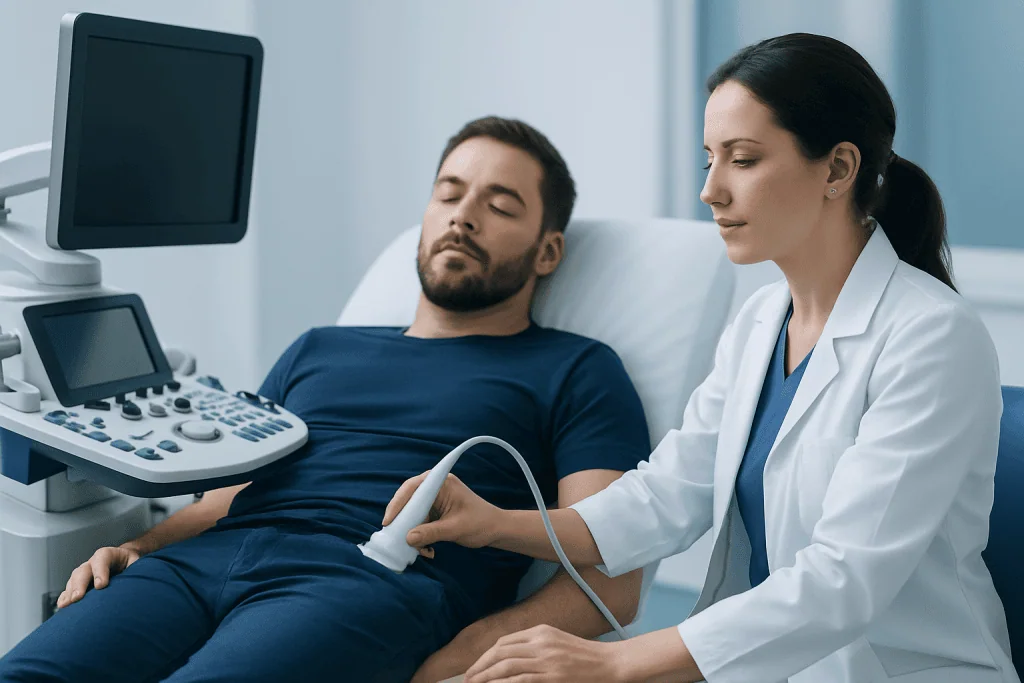
Scrotal ultrasound is the most common imaging test used to evaluate the spermatic cord and surrounding structures. It can help show blood flow, swelling, fluid collections, enlarged veins, or masses. Doppler ultrasound is especially helpful when assessing blood supply to the testicle.
Additional tests may be used depending on symptoms. Urine testing can help if infection is suspected. Blood tests are sometimes ordered in selected cases. If a lump is found, further imaging or specialist review may be needed to clarify whether it is benign or requires treatment.
Treatment options and what recovery may involve
Treatment depends entirely on the underlying cause. Mild strain, nonspecific discomfort, or some benign findings may be managed with rest, supportive underwear, avoiding heavy lifting for a period, and simple pain relief if a doctor advises it. If infection or inflammation is identified, treatment may include medications and follow-up to confirm improvement.
When there is a structural issue, treatment can be more specific. A symptomatic varicocele may be treated with monitoring or a procedure such as varicocele treatment if pain, testicular changes, or fertility concerns are present. An inguinal hernia may require inguinal hernia repair when it causes symptoms or carries a risk of complications.
Testicular torsion is an emergency because the twisted spermatic cord can block blood flow. This usually requires urgent testicular torsion surgery to untwist the cord and secure the testicle. The sooner this is treated, the better the chance of preserving normal function.
If a suspicious mass is found, referral to a urologist is important. Treatment may involve monitoring, additional imaging, or surgery depending on the diagnosis. In experienced centers, multidisciplinary specialists evaluate these conditions carefully. Acibadem International’s JCI-accredited hospitals care for international patients with urologic and groin conditions using coordinated diagnostic and surgical teams.
Self-care, prevention, and practical steps
Not all spermatic cord conditions can be prevented, but some practical steps may reduce strain or help patients notice problems early. Supportive underwear can reduce discomfort during exercise or long periods of standing. Using proper lifting technique may lower pressure in the groin, which can be helpful for people prone to hernias or heaviness in the scrotum.
Patients should also pay attention to changes in the scrotum or groin, especially a new lump, visible swelling, or pain that keeps returning. Monthly self-awareness is reasonable, but it does not replace a professional exam. Any uncertain finding should be discussed with a doctor rather than self-diagnosed.
General measures that support genital and urinary health include staying hydrated, seeking timely treatment for urinary or reproductive tract infections, and wearing appropriate protection during contact sports. After a groin injury, rest and observation may be enough for mild symptoms, but persistent pain should be evaluated.
For people with a known diagnosis such as varicocele or hernia, follow-up recommendations matter. Monitoring helps ensure that symptoms, testicular size, or fertility concerns are addressed before they become more troublesome.
When to seek medical care
Prompt medical evaluation is important if there is sudden severe pain in the scrotum or groin, especially if it is accompanied by nausea, vomiting, swelling, or a testicle that appears higher than normal. These features may indicate torsion, which is time-sensitive and should be treated as urgent.
A doctor should also assess pain that lasts more than a short time, recurrent discomfort, a new bulge in the groin, fever, redness, or a lump in the scrotum. Even when the cause is not serious, the symptoms can overlap with conditions that need treatment.
Patients do not need to wait for severe symptoms to seek advice. If swelling, heaviness, or aching is affecting daily activity, exercise, or peace of mind, a urologist or qualified physician can help clarify the cause and discuss options. Early evaluation often provides reassurance as well as a clearer treatment plan.
Frequently asked questions
What is the spermatic cord made of?
The spermatic cord contains the vas deferens, arteries, veins, nerves, lymphatic vessels, and connective tissue. Together, these structures support the testicle and carry blood, nerve signals, and sperm-related transport pathways.
Can the spermatic cord cause pain?
Yes. Pain can arise from twisting of the cord, enlarged veins, inflammation, hernia, injury, or nearby conditions affecting the testicle or epididymis. Sudden severe pain should be treated as urgent until a doctor rules out torsion.
Is spermatic cord swelling always serious?
Not always. Swelling can result from benign conditions such as varicocele, fluid collections, or temporary inflammation. However, because some serious problems can look similar, new or unexplained swelling should be checked by a clinician.
How is a spermatic cord problem diagnosed?
Doctors usually begin with a history and physical examination. A scrotal ultrasound, often with Doppler to assess blood flow, is commonly used to identify twisting, enlarged veins, fluid, or masses.
Can spermatic cord problems affect fertility?
Some can. For example, varicocele may be associated with impaired sperm quality in some patients, while torsion can affect testicular function if treatment is delayed. The impact depends on the underlying condition and how quickly it is managed.
When should someone go to the emergency department for scrotal pain?
Emergency care is appropriate for sudden severe pain, rapidly increasing swelling, nausea or vomiting with testicular pain, or a testicle that looks higher or differently positioned. These can be warning signs of testicular torsion or another urgent condition.
This article is for general information only and is not a substitute for professional medical advice. Please consult a qualified doctor about your individual situation.
Explore treatments in Turkey — costs, top hospitals & a free quote
JCI-accredited · board-certified surgeons · reply within 24h
Add us as a Preferred Source to see more of our trusted health content across Google Search, AI Overviews and Discover.

More from the Health Library

Sexismes: An Evidence-Based Guide for Patients

I Macaroni: What Patients Need to Know

Spinach: A Complete Medical Overview

Buccal Fat Removal — Explained by Medical Evidence, Not Myths

Amoxicillin: A Complete Medical Overview