Spindle Cell Sarcoma Treatment: How It Works, Results and What to Expect

Spindle cell sarcoma is a descriptive pathology term for several sarcoma types whose cells appear elongated under a microscope. Surgery is commonly the main treatment for localized tumors, aiming to remove the cancer with a margin of healthy tissue.
Key Takeaways
- Spindle cell sarcoma is a descriptive pathology term for several sarcoma types whose cells appear elongated under a microscope.
- Surgery is commonly the main treatment for localized tumors, aiming to remove the cancer with a margin of healthy tissue.
- Radiotherapy may be given before or after surgery to reduce the chance of local recurrence.
- Chemotherapy, targeted therapy, or immunotherapy may be considered for certain subtypes or advanced disease.
- Tumor grade and stage guide prognosis, but outcomes vary widely between individuals.
Spindle cell sarcoma treatment is planned by a specialist sarcoma team and most often involves surgery to remove the tumor, with radiotherapy and drug treatment used when appropriate. The best approach depends on the tumor’s location, size, grade, subtype, and whether it has spread.
Spindle Cell Sarcoma Treatment: How It Works
Spindle cell sarcoma treatment is individualized care for a group of cancers in which the cells have a spindle-shaped appearance under the microscope. This appearance can occur in several soft-tissue and bone sarcomas, so an experienced pathologist often performs additional testing to identify the exact subtype. Treatment is then designed around the diagnosis rather than the cell shape alone.
For a sarcoma that has not spread, the central aim is complete local control: removing or destroying the tumor while preserving function whenever safely possible. Surgery is frequently the main treatment. Radiotherapy may be used before or after surgery, and medicines that work throughout the body may have a role for selected higher-risk, recurrent, or metastatic tumors.
Sarcoma care is usually coordinated through a multidisciplinary team that may include surgical oncologists, orthopedic oncologists, medical oncologists, radiation oncologists, radiologists, pathologists, reconstructive surgeons, rehabilitation professionals, and supportive-care specialists. Reviewing scans and pathology together helps the team balance cancer control, function, and quality of life.
How Is a Treatment Plan Chosen?
Before treatment begins, the team confirms the diagnosis with imaging and a carefully planned biopsy. Magnetic resonance imaging is often useful for tumors in an arm, leg, or body wall, while computed tomography may help assess deeper sites and check the chest, where some sarcomas can spread. The biopsy should ideally be planned by a sarcoma team because its placement can affect later surgery.
Important treatment factors include the tumor’s precise subtype, grade, size, depth, location, growth rate, and whether it can be removed completely. The patient’s overall health, previous treatments, and personal priorities also matter. A lower-grade, small tumor may need surgery alone, while a large or high-grade tumor may benefit from combined treatment.
Pathology testing can include immunohistochemistry and molecular testing. These tests may distinguish a true sarcoma from other spindle-cell tumors and can sometimes identify genetic changes that influence treatment choices. Patients may also be offered a second pathology review when the diagnosis is uncertain or treatment decisions are complex.
Treatment Steps: Surgery, Radiotherapy and Medicines
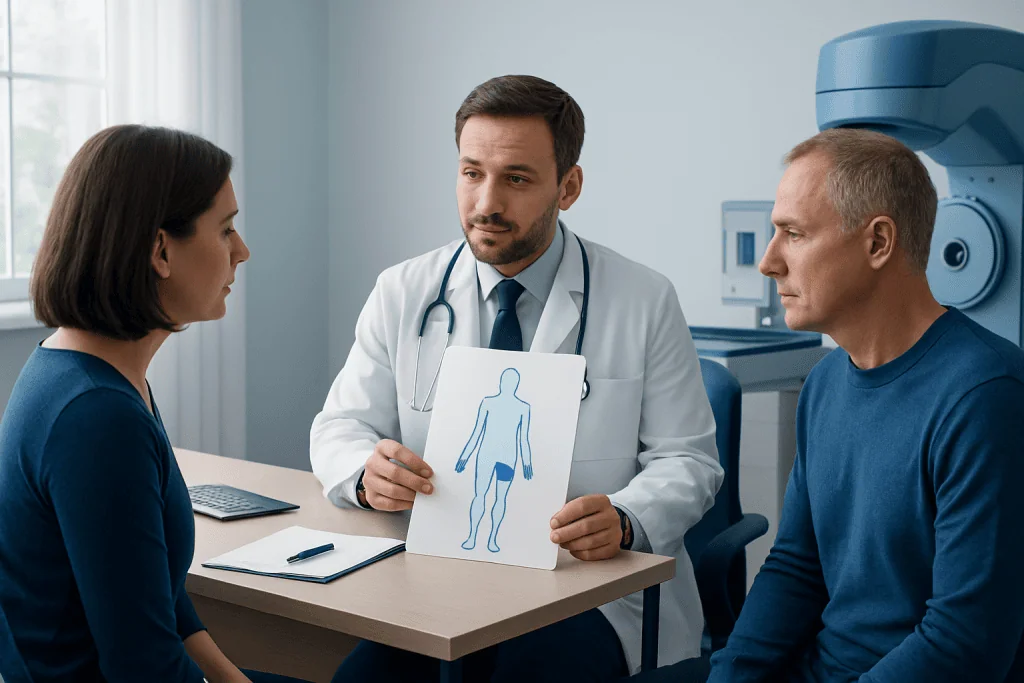
Surgery aims to remove the tumor in one piece with a surrounding rim of normal tissue, known as a surgical margin. The type of operation depends on where the tumor is located. Limb-sparing surgery is possible for many tumors in the arms or legs; reconstructive surgery, including skin, muscle, bone, nerve, or blood-vessel reconstruction, may be used when needed. Amputation is now uncommon but may be considered if it is the safest way to control a tumor that involves critical structures.
Radiotherapy uses carefully directed radiation to damage cancer cells and lower the risk of local recurrence. It may be delivered before surgery to shrink or contain a tumor, or after surgery when there is a concern about microscopic cells remaining. The timing involves trade-offs: preoperative radiotherapy can make surgery easier in some cases but may increase wound-healing problems, while postoperative radiotherapy usually treats a larger area.
Systemic therapy includes chemotherapy and, for some specific subtypes, targeted medicines or immunotherapy. It may be considered before surgery, after surgery in selected higher-risk circumstances, or to control cancer that cannot be removed or has spread. The expected benefit varies substantially by sarcoma subtype, so the medical oncologist explains whether treatment is likely to help in an individual situation.
For patients requiring operative management, sarcoma surgery is planned with attention to tumor control and preservation of mobility or organ function. A treatment plan may also include rehabilitation before surgery, symptom management, nutritional support, and emotional support throughout care.
Who May Be a Candidate for Combined Treatment?
Most people with a confirmed localized spindle cell sarcoma are assessed for surgery. Whether surgery can be performed immediately depends on tumor location and its relationship to nearby nerves, vessels, organs, and bones. A tumor that is close to important structures may still be treatable, sometimes after radiotherapy or systemic therapy has been considered.
Combined treatment is more likely to be discussed for tumors that are large, deep, high-grade, recurrent, or difficult to remove with a clear margin. It can also be considered when local control is especially important, such as a tumor near a joint or in the pelvis, abdomen, chest wall, head, or neck.
Not every person needs chemotherapy, and not every sarcoma responds to the same medicines. People with metastatic disease may still have options, including systemic therapy, surgery or ablation for selected metastatic sites, radiotherapy for symptom control, and clinical trials where appropriate. Treatment remains individualized and may focus on controlling the disease, maintaining function, and managing symptoms.
Recovery Timeline, Benefits and Possible Risks
Recovery depends on the treatment location and intensity. After a small operation, people may return gradually to usual activities over several weeks. Larger operations, reconstruction, or surgery involving an arm or leg can require a longer recovery, often with physiotherapy or occupational therapy to rebuild strength, movement, and independence.
Radiotherapy is usually delivered over several weeks when conventional external-beam treatment is used. Tiredness and skin irritation in the treatment area are common temporary effects. Longer-term effects can include stiffness, swelling, fibrosis, changes in wound healing, or effects on nearby organs, depending on the body area treated. The radiation team plans treatment carefully to limit exposure to healthy tissue.
Surgical risks include bleeding, infection, wound problems, pain, scarring, numbness, reduced movement, and the need for further reconstruction. Systemic therapies may cause fatigue, nausea, lowered blood counts, infection risk, nerve symptoms, or organ-specific effects, depending on the medicine. The care team monitors for complications and offers strategies to reduce or manage them.
The potential benefits of treatment include removing or controlling the tumor, reducing the risk of it returning in the same area, relieving symptoms, and preserving function where possible. Follow-up commonly includes physical examinations and imaging at regular intervals, since early detection of recurrence can expand management options.
Can You Survive Spindle Cell Sarcoma?
Yes. Many people with spindle cell sarcoma can be treated successfully, particularly when the tumor is detected before it has spread and can be completely removed. However, survival cannot be predicted from the phrase “spindle cell sarcoma” alone because it covers different tumor subtypes with different behaviors.
Outlook is influenced by stage, grade, size, location, surgical margins, response to treatment, and whether the cancer has spread. A specialist can discuss prognosis using the complete pathology report and imaging results, while recognizing that population estimates cannot determine an individual person’s outcome.
Regular follow-up is important after treatment because sarcomas can recur locally or at distant sites. Follow-up plans are tailored to the sarcoma subtype and risk level, and may include chest imaging as well as scans of the original tumor site.
How Long Does It Take for Sarcoma to Spread?
There is no fixed timeline for sarcoma to spread. Some low-grade sarcomas grow slowly over years and may remain localized, while certain high-grade sarcomas can grow and spread more quickly over months. The behavior depends on the exact subtype and biology of the tumor, not simply on the presence of spindle-shaped cells.
When soft-tissue sarcomas spread, the lungs are a common site, although spread to other places can occur depending on subtype. Imaging at diagnosis helps determine whether spread is present, and scheduled surveillance after treatment looks for changes early. A scan result should always be interpreted by the clinician in the context of the individual diagnosis.
New or worsening symptoms should be reported promptly, but symptoms alone cannot show whether a sarcoma has spread. Persistent cough, unexplained shortness of breath, new persistent bone pain, or unexplained weight loss merit medical assessment, especially in a person with a history of sarcoma.
How Aggressive Is Spindle Cell Carcinoma and Is Spindle Cell Sarcoma High-Grade Cancer?
Spindle cell carcinoma and spindle cell sarcoma are different conditions. Spindle cell carcinoma is a type of carcinoma, meaning it arises from epithelial cells, and it can occur in sites such as the head and neck, lungs, skin, or other organs. Spindle cell sarcoma arises from connective or supporting tissues. Both require precise pathology because treatment and outlook differ.
Spindle cell carcinoma is often considered an aggressive cancer type in many locations, but its behavior varies according to where it begins, its stage, and the individual tumor characteristics. It should not be assumed to behave the same way as a spindle cell sarcoma. An accurate diagnosis may require specialized stains and molecular tests.
Spindle cell sarcoma is not automatically high-grade cancer. Grade describes how abnormal the cells look and how likely the tumor is to grow or spread, based on features such as cell division and tumor necrosis. A spindle cell sarcoma may be low, intermediate, or high grade. The pathology report provides this information and helps guide treatment intensity.
Acibadem International’s multidisciplinary specialists in JCI-accredited hospitals can assess sarcoma diagnoses and coordinate surgery, radiation treatment, medical oncology care, and rehabilitation for international patients.
When to Seek Medical Care
A new lump should be assessed by a doctor if it is enlarging, is deep beneath the skin, feels firm or fixed, is painful, or measures roughly more than 5 centimeters. A lump does not usually mean cancer, and many are harmless, but early evaluation is important because sarcomas can be difficult to recognize without imaging and biopsy.
People already diagnosed with spindle cell sarcoma should contact their care team for increasing pain, rapid swelling, fever or wound concerns after surgery, treatment side effects that are difficult to manage, or new symptoms that persist. Urgent medical care is appropriate for severe shortness of breath, chest pain, uncontrolled bleeding, signs of a severe infection, or sudden weakness.
It is generally best not to attempt removal of a suspicious deep or enlarging mass before specialist assessment. Referral to a sarcoma-focused team supports appropriate imaging, biopsy planning, and treatment sequencing from the start.
Frequently asked questions
What is spindle cell sarcoma treatment?
Spindle cell sarcoma treatment commonly includes surgery, with radiotherapy and systemic medicines used when indicated. The plan depends on the exact sarcoma subtype, grade, location, size, and stage. A specialist sarcoma team coordinates diagnosis and treatment.
Is surgery always needed for spindle cell sarcoma?
Surgery is often the main treatment for a localized spindle cell sarcoma because it offers the best chance of complete local control. It may not be appropriate if the tumor has spread widely or cannot be removed safely. In those situations, systemic therapy, radiotherapy, or symptom-directed treatments may be used.
Can radiotherapy cure spindle cell sarcoma?
Radiotherapy is commonly used with surgery to improve local control, rather than as the only curative treatment. In selected situations where surgery is not possible, it may be used to control the tumor. Its role depends on the tumor site, size, subtype, and treatment goals.
Does chemotherapy work for spindle cell sarcoma?
Chemotherapy can be useful for some sarcoma subtypes and clinical situations, especially higher-risk or metastatic disease. Its effectiveness varies, so it is not routinely recommended for every person with spindle cell sarcoma. The medical oncology team considers pathology findings and overall treatment goals before recommending it.
How often is follow-up needed after sarcoma treatment?
Follow-up schedules vary according to sarcoma grade, subtype, stage, and the treatments received. Visits commonly include a physical examination and imaging of the original site and chest at planned intervals. Follow-up is usually more frequent in the first years after treatment, when recurrence risk may be higher.
Can spindle cell sarcoma come back after treatment?
Yes, spindle cell sarcoma can recur in the original area or elsewhere in the body, although the risk differs greatly between tumors. Clear surgical margins, tumor grade, size, and subtype influence recurrence risk. Regular surveillance helps the care team identify changes as early as possible.
References
- National Cancer Institute
- American Cancer Society
- European Society for Medical Oncology
- National Comprehensive Cancer Network
- World Health Organization Classification of Tumours
This article is for general information only and is not a substitute for professional medical advice. Please consult a qualified doctor about your individual situation.
Oncology care in Turkey — second opinion and treatment plan
JCI-accredited · board-certified surgeons · reply within 24h
Add us as a Preferred Source to see more of our trusted health content across Google Search, AI Overviews and Discover.