Spondylolisthesis Treatment: How It Works, Results and What to Expect
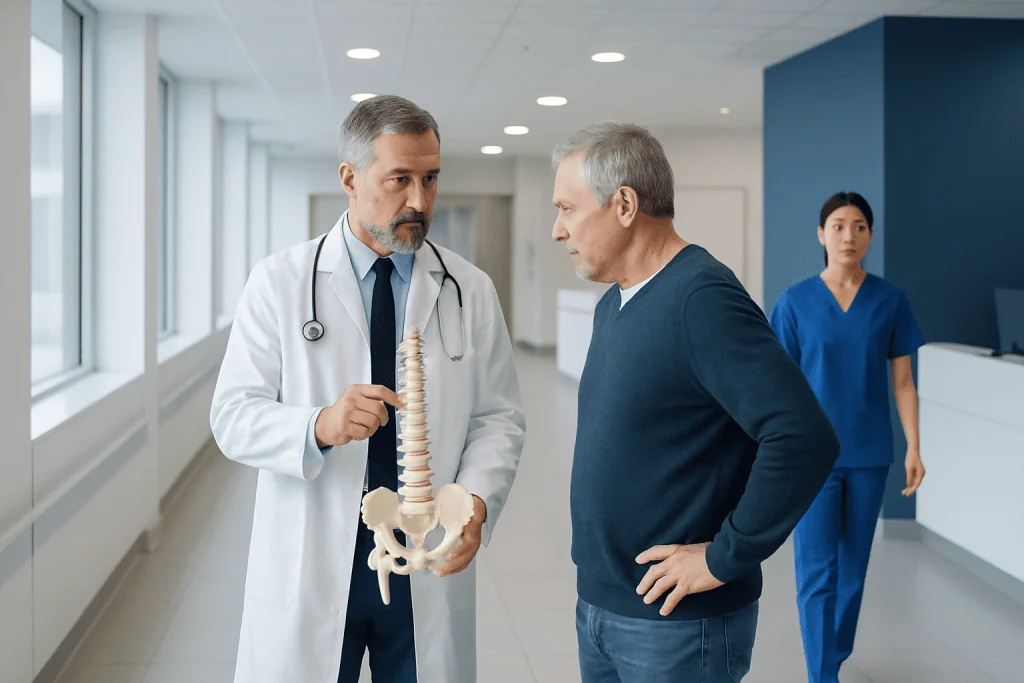
Treatment often begins with activity modification, physiotherapy and pain management. Surgery is not required for every vertebral slip; symptoms and nerve function guide decisions.
Key Takeaways
- Treatment often begins with activity modification, physiotherapy and pain management.
- Surgery is not required for every vertebral slip; symptoms and nerve function guide decisions.
- Spinal fusion may stabilize an unstable segment and decompress affected nerves when needed.
- Recovery after surgery is gradual and commonly includes walking, rehabilitation and follow-up imaging.
- New weakness, loss of bladder or bowel control, or numbness around the groin needs urgent medical assessment.
Spondylolisthesis treatment is tailored to the degree of vertebral slip, symptoms, nerve involvement and the person’s daily activity goals. Many people improve with non-surgical care, while surgery may be considered for persistent pain, progressive slipping or pressure on spinal nerves.
Overview: how spondylolisthesis treatment works
Spondylolisthesis treatment aims to reduce pain, maintain mobility, protect affected nerves and, when necessary, stabilize a vertebra that has moved forward relative to the bone below it. The right approach depends on the cause of the slip, its location and grade, whether nerves are compressed, and how symptoms affect work, sleep, walking and other daily activities.
For many people, care starts without an operation. A clinician may recommend tailored physiotherapy, changes to aggravating activities, medicines for symptom relief when appropriate, and sometimes targeted injections. These measures do not necessarily move the vertebra back into its original position, but they can improve comfort and function by supporting the spine and calming irritated tissues.
When pain remains disabling despite appropriate conservative care, the slip is progressing, or there is significant nerve compression or weakness, surgery may offer a more durable solution. The central surgical goals are nerve decompression, spinal stability and alignment where appropriate.
Understanding grades and symptoms
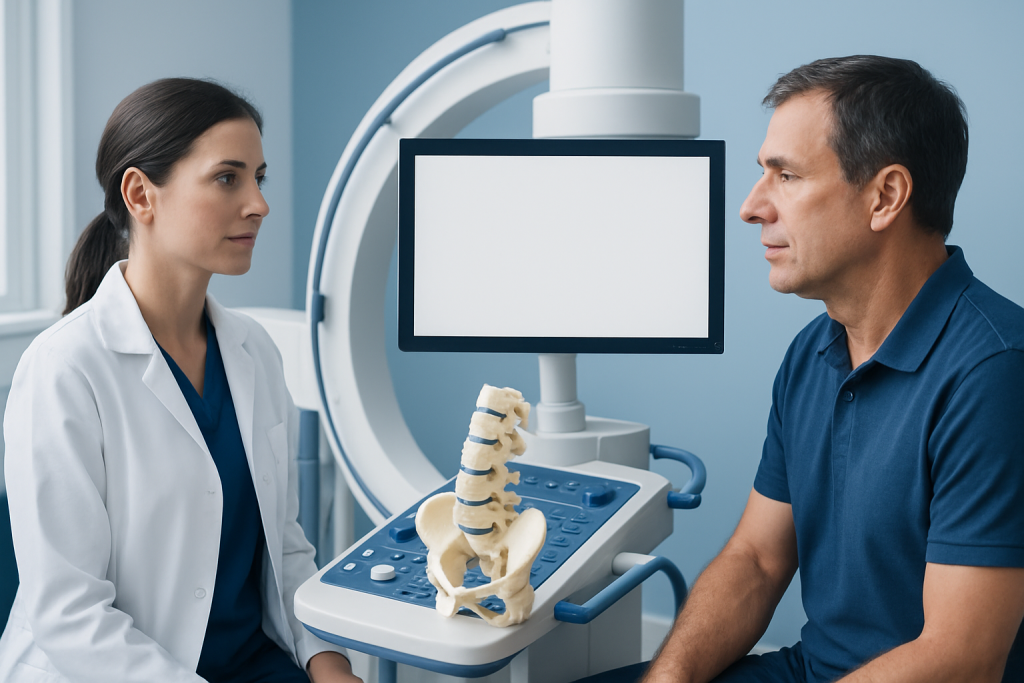
Spondylolisthesis can occur in the lower back, most often at L4-L5 or L5-S1. It may develop from age-related disc and joint changes, a stress-related defect in part of a vertebra, injury, less commonly a congenital difference, or other conditions affecting bone structure. Some slips are found incidentally and cause little or no discomfort.
Possible symptoms include low-back pain, stiffness, pain spreading into a buttock or leg, tingling, numbness, heaviness in the legs or reduced walking tolerance. Symptoms may arise when the movement of one vertebra narrows space for a nerve. A physical examination helps distinguish these features from other causes of back and leg pain, including lumbar spinal stenosis.
Spondylolisthesis is often described by the percentage of forward movement: grade I is less than 25%, grade II is 25% to 50%, grade III is 51% to 75%, grade IV is 76% to 100%, and grade V is a complete forward displacement, also called spondyloptosis. The grade is important, but it is only one part of treatment planning; a low-grade slip can still cause meaningful symptoms, while a higher-grade slip may sometimes be stable.
Assessment and candidacy for treatment

Assessment begins with a history and physical examination. A clinician will ask about the pattern of pain, walking ability, work and sport demands, prior treatments and symptoms such as numbness or weakness. The examination may include testing muscle strength, reflexes, sensation, flexibility, gait and signs that a nerve is under pressure.
Standing X-rays can show the amount of slip, spinal alignment and whether the position changes on bending views. MRI is commonly used when leg symptoms or neurological findings suggest nerve compression. CT may be helpful for detailed bone anatomy, particularly when planning an operation or assessing a pars defect.
People are more likely to be considered for surgery when non-surgical treatment has not provided adequate relief, pain substantially limits quality of life, there is worsening weakness or progressive neurological impairment, or imaging shows instability that matches the symptoms. Decisions are individualized and should include a discussion of general health, bone quality, smoking status, expectations and rehabilitation needs.
Spondylolisthesis procedure: step by step
Not all operations are the same. For some people, surgery focuses on relieving nerve pressure through decompression, which may involve removing part of bone or thickened tissue that is narrowing the spinal canal. If decompression alone could make an already unstable segment less stable, or if instability is an important cause of symptoms, fusion is commonly considered.
In a spinal fusion, the surgeon prepares the affected spinal level so adjacent vertebrae can heal together as one stable unit. Screws and rods may hold the bones in position while fusion develops, and bone graft material supports new bone growth. Depending on anatomy and the surgical plan, the procedure may be performed from the back, the front, the side, or through a combined approach. A disc spacer may also be placed to support disc height and nerve space. This is often referred to as spinal fusion surgery.
Before surgery, the team reviews imaging, medications, anesthesia considerations and medical conditions that may affect healing. During the procedure, the patient receives anesthesia and the surgical team uses imaging and careful neurological techniques to guide treatment. Afterward, monitoring focuses on pain control, movement, wound care, circulation and any change in nerve symptoms.
Benefits, limitations and possible risks
Potential benefits of surgery include improved leg pain caused by nerve compression, better walking tolerance, greater spinal stability and improved ability to take part in daily activities. Back pain may also improve, particularly when it is linked to an unstable painful segment. However, surgery cannot guarantee complete relief of every symptom, and recovery varies with the underlying condition, duration of symptoms, overall health and rehabilitation participation.
Possible risks include bleeding, infection, blood clots, anesthesia-related complications, injury or irritation of a nerve, fluid leakage around spinal nerves, persistent pain, wound problems and the need for additional treatment. Fusion-specific considerations include failure of bone healing, implant problems and increased stress at nearby spinal levels over time. These risks are uncommon for many patients but should be discussed clearly in a personal surgical consultation.
Non-surgical care also has limits. It may control symptoms successfully without correcting the slip, and repeated injections are not suitable for everyone. A spine specialist can help weigh the expected benefit of each option against potential downsides and the person’s preferences.
Recovery timeline and self-care
Recovery begins with early, supported movement. Many patients are encouraged to sit, stand and take short walks soon after surgery when medically appropriate. Length of hospital stay depends on the procedure, general health and early recovery. Pain, fatigue and stiffness are expected initially and are managed with a personalized plan from the surgical and rehabilitation teams.
During the first weeks, activity is usually increased gradually. Instructions often include wound care, safe movement techniques, avoiding heavy lifting or twisting, and taking short, frequent walks. A brace may be advised in selected cases. Driving, work and exercise should be resumed only when the treating clinician confirms that it is safe.
Rehabilitation may begin with gentle mobility and progress toward core, hip and leg strengthening. Fusion healing takes time, often several months, so follow-up visits and imaging are important. Avoiding tobacco and nicotine is particularly important because they can interfere with bone healing. Structured physical therapy and rehabilitation can help rebuild confidence, movement control and functional strength.
When to seek medical care
A person should arrange a medical evaluation for back pain that persists, repeatedly returns, spreads into the leg, or interferes with walking, sleep, work or usual activities. Assessment is also appropriate for tingling, numbness, leg weakness or a noticeable decline in balance or endurance. Early review can clarify whether symptoms are related to spondylolisthesis, disc disease, arthritis or another spinal condition.
Urgent medical care is needed for new or rapidly worsening leg weakness, numbness in the saddle or groin area, or new difficulty controlling the bladder or bowel. These symptoms can indicate serious nerve compression and require prompt assessment.
Acibadem International’s multidisciplinary spine specialists and JCI-accredited hospitals evaluate and treat spinal conditions for international patients, including through coordinated surgical and rehabilitation planning where needed.
Frequently asked questions
Is spondylolisthesis surgery worth it?
Spondylolisthesis surgery may be worthwhile when symptoms remain significantly limiting despite well-planned non-surgical care, or when there is progressive nerve weakness or spinal instability. Its value depends on the individual cause of pain, imaging findings, health status and goals. A spine specialist can explain the likely benefits and risks for the specific spinal level involved.
What is the success rate of L4-L5 spondylolisthesis surgery?
There is no single success rate that applies to every L4-L5 operation because outcomes depend on the type of slip, nerve compression, procedure performed and how success is measured. Many appropriately selected patients experience meaningful improvement in leg symptoms, walking and daily function after decompression with or without fusion. Persistent symptoms or complications can occur, so an individual estimate should come from the treating surgical team.
What are the 5 stages of spondylolisthesis?
The five grades are based on how far one vertebra has slipped forward: grade I is under 25%, grade II is 25% to 50%, grade III is 51% to 75%, grade IV is 76% to 100%, and grade V is complete displacement. Grade V is also called spondyloptosis. Treatment is based on symptoms, stability and nerve function as well as the grade.
Can you fully recover from spondylolisthesis?
Many people recover good function and manage symptoms effectively with physiotherapy, activity adjustments and other non-surgical measures. Surgery can also provide substantial improvement when it is indicated, especially for nerve-related leg symptoms or instability. The vertebral slip itself may not fully return to normal, and recovery should be understood as returning to comfortable, meaningful function rather than a guaranteed complete cure.
Can spondylolisthesis get worse without surgery?
Some slips remain stable for years, especially in adults with low-grade findings. Others may progress or become more symptomatic, particularly when there is instability or ongoing degeneration. Periodic clinical review and imaging may be recommended when symptoms change or progression is a concern.
How long does it take to recover after spondylolisthesis surgery?
Early recovery commonly takes several weeks, while return to more demanding activities may take months. If fusion is performed, bone healing continues over several months and follow-up is needed to confirm progress. The timeline varies according to the surgical approach, number of levels treated, overall health and rehabilitation needs.
References
- American Academy of Orthopaedic Surgeons
- North American Spine Society
- National Institute of Arthritis and Musculoskeletal and Skin Diseases
- National Institute for Health and Care Excellence
This article is for general information only and is not a substitute for professional medical advice. Please consult a qualified doctor about your individual situation.
Joint and spine care in Turkey — expert assessment & treatment
JCI-accredited · board-certified surgeons · reply within 24h
Add us as a Preferred Source to see more of our trusted health content across Google Search, AI Overviews and Discover.