

Sports Injuries: Sprains, Strains, and When to See an Orthopedist
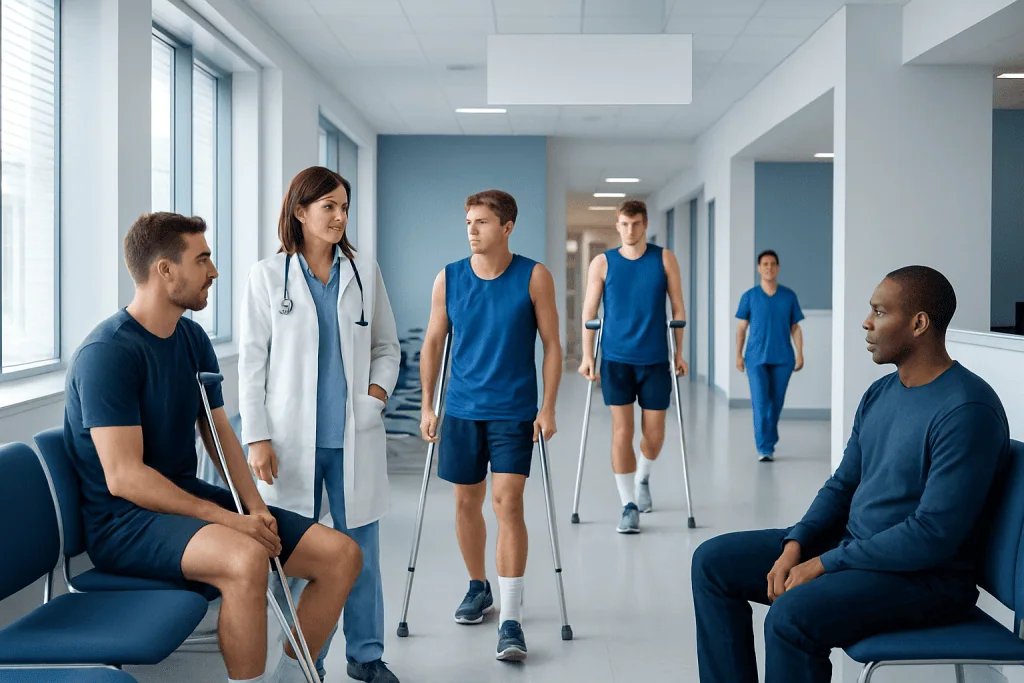
A sprain affects ligaments around a joint, while a strain affects muscles or tendons. Early care usually includes protection, relative rest, ice, compression, elevation, and avoiding painful activity.
Key Takeaways
- A sprain affects ligaments around a joint, while a strain affects muscles or tendons.
- Early care usually includes protection, relative rest, ice, compression, elevation, and avoiding painful activity.
- Severe pain, swelling, deformity, inability to bear weight, numbness, or symptoms that do not improve should be assessed by a doctor.
- Rehabilitation is important because returning to sport too soon can increase the risk of repeated injury.
- Warm-up, strength training, proper technique, suitable equipment, and gradual training progression can reduce the risk of sports injuries.
Sports injuries such as sprains and strains are common in both recreational and competitive athletes, and most improve with early care and proper rehabilitation. Knowing the difference between minor soreness and signs that need orthopedic evaluation helps protect joints, muscles, and long-term performance.
Overview
Sports injuries can happen during organized competition, fitness training, recreational activities, or even a weekend game with friends. Some injuries occur suddenly, such as an ankle twisting during a landing. Others develop gradually when tissues are stressed repeatedly without enough recovery time. Sprains and strains are among the most common sports-related problems, and they can affect people of all ages and activity levels.
A sprain is an injury to a ligament, the strong band of tissue that connects one bone to another and supports a joint. Sprains often occur in the ankle, knee, wrist, or thumb. A strain is an injury to a muscle or tendon, the tissue that connects muscle to bone. Strains commonly affect the hamstring, calf, groin, shoulder, or lower back. Although the terms are sometimes used interchangeably, they describe different tissues and may require different rehabilitation plans.
Many mild sports injuries improve with careful self-care, but some need medical assessment to rule out fracture, tendon rupture, joint instability, or cartilage damage. An orthopedist can evaluate the injury, guide imaging when needed, and recommend treatment ranging from physical therapy to bracing or, less commonly, surgery. Early, appropriate care helps reduce pain, restore movement, and lower the chance of reinjury.
Common Types of Sports Injuries
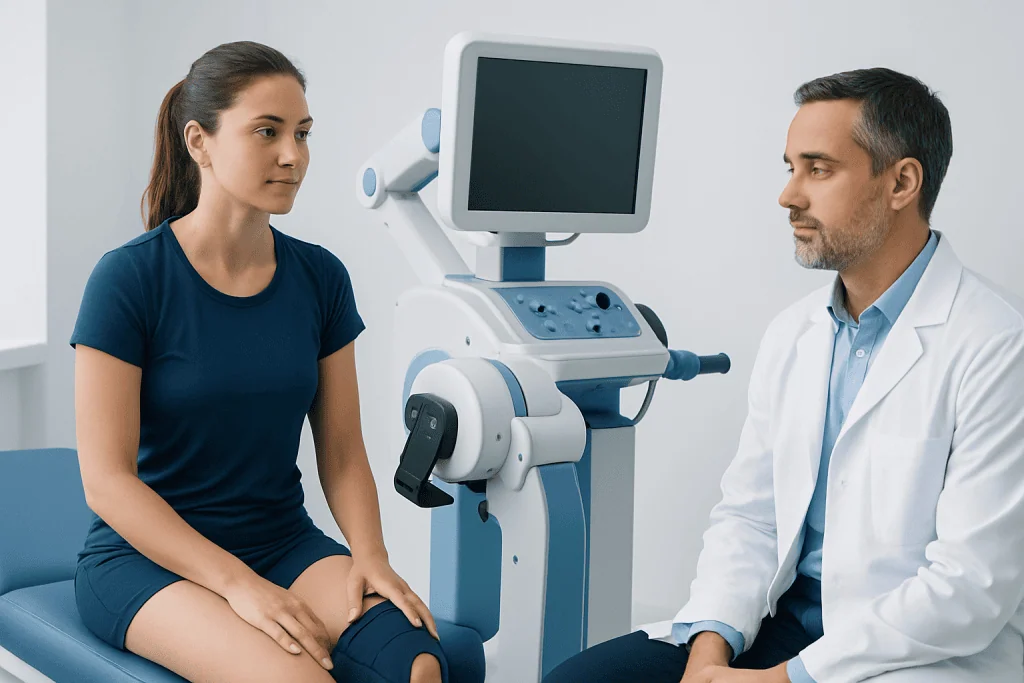
Sprains and strains vary in severity. A mild sprain may involve overstretched ligament fibers with slight tenderness and swelling. A more serious sprain may include a partial or complete ligament tear, causing marked swelling, bruising, instability, and difficulty using the joint. An ankle sprain is one of the best-known examples, but knee ligament sprains and wrist sprains are also frequent in sports.
Muscle strains often occur when a muscle is stretched beyond its capacity or contracts forcefully, especially during sprinting, jumping, kicking, or sudden changes in direction. Hamstring and calf strains are common in running sports, while shoulder and elbow strains may occur in throwing or racquet sports. Tendon injuries can be acute, such as a sudden tear, or overuse-related, such as tendinopathy from repeated loading.
Other sports injuries may look similar to sprains or strains at first. These include fractures, dislocations, meniscus or cartilage injuries, bursitis, stress fractures, and overuse pain syndromes. Because symptoms can overlap, persistent pain or loss of function should not be ignored. A careful clinical examination helps identify the injured structure and the most appropriate next step.
Symptoms: What Sprains and Strains Feel Like
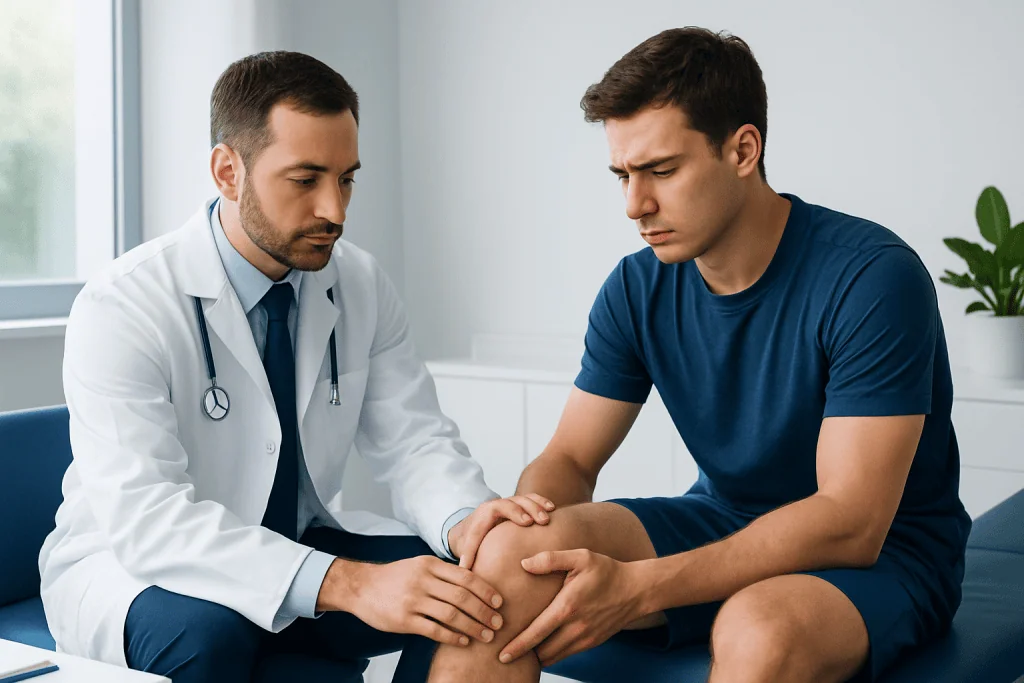
The symptoms of a sports injury depend on the tissue involved and how severe the damage is. Sprains often cause pain around a joint, swelling, bruising, tenderness, reduced range of motion, and a feeling that the joint is weak or unstable. Some people describe a “pop” or tearing sensation at the time of injury, especially with more significant ligament damage.
Strains usually cause pain in the muscle or tendon, stiffness, cramping, weakness, and discomfort when stretching or contracting the affected area. A mild strain may feel like tightness or soreness after activity. A more serious strain may cause sudden sharp pain, visible bruising, swelling, a gap or lump in the muscle, or difficulty walking, lifting, throwing, or continuing the activity.
Signs that may suggest a more serious injury include:
- Severe pain that does not settle with rest
- Rapid swelling or extensive bruising
- Visible deformity or a joint that appears out of place
- Inability to bear weight or use the limb normally
- Numbness, tingling, coldness, or color change in the limb
- Repeated giving way, locking, or catching of a joint
Causes and Risk Factors
Sports injuries may occur because of a single sudden event, such as a fall, collision, awkward landing, or rapid twist. They can also develop when repetitive forces exceed the body’s ability to recover. Overuse injuries are more likely when training volume, speed, intensity, or frequency increases too quickly. This is common when athletes return after a break or prepare for an event without gradual conditioning.
Several factors can raise the risk of sprains and strains. These include poor warm-up, reduced flexibility, muscle weakness or imbalance, fatigue, previous injury, inadequate recovery, incorrect technique, unsuitable footwear, and playing surfaces that are slippery, uneven, or too hard. In children and adolescents, growth-related changes can affect coordination and tendon or growth plate stress, so persistent pain should be assessed carefully.
Sports-specific demands also matter. Pivoting sports such as football, basketball, tennis, and skiing place higher loads on the ankle and knee ligaments. Sprinting sports increase the risk of hamstring and calf strains. Throwing, swimming, and racquet sports can stress the shoulder and elbow. Understanding the movement pattern that caused the injury helps clinicians and physiotherapists design safer return-to-sport plans.
First Aid and Early Self-Care
In the first day or two after a suspected sprain or strain, the goal is to protect the injured area, reduce pain and swelling, and avoid making the injury worse. A commonly used approach is protection, relative rest, ice, compression, and elevation. “Relative rest” means avoiding painful activities while maintaining gentle, safe movement when possible. Complete immobilization is not always needed for mild injuries and may delay recovery if used too long.
Ice can help with pain in the early stage. It should be wrapped in a cloth and applied for short periods rather than directly on the skin. Compression with an elastic bandage or supportive sleeve may reduce swelling, but it should not be tight enough to cause numbness, tingling, or color change. Elevating the injured limb above heart level when resting can also help limit swelling.
People should avoid returning to sport while pain, limping, swelling, or weakness is still present. Pain-relief medicines may be helpful for some patients, but they are not suitable for everyone, especially those with certain stomach, kidney, heart, bleeding, or medication-related risks. A pharmacist or doctor can advise on safe options. If symptoms are significant, uncertain, or not improving, medical evaluation is the safest choice.
Diagnosis: How an Orthopedist Evaluates a Sports Injury
Diagnosis begins with a detailed history of how the injury happened, what the athlete felt at the time, and what symptoms developed afterward. The doctor may ask about previous injuries, training changes, footwear, playing surface, and the patient’s sport goals. This information helps distinguish between an acute injury, an overuse problem, and pain related to another condition.
The physical examination usually includes checking swelling, bruising, tenderness, joint alignment, range of motion, strength, nerve and blood flow, and specific ligament or tendon tests. For example, ankle stability tests may help identify ligament injury, while knee tests may suggest meniscus or cruciate ligament involvement. Comparison with the uninjured side is often useful.
Imaging is not required for every sports injury, but it can be important when a fracture, dislocation, tendon tear, or internal joint injury is suspected. X-rays are commonly used to assess bones and joint alignment. Ultrasound may help evaluate some tendon and muscle injuries. MRI provides detailed images of ligaments, tendons, cartilage, muscles, and bone stress injuries. The choice depends on the symptoms, examination findings, and the treatment decisions being considered.
Treatment Options and Return to Sport
Treatment depends on the type and severity of the injury, the patient’s age and health, and the demands of the sport. Mild sprains and strains are often treated with activity modification, supportive taping or bracing, pain control, and a structured exercise program. Physical therapy may include mobility work, progressive strengthening, balance training, sport-specific movement practice, and education about load management.
Moderate injuries may need a longer rehabilitation period and temporary protection with a brace, boot, splint, or crutches. More serious injuries, such as complete ligament tears, large tendon tears, displaced fractures, or unstable joints, may require specialist management and sometimes surgery. Surgery is not the standard for every sports injury, but it may be considered when non-surgical treatment cannot restore stability, function, or safe return to activity.
Return to sport should be based on function, not only on the calendar. The athlete should generally have minimal or no pain, near-normal range of motion, adequate strength, good balance and coordination, and the ability to perform sport-specific movements without compensation. Returning too early can increase the risk of reinjury, which may lead to longer recovery. A gradual plan, supervised when needed, is often the best way to rebuild confidence and performance.
Prevention, Self-Care, and When to See a Doctor
Not all sports injuries can be prevented, but many risks can be reduced. A good prevention plan includes warming up before activity, building strength and flexibility, practicing correct technique, increasing training load gradually, and allowing enough recovery between sessions. Footwear and equipment should fit well and match the sport. Athletes should also pay attention to early warning signs such as persistent soreness, reduced performance, or pain that changes movement patterns.
Medical care is recommended immediately after a sports injury if there is severe pain, obvious deformity, inability to stand or use the limb, suspected dislocation, numbness, open wound, or rapidly increasing swelling. An orthopedist should also be consulted if pain lasts more than a few days, swelling does not improve, the joint feels unstable, there is repeated injury in the same area, or the athlete cannot return to normal daily activities.
For international patients seeking evaluation, Acibadem International’s multidisciplinary specialists and JCI-accredited hospitals diagnose and treat orthopedic and sports-related injuries, including sprains, strains, ligament injuries, tendon problems, and rehabilitation needs. Any patient with ongoing symptoms should consult a qualified healthcare professional for an individualized diagnosis and treatment plan.
Frequently asked questions
What is the difference between a sprain and a strain?
A sprain is an injury to a ligament, which connects bones and supports a joint. A strain is an injury to a muscle or tendon, which connects muscle to bone. Both can cause pain, swelling, and reduced movement, but they involve different tissues.
Can a mild sports injury be treated at home?
Many mild sprains and strains improve with protection, relative rest, ice, compression, elevation, and a gradual return to activity. However, symptoms should steadily improve over the first few days. If pain, swelling, weakness, or difficulty using the limb persists, a medical evaluation is recommended.
When should someone see an orthopedist after a sports injury?
An orthopedist should be consulted for severe pain, major swelling, deformity, inability to bear weight, numbness, instability, or suspected fracture or dislocation. Evaluation is also helpful when symptoms do not improve as expected or when an athlete wants guidance for safe return to sport.
Is swelling always a sign of a serious injury?
Swelling is common after sprains, strains, bruises, and overuse injuries, and it does not always mean the injury is severe. Rapid swelling, swelling with severe pain, or swelling that limits movement may suggest a more significant injury. A doctor can assess whether imaging or specialist care is needed.
How long does it take to recover from a sprain or strain?
Recovery time varies depending on the injured tissue, severity, age, general health, and how well rehabilitation is followed. Mild injuries may improve within days to a few weeks, while moderate or severe injuries can take much longer. A clinician can provide a more accurate estimate after examination.
Should an athlete stretch immediately after a muscle strain?
Aggressive stretching immediately after a strain can sometimes worsen pain or tissue irritation. In the early stage, the priority is protection and gentle, pain-free movement. Stretching and strengthening are usually introduced gradually as part of rehabilitation.
How can repeat sports injuries be prevented?
Prevention focuses on correcting the factors that contributed to the first injury. This may include strength training, balance exercises, technique correction, better footwear, load management, and adequate recovery. Returning to sport only when movement, strength, and confidence have recovered is also important.
References
- American Academy of Orthopaedic Surgeons
- Mayo Clinic
- National Institute of Arthritis and Musculoskeletal and Skin Diseases
- NHS
- World Health Organization
This article is for general information only and is not a substitute for professional medical advice. Please consult a qualified doctor about your individual situation.
Joint and spine care in Turkey — expert assessment & treatment
JCI-accredited · board-certified surgeons · reply within 24h
Add us as a Preferred Source to see more of our trusted health content across Google Search, AI Overviews and Discover.

Orthopedics & Spine
Care for bones, joints and the musculoskeletal system, including joint replacement, sports injuries and trauma.
125 specialists in this unitMore from the Health Library



Related Specialists

Assoc. Prof. Dr. Ahmet Küçükçelebi
Aesthetic Plastic & Reconstructive Surgery
Prof. Dr. Sabahattin Kaymakoğlu
Gastroenterology
Prof. Dr. Erdal Okur
Thoracic Surgery
Prof. Dr. Fevzi Toraman
Anesthesiology