Spot Vision Screening: How It Works, Results and What to Expect
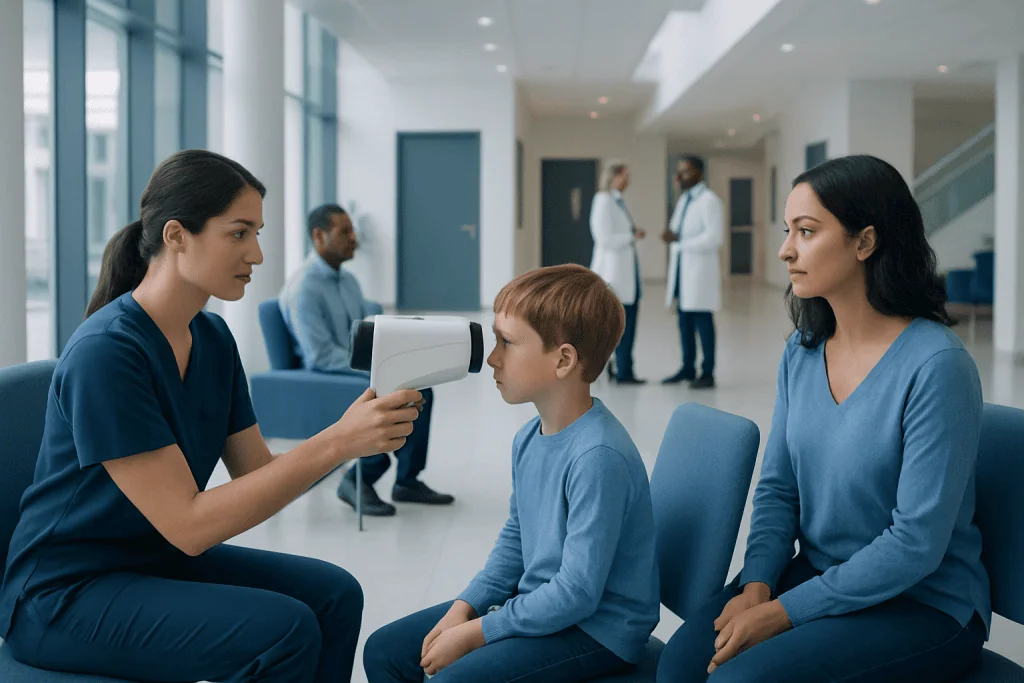
Spot vision screening is non-contact, painless and usually takes only a few seconds. It estimates refractive errors such as nearsightedness, farsightedness and astigmatism, and may flag unequal refractive error or eye alignment concerns.
Key Takeaways
- Spot vision screening is non-contact, painless and usually takes only a few seconds.
- It estimates refractive errors such as nearsightedness, farsightedness and astigmatism, and may flag unequal refractive error or eye alignment concerns.
- A referral result does not confirm disease; it means a full eye examination is recommended.
- The test is particularly useful for young children who may not yet be able to read an eye chart.
- No recovery time is needed, and normal activities can resume immediately after screening.
Spot vision screening is a fast, camera-based eye screening test that looks for risk factors for vision problems, including refractive errors and some alignment concerns. It does not diagnose an eye condition, but it can identify people who may benefit from a comprehensive eye examination.
Overview: what is spot vision screening?
Spot vision screening is a quick, automated method of checking for risk factors that can affect visual development or clear vision. A handheld device, often called a Spot Vision Screener, uses light and a camera to assess how light reflects from the eyes. It is commonly used in children, including those who are too young to reliably participate in a letter-chart vision test.
The screening can estimate refractive errors, such as nearsightedness, farsightedness and astigmatism. It may also identify differences in refractive error between the eyes, irregular pupil size, and possible eye alignment concerns. These findings can be associated with amblyopia, sometimes called “lazy eye,” if they are not assessed and managed appropriately during childhood.
A screening result is not a diagnosis and does not replace a detailed examination by an ophthalmologist or optometrist. Rather, it helps determine whether a person should have further assessment. This distinction is important because some eye conditions require additional testing, examination of the eye structures and evaluation of visual function.
How spot vision screening works
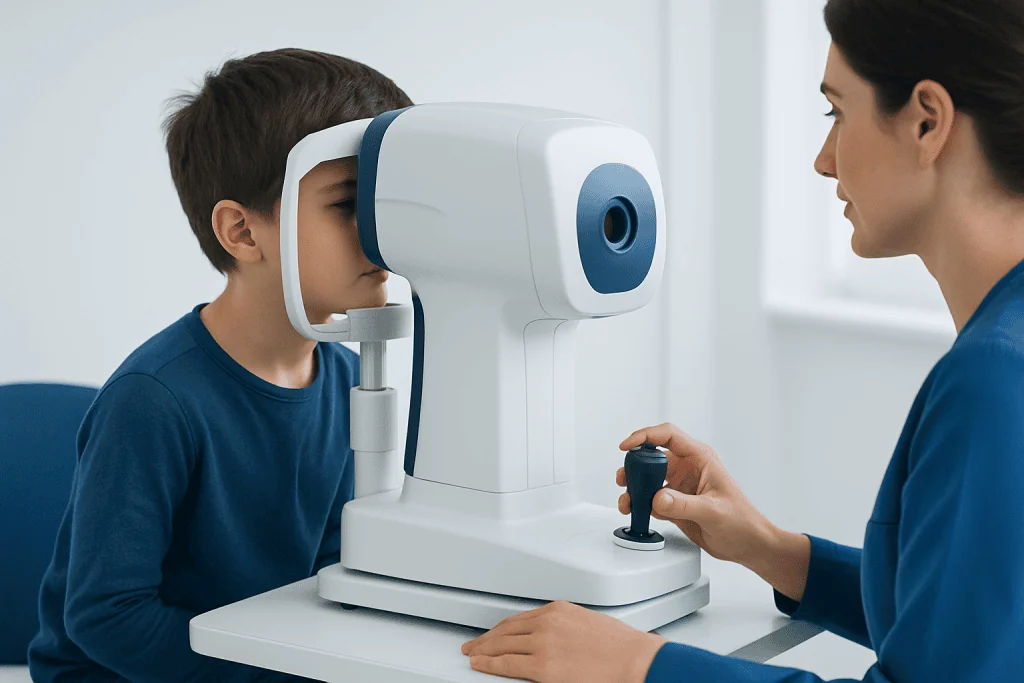
During spot vision screening, the individual looks toward the device from a short distance, usually about one metre away. The device displays lights, sounds or visual targets to encourage attention, especially for infants and young children. It takes images of the eyes and analyzes the reflection of light from each pupil.
The device uses this information to estimate the eye’s refractive status and assess selected features of the pupils and eye position. It can screen both eyes at the same time, which helps it identify meaningful differences between the two eyes. Results are generally available immediately on the device display or a printed report.
Because it is objective and does not depend on reading letters, the test can be useful from around 6 months of age in appropriate settings. However, a child’s ability to look at the device, lighting conditions, movement and factors such as glasses or unusually small pupils can sometimes affect whether the screening is completed successfully.
Spot vision screening is one part of routine eye-health care. It may be combined with age-appropriate visual acuity testing, a review of symptoms and family history, and a physical examination of the eyes.
Who may benefit and what happens during the procedure
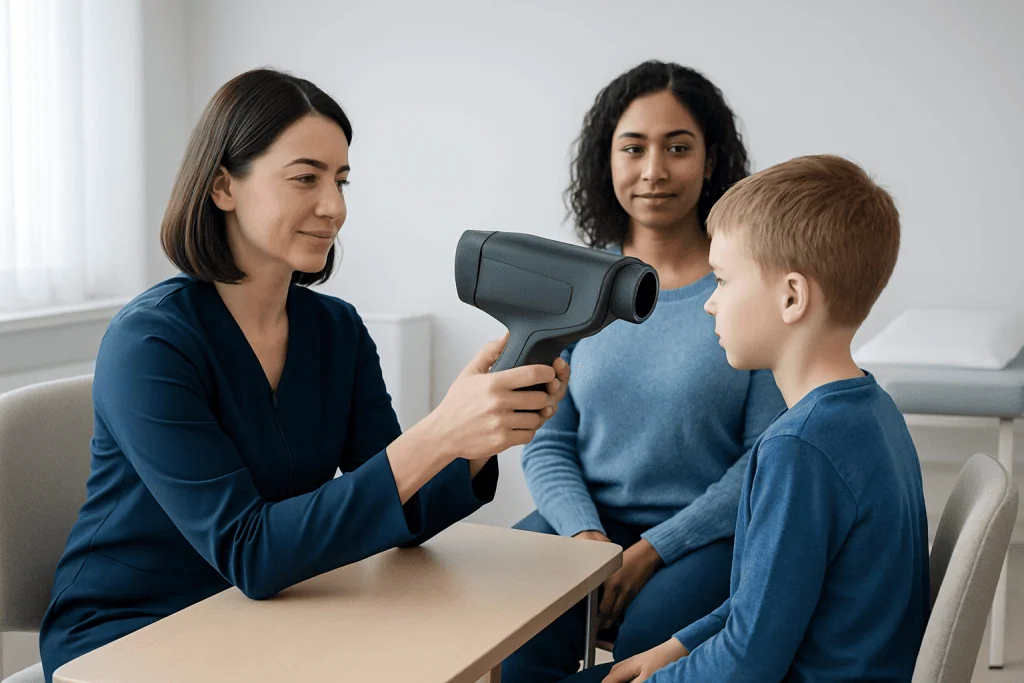
Spot vision screening is most often used for infants, toddlers, preschool-age children and children with developmental or communication differences who may find conventional vision charts difficult. Older children and adults may also be screened, but they usually need standard visual acuity testing and, when indicated, a comprehensive eye examination.
It may be especially helpful when there is a family history of childhood eye problems, a visible eye turn, concern about delayed visual development, premature birth, neurological conditions or difficulty cooperating with routine chart-based screening. Children often do not report blurry vision because they may not realize that their vision differs from others’.
The procedure is simple. The clinician checks that the person is positioned at the appropriate distance, asks them to look at the device, and captures the measurement when both eyes are visible. The scan itself takes seconds, although several attempts may be needed if the child looks away, blinks frequently or is unsettled.
No eye drops, needles, touching of the eye or radiation are involved. Glasses may be left on or removed depending on the reason for screening and the clinician’s protocol. Contact lenses should be mentioned to the clinician, as they may influence the purpose and interpretation of the assessment.
How to interpret spot vision screening results?
Spot vision screening results are usually reported as either “complete” or “unable to obtain,” followed by an indication such as “all measurements in range” or “complete eye exam recommended.” A result within the device’s screening range means no selected risk factor exceeded its programmed referral thresholds at that time. It does not guarantee perfect vision or rule out every eye condition.
A recommendation for a complete eye examination means the device detected a measurement that may need closer evaluation. For example, it may estimate a refractive error above the referral threshold, a meaningful difference between the eyes, or a possible alignment or pupil-related concern. The report may list estimated values, but these are screening estimates rather than a final prescription.
An “unable to obtain” result does not necessarily indicate an eye problem. It can occur when a child is moving, not looking toward the target, crying, has reflections from glasses, or when environmental conditions interfere with the scan. Repeating the screening or arranging an eye examination may be appropriate depending on the child’s age, symptoms and clinical context.
If screening suggests follow-up, a pediatric ophthalmologist or eye-care professional can perform a complete assessment. This may include vision testing, alignment checks and refraction after dilating eye drops, which is the most reliable way to measure refractive error in many children.
What is a failed vision screening score?
There is no single universal “failed vision screening score.” In spot vision screening, a referral result generally means one or more measurements exceeded the screening device’s age-based referral criteria. These criteria are designed to find risk factors for reduced vision development, rather than to provide a diagnosis or a definitive glasses prescription.
Depending on the person’s age and the device settings, referral may be related to estimated nearsightedness, farsightedness, astigmatism, unequal refractive error between the eyes, possible eye misalignment, or selected pupil findings. Thresholds can differ by age because some refractive error is normal in early childhood and because the risks for visual development change as a child grows.
A failed or referred screen should be treated as a reason to arrange professional follow-up, not as proof that a child has a serious condition. Many children referred after screening have treatable refractive errors, while others have normal findings on the detailed examination. Timely assessment helps ensure that clinically important problems are not missed.
How accurate is a Spot Vision Screener?
A Spot Vision Screener can be a useful and well-studied tool for identifying children who may have amblyopia risk factors or other concerns needing an eye examination. Its accuracy depends on the child’s age, cooperation, the referral criteria being used, the setting and the specific condition being screened for. Like all screening tests, it can produce false-positive and false-negative results.
In practical terms, a referral result can occur in someone whose comprehensive examination later finds no clinically significant problem. Conversely, a result within range cannot exclude conditions that the device is not designed to detect, including some retinal, optic nerve or eye-health disorders. This is why routine clinical care and attention to symptoms remain important.
The test is most valuable when used as part of an organized vision-screening program with clear follow-up pathways. A comprehensive examination remains the standard for confirming refractive error, diagnosing strabismus or amblyopia, and deciding whether treatment such as glasses, patching or other care is needed.
Where a detailed assessment is recommended, a comprehensive eye examination can clarify the findings and support an individualized care plan.
What should you not do before a visual field test?
A visual field test is different from spot vision screening. It measures how well a person sees in central and peripheral areas while looking straight ahead, and it is often used in the assessment and monitoring of glaucoma and some neurological or retinal conditions. It requires sustained attention and responses to light targets, unlike the brief camera-based spot screening process.
Before a visual field test, people should generally avoid arriving overly tired, rushed or distracted, as fatigue can affect concentration and reliability. They should bring their usual glasses for distance or near vision if instructed, and should tell the clinical team about eye drops, medicines, recent eye procedures and any difficulty maintaining attention or positioning.
It is usually best not to stop prescribed medicines or alter normal eye-drop use unless a doctor has given specific instructions. Alcohol or other substances that impair alertness should be avoided before testing. If a person is unwell, has a severe headache, or cannot comfortably keep the eye open, rescheduling may provide a more reliable result.
Visual field testing may be included in assessment for conditions such as glaucoma, but the choice and timing of tests should be guided by an eye-care professional.
Benefits, risks, aftercare and when to seek medical care
The main benefits of spot vision screening are speed, comfort and the ability to screen people who cannot yet read an eye chart. Identifying possible refractive errors or alignment concerns early can allow appropriate evaluation during key stages of visual development. The test is non-invasive and does not use radiation, so there is no recovery period and no specific aftercare.
There are no known physical risks from the screening itself. Its main limitation is that it is a screening tool rather than a diagnostic examination. A child may need repeat screening or referral because of an incomplete scan, and a referral can cause understandable worry even when later testing is reassuring.
Medical review should be arranged promptly if there is a persistent eye turn, a white or unusual pupil reflection in photographs, unequal pupils, eyelid drooping, eye pain, redness with light sensitivity, sudden change in vision, new double vision, or a child who consistently squints, covers one eye or holds objects very close. Sudden vision loss or severe eye pain requires urgent medical care.
Acibadem International’s multidisciplinary specialists and JCI-accredited hospitals can assess vision concerns and arrange appropriate ophthalmology care for international patients. A full evaluation may help identify conditions such as amblyopia or refractive errors and discuss suitable next steps.
Frequently asked questions
Is spot vision screening painful?
No. Spot vision screening is non-contact and painless. The person simply looks toward a handheld device while it takes a brief measurement of light reflections from the eyes.
Can spot vision screening detect the need for glasses?
It can identify estimated refractive errors that may indicate a need for further assessment. However, it does not provide a final glasses prescription. A comprehensive eye examination is needed to confirm refractive error and determine whether glasses are appropriate.
At what age can a child have spot vision screening?
Spot vision screening may be used from around 6 months of age, depending on local screening practices and the device instructions. It is particularly helpful for young children who cannot reliably complete an eye-chart test. A clinician can advise which type of screening is suitable for the child’s age.
What does “complete eye exam recommended” mean on a Spot Vision Screener?
It means that one or more measurements met the device’s referral criteria. It does not confirm an eye disease or vision loss. A qualified eye-care professional should assess the result with a full examination.
Should a child wear glasses during spot vision screening?
The clinician may ask the child to keep glasses on or remove them, depending on whether the goal is to screen vision with correction or assess underlying refractive risk. Parents should bring the child’s current glasses and share the prescription if available. Contact lens use should also be discussed before testing.
What happens after an unsuccessful spot vision screening?
If the device cannot obtain a result, the clinician may repeat the test when the child is calmer or better able to look toward the target. If results remain unavailable, or if there are symptoms or risk factors, referral for a comprehensive eye examination may be recommended. An unsuccessful scan alone does not diagnose an eye problem.
References
- American Academy of Ophthalmology
- American Academy of Pediatrics
- American Association for Pediatric Ophthalmology and Strabismus
- U.S. Food and Drug Administration
- World Health Organization
This article is for general information only and is not a substitute for professional medical advice. Please consult a qualified doctor about your individual situation.
Explore treatments in Turkey — costs, top hospitals & a free quote
JCI-accredited · board-certified surgeons · reply within 24h
Add us as a Preferred Source to see more of our trusted health content across Google Search, AI Overviews and Discover.