Spotting But No Period Explained: Causes, Management, and When to See a Doctor

Spotting is usually lighter than a period and may appear pink, red, or brown. Pregnancy, including early pregnancy loss or ectopic pregnancy, is an important cause to rule out when a period is late.
Key Takeaways
- Spotting is usually lighter than a period and may appear pink, red, or brown.
- Pregnancy, including early pregnancy loss or ectopic pregnancy, is an important cause to rule out when a period is late.
- Hormonal contraception, stress, weight changes, and conditions affecting ovulation can also cause spotting.
- A pregnancy test, symptom history, examination, and sometimes blood tests or ultrasound can help identify the cause.
- Urgent care is important for severe pain, heavy bleeding, fainting, shoulder pain, or a positive pregnancy test with bleeding.
Spotting but no period is light vaginal bleeding that occurs when a usual menstrual period does not arrive or is much lighter than expected. It is often linked to hormonal changes or contraception, but pregnancy should be considered and certain symptoms require prompt medical assessment.
Spotting but no period: what it can mean
Spotting but no period means there is light vaginal bleeding around the time a menstrual period is expected, but the usual flow does not begin. The bleeding may be visible only when wiping, leave small marks on underwear, or require a panty liner rather than a pad or tampon. It can be pink, bright red, dark red, or brown; brown spotting often reflects a small amount of older blood leaving the uterus.
This pattern can occur for many reasons. A late or unusually light period may follow temporary changes in hormones, stress, illness, travel, changes in weight, intensive exercise, or use of hormonal birth control. Pregnancy is also a possible explanation whenever there has been vaginal sex that could lead to pregnancy, even if contraception was used.
Spotting alone does not identify the cause. Timing in the menstrual cycle, pregnancy possibility, other symptoms, medications, and a person’s usual bleeding pattern all matter. Most causes are not dangerous, but new, recurrent, or unexplained bleeding deserves attention, particularly after menopause or during pregnancy.
How spotting differs from a menstrual period
A menstrual period occurs when the uterine lining is shed after hormone levels change at the end of a cycle. It usually lasts several days and produces a flow that is greater than a few drops of blood. Periods vary substantially between individuals, and flow can naturally be lighter or heavier from one cycle to another.
Spotting is generally intermittent and lighter than a typical period. It may last hours or a few days, and it often does not contain the usual amount of menstrual tissue or clots. However, the distinction is not always clear: some people have naturally very light periods, and early pregnancy bleeding can occasionally be mistaken for a light period.
Keeping a brief record can be useful. Note the first day of the last normal period, days of spotting, colour and amount of blood, pain, vaginal discharge, contraception, medicines, and pregnancy test results. This information helps a clinician assess whether the bleeding fits a normal cycle variation or needs further investigation.
Common causes of spotting without a period

Pregnancy should be considered first when a period is late. Some people have light bleeding in early pregnancy, sometimes around the time an embryo attaches to the uterine lining. Bleeding can also occur for other pregnancy-related reasons, including changes in the cervix, early pregnancy loss, or an ectopic pregnancy, in which a pregnancy develops outside the uterus. Bleeding in pregnancy should be discussed with a healthcare professional.
Changes in ovulation are another common explanation. Stress, acute illness, disrupted sleep, major changes in eating or activity, breastfeeding, and the transition toward menopause can affect the hormones that regulate the menstrual cycle. If ovulation occurs later than usual or does not occur, a period may be delayed, absent, or preceded by irregular spotting.
Hormonal methods of contraception, including pills, implants, injections, hormonal intrauterine devices, and emergency contraception, may cause breakthrough spotting, especially during the first months of use or if pills are missed. Starting, stopping, or changing hormonal medication can also alter bleeding patterns. Spotting may occur after sex if the cervix is irritated or if there is vaginal dryness.
Less commonly, spotting may be associated with polycystic ovary syndrome, thyroid conditions, uterine fibroids or polyps, cervical changes, pelvic infections, or certain medicines such as anticoagulants. In people who have reached menopause, any vaginal bleeding should be assessed because it is not considered a normal menstrual change.
Symptoms that may help narrow down the cause
The timing of spotting can provide useful clues, although it cannot confirm a diagnosis. Mid-cycle spotting may happen near ovulation. Spotting shortly after starting contraception may be breakthrough bleeding. A late period with breast tenderness, nausea, fatigue, or increased urination can occur in pregnancy, but these symptoms can also overlap with premenstrual hormonal changes.
Pelvic pain, fever, unusual discharge, itching, burning when urinating, or pain during sex may suggest an infection or another gynecological condition. Abnormal discharge may be yellow, green, gray, or have a strong odour, although discharge alone does not always mean infection. Sexually transmitted infections can sometimes cause bleeding after sex or between periods and may have few symptoms.
One-sided lower abdominal pain, worsening pelvic pain, dizziness, fainting, shoulder-tip pain, or heavy bleeding are not symptoms to monitor at home when pregnancy is possible. They can be warning signs of ectopic pregnancy or significant bleeding and need urgent evaluation. A person should not rely on the amount of bleeding alone to judge whether a pregnancy-related problem is serious.
How doctors evaluate spotting and a missed period
A clinician will usually begin by asking about menstrual history, the date of the last normal period, pregnancy possibility, contraception, recent life changes, medicines, and symptoms. They may also ask about previous pregnancies, sexual health, medical conditions, and family history. This conversation helps guide testing and avoids making assumptions based on bleeding alone.
A urine or blood pregnancy test is commonly the first step if pregnancy is possible. Home urine tests are generally most reliable after a missed period, but testing too early can produce a negative result. If the test is negative and the period still does not arrive, repeating the test after a few days or following a clinician’s advice may be appropriate.
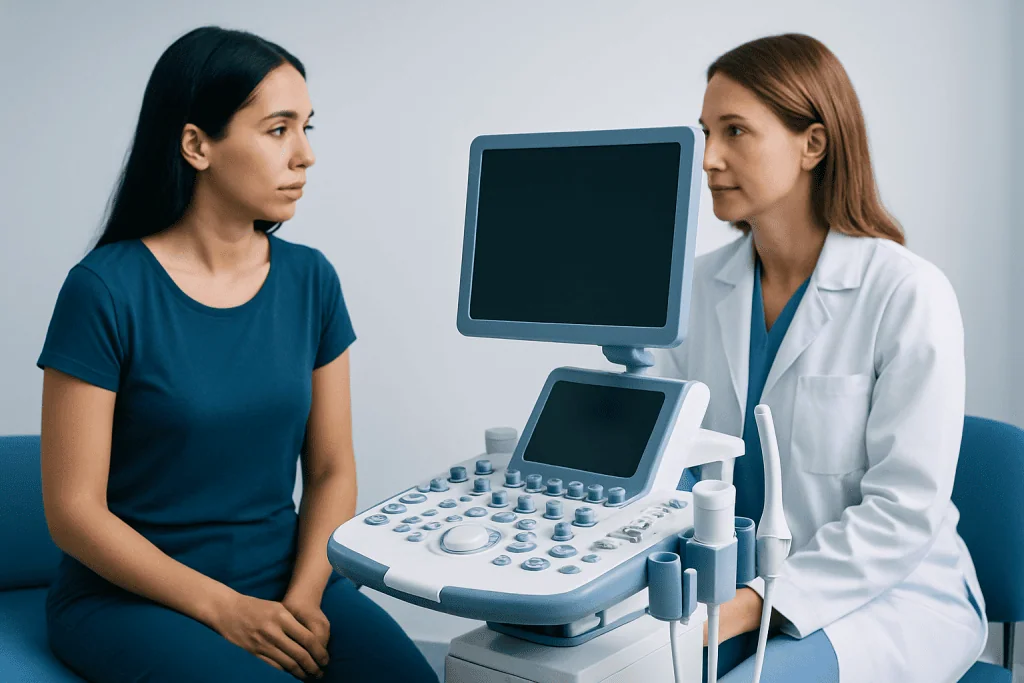
Depending on the situation, assessment may include a pelvic examination, testing for infections, blood tests for anemia or hormone-related conditions, and a pelvic ultrasound. An ultrasound can help assess the uterus and ovaries and, when pregnancy is confirmed, help determine whether the pregnancy is in the uterus. Cervical screening is considered according to local recommendations and an individual’s screening history.
Management and practical self-care
Management depends on the underlying cause. A temporary hormonal disruption may settle without treatment, while a contraceptive-related bleeding pattern may improve as the body adjusts. A clinician may review whether a method is being used correctly, discuss alternatives if bleeding remains troublesome, or investigate other causes before changing contraception.
When pregnancy is possible, taking a home pregnancy test is a sensible first step. If the result is positive, or unclear, medical advice is important, especially if bleeding continues or there is pain. Do not stop prescribed medication solely because of spotting without checking with the clinician who prescribed it; some medicines need careful adjustment or substitution.
It may help to track bleeding and symptoms, use pads or panty liners to estimate flow, rest if feeling unwell, and maintain regular meals and hydration. Avoid douching or using vaginal products marketed to “cleanse” the vagina, as these can cause irritation and disrupt the natural vaginal environment. Condoms can reduce the risk of many sexually transmitted infections when used correctly and consistently.
For persistent irregular cycles, clinicians may assess conditions that affect ovulation or the uterus and offer individualized care. Acibadem International’s multidisciplinary specialists and JCI-accredited hospitals can assess menstrual concerns and related gynecological conditions for international patients.
When to seek medical care
Contact a doctor or women’s health clinician soon if spotting lasts more than a few days, keeps returning, happens after sex, occurs with pelvic discomfort or unusual discharge, or is a new change in a previously predictable cycle. An appointment is also appropriate if periods are repeatedly missed, if there is concern about a hormonal condition, or if contraception is causing unacceptable bleeding.
Seek urgent medical care if there is a positive pregnancy test together with vaginal bleeding, especially with abdominal or pelvic pain. Emergency assessment is also needed for severe or one-sided pain, fainting, dizziness, shoulder-tip pain, fever with worsening pelvic pain, or bleeding that becomes heavy enough to soak through pads quickly. These symptoms can have several causes and should be assessed promptly.
Anyone who has gone through menopause should arrange medical evaluation for any vaginal spotting or bleeding, even if it happens once and stops. Although there are often non-serious explanations, postmenopausal bleeding requires assessment to identify the cause.
Frequently asked questions
Can spotting but no period mean pregnancy?
Yes. Light bleeding can occur in early pregnancy, and it may be mistaken for a very light period. Anyone with a late period and possible pregnancy should take a pregnancy test and seek medical advice if the test is positive, bleeding persists, or pain develops.
How long should someone wait before taking a pregnancy test?
Home pregnancy tests are generally most reliable from the first day of a missed period, although timing varies by test and cycle length. If a test is negative but pregnancy is still possible and the period does not start, repeating it after a few days or contacting a clinician is reasonable.
Can stress cause spotting and a missed period?
Stress can influence the hormonal signals involved in ovulation and may lead to a delayed, missed, lighter, or irregular period. However, stress should not automatically be assumed to be the cause, particularly when pregnancy is possible or bleeding is recurrent.
Is brown spotting without a period normal?
Brown spotting often means that a small amount of older blood is leaving the body, and it can occur before or after a period. It may be harmless, but pregnancy, infection, hormonal changes, and other causes are also possible depending on the timing and accompanying symptoms.
Can birth control cause spotting but no period?
Yes. Hormonal contraceptives can cause breakthrough spotting and may make periods much lighter or absent, particularly with some hormonal intrauterine devices, implants, injections, or continuous pill use. A clinician can advise whether the pattern is expected for a particular method and whether testing is needed.
When is spotting an emergency?
Spotting needs urgent assessment when it occurs with a positive pregnancy test, severe or one-sided pelvic pain, dizziness, fainting, shoulder-tip pain, or heavy bleeding. These symptoms may indicate a condition that requires prompt treatment, including ectopic pregnancy or significant blood loss.
References
- American College of Obstetricians and Gynecologists
- National Health Service
- Mayo Clinic
- Office on Women's Health, U.S. Department of Health and Human Services
- World Health Organization
This article is for general information only and is not a substitute for professional medical advice. Please consult a qualified doctor about your individual situation.
Explore treatments in Turkey — costs, top hospitals & a free quote
JCI-accredited · board-certified surgeons · reply within 24h
Add us as a Preferred Source to see more of our trusted health content across Google Search, AI Overviews and Discover.
Check your numbers in seconds
BMI, calories, due date, blood pressure and 30+ more clinical calculators — free, instant, doctor-reviewed ranges.