Spotting on 6th Week of Pregnancy: What Is Normal, What Is Not, and When to Seek Care

Light pink, red or brown spotting can happen in early pregnancy, but it should not be ignored. Bleeding alone cannot confirm whether a pregnancy is progressing normally; assessment may include ultrasound and blood tests.
Key Takeaways
- Light pink, red or brown spotting can happen in early pregnancy, but it should not be ignored.
- Bleeding alone cannot confirm whether a pregnancy is progressing normally; assessment may include ultrasound and blood tests.
- Heavy bleeding, one-sided or severe abdominal pain, shoulder pain, fainting or dizziness require urgent medical attention.
- Avoid tampons and vaginal intercourse until a clinician advises it is safe if bleeding is ongoing.
- Most causes of first-trimester spotting are not preventable, so self-blame is not helpful.
Spotting on 6th week of pregnancy can occur in a healthy pregnancy and is not always a sign of miscarriage. However, any bleeding in early pregnancy deserves timely medical advice because symptoms, pregnancy history and ultrasound findings help determine the cause and identify situations needing urgent care.
What spotting at 6 weeks can mean
Spotting on 6th week of pregnancy means a small amount of blood seen on underwear, toilet paper or a panty liner. It may be pink, red, rust-coloured or brown. Brown spotting often represents older blood leaving the uterus or vagina, while bright-red blood is newer bleeding. The amount, colour and duration can be useful details, but none can diagnose the cause on their own.
Pregnancy weeks are usually counted from the first day of the last menstrual period. At six weeks, the pregnancy is still very early, and ultrasound findings may vary depending on when ovulation and implantation occurred. A heartbeat may sometimes be visible on a transvaginal ultrasound at this stage, but an earlier-than-expected scan does not necessarily mean there is a problem.
Light spotting without significant pain may settle and can occur in pregnancies that continue normally. Still, it is sensible to contact the obstetrician, midwife or maternity care provider the same day or as advised locally. They can decide whether monitoring, an examination, blood testing or an ultrasound is appropriate.
How to describe bleeding accurately
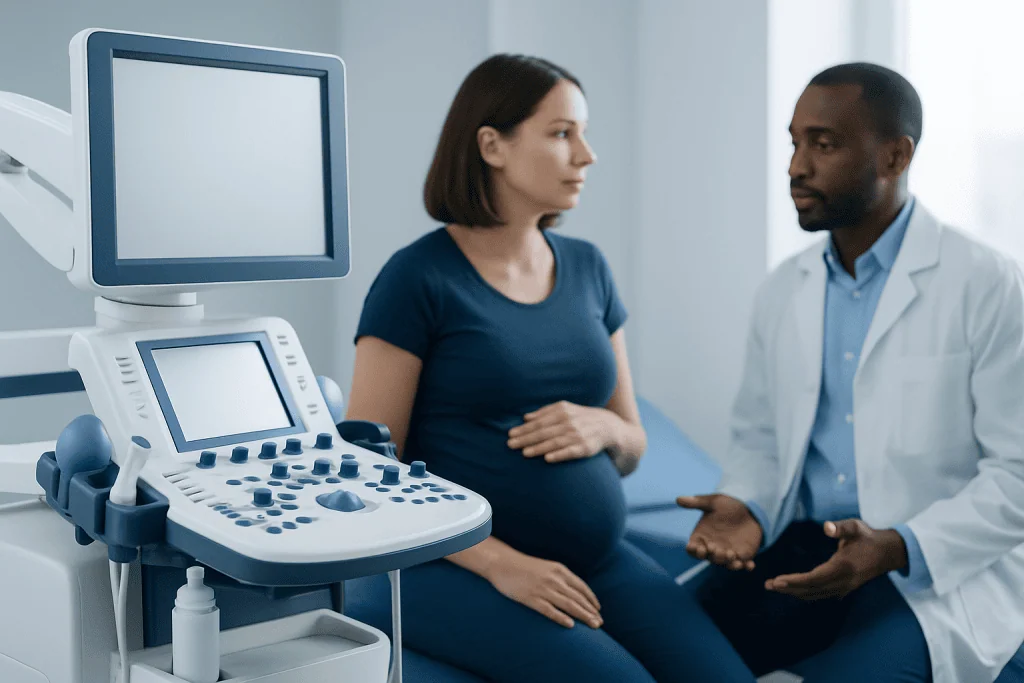
Using clear details can help a clinician assess the situation. Spotting is usually a few drops or streaks that do not soak a pad. Bleeding is heavier when it flows like a menstrual period, requires a pad, contains clots or tissue, or becomes progressively heavier. A person should use a sanitary pad rather than a tampon or menstrual cup while bleeding, so the amount can be observed more easily and infection risk is reduced.
It may be helpful to note when the spotting began, its colour, whether it happens only after wiping or continues, and whether there are cramps, pelvic pressure, back pain, fever, nausea beyond usual pregnancy symptoms, or pain during urination. Recent sexual intercourse, a pelvic examination or vaginal medication can also be relevant because the cervix becomes more sensitive and has an increased blood supply during pregnancy.
A photo of the pad or discharge may be useful for some people when speaking to a clinician, although it is never required. If tissue or a large clot is passed, medical advice should be sought promptly. If possible, it may be helpful to save any passed tissue in a clean container for the medical team to advise on, but this should never delay urgent care.
- Light spotting: a few drops or streaks, usually not filling a pad.
- Concerning bleeding: bleeding that is increasing, bright red, similar to a period or heavier, or accompanied by pain.
- Emergency symptoms: severe pain, fainting, shoulder-tip pain, marked weakness or very heavy bleeding.
Common and less common causes
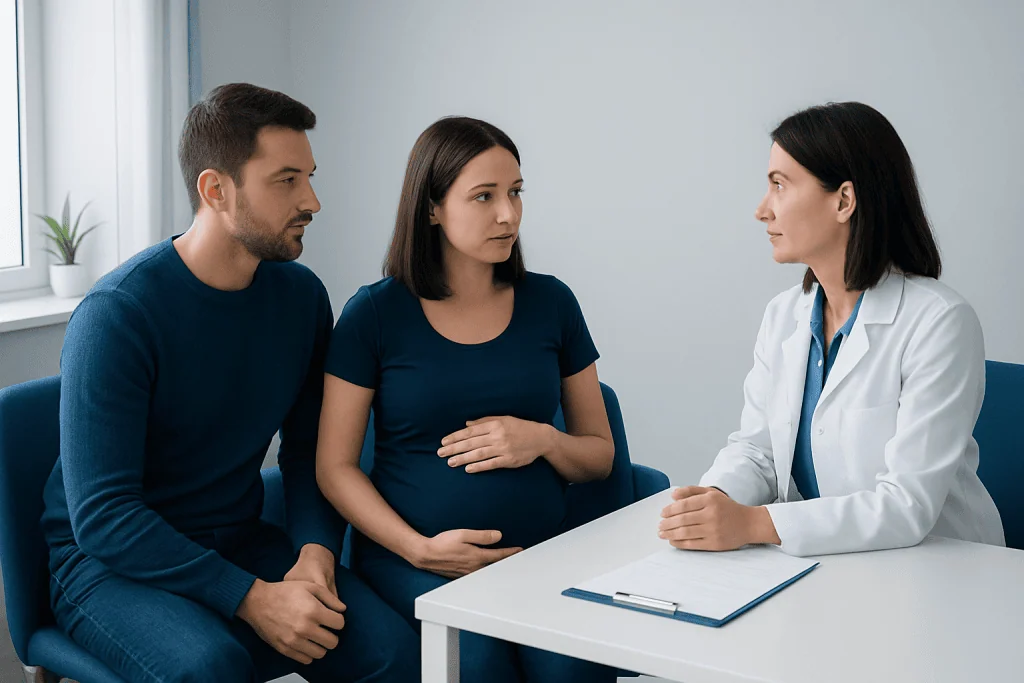
There are several possible explanations for spotting in early pregnancy. Cervical changes are common: pregnancy hormones make the cervix softer and more likely to bleed after intercourse, a cervical screening test or an internal examination. Vaginal infections, cervical polyps and irritation may also cause bleeding and may need treatment.
A small collection of blood beside the pregnancy, sometimes called a subchorionic hematoma or subchorionic bleed, may be found on ultrasound. Its significance depends on factors such as size, location and symptoms. Many small collections resolve, but the maternity team may recommend follow-up based on the individual scan and medical history.
Spotting can also occur with a threatened miscarriage, a term used when bleeding happens but the cervix remains closed and the pregnancy may still be viable. Early pregnancy loss is another possible cause. It is important to understand that most miscarriages occur because of chromosomal changes that happen by chance during development; everyday activities, work, exercise, sex or a single episode of stress do not usually cause miscarriage.
One less common but important cause is an ectopic pregnancy, where the pregnancy develops outside the main cavity of the uterus, most often in a fallopian tube. It can become serious if it ruptures. Pregnancy location should be confirmed when there is pain, uncertainty on ultrasound, risk factors for ectopic pregnancy or concerning symptoms. A clinician may discuss assessment for ectopic pregnancy if it is relevant.
What medical assessment may involve
Assessment begins with questions about symptoms, the date of the last menstrual period, previous pregnancies, fertility treatment, contraception at conception and medical history. The clinician may ask about prior ectopic pregnancy, fallopian tube surgery, pelvic infection, smoking or use of an intrauterine device, as these can affect ectopic pregnancy risk. However, ectopic pregnancy can also occur without known risk factors.
A transvaginal ultrasound is often the most informative scan in early pregnancy because it gives a clearer view of the uterus and ovaries than an abdominal scan at this stage. The scan may show the pregnancy sac, yolk sac, embryo and sometimes cardiac activity. If dates are uncertain or the pregnancy is too early to confirm location or viability, a repeat scan after an appropriate interval may be recommended.
Blood tests may include quantitative human chorionic gonadotropin, or hCG, measured over time rather than interpreted as a single result. In some situations, progesterone testing may be used as part of the broader assessment, although it cannot independently confirm a healthy pregnancy. Blood group testing is also relevant. People who are RhD-negative may need anti-D immunoglobulin after bleeding in certain circumstances, according to local guidelines and clinical assessment.
An examination is not always necessary, but it may be offered when the source of bleeding is unclear or symptoms suggest infection or cervical changes. The healthcare professional should explain why it is recommended, and the patient may ask questions or request a chaperone. The aim is to establish the safest next step while avoiding conclusions before enough information is available.
What to do while waiting for advice
Someone with light spotting who feels otherwise well should contact their pregnancy care provider for guidance. Until reviewed, using pads instead of tampons or menstrual cups is advisable. Rest may be comforting, but strict bed rest has not been shown to prevent miscarriage and can have drawbacks. Normal gentle movement is generally reasonable unless a clinician gives different instructions.
Many clinicians recommend avoiding vaginal intercourse, penetrative sex and swimming until the spotting has stopped or until individual advice is provided, particularly when bleeding is unexplained. It is also sensible to avoid inserting anything into the vagina, including non-prescribed products. Continue prenatal vitamins containing folic acid and take prescribed medicines unless a healthcare professional says otherwise.
For discomfort, a clinician or pharmacist can advise on pregnancy-appropriate options. People should not start, stop or increase medicines, including herbal supplements, without professional guidance. Non-steroidal anti-inflammatory medicines may not be suitable in pregnancy for every person, so it is best to ask before using them.
Spotting is not usually caused by lifting, walking, working or ordinary daily activity. Feelings of worry are understandable, especially before a scan has confirmed the pregnancy location and development. Seeking support from a partner, trusted person or healthcare team can make the waiting period more manageable.
When to seek medical care
Medical advice should be sought promptly for any new vaginal bleeding in pregnancy, even if it is light. Contact a maternity unit, obstetrician, midwife or urgent-care service on the same day when spotting persists, returns repeatedly, becomes heavier, occurs after a positive pregnancy test without a confirmed intrauterine pregnancy, or is accompanied by cramps or pelvic pain.
Emergency assessment is needed if bleeding is heavy enough to soak a pad quickly, if there is severe or worsening abdominal or pelvic pain, pain mainly on one side, shoulder-tip pain, fainting, dizziness, shortness of breath, marked weakness, fever or feeling very unwell. These signs can indicate significant blood loss, infection or complications such as ectopic pregnancy and should not be watched at home.
People with previous ectopic pregnancy, recurrent miscarriage, fertility treatment, known bleeding disorders, or RhD-negative blood type should mention this when they call. If there is uncertainty about where to go, local emergency services or the nearest emergency department can provide direction. It is safer to arrange urgent evaluation than to drive alone when there is severe pain, faintness or heavy bleeding.
Outlook, follow-up and support
The outcome after early-pregnancy spotting depends on the underlying cause. Some people have a brief episode and continue with an uncomplicated pregnancy. Others need follow-up scans or blood tests before clinicians can give a clear answer. When findings are uncertain, waiting for repeat testing can be emotionally difficult, but it is often the most accurate way to understand what is happening.
If a miscarriage or ectopic pregnancy is diagnosed, the care team will explain available management options, expected physical recovery, warning symptoms and follow-up needs. Emotional reactions can vary widely, and there is no right way to feel. Support from a partner, family member, counsellor, pregnancy-loss support organisation or mental health professional may be valuable.
Most early pregnancy bleeding cannot be prevented. The practical focus is early contact with a qualified clinician, following individualized advice and attending recommended appointments. Acibadem International’s multidisciplinary specialists and JCI-accredited hospitals diagnose and treat early-pregnancy concerns for international patients when specialist assessment is needed.
Frequently asked questions
Is spotting on 6th week of pregnancy normal?
Light spotting can occur in a normal early pregnancy, particularly because the cervix is more sensitive and has a greater blood supply. However, it is not possible to identify the cause from bleeding alone, so a maternity care provider should be informed. Urgent assessment is needed if spotting becomes heavy or occurs with significant pain, dizziness or fainting.
Does brown spotting at 6 weeks mean miscarriage?
Brown spotting often indicates older blood and does not automatically mean miscarriage. Some pregnancies have short episodes of brown discharge and continue normally. Because early pregnancy loss and other causes can also involve brown bleeding, clinical advice and, when appropriate, ultrasound are important.
Can sex cause spotting at 6 weeks pregnant?
Yes, intercourse can sometimes cause light spotting because the cervix is softer and more vascular during pregnancy. This does not necessarily harm the pregnancy. If bleeding is recurrent, heavy, painful or ongoing, a clinician should assess it before intercourse is resumed.
Should a person have an ultrasound for bleeding at 6 weeks?
An ultrasound is commonly considered for bleeding in early pregnancy, especially if there is pain or no previous scan has confirmed the pregnancy is in the uterus. At six weeks, a transvaginal ultrasound may provide useful information, although exact timing of ovulation can affect what is visible. A repeat scan may be needed if the first scan is inconclusive.
What cramps are concerning with spotting in early pregnancy?
Mild intermittent cramping can happen in early pregnancy, but severe, persistent or worsening pain needs prompt evaluation. One-sided pelvic pain, shoulder-tip pain, fainting or dizziness are particularly concerning because they can occur with ectopic pregnancy. Heavy bleeding together with strong cramps also requires urgent medical advice.
Can exercise or lifting cause spotting in early pregnancy?
Ordinary exercise, walking and routine lifting do not usually cause miscarriage or early-pregnancy spotting. A clinician may recommend temporary activity adjustments depending on the amount of bleeding, ultrasound findings and individual medical history. Until advice is received, avoiding strenuous activity may feel prudent, but strict bed rest is generally not routinely recommended.
References
- American College of Obstetricians and Gynecologists
- National Health Service
- Royal College of Obstetricians and Gynaecologists
- National Institute for Health and Care Excellence
- Mayo Clinic
This article is for general information only and is not a substitute for professional medical advice. Please consult a qualified doctor about your individual situation.
Explore treatments in Turkey — costs, top hospitals & a free quote
JCI-accredited · board-certified surgeons · reply within 24h
Add us as a Preferred Source to see more of our trusted health content across Google Search, AI Overviews and Discover.
Check your numbers in seconds
BMI, calories, due date, blood pressure and 30+ more clinical calculators — free, instant, doctor-reviewed ranges.