Stage 3 Esophageal Cancer Life Expectancy with Treatment: How It Works, Results and What to Expect

Stage 3 means the cancer has grown deeper into the esophageal wall and/or reached nearby lymph nodes, but has not spread to distant organs. Treatment commonly combines chemotherapy, radiation therapy, and surgery, planned by a multidisciplinary cancer team.
Key Takeaways
- Stage 3 means the cancer has grown deeper into the esophageal wall and/or reached nearby lymph nodes, but has not spread to distant organs.
- Treatment commonly combines chemotherapy, radiation therapy, and surgery, planned by a multidisciplinary cancer team.
- Survival statistics describe groups of people and cannot predict what will happen for one individual.
- Nutrition, symptom control, rehabilitation, and follow-up care are important parts of treatment and recovery.
- New or worsening swallowing problems, dehydration, bleeding, severe pain, or breathing difficulty require prompt medical assessment.
Stage 3 esophageal cancer life expectancy with treatment depends on the tumor type, lymph node involvement, overall health, response to therapy, and whether surgery is possible. Many people receive combined chemotherapy and radiation followed by surgery, or other individualized approaches, with the goal of controlling the cancer and, in selected cases, achieving cure.
Overview: stage 3 esophageal cancer life expectancy with treatment
Stage 3 esophageal cancer life expectancy with treatment varies widely from person to person. Treatment can be intensive, but for many suitable patients it is designed to remove or control cancer in the chest and nearby lymph nodes. The outlook is influenced by the cancer’s exact stage, cell type, location, response to early treatment, ability to complete therapy, and the person’s general health.
Stage 3 is generally a locally advanced stage. The tumor may extend through deeper layers of the esophageal wall, involve nearby tissues, and/or spread to regional lymph nodes. It has not spread to distant organs such as the liver, lungs, bones, or brain; distant spread would be classified differently and requires a different treatment approach.
Doctors use population-based survival data as one part of a prognosis discussion. These data may be several years old and include people treated with different methods, so they cannot forecast an individual outcome. A treating oncology team can provide the most meaningful perspective after reviewing imaging, biopsy findings, physical fitness, and response to treatment.
Care is usually coordinated among medical oncologists, radiation oncologists, surgeons, gastroenterologists, radiologists, pathologists, dietitians, and supportive-care professionals. This helps ensure that treatment decisions account for both cancer control and quality of life.
How treatment works and who may be a candidate
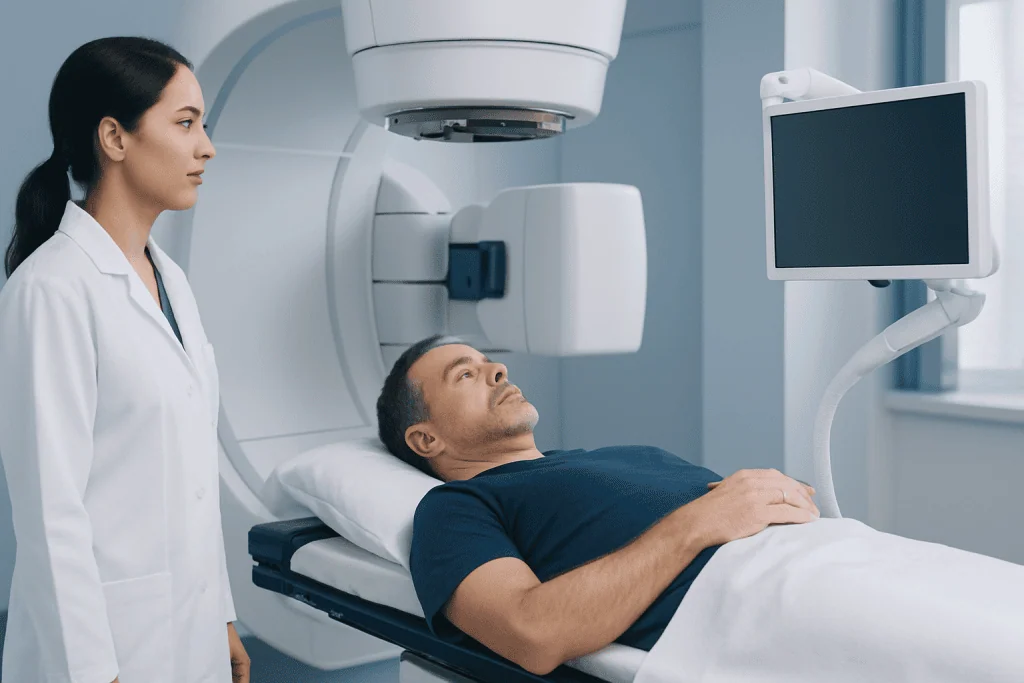
For many people with potentially removable stage 3 disease, treatment begins with chemotherapy and radiation given together before surgery. This is called neoadjuvant chemoradiotherapy. Chemotherapy helps damage cancer cells throughout the body, while radiation targets the tumor and nearby lymph nodes. Giving these treatments first may shrink the cancer, treat microscopic cells that cannot be seen on scans, and improve the chance of complete surgical removal.
After this combined treatment, eligible patients may undergo esophagectomy, an operation that removes the cancer-containing part of the esophagus and reconnects the digestive tract using the stomach or, less commonly, another section of intestine. In some situations, treatment may include chemotherapy before and after surgery, immunotherapy after surgery when appropriate, or definitive chemoradiotherapy without surgery.
Candidacy for surgery is individualized. The team considers whether the tumor appears removable, whether there is evidence of distant spread, heart and lung function, nutritional status, other medical conditions, age-related fitness, and personal priorities. Not every person with stage 3 cancer should have the same treatment; some may benefit more from non-surgical chemoradiotherapy or symptom-focused care.
Pathology is also important. The two main types are adenocarcinoma, often arising in the lower esophagus, and squamous cell carcinoma, more often found in the upper or middle esophagus. Both can be treated with multimodal care, but the recommended sequence and medicines may differ.
Step by step: testing, treatment, surgery, and recovery
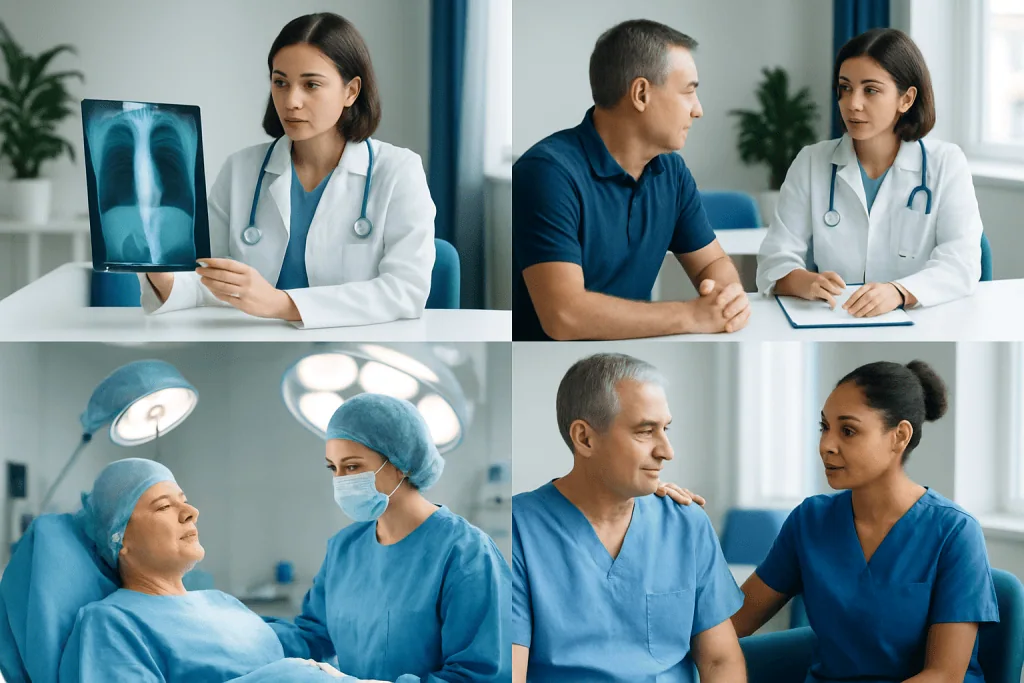
Planning starts with confirming the diagnosis by endoscopy and biopsy. Staging often includes CT scanning, PET-CT, and endoscopic ultrasound when appropriate. These tests assess the depth of the tumor, lymph nodes, and possible spread elsewhere. A patient may also have blood tests, nutritional assessment, heart and lung testing, and a discussion about maintaining strength before treatment.
When chemoradiotherapy is recommended, chemotherapy is delivered in cycles and radiation is typically given in multiple outpatient sessions over several weeks. The care team monitors swallowing, weight, blood counts, hydration, fatigue, and treatment side effects. Some people need nutrition support, including high-calorie supplements or temporary feeding access, to help them complete treatment safely.
If surgery follows, it is usually scheduled after the body has had time to recover from chemoradiotherapy and restaging has been completed. During esophagectomy, the surgeon removes the affected esophageal section and regional lymph nodes, then reconstructs the passage for food. Depending on the case and surgical expertise, the procedure may use open, minimally invasive, or robotic-assisted techniques.
Hospital recovery after esophagectomy commonly involves close monitoring, pain management, breathing exercises, early mobilization, and gradual reintroduction of nutrition. Full recovery takes months rather than days. Smaller, more frequent meals, dietitian guidance, physical rehabilitation, and regular follow-up can help patients adjust to changes in digestion, appetite, and energy.
Benefits, risks, and realistic expectations
The potential benefit of combined treatment is better local cancer control and, for appropriate patients, a chance of long-term remission. The response seen in the surgical specimen after preoperative therapy can provide useful prognostic information. Even when a complete response is not achieved, treatment can reduce symptoms such as difficulty swallowing and may delay or prevent recurrence.
All cancer treatments can cause side effects. Chemotherapy may lead to fatigue, nausea, appetite changes, lowered blood counts, numbness or tingling, and increased infection risk. Radiation to the chest can cause tiredness, painful swallowing, skin irritation, and inflammation of nearby tissues. Most side effects can be managed, and patients should report symptoms early rather than trying to cope alone.
Esophagectomy is major surgery. Possible complications include infection, bleeding, pneumonia, blood clots, leakage at the new connection, irregular heart rhythm, and changes in swallowing or digestion. Long-term effects can include reflux, early fullness, dumping symptoms, weight loss, and altered bowel habits. The surgical team discusses individual risks before surgery and provides plans to reduce them.
Some people are offered immunotherapy after surgery if cancer remains in the removed tissue following preoperative chemoradiotherapy. Others may receive systemic treatment when surgery is not suitable. Testing of the tumor, including selected biomarker testing, can help guide treatment options in advanced or recurrent disease.
Is esophageal cancer a death sentence?
No. An esophageal cancer diagnosis is serious, but it is not a death sentence. Outcomes have improved as staging, surgical care, radiation techniques, systemic therapies, nutritional care, and supportive treatment have advanced. Some people with locally advanced disease complete treatment and remain free of detectable cancer for years.
It is understandable to seek a clear prediction, yet no statistic can capture an individual person’s situation. Factors such as whether the cancer can be removed, the response to treatment, lymph node findings, tumor biology, and overall fitness all matter. Honest discussions with the oncology team can help a person understand the goals of care and make informed decisions.
Emotional support is also part of cancer care. Counseling, social work, patient support groups, palliative-care specialists, family involvement, and practical nutrition support can help people manage the physical and emotional demands of treatment. Palliative care can be provided alongside curative-intent treatment and focuses on comfort, symptom relief, and quality of life.
Is esophageal cancer an aggressive cancer?
Esophageal cancer can be aggressive because it may cause few symptoms early and is sometimes diagnosed after it has grown into deeper tissues or reached nearby lymph nodes. The esophagus also has a rich network of lymphatic channels, which can allow cancer cells to spread to regional nodes. However, aggressiveness differs between tumors and does not determine an individual outcome by itself.
The cancer’s cell type, grade, genetic and biomarker features, size, location, stage, and response to therapy contribute to its behavior. Thorough staging is essential because it distinguishes potentially localized disease from cancer that has spread farther away. This is why imaging and specialist review are needed before treatment decisions are made.
Risk factors can include smoking, heavy alcohol use, long-standing reflux and Barrett’s esophagus for some adenocarcinomas, obesity, and certain dietary or environmental exposures. Having a risk factor does not mean a person will develop cancer, and some people with esophageal cancer have no obvious risk factors.
For more general information about the diagnosis and its care pathway, patients may review esophageal cancer.
How many people survive esophageal cancer?
Survival depends strongly on the stage at diagnosis. People whose cancer is confined to the esophagus or nearby lymph nodes generally have a better outlook than those whose cancer has spread to distant organs. However, survival figures are estimates based on large groups, often measured over five years, and they cannot tell an individual patient how long they will live.
Published figures also differ by country, registry, tumor type, access to specialist care, and the treatments available when the data were collected. Current treatment options may be more effective than those reflected in older datasets. Rather than relying on a single number found online, patients can ask their team which data best fit their stage and treatment plan.
For stage 3 disease, the most relevant questions are often whether the tumor is resectable, whether combined therapy can be completed, and how the cancer responds. Regular scans, endoscopy when needed, pathology results after surgery, and follow-up visits provide more personalized information over time.
Acibadem International’s multidisciplinary specialists and JCI-accredited hospitals diagnose and treat esophageal cancer for international patients, coordinating oncology, surgery, radiation therapy, nutrition, and follow-up support.
When to seek medical care
Medical assessment is important for persistent swallowing difficulty, food sticking, pain with swallowing, unexplained weight loss, ongoing chest discomfort, persistent indigestion, vomiting, or black stools. These symptoms can have causes other than cancer, but they should not be ignored, especially if they are progressive. Early evaluation may include an examination, blood tests, and referral for endoscopy.
People already receiving treatment should contact their cancer team promptly for fever, inability to drink fluids, repeated vomiting, rapidly worsening swallowing, severe weakness, dehydration, uncontrolled pain, new confusion, or signs of infection. Urgent emergency care is needed for severe breathing difficulty, coughing or vomiting blood, black tar-like stools with weakness or dizziness, severe chest pain, or fainting.
Questions about sudden decline can be distressing. In advanced illness, warning signs may include increasing weakness, markedly reduced intake, worsening breathlessness, confusion, or major bleeding, but these signs are not specific and can sometimes be treated. A patient’s oncology or palliative-care team should be contacted without delay to assess symptoms and provide appropriate support.
Follow-up after treatment is individualized and may include clinical visits, nutrition review, imaging, and endoscopy where indicated. Reporting new symptoms between scheduled appointments is an important part of monitoring for treatment effects or recurrence.
Frequently asked questions
What is stage 3 esophageal cancer?
Stage 3 esophageal cancer is a locally advanced cancer that has grown more deeply into the esophagus, may involve nearby structures, and/or has reached regional lymph nodes. It has not spread to distant organs. The exact stage is determined using imaging, endoscopy, biopsy results, and sometimes surgical pathology.
Can stage 3 esophageal cancer be cured?
For some patients, treatment is given with curative intent. Combined chemotherapy, radiation therapy, and surgery may remove or control all detectable disease when the cancer is localized and the person is fit for treatment. Cure cannot be guaranteed, and the care team will explain the individual goals and likelihood of benefit.
What are the signs of sudden death from esophageal cancer?
There is no single set of signs that reliably predicts sudden death from esophageal cancer. Severe bleeding, major breathing difficulty, fainting, confusion, or sudden severe chest pain are emergencies and need immediate medical help. In advanced illness, increasing weakness, poor intake, sleepiness, and breathlessness should also be reported promptly to the oncology or palliative-care team.
How long is recovery after esophagectomy?
Initial hospital recovery commonly takes days to a few weeks, depending on the operation and any complications. Regaining strength, adapting to a changed diet, and recovering weight and stamina often take several months. Dietitian support, activity progression, breathing exercises, and follow-up appointments are important during recovery.
What happens if surgery is not possible for stage 3 esophageal cancer?
If surgery is not safe or the cancer cannot be removed, definitive chemoradiotherapy may be used to control the cancer. Some patients may also receive systemic treatments such as chemotherapy, immunotherapy, or targeted therapy when appropriate. The plan is based on tumor features, prior treatment, overall health, and the person’s goals.
Can a person eat normally after esophageal cancer treatment?
Many people can eat by mouth after recovery, but eating patterns often change. Smaller, more frequent meals, careful chewing, remaining upright after meals, and managing reflux can be helpful. A dietitian can tailor advice for weight maintenance, swallowing difficulties, dumping symptoms, and nutritional needs.
References
- National Cancer Institute
- American Cancer Society
- European Society for Medical Oncology
- National Comprehensive Cancer Network
- World Health Organization
This article is for general information only and is not a substitute for professional medical advice. Please consult a qualified doctor about your individual situation.
Esophageal Cancer in Turkey — costs, top hospitals & a free quote
JCI-accredited · board-certified surgeons · reply within 24h
Add us as a Preferred Source to see more of our trusted health content across Google Search, AI Overviews and Discover.
Check your numbers in seconds
BMI, calories, due date, blood pressure and 30+ more clinical calculators — free, instant, doctor-reviewed ranges.

Medical Oncology Department
Medical treatment of cancer with chemotherapy, immunotherapy and targeted therapies under a multidisciplinary tumor board.
60 specialists in this unitMore from the Health Library



Related Specialists

Assoc. Prof. Dr. Selçuk Keskin
Urology
Fzt. Umut Şahin
Physical Medicine & Rehabilitation
Prof. Dr. Recep Kurnaz
Orthopedic Surgery & Traumatology
Prof. Dr. Özlem Er
Medical Oncology