Starburst after Cataract Surgery: Procedure, Recovery and Results

Starbursts and glare are relatively common visual symptoms in the first days to weeks after cataract surgery. Healing of the eye surface, swelling, residual prescription error, and lens-related optical effects can contribute to starburst vision.
Key Takeaways
- Starbursts and glare are relatively common visual symptoms in the first days to weeks after cataract surgery.
- Healing of the eye surface, swelling, residual prescription error, and lens-related optical effects can contribute to starburst vision.
- Many people notice gradual improvement over several weeks, although some causes need targeted treatment.
- Sudden vision loss, significant pain, increasing redness, flashes, or a curtain-like shadow require urgent eye care.
- Follow-up visits are important because an ophthalmologist can check the cornea, lens position, eye pressure, retina, and need for updated glasses.
Starburst after cataract surgery describes rays or spikes of light seen around headlights, lamps, or other bright sources. It is commonly related to early healing, dry eye, pupil size, or adjustment to the new intraocular lens, and it often improves over time; however, new severe symptoms or declining vision need prompt assessment.
Overview: What Starburst Vision Means After Cataract Surgery
Starburst after cataract surgery is the appearance of lines, spikes, or rays spreading outward from bright lights, especially at night. A person may notice it around headlights, streetlights, screens, or indoor lamps. It can occur with glare, halos, ghost images, or reduced contrast in dim conditions.
Cataract surgery replaces the eye’s cloudy natural lens with a clear artificial intraocular lens (IOL). This improves vision for most people, but the visual system needs time to adapt to the changed optics. In the early recovery period, mild starbursts are often temporary and may reflect normal healing rather than damage to the eye.
Still, starburst symptoms should be discussed at scheduled postoperative visits, particularly if they interfere with driving or daily life. An eye examination can identify treatable factors such as dry eye, corneal swelling, an uncorrected refractive error, inflammation, or a problem involving the retina or implanted lens.
How Cataract Surgery Works and Why Vision Can Change During Healing
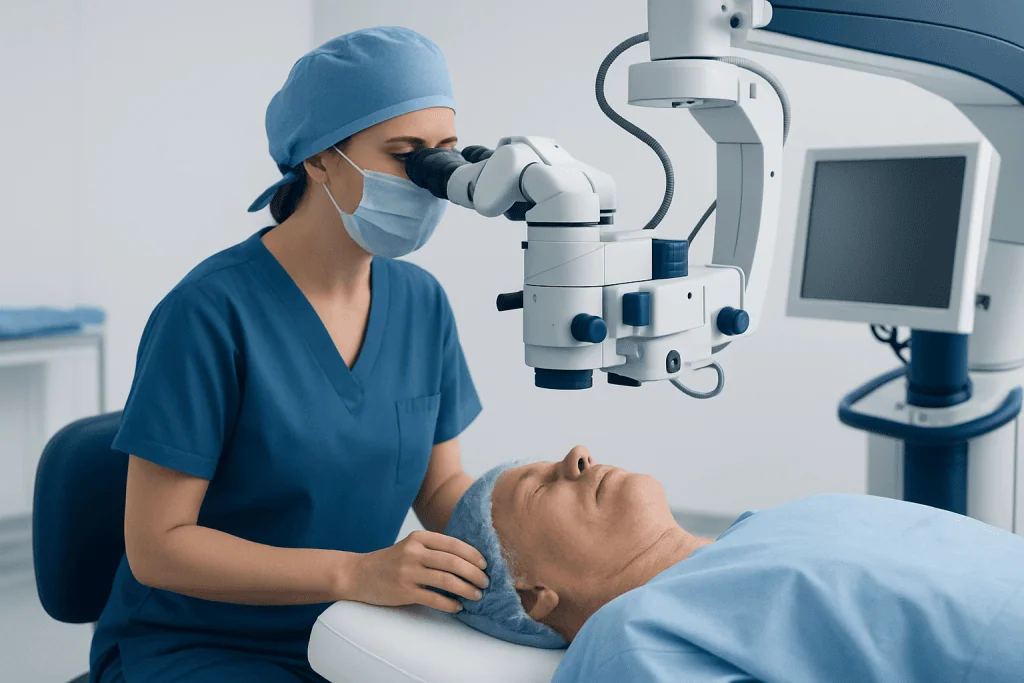
Cataract surgery is usually performed through a small incision in the cornea, the clear front surface of the eye. The surgeon breaks up and removes the cloudy lens, commonly using ultrasound energy, then places an IOL inside the remaining lens capsule. The procedure is generally done with local anesthesia and sedation, and most people return home the same day.
Although the incision is small, the eye still needs time to recover. The cornea may have temporary swelling, the tear film can become unstable, and the brain must adjust to sharper light entering the eye. These changes can alter the way light is focused and scattered, making starbursts more noticeable at first.
The type of IOL can also influence night-vision symptoms. Multifocal, extended-depth-of-focus, and some toric lenses are designed to meet particular vision goals, but may create more noticeable halos or glare for some patients than standard monofocal lenses. A preoperative discussion about visual priorities, including night driving, helps guide lens selection.
Cataract surgery is not designed specifically to treat starbursts, but accurate preoperative measurements, careful lens planning, and management of eye-surface disease can reduce the likelihood of bothersome optical symptoms after surgery.
Is It Normal to See Starbursts After Cataract Surgery?

Yes, mild starbursts after cataract surgery can be normal, especially in the first several days or weeks. The visual symptom may be more apparent in dark environments because the pupil becomes larger, allowing light to pass through more of the cornea and the edge zones of the optical system.
Temporary dryness is a common contributor. Surgery, postoperative drops, and reduced blinking can disturb the tear film, which is essential for a smooth optical surface. When the tear film is irregular, light may scatter and produce glare, fluctuating clarity, or starburst patterns.
Other common, usually manageable contributors include temporary corneal edema, residual astigmatism or nearsightedness/farsightedness, and the brain’s adaptation to an IOL. Some people report that symptoms vary through the day, becoming more apparent when tired, in air-conditioned environments, or after prolonged screen use.
Normal does not mean it should be ignored. A person should tell their ophthalmologist about the symptom, particularly if it is worsening, occurs in only one eye to a marked degree, or makes night driving feel unsafe. The doctor can determine whether observation, lubricating drops, glasses, or another approach is appropriate.
How Long Does It Take for Starbursts to Go Away After Cataract Surgery?
For many people, starbursts improve as the eye heals over the first few weeks after cataract surgery. Recovery is individual: some notice rapid improvement within days, while others need several weeks or occasionally a few months for the cornea, tear film, and visual processing to stabilize.
When dry eye or mild corneal swelling is the main cause, symptoms may improve as prescribed drops are used and the eye surface recovers. If a person needs a new glasses prescription after surgery, vision is often reassessed once healing is sufficiently stable, commonly at a postoperative visit determined by the surgeon.
Persistent starbursts do not automatically mean that surgery was unsuccessful. The ophthalmologist may check for residual refractive error, posterior capsule opacification, lens alignment, corneal irregularity, or retinal conditions. Posterior capsule opacification can develop months or years later and may cause blurred or glary vision; it is different from a cataract returning and can often be treated with a laser procedure when clinically indicated.
People should avoid judging the final visual result too early. They should use prescribed medications exactly as directed, attend follow-up appointments, and ask their eye-care team before resuming night driving if lights remain distracting.
Can Starburst Vision Go Away?
Starburst vision can go away or become much less noticeable when the cause is temporary, such as postoperative dry eye, early corneal swelling, inflammation, or adaptation to the new lens. Even when minor optical effects remain, the brain may gradually learn to filter them so they become less intrusive.
Treatment depends on the cause. An ophthalmologist may recommend preservative-free lubricating drops, treatment for eyelid or tear-film conditions, an updated spectacle prescription, or further evaluation of the cornea and retina. Changes to postoperative medication should only be made under the direction of the surgical team.
In a smaller number of cases, a lens-related optical phenomenon called dysphotopsia may persist. Positive dysphotopsia can include glare, arcs, streaks, halos, or starbursts. Careful assessment is important before considering any procedure, since symptoms may improve with time and conservative measures are often appropriate first steps.
If starbursts are caused by another eye condition rather than surgery alone, treating that condition may help. For example, corneal surface disorders, irregular astigmatism, and retinal problems can affect visual quality and require condition-specific care.
How Do You Know If You Damaged Your Eye After Cataract Surgery?
Starbursts alone usually do not prove that the eye has been damaged. Mild glare or fluctuating vision is common during recovery. However, it is important to contact the surgical team promptly if visual symptoms are accompanied by warning signs such as increasing pain, marked redness, worsening swelling around the eye, discharge, or a clear decline in vision.
Urgent assessment is also needed for a sudden shower of floaters, flashes of light, a dark curtain or shadow in the visual field, severe headache with nausea, or a rapidly worsening change in sight. These symptoms can have several causes, including conditions that need timely treatment to protect vision.
After surgery, people should avoid rubbing or pressing on the eye and should follow instructions about eye shields, water exposure, lifting, exercise, and use of drops. Accidental minor contact does not always cause harm, but any direct injury, persistent discomfort, or change in vision should be reported to an ophthalmologist.
At follow-up, the doctor can measure vision and eye pressure and examine the incision, cornea, IOL, and retina. This is the reliable way to distinguish expected recovery effects from a complication or a separate eye problem.
Practical Recovery Steps, Benefits, and Possible Risks
The central benefit of cataract surgery is removal of a cloudy lens that has been limiting sight. Many people experience clearer, brighter vision and improved ability to carry out daily activities. However, visual quality may continue to change during the recovery period, so expectations should include a period of healing and adaptation.
Helpful recovery measures include using postoperative eye drops as prescribed, keeping all follow-up visits, protecting the eye from rubbing or accidental impact, and using sunglasses outdoors if light sensitivity is uncomfortable. Lubricating drops may be advised for dryness. A person should not use non-prescribed eye drops, including redness-relief drops, unless their clinician confirms they are suitable.
Possible complications of cataract surgery are uncommon but can include infection, significant inflammation, raised eye pressure, corneal problems, retinal swelling, retinal detachment, bleeding, or movement of the IOL. Visual effects such as glare and halos may also persist in some people. Knowing the warning signs and maintaining follow-up care supports early recognition and treatment.
Patients who remain troubled by nighttime glare should discuss driving, work, and lifestyle needs with their ophthalmologist. A carefully tailored plan may include treatment of dry eye, optical correction, or additional testing rather than an immediate invasive intervention.
When to Seek Medical Care
Contact the cataract surgeon or eye clinic promptly if starbursts are getting worse instead of gradually improving, if they are paired with increasing blur, or if they prevent safe driving and normal activities. A non-urgent review can also be useful when glare persists beyond the expected healing period or there is concern about needing glasses.
Seek urgent medical care for sudden loss of vision, severe or increasing eye pain, rapidly increasing redness, sensitivity to light with worsening symptoms, new flashes or many floaters, a curtain-like shadow, or nausea and vomiting with eye pain. These symptoms require timely professional evaluation and should not be managed at home.
Acibadem International’s multidisciplinary specialists and JCI-accredited hospitals provide ophthalmic assessment and treatment for international patients. A qualified ophthalmologist can review the surgery history, examine both eyes, and explain which recovery changes are expected and which require care.
Frequently asked questions
Are starbursts after cataract surgery permanent?
They are often temporary, particularly when related to dry eye, corneal healing, or early adjustment to the intraocular lens. Persistent symptoms can occur, but an ophthalmologist can assess possible causes and discuss treatment options.
Why are starbursts worse at night after cataract surgery?
In dim light, the pupil naturally widens, which can make light scatter more noticeable through the cornea and optical system of the eye. Headlights and other bright point sources also create a stronger contrast against a dark background.
Can dry eye cause starbursts after cataract surgery?
Yes. An unstable tear film can make the corneal surface less smooth, causing light to scatter and vision to fluctuate. Dry-eye treatment recommended by an eye-care professional may reduce glare and improve comfort.
Will glasses help starbursts after cataract surgery?
Glasses may help when starbursts are related to remaining astigmatism, nearsightedness, or farsightedness after surgery. The surgeon will advise when vision is stable enough for an accurate prescription.
Should a person drive at night with starburst vision after cataract surgery?
A person should avoid night driving if glare or starbursts make it difficult to see clearly, judge distance, or feel safe. They should discuss the symptom with their ophthalmologist, who can assess recovery and offer guidance.
Can posterior capsule opacification cause glare or starbursts?
It can contribute to glare, haze, and reduced visual quality after cataract surgery. Posterior capsule opacification is a clouding of the capsule behind the implanted lens, not a return of the cataract, and an ophthalmologist can determine whether treatment is needed.
References
- American Academy of Ophthalmology
- National Eye Institute
- Mayo Clinic
- Royal College of Ophthalmologists
This article is for general information only and is not a substitute for professional medical advice. Please consult a qualified doctor about your individual situation.
Cataract Surgery in Turkey — costs, top hospitals & a free quote
JCI-accredited · board-certified surgeons · reply within 24h
Add us as a Preferred Source to see more of our trusted health content across Google Search, AI Overviews and Discover.

Ophthalmology
Comprehensive eye care from laser vision correction to retina, cornea and cataract surgery.
75 specialists in this unit