Stargardt Disease Treatment: How It Works, Results and What to Expect

Stargardt disease is an inherited retinal condition that affects the macula and can reduce detailed central vision. There is no established treatment that cures Stargardt disease or restores retinal cells that have already been lost.
Key Takeaways
- Stargardt disease is an inherited retinal condition that affects the macula and can reduce detailed central vision.
- There is no established treatment that cures Stargardt disease or restores retinal cells that have already been lost.
- Care usually includes retinal monitoring, visual aids, rehabilitation, light protection, and support for school, work, and independence.
- Genetic testing can confirm the diagnosis, clarify inheritance, and help determine eligibility for research studies.
- Progression varies considerably between individuals, so follow-up plans should be personalized.
Stargardt disease treatment currently cannot reverse retinal damage or reliably restore lost central vision, but it can help people protect remaining sight, manage daily activities, and access emerging research when appropriate. Regular retinal care, individualized low-vision support, and genetic counseling are central parts of care.
Overview: What Stargardt Disease Treatment Can Do
Stargardt disease treatment focuses on preserving usable vision, monitoring retinal health, helping a person adapt to central vision changes, and considering research studies when eligible. At present, there is no approved therapy that reliably stops the condition for everyone, repairs retinal damage, or restores central vision that has already been lost.
Stargardt disease is an inherited retinal disorder, often caused by changes in the ABCA4 gene. It affects the macula, the small central part of the retina needed for reading, recognizing faces, seeing fine detail, and many other precise visual tasks. It is sometimes called juvenile macular degeneration because symptoms often begin in childhood, adolescence, or early adulthood, although onset can occur later.
Care is best led by an ophthalmologist with expertise in retinal disorders. The plan is not one single procedure; rather, it is a coordinated approach that combines accurate diagnosis, regular assessment, low-vision rehabilitation, practical visual tools, and discussion of clinical research. Early support can make a meaningful difference in safety, education, work, and quality of life.
How Can Stargardt Disease Be Treated?
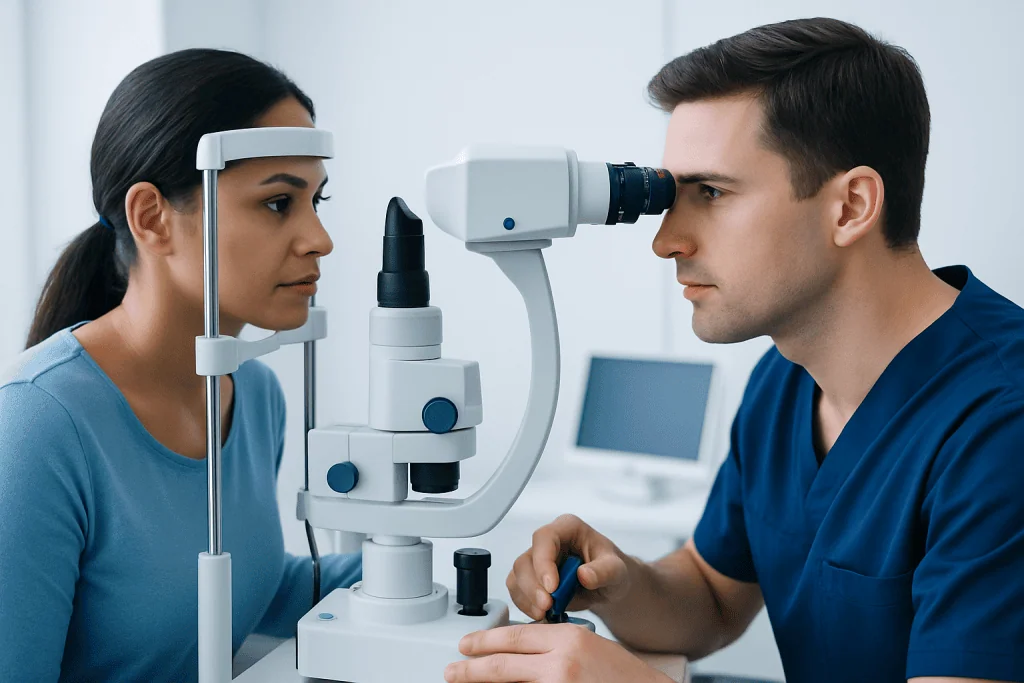
There is currently no standard curative procedure for Stargardt disease. Management aims to preserve remaining retinal function where possible and help the person use vision as effectively and comfortably as possible. Follow-up examinations also allow the retinal specialist to identify changes that may affect care or suggest eligibility for a clinical study.
Low-vision rehabilitation is often one of the most useful forms of treatment. A low-vision specialist can recommend magnifiers, telescopic devices, electronic reading aids, screen readers, enlarged print, contrast adjustments, glare control, and smartphone accessibility settings. Occupational therapy or vision rehabilitation can help a person learn strategies for reading, navigation, household tasks, study, and work.
Genetic counseling and genetic testing are important parts of modern care. Results may confirm the underlying cause, explain inheritance patterns for family members, and support discussion of research opportunities. Potential therapies being studied include gene-based approaches, medicines designed to reduce harmful retinal by-products, cell-based treatments, and treatments that protect photoreceptor cells. These investigational options are not yet routine care and should be discussed carefully with a retinal specialist.
People should avoid high-dose vitamin A supplements unless their clinician specifically recommends them for another reason. Because ABCA4-related disease involves vitamin A processing in the retina, specialists commonly advise avoiding unnecessary supplemental vitamin A. A balanced diet remains appropriate, but dietary changes should not replace specialist eye care.
How Treatment and Support Work in Practice

Unlike a surgical procedure with a single treatment day, Stargardt care usually begins with a detailed retinal assessment and develops over time. The ophthalmologist reviews symptoms, family history, visual needs, and previous eye records. Testing may include visual acuity measurement, color-vision testing, retinal photographs, optical coherence tomography (OCT), fundus autofluorescence imaging, and sometimes visual field testing or electroretinography.
Genetic testing may be offered after counseling. A confirmed genetic result can distinguish Stargardt disease from other inherited retinal conditions, help assess family implications, and provide useful information if clinical trial screening is considered. Not every person with a clinical diagnosis has an immediately identifiable genetic result, so interpretation should be performed by an experienced team.
After assessment, the clinician and patient create a plan around daily priorities. This may include referral to a low-vision service, an optometrist experienced in visual aids, occupational therapy, educational support, psychological support, or social services. Children and adolescents may benefit from school accommodations such as large-print material, digital resources, extra time, seating choices, and assistive technology.
Follow-up timing depends on age, symptoms, retinal findings, and personal needs. Regular reviews help track change rather than predict it from one examination alone. A person should bring up any new distortion, sudden blind spot, major reduction in vision, flashes, floaters, or pain, as these symptoms may need prompt assessment even though they are not typical signs of Stargardt progression.
Who May Benefit From Specialist Evaluation and Clinical Research?
Anyone with suspected or confirmed Stargardt disease can benefit from specialist retinal evaluation. This is particularly important for people with gradual central blur, difficulty reading despite correct glasses, reduced color vision, increasing sensitivity to glare, or a family history of inherited retinal disease. An accurate diagnosis is essential because several retinal conditions can cause similar symptoms but have different genetic causes and outlooks.
Clinical trial eligibility is individual. Studies commonly have detailed requirements related to age, genetic findings, retinal structure, visual function, prior treatment, and overall health. A clinical trial may offer access to a carefully monitored investigational therapy, but it may also involve additional visits, testing, uncertain benefit, and possible side effects. Participation should be voluntary and based on a clear understanding of the study.
People considering a study should ask what the treatment is designed to do, whether it is intended to slow progression or improve function, what alternatives exist, how long follow-up lasts, and what risks are known. A retinal specialist can help interpret whether a trial is credible and suitable. Enrollment in a study does not guarantee improvement.
For international patients, Acibadem International’s multidisciplinary specialists and JCI-accredited hospitals can support assessment and management of inherited retinal conditions, including coordination with retinal, genetic, and low-vision services.
Benefits, Limitations, and Possible Risks of Care
The main benefits of a structured Stargardt management plan are earlier diagnostic clarity, practical support for remaining vision, and better preparation for changing visual needs. Low-vision devices and training cannot remove the underlying retinal disease, but they may improve reading efficiency, reduce visual strain, and help maintain independence at home, school, and work.
Retinal imaging and genetic testing are generally low risk. The eye drops used to dilate the pupils can temporarily blur vision and increase light sensitivity. Rarely, dilation drops may cause side effects such as eye discomfort, headache, or an increase in eye pressure in susceptible individuals. The care team can explain what to expect and whether someone should avoid driving after the appointment.
Investigational treatments carry uncertainties. Depending on the type of study, possible risks may include medication side effects, inflammation, infection, immune reactions, or complications from an eye procedure. The exact risks differ substantially between trials and should be reviewed in the informed-consent process.
It is also important to recognize the emotional impact of progressive visual loss. Feelings of worry, frustration, or grief are understandable. Counseling, peer support, rehabilitation professionals, and communication with family members can all be valuable components of comprehensive care.
Can Macular Degeneration Get Better?
Whether macular degeneration can get better depends on its cause. Stargardt disease is a form of inherited macular degeneration, and the retinal cell damage it causes is not currently considered reversible. Some people may experience periods where their vision seems stable, or they may function better after receiving updated glasses, low-vision aids, treatment for another eye problem, or rehabilitation training.
Stargardt disease is different from age-related macular degeneration, which occurs later in life and has different risk factors and treatments. Some forms of age-related macular degeneration can be treated to reduce retinal swelling or lower the risk of severe vision loss, but those treatments do not treat Stargardt disease. Correct diagnosis is therefore important before considering any treatment.
Even when central vision does not return, adaptation can improve everyday functioning. People can learn to use their peripheral vision more efficiently, optimize lighting and contrast, and use digital accessibility tools. These changes are not a cure, but they can support confidence and independence.
How Quickly Does Stargardt Progress?
Stargardt disease progression is highly variable. Some people notice gradual changes over many years, while others have more noticeable loss of central detail over a shorter period. Age at onset, genetic factors, and the specific retinal findings may influence the pattern, but no single test can precisely predict an individual person’s course.
Symptoms often include difficulty reading, recognizing faces, seeing fine details, or adapting to bright light. Peripheral vision is frequently retained, particularly in earlier stages, which can support navigation and mobility. However, some people develop broader retinal involvement over time.
Regular retinal imaging helps the specialist compare the macula over time and discuss trends in a meaningful way. It is usually more helpful to focus on an individual’s pattern of change and functional needs than to compare vision with another person’s experience. Timely rehabilitation can be introduced or adjusted as needs evolve.
Protecting the eyes from excessive bright light may improve comfort for people who are light-sensitive. Sunglasses or tinted lenses that provide ultraviolet protection can be considered with professional guidance. Smoking avoidance and general health measures are sensible for overall eye health, although they do not cure the inherited cause of Stargardt disease.
Can Central Vision Loss Be Restored? When to Seek Medical Care
Central vision loss caused by Stargardt disease cannot currently be restored once macular photoreceptor cells and retinal pigment cells have been permanently damaged. Research is continuing, and future therapies may change what is possible, but no existing treatment should be presented as a proven way to regenerate lost central vision in Stargardt disease.
Prompt eye assessment is recommended for new or worsening central blur, a new dark or blank spot in vision, distortion of straight lines, reduced color vision, or difficulty reading that is not corrected by glasses. Sudden vision loss, a curtain-like shadow, flashes of light, a sudden increase in floaters, severe eye pain, or a red painful eye should be assessed urgently, as these may indicate another eye condition requiring immediate attention.
People with a known diagnosis should continue planned retinal follow-up even if their vision seems unchanged. They should also seek support early if vision is affecting study, employment, driving discussions, mobility, emotional well-being, or daily safety. A qualified eye-care professional can tailor recommendations to the person’s vision, health, and goals.
Frequently asked questions
Is there a cure for Stargardt disease?
There is currently no established cure for Stargardt disease and no approved treatment that consistently restores retinal cells that have been lost. Care focuses on monitoring, protecting remaining vision, low-vision rehabilitation, and consideration of suitable clinical research.
What is the best treatment for Stargardt disease?
The best plan is individualized and usually combines retinal specialist follow-up with low-vision support and genetic counseling. Helpful tools may include magnification, electronic accessibility features, glare control, rehabilitation training, and education or workplace accommodations.
Can gene therapy cure Stargardt disease?
Gene-based treatments for Stargardt disease are being researched, but they are not currently a routine cure. Whether a person may qualify for a research study depends on factors such as the gene involved, retinal findings, age, and study criteria.
Should people with Stargardt disease take vitamin A?
People with Stargardt disease should not take high-dose vitamin A supplements unless a clinician has specifically advised them to do so for another medical reason. They should discuss all supplements with their ophthalmologist or primary care clinician and continue a balanced diet.
Will Stargardt disease cause complete blindness?
Stargardt disease mainly affects central vision, which is needed for detailed tasks such as reading and face recognition. Many people retain useful peripheral vision, although the extent and pace of visual change vary widely.
Can glasses improve Stargardt disease?
Standard glasses may correct refractive errors such as short-sightedness or astigmatism, but they cannot repair macular damage from Stargardt disease. Low-vision devices and digital accessibility tools may provide more practical help when central vision is reduced.
References
- National Eye Institute
- American Academy of Ophthalmology
- National Organization for Rare Disorders
- Foundation Fighting Blindness
- Orphanet
This article is for general information only and is not a substitute for professional medical advice. Please consult a qualified doctor about your individual situation.
Explore treatments in Turkey — costs, top hospitals & a free quote
JCI-accredited · board-certified surgeons · reply within 24h
Add us as a Preferred Source to see more of our trusted health content across Google Search, AI Overviews and Discover.

More from the Health Library



Related Specialists

Dt. Şerife Karaarslan
Oral & Dental Health
Dr. Cem Tangay
Orthopedic Surgery & Traumatology
Dr. Semavi Ulusoy
Gynecology & Obstetrics
Dr. Yusuf Hakan Abacı
Orthopedic Surgery & Traumatology