Stasis Ulcer — Explained by Medical Evidence, Not Myths

Stasis ulcers most often occur around the ankle or lower leg and are linked to chronic venous insufficiency. Leg swelling, skin discoloration, itching, and aching may develop before an ulcer appears.
Key Takeaways
- Stasis ulcers most often occur around the ankle or lower leg and are linked to chronic venous insufficiency.
- Leg swelling, skin discoloration, itching, and aching may develop before an ulcer appears.
- Compression therapy is a main treatment, but arterial blood flow should be checked before compression is prescribed.
- Wound care, movement, leg elevation, and treatment of vein disease can support healing and reduce recurrence.
- A new, painful, infected, or non-healing leg wound should be assessed by a qualified clinician.
A stasis ulcer, also called a venous leg ulcer, is an open wound that usually develops on the lower leg when blood has difficulty returning to the heart through the leg veins. It is treatable, but healing depends on proper wound care, compression when appropriate, and management of the underlying vein problem.
Overview: What Is a Stasis Ulcer?
A stasis ulcer is a chronic open wound caused by long-term pressure in the veins of the legs. It is also known as a venous ulcer or venous leg ulcer. These ulcers usually form on the lower leg, particularly near the inside of the ankle, and may take weeks or months to heal without appropriate care.
The underlying issue is commonly chronic venous insufficiency. In this condition, valves inside leg veins do not close effectively, allowing blood to pool in the lower legs rather than moving efficiently back toward the heart. The resulting pressure can cause fluid leakage, inflammation, skin changes, and eventually breakdown of the skin.
A stasis ulcer is not simply a surface injury. Successful care addresses both the wound and the circulation problem that contributed to it. With an individualized plan, many venous ulcers heal, and strategies to prevent another ulcer are an important part of ongoing care.
How a Stasis Ulcer May Look and Feel
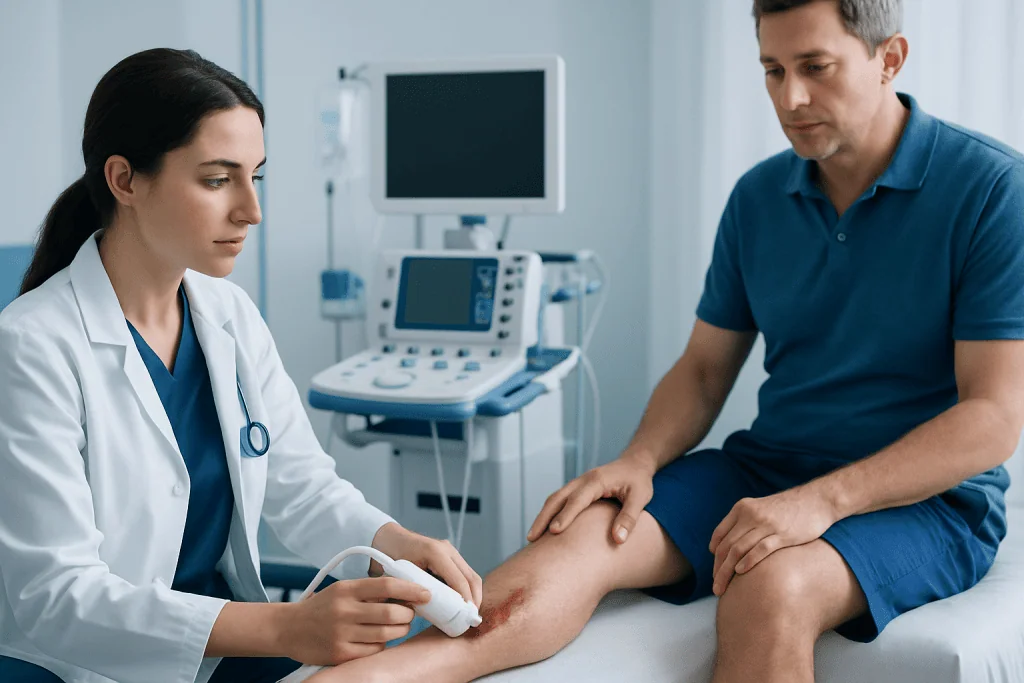
A venous ulcer often begins after swelling, dryness, itching, or a minor injury to fragile lower-leg skin. It may appear as a shallow, irregularly shaped wound with a red or yellow wound bed. Clear fluid may seep from the area, and the surrounding skin can look shiny, swollen, darker than usual, or reddish-brown.
Symptoms vary, but people may experience aching, heaviness, throbbing, or a feeling of tightness in the legs. Discomfort and swelling commonly become more noticeable after prolonged standing or sitting and may improve with walking or elevating the legs. Some people also have visible varicose veins.
Skin around a longstanding ulcer can become thickened, hardened, scaly, or itchy. These changes are signs of chronic inflammation and impaired circulation rather than poor hygiene. However, increasing pain, warmth, spreading redness, pus-like drainage, fever, or a sudden unpleasant odor can suggest infection and needs prompt medical assessment.
- Common location: lower leg, especially around the inner ankle
- Common associated features: ankle swelling, brownish skin staining, eczema-like irritation, and varicose veins
- Less typical features: an ulcer on the toes, foot, or outer ankle may point to another cause and should be evaluated carefully
Why Stasis Ulcers Develop: Causes and Risk Factors

The main cause of a stasis ulcer is sustained venous hypertension, meaning abnormally high pressure within the leg veins. Healthy venous valves help blood travel upward against gravity. When valves are damaged or weakened, blood can flow backward and collect in the lower legs. This can happen after deep vein thrombosis, with varicose veins, or because of vein changes that develop over time.
Risk rises with older age, a past blood clot in the leg, obesity, limited mobility, pregnancy history, family history of vein disease, and occupations involving long periods of standing or sitting. Leg injury, surgery, and conditions that cause chronic swelling may also contribute. Having one or more risk factors does not mean that an ulcer will develop, but it can help explain why prevention matters.
Not every leg ulcer is a stasis ulcer. Reduced arterial blood flow, diabetes-related nerve damage, inflammatory disease, pressure injury, skin cancer, and certain infections can also cause wounds on the legs or feet. In some people, more than one circulation problem is present. For this reason, it is important not to self-diagnose a persistent wound or begin strong compression without professional guidance.
How Clinicians Diagnose a Venous Leg Ulcer
Diagnosis starts with a detailed history and examination of the legs and wound. A clinician considers the ulcer location, its appearance, symptoms, medical history, medicines, mobility, history of blood clots, and signs of vein or artery disease. They will also look for swelling, varicose veins, skin discoloration, reduced sensation, and evidence of infection.
Assessing arterial circulation is especially important before compression treatment is used. This may include checking pulses in the feet and performing an ankle-brachial index, a painless comparison of blood pressure at the ankle and arm. When the cause is uncertain or more information is needed, a duplex ultrasound can show how blood moves through leg veins and whether there is reflux or blockage.
Wound measurements, photographs, and regular review help track healing. A swab or other test is not routinely needed for every ulcer, because chronic wounds may contain bacteria without being infected. Testing may be appropriate when there are clinical signs of infection or when healing is unexpectedly delayed. A biopsy may occasionally be recommended for an atypical, worsening, or non-healing ulcer to rule out other conditions.
Treatment: Healing the Wound and Improving Circulation
Treatment usually combines wound management with measures to reduce pressure in the leg veins. The exact plan depends on the ulcer size, drainage, pain level, skin condition, arterial circulation, mobility, and other health conditions. Regular follow-up is valuable because dressings and treatment needs can change as the wound heals.
Compression therapy, often provided through bandages, wraps, or specially fitted stockings, is a central treatment for confirmed venous ulcers when arterial blood supply is adequate. Compression helps limit swelling and supports blood return through the veins. It should be selected and applied by trained professionals, particularly for people with diabetes, neuropathy, peripheral artery disease, heart failure, or a complex wound history.
Clinicians may gently clean the wound, remove non-viable tissue when appropriate, and choose a dressing that manages fluid while protecting the surrounding skin. Antibiotics are generally reserved for a diagnosed infection rather than used routinely to speed healing. Pain management, moisturizing intact skin, and treatment for eczema-like inflammation may also be included.
If ultrasound identifies problematic varicose veins or venous reflux, a vascular specialist may discuss procedures that close or treat affected veins. These treatments can support ulcer healing and reduce the chance of recurrence for suitable patients. Care is individualized; no single dressing, medication, or procedure is right for every stasis ulcer.
Daily Care, Movement and Recurrence Prevention
People with a stasis ulcer should follow their wound team’s instructions about cleaning, dressings, bathing, compression, and activity. Dressings should generally be kept clean and changed on schedule. Applying unproven creams, herbal products, hydrogen peroxide, or antiseptics directly to the wound without advice can irritate healing tissue or interfere with the treatment plan.
Gentle walking and regular ankle movements can activate the calf muscles, which help pump blood upward through the veins. If a clinician agrees, elevating the legs above heart level during rest periods can reduce swelling. Long periods of stillness are best avoided where possible; taking brief movement breaks during sitting, travel, or standing can be helpful.
After an ulcer heals, ongoing compression stockings are often recommended to lower the risk of another venous ulcer. A clinician can advise on the correct type and fit, as well as whether stockings are safe for the individual. Maintaining a weight that is appropriate for the person, managing diabetes or blood pressure, not smoking, and protecting the legs from injury can also support vascular and skin health.
Recurrence is common if the underlying vein problem and swelling are not managed. New itching, swelling, skin darkening, or a small break in the skin should be addressed early rather than waiting for a larger wound to form.
When to Seek Medical Care
Any new wound on the lower leg that does not begin to heal, repeatedly leaks fluid, or occurs with chronic swelling should be assessed by a healthcare professional. Early assessment can clarify whether the wound is venous, arterial, diabetic, traumatic, or due to another cause, and can help prevent complications. People should not assume that a leg ulcer will heal on its own.
Urgent medical advice is appropriate for rapidly spreading redness, increasing warmth or swelling, worsening pain, fever, chills, pus-like drainage, red streaks, black or gray tissue, or sudden foul-smelling drainage. These symptoms may indicate infection or tissue damage that requires timely treatment. Sudden one-sided leg swelling, chest pain, shortness of breath, or coughing blood requires emergency evaluation because these can be warning signs of a blood clot or pulmonary embolism.
Medical review is also important if the foot becomes cold, pale, bluish, numb, or severely painful, as these signs can suggest reduced arterial blood flow. Acibadem International’s multidisciplinary specialists at JCI-accredited hospitals can assess venous disease and complex leg wounds for international patients, coordinating vascular and wound-care expertise when needed.
Frequently asked questions
Is a stasis ulcer the same as a venous leg ulcer?
Yes. Stasis ulcer, venous ulcer, and venous leg ulcer are commonly used terms for a wound caused mainly by impaired venous circulation in the leg. The term reflects blood pooling, or venous stasis, that can damage the skin over time.
Can a stasis ulcer heal completely?
Many stasis ulcers can heal with appropriate compression, wound care, mobility support, and management of underlying vein disease. Healing time varies depending on ulcer size, duration, circulation, infection, swelling, and other health conditions. Continued prevention is important because venous ulcers can recur.
Should a person with a stasis ulcer keep walking?
For many people, gentle walking is helpful because calf muscle movement supports blood flow from the legs. The appropriate level of activity depends on pain, balance, wound dressings, arterial circulation, and other medical conditions. A clinician can give individualized advice, especially if walking worsens symptoms.
Can compression stockings make a leg ulcer worse?
Compression is beneficial for many venous ulcers, but it is not suitable for everyone. In particular, significant peripheral artery disease can make strong compression unsafe. A clinician should assess circulation and recommend the correct compression method before it is used.
Are stasis ulcers contagious?
No. A stasis ulcer itself is not contagious because it results from circulation problems, not from person-to-person transmission. A wound can become infected, but routine contact does not spread a venous ulcer to another person.
Why is the skin around a stasis ulcer brown or itchy?
Longstanding venous pressure can cause blood components and fluid to leak into nearby tissues, leading to brownish discoloration and inflammation. The skin may also become dry, itchy, or eczema-like. Protecting and moisturizing intact surrounding skin as advised can help reduce irritation.
References
- World Health Organization
- National Institute for Health and Care Excellence
- Society for Vascular Surgery
- Wound, Ostomy and Continence Nurses Society
- Centers for Disease Control and Prevention
This article is for general information only and is not a substitute for professional medical advice. Please consult a qualified doctor about your individual situation.
Persistent digestive symptoms? Get evaluated in Turkey
JCI-accredited · board-certified surgeons · reply within 24h
Add us as a Preferred Source to see more of our trusted health content across Google Search, AI Overviews and Discover.
Check your numbers in seconds
BMI, calories, due date, blood pressure and 30+ more clinical calculators — free, instant, doctor-reviewed ranges.