STD in Throat: An Evidence-Based Guide for Patients

A std in throat may be caused by gonorrhea, chlamydia, herpes, syphilis, HPV, or HIV exposure, depending on the situation. Many throat infections cause no symptoms, so testing can be important after exposure or if a partner is diagnosed.
Key Takeaways
- A std in throat may be caused by gonorrhea, chlamydia, herpes, syphilis, HPV, or HIV exposure, depending on the situation.
- Many throat infections cause no symptoms, so testing can be important after exposure or if a partner is diagnosed.
- Diagnosis usually involves a medical history, throat examination, and swab-based laboratory testing.
- Treatment depends on the infection and may include antibiotics, antiviral medicines, monitoring, and partner notification.
- Using barrier protection during oral sex and having regular sexual health screening can reduce risk.
A std in throat is a sexually transmitted infection affecting the mouth or throat, often after oral sex. Some cases cause sore throat, swollen glands, or mouth changes, but many cause no symptoms and are found only with testing.
Overview: What Does “STD in Throat” Mean?
A std in throat means a sexually transmitted infection affecting the throat, tonsils, or mouth area. It can happen after oral sex with a partner who has an infection in the genitals, anus, or mouth. In medical practice, this may also be called an oral or pharyngeal sexually transmitted infection.
Several infections can involve the throat. Common examples include gonorrhea and, less often, chlamydia. Viral infections such as herpes simplex virus, human papillomavirus (HPV), and HIV exposure may also involve the mouth or throat in certain situations. Syphilis can cause sores in the mouth as well. The exact infection matters because symptoms, testing, and treatment differ.
One reason this topic can be confusing is that throat symptoms are often mild or absent. A person may feel completely well and still have an infection that can be passed to a partner. For that reason, sexual history and appropriate testing are often just as important as symptoms themselves.
Symptoms and What They Can Feel Like
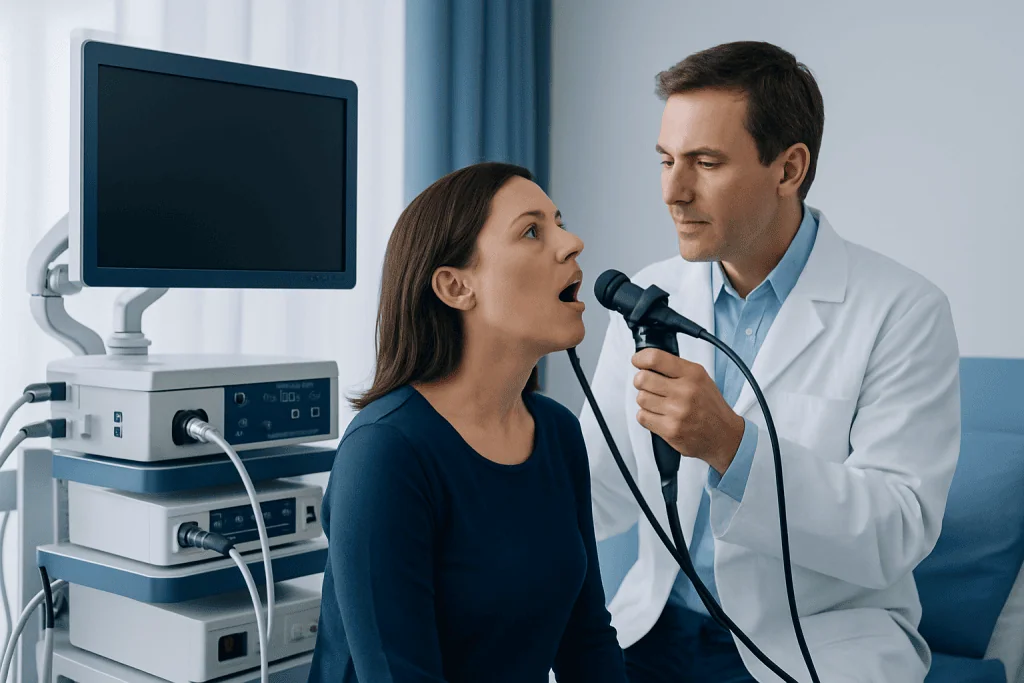
Many people with a std in throat have no symptoms at all. When symptoms do occur, they can look like a common viral illness or ordinary throat irritation. This is why self-diagnosis is unreliable and why laboratory testing is needed to confirm the cause.
Possible symptoms may include a sore throat, pain when swallowing, swollen tonsils, redness in the throat, swollen lymph nodes in the neck, mouth sores, or white patches. Some people may notice bad breath, fever, or a general feeling of being unwell. Herpes can cause painful blisters or ulcers, while syphilis may begin with a painless sore.
Symptoms outside the throat can offer useful clues. For example, a person may also have genital discharge, burning during urination, rectal symptoms, a genital sore, or a skin rash. However, a throat infection can also happen on its own, especially with gonorrhea.
- Gonorrhea in the throat: often causes no symptoms, but may lead to sore throat or swollen glands.
- Chlamydia in the throat: usually silent and less common than gonorrhea.
- Herpes: may cause painful mouth ulcers, burning, or fever.
- Syphilis: may cause a sore in the mouth, followed later by rash or flu-like symptoms.
- HPV: may cause oral warts in some people, though many infections cause no visible changes.
How It Spreads and Who May Be at Risk

A std in throat most often spreads through oral sex, including mouth-to-penis, mouth-to-vagina, and mouth-to-anus contact. Some infections can also spread through close skin-to-skin or mouth-to-mouth contact if infectious sores are present. Transmission risk varies depending on the organism, the type of contact, and whether there are sores, inflammation, or a high level of infection in a partner.
Risk may be higher for people who have new or multiple sexual partners, do not use barrier protection during oral sex, have a partner with a known STI, or have a history of sexually transmitted infections. People with oral ulcers, gum disease, or recent dental procedures may have more vulnerable tissue, although this does not mean infection will occur.
It is also important to know that condoms and dental dams can lower risk but do not remove it completely, because some infections spread through skin or mucosal contact beyond the covered area. People who are sexually active and concerned about exposure may benefit from screening and broader sexual health evaluation, especially if they also have symptoms of sexually transmitted diseases.
Diagnosis: Why Testing Matters
Because symptoms can be absent or nonspecific, diagnosis depends on proper testing. A clinician will usually ask about symptoms, recent sexual contact, and which body sites may have been exposed. This helps determine whether the throat, urine, genitals, rectum, or blood should be tested.
For gonorrhea and chlamydia, the most common test is a throat swab sent for nucleic acid amplification testing. This type of test is highly sensitive and can identify the genetic material of the infection. In some situations, a culture may also be done, especially if treatment failure is a concern.
If mouth ulcers, blisters, or sores are present, the clinician may swab the lesion to test for herpes or other causes. Blood tests may be recommended for syphilis, HIV, and sometimes hepatitis depending on the exposure history. A general ENT or sexual health examination may also be appropriate when symptoms are persistent, severe, or unusual.
Testing should be tailored, not one-size-fits-all. A person with repeated sore throats does not automatically have an STI, and many common throat complaints are caused by viruses, reflux, allergies, or bacterial infections unrelated to sexual contact. This is why professional assessment is the safest way to reach the correct diagnosis.
Treatment Options and What Recovery Usually Involves
Treatment for a std in throat depends entirely on the specific infection. Bacterial infections such as gonorrhea, chlamydia, and syphilis are treated with antibiotics chosen according to current clinical guidelines. Viral infections such as herpes are managed with antiviral medicines, while HPV-related changes may need monitoring or procedure-based treatment if visible lesions are present.
It is important not to self-treat with leftover antibiotics or internet advice. The wrong medicine may not work, may delay diagnosis, and can contribute to antibiotic resistance. After diagnosis, a clinician may advise avoiding sexual contact until treatment is completed and, when relevant, until follow-up confirms it is safe to resume sexual activity.
Partner management is also part of treatment. Current or recent sexual partners may need testing and treatment to prevent reinfection and reduce further spread. Some people may also need repeat testing after treatment, depending on the organism, symptoms, and local guidance.
When symptoms are more complex or involve persistent throat changes, evaluation by specialists may be helpful. In selected cases, doctors may coordinate care with infectious diseases experts, and if structural throat symptoms need closer assessment, ENT evaluation may also be considered.
Prevention and Self-Care After Exposure
Prevention focuses on reducing exposure and recognizing when testing is needed. Using condoms or dental dams during oral sex lowers the risk of many infections. Avoiding sexual contact when either partner has mouth sores, genital sores, unusual discharge, or other symptoms can also help reduce transmission.
Regular STI screening is important for people with ongoing risk, especially those with new partners or multiple partners. Screening should be site-specific when appropriate, meaning that a throat swab may be needed if oral exposure occurred. Vaccination also has a role in prevention; HPV vaccination helps protect against strains linked to warts and some cancers.
After a possible exposure, it is reasonable to avoid assuming the worst while still taking the situation seriously. It may help to avoid sexual contact until medical advice is obtained, especially if symptoms develop or a partner has been diagnosed with an infection. Good oral hygiene supports overall mouth health, but it does not prevent or cure a throat STI.
For people who need broader care, testing may be part of a comprehensive sexual health plan that includes counseling, vaccination, and follow-up. In some cases, doctors may also recommend check-up and screening services to review general health and exposure-related risks.
When to Seek Medical Care
Medical care should be sought if a person has a persistent sore throat after oral sexual exposure, mouth ulcers, white patches, swollen glands, fever, trouble swallowing, or a partner who has tested positive for an STI. Evaluation is also important when symptoms keep returning or do not improve as expected.
Urgent medical attention is needed for breathing difficulty, severe throat swelling, dehydration, inability to swallow fluids, or intense pain. These symptoms can have causes beyond sexually transmitted infection and should not be ignored.
Even without symptoms, testing is worth discussing after a known exposure or if a partner is diagnosed. A clinician can explain the best timing for tests and which body sites should be checked. Near the end of the care pathway, patients may also value multidisciplinary support; Acibadem International’s specialists and JCI-accredited hospitals diagnose and treat sexual health and throat-related conditions for international patients.
Frequently asked questions
Can a std in throat go away on its own?
Some symptoms may improve without treatment, but the infection itself may remain. Because untreated STIs can still spread to partners and may lead to complications, medical testing and appropriate treatment are recommended.
How soon after oral sex should someone get tested?
The best timing depends on the suspected infection and the type of test being used. A clinician or sexual health service can advise when a throat swab or blood test is most likely to be accurate after exposure.
Is a sore throat after oral sex always an STI?
No. A sore throat can be caused by common viruses, allergies, acid reflux, dry air, smoking, or non-sexually transmitted bacteria. Because symptoms overlap, testing is needed if STI exposure is possible.
Can throat gonorrhea or chlamydia be present without symptoms?
Yes. Both infections, especially throat gonorrhea, can be completely asymptomatic. This is one reason screening may be advised after exposure or when a partner has been diagnosed.
Can someone pass a throat STI to another person?
Yes, depending on the infection. Oral sexual contact can transmit infections from the throat to a partner’s genitals or other exposed areas, which is why treatment and partner notification are important.
Do mouthwash or home remedies treat a std in throat?
No home remedy should be relied on to treat a sexually transmitted infection in the throat. Supportive measures may ease discomfort, but confirmed infections need professional evaluation and treatment based on the specific cause.
References
- Centers for Disease Control and Prevention
- World Health Organization
- American Sexual Health Association
- Mayo Clinic
- National Health Service
This article is for general information only and is not a substitute for professional medical advice. Please consult a qualified doctor about your individual situation.
Explore treatments in Turkey — costs, top hospitals & a free quote
JCI-accredited · board-certified surgeons · reply within 24h
Add us as a Preferred Source to see more of our trusted health content across Google Search, AI Overviews and Discover.

More from the Health Library

Drooling — Explained by Medical Evidence, Not Myths

Albumin — Explained by Medical Evidence, Not Myths

Anorexia: An Evidence-Based Guide for Patients

Paleo Snacks — Explained by Medical Evidence, Not Myths

Enucleation: An Evidence-Based Guide for Patients