Straight Leg Raises: What Patients Need to Know
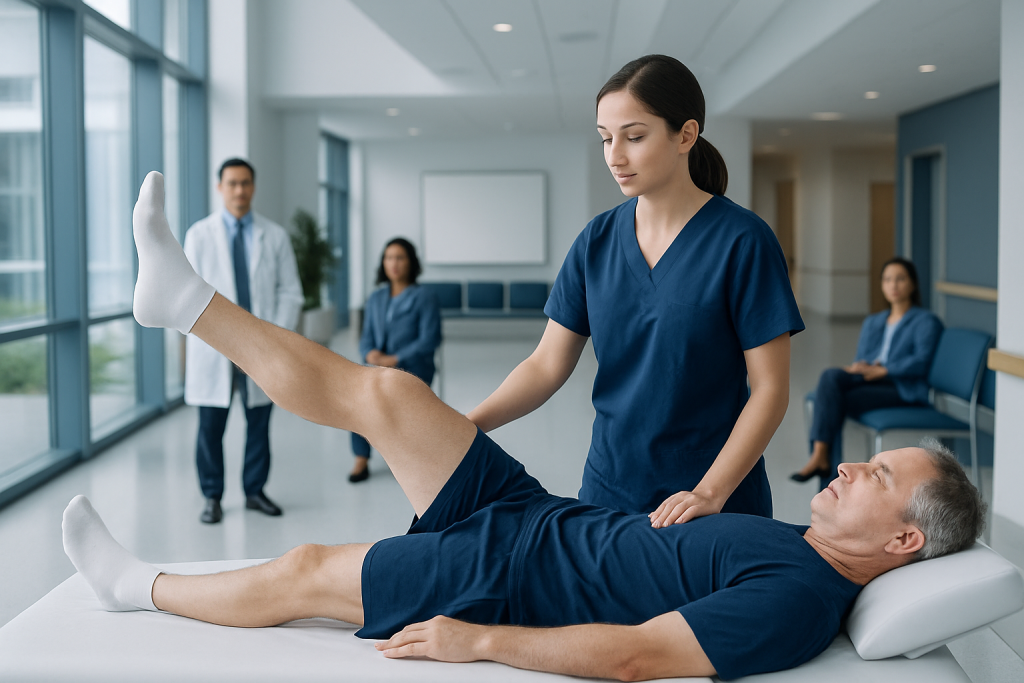
Straight leg raises strengthen the quadriceps and hip flexors while the knee stays straight. They are often used in rehabilitation after knee, hip, or lower-limb problems.
Key Takeaways
- Straight leg raises strengthen the quadriceps and hip flexors while the knee stays straight.
- They are often used in rehabilitation after knee, hip, or lower-limb problems.
- Pain during the exercise is not expected and may mean the technique or timing needs review.
- The term "straight leg raise" can also refer to a clinical test for nerve irritation in the lower back.
- A clinician or physical therapist can advise whether straight leg raises are suitable for a person’s condition.
Straight leg raises are a common exercise used in rehabilitation and general fitness to strengthen the front of the thigh and hip without bending the knee. They can be helpful after some injuries or surgeries, but good technique and medical guidance matter, especially if pain is present.
Overview: what straight leg raises are and why they are used
Straight leg raises are a simple movement in which a person lifts one leg while keeping the knee straight. In exercise and rehabilitation settings, they are mainly used to strengthen the quadriceps muscles at the front of the thigh and the hip flexor muscles. Because the knee does not bend during the movement, straight leg raises are often introduced when a person needs a lower-impact way to build strength.
They are commonly recommended after knee surgery, during recovery from some musculoskeletal injuries, or as part of a home exercise program for improving leg control. For some people, they can also support daily activities such as walking, climbing stairs, and getting up from a chair by helping rebuild muscle activation.
It is also helpful to know that the phrase “straight leg raise” has two meanings in healthcare. One refers to the exercise itself. The other refers to a physical examination maneuver used by clinicians to check for signs of nerve irritation in the lower back, sometimes seen with sciatica. The exercise and the test are related in name, but they are used for different purposes.
How the exercise works in the body
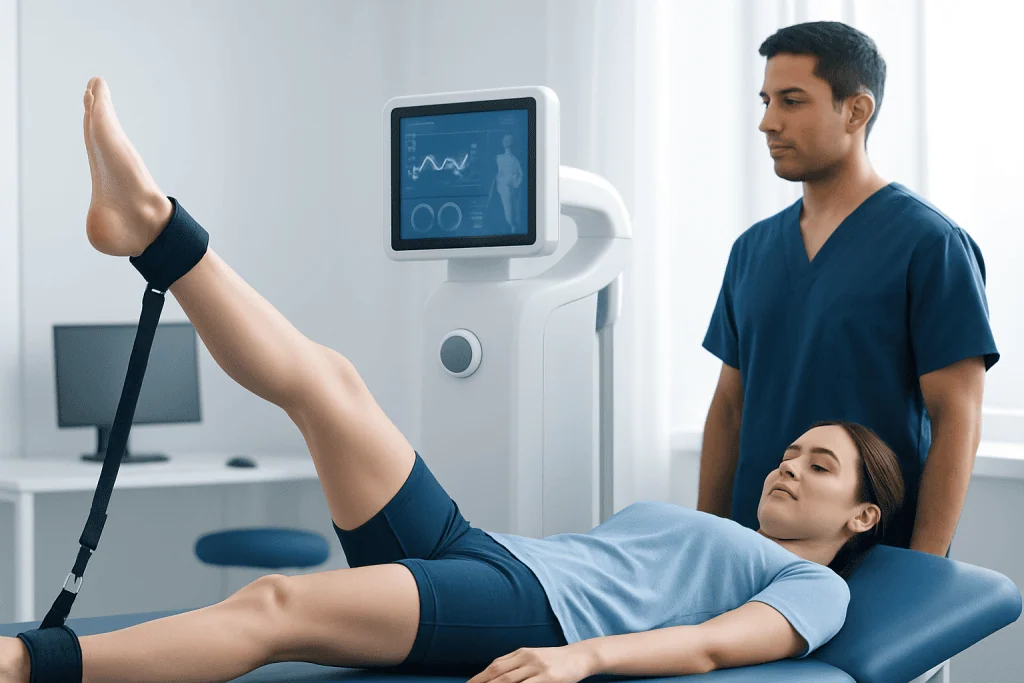
When a person performs straight leg raises while lying down, the quadriceps help keep the knee fully extended, and the hip flexors lift the leg upward. The abdominal and pelvic muscles also contribute by helping stabilize the trunk and pelvis. This makes the exercise more than a simple leg lift; it is also a basic control exercise for the lower limb and core.
One reason straight leg raises are popular in rehabilitation is that they can activate the thigh muscles without placing large bending forces through the knee joint. This can be useful early in recovery when deeper squatting or step exercises are not yet comfortable. However, “gentle” does not always mean appropriate for everyone. People with hip flexor irritation, certain back problems, or poor pelvic control may need alternatives or modifications.
The exercise can be done in several positions, including:
- Supine: lying on the back, the most common version
- Side-lying: to target the outer hip muscles more directly
- Prone: lying on the stomach to work the back of the hip
- Seated or standing variations: sometimes used later in rehabilitation
The most suitable version depends on the goal, the person’s symptoms, and any recent procedure or injury.
Benefits and common reasons clinicians recommend straight leg raises

Straight leg raises may help improve muscle strength, neuromuscular control, and confidence in using the leg after a period of pain or reduced activity. They are often included in rehabilitation plans because they are relatively easy to learn and can be progressed gradually over time. For example, a physical therapist may start with a few controlled repetitions and later increase the hold time, repetitions, or resistance.
Common situations in which a clinician may recommend straight leg raises include recovery after knee injury, some forms of knee pain, post-operative strengthening, or general deconditioning. They may appear in care plans for people being treated with knee replacement rehabilitation or after procedures such as ACL surgery, depending on the treating surgeon’s or therapist’s protocol.
Possible benefits include:
- Improved quadriceps activation when the knee is sensitive or weak
- Support for early-stage rehabilitation when more demanding exercises are not yet suitable
- Better leg control during basic movements such as walking or transfers
- A simple home exercise option with little or no equipment
Even so, straight leg raises are only one part of a broader program. Most people also need flexibility work, balance training, functional strengthening, and activity-specific exercises for best long-term results.
How to do straight leg raises safely and correctly
To perform a basic straight leg raise while lying on the back, one leg stays bent with the foot flat on the surface, and the other leg stays straight. The person gently tightens the front thigh muscle of the straight leg, keeps the knee facing upward, and slowly lifts the leg to a comfortable height. The movement should be smooth and controlled rather than quick or forceful. After a short pause, the leg is lowered slowly.
Good form usually matters more than lifting the leg high. A common mistake is arching the lower back or allowing the pelvis to tilt as the leg comes up. Another is letting the knee soften or rotate outward. These changes can reduce the benefit of the exercise and may increase discomfort, especially in the back or hip.
Helpful technique points include:
- Keep the knee straight but not forcefully locked
- Tighten the thigh muscle before lifting
- Move slowly in both directions
- Stop if sharp pain, catching, or radiating pain occurs
- Breathe normally rather than holding the breath
If a person has recently had surgery or is recovering from a musculoskeletal problem, the safest approach is to follow a tailored program from a clinician or rehabilitation specialist. Some patients benefit from supervised physical therapy and rehabilitation to learn technique and progress safely.
When straight leg raises may cause pain or may not be appropriate
Straight leg raises should not usually cause sharp pain. Mild muscle effort or fatigue is expected, but joint pain, pinching in the front of the hip, worsening swelling, or pain that travels down the leg can be a sign that the exercise needs to be adjusted or paused. In some people, the movement may irritate the hip flexors or place strain on the lower back if the pelvis is not stable.
People with significant back pain, nerve-related symptoms, recent trauma, or an unclear diagnosis should be cautious. If lifting the straight leg reproduces pain running from the buttock down the leg, this may point to a nerve-related issue rather than a simple muscle weakness problem. In such cases, a medical assessment is more appropriate than continuing home exercise without guidance.
Depending on the underlying condition, alternatives may be preferable. A therapist may suggest quad sets, short arc quadriceps exercises, supported leg movements, or other low-load strengthening options. If symptoms relate to the spine, treatment may focus more on diagnosis and targeted care for conditions such as a herniated disc than on repeating a painful exercise.
The straight leg raise test: how doctors use the name differently
In clinical practice, the straight leg raise test is different from the strengthening exercise. During the test, a clinician lifts a relaxed straight leg while the person lies on the back. The goal is to see whether this movement reproduces radiating leg pain, which can happen when a nerve root is irritated. This test is one part of a wider examination and does not confirm a diagnosis by itself.
A positive straight leg raise test may suggest nerve tension or irritation, often involving the lower spine. It can be relevant in people with lower back pain accompanied by symptoms that extend below the knee, such as tingling, burning, or numbness. Clinicians interpret the result alongside the person’s history, strength, reflexes, sensation, and, when needed, imaging studies.
Because the test and the exercise share the same name, patients may understandably confuse them. A useful distinction is that the exercise is an active strengthening movement, while the test is a diagnostic maneuver performed during a medical examination. If uncertainty remains about which one has been recommended, it is wise to ask a clinician for clarification.
When to seek medical care
Medical advice is important if leg raising causes sudden or severe pain, marked weakness, inability to bear weight, major swelling, fever, or symptoms after a fall or other injury. Prompt assessment is also sensible if pain is worsening instead of improving, especially after surgery or during rehabilitation.
A person should also seek medical care if the movement brings on numbness, tingling, pain shooting below the knee, or new back pain. These symptoms may suggest a nerve-related problem that needs evaluation. Persistent hip or knee pain that limits daily activity is another reason to consult a doctor or physical therapist rather than continuing self-directed exercise.
Near the end of a treatment journey, many people simply need expert guidance on progression, technique, and return to activity. Acibadem International’s multidisciplinary specialists and JCI-accredited hospitals diagnose and treat musculoskeletal and spine conditions for international patients, including rehabilitation after orthopedic procedures such as hip replacement when appropriate.
Frequently asked questions
What do straight leg raises help with?
Straight leg raises mainly help strengthen the quadriceps and hip flexor muscles while the knee stays straight. They are often used in rehabilitation to improve early muscle activation and leg control.
Are straight leg raises good for knee pain?
They can be helpful for some types of knee pain, especially when a clinician wants to strengthen the thigh without a lot of knee bending. However, they are not suitable for every cause of knee pain, so persistent or worsening symptoms should be assessed.
Why does my hip hurt during straight leg raises?
Hip pain during the exercise may happen if the hip flexor muscles are irritated, the pelvis is not stable, or the exercise is being done too early or with poor form. Pain is a sign to stop and ask a clinician or physical therapist to review technique and suitability.
What is the difference between a straight leg raise exercise and a straight leg raise test?
The exercise is an active movement used to build strength and control. The test is a clinical examination maneuver used by a healthcare professional to check for possible nerve irritation in the lower back or leg.
How many straight leg raises should a person do?
There is no single number that is right for everyone. The ideal amount depends on the person’s condition, strength, pain level, and recovery stage, so a doctor or physical therapist should guide the plan when the exercise is part of treatment.
Should straight leg raises be done after surgery?
They are commonly included after some knee or hip procedures, but timing depends on the exact operation and the surgeon’s instructions. A post-operative program should always follow the treating team’s advice rather than a general routine found online.
References
- American Academy of Orthopaedic Surgeons
- National Institute of Arthritis and Musculoskeletal and Skin Diseases
- MedlinePlus
- National Health Service
- American Physical Therapy Association
This article is for general information only and is not a substitute for professional medical advice. Please consult a qualified doctor about your individual situation.
Joint and spine care in Turkey — expert assessment & treatment
JCI-accredited · board-certified surgeons · reply within 24h
Add us as a Preferred Source to see more of our trusted health content across Google Search, AI Overviews and Discover.

More from the Health Library

Compound Exercises: An Evidence-Based Guide for Patients

Skin Tear: An Evidence-Based Guide for Patients

Erythropoiesis: A Complete Medical Overview

Bathing in Oats: An Evidence-Based Guide for Patients

Duct Ectasia — Explained by Medical Evidence, Not Myths