Stress Fracture: Early Symptoms, Causes, and Recovery Basics

A stress fracture often causes localized pain that starts with activity and may progress to pain at rest. It commonly affects weight-bearing bones such as the foot, shin, ankle, hip, and pelvis.
Key Takeaways
- A stress fracture often causes localized pain that starts with activity and may progress to pain at rest.
- It commonly affects weight-bearing bones such as the foot, shin, ankle, hip, and pelvis.
- Training changes, repetitive impact, poor footwear, and low bone strength can all increase risk.
- Diagnosis may involve a physical exam and imaging, especially when early X-rays are normal.
- Treatment usually focuses on rest, activity modification, supportive footwear or bracing, and gradual return to exercise.
- Persistent bone pain should be assessed by a qualified doctor to prevent worsening injury.
A stress fracture is a small crack in a bone that usually develops from repeated impact or overuse rather than a single injury. Recognizing early symptoms and getting timely care can help healing and reduce the risk of a complete fracture.
Overview
A stress fracture is a tiny crack or severe bone stress injury caused by repeated force over time. Unlike a fracture from a sudden fall or direct blow, this type of injury usually develops gradually when a bone is repeatedly loaded faster than the body can repair it. It is especially common in people who run, jump, march, dance, or take part in sports with frequent impact.
Stress fractures most often affect weight-bearing bones. Common locations include the metatarsals in the foot, the tibia in the lower leg, the heel bone, the ankle, and sometimes the hip or pelvis. Although athletes are well known to develop them, stress fractures can also occur in people who suddenly become more active, spend long hours standing, or have reduced bone strength.
Early recognition matters because continuing the same activity can turn a small stress injury into a more serious fracture. With appropriate rest and medical guidance, most stress fractures heal well. Treatment and recovery time depend on which bone is affected, how severe the injury is, and whether there are underlying factors such as nutrition issues or low bone density.
Early Symptoms of a Stress Fracture

The most common early sign of a stress fracture is pain in one specific area of bone during activity. At first, the discomfort may appear only near the end of exercise or after a workout. Over time, it may start earlier, become more intense, and last longer after activity stops.
Many people also notice tenderness when pressing on the area, mild swelling, or pain when putting weight on the affected limb. The pain is often well localized rather than spread out through a whole muscle group. This can help distinguish a stress fracture from general soreness after exercise.
Symptoms that may suggest a stress fracture include:
- Pain that worsens with running, jumping, or walking
- Pain that improves with rest but returns with activity
- A small, specific tender spot on the bone
- Swelling around the painful area
- Reduced performance or limping
As the injury progresses, pain may be present even during daily activities or at rest. Because early symptoms can resemble shin splints, tendon irritation, or a sprain, persistent focal bone pain should not be ignored.
Causes and Risk Factors
Stress fractures happen when repeated stress placed on a bone exceeds its ability to recover. Bones normally remodel themselves, breaking down old tissue and building new tissue. If activity increases too quickly or recovery time is too short, tiny areas of damage can build up and eventually lead to a crack.
Training errors are a frequent cause. A sudden increase in running distance, intensity, frequency, or hill work can overload bones. Starting a new sport, returning too quickly after a break, or exercising on hard surfaces may also contribute. Worn-out shoes or footwear that does not match the activity can further increase impact on the lower limbs.
Some people are more vulnerable because of body mechanics or medical factors. Reduced muscle strength, tightness, altered gait, foot shape, or poor balance can change how force travels through the body. Conditions that lower bone strength, such as low bone mineral density, hormonal changes, nutritional deficiencies, or certain medications, may also raise risk.
Important risk factors include:
- Rapid increase in exercise volume or intensity
- Repetitive high-impact sports such as running, basketball, tennis, or dance
- Inadequate rest between training sessions
- Poor footwear or change in training surface
- Low calcium or vitamin D intake
- Low energy availability or restrictive eating patterns
- Osteoporosis or other conditions affecting bone health
- Previous stress fracture
How Stress Fractures Are Diagnosed
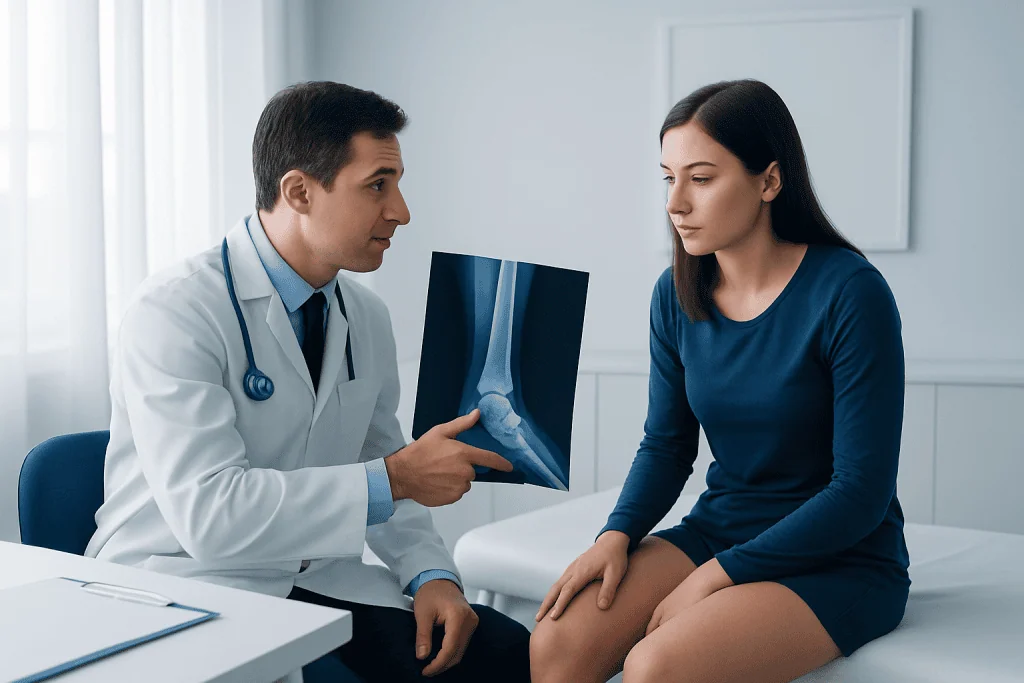
Diagnosis begins with a medical history and physical examination. A doctor will ask when the pain started, which activities make it worse, whether training has changed recently, and if there is a history of menstrual changes, eating difficulties, bone disease, or prior fractures. During the examination, the doctor checks for a focused area of bone tenderness, swelling, and pain with weight-bearing or hopping.
Imaging is often used to confirm the diagnosis. Standard X-rays are usually the first test, but early stress fractures may not appear on X-rays right away. If symptoms strongly suggest a stress fracture and the X-ray is normal, more sensitive imaging such as MRI may be recommended. MRI can show bone stress injury at an earlier stage and helps assess severity.
In some situations, a bone scan or CT scan may be considered, but MRI is commonly preferred because it provides detailed information without radiation exposure. If the fracture is in a higher-risk area, such as certain parts of the hip, front of the shin, or a specific bone in the foot, prompt diagnosis is especially important because healing can be slower or complications may be more likely.
Doctors may also investigate contributing causes. Blood tests or a bone health evaluation can be helpful if fractures recur, healing is delayed, or there are signs of low bone density or nutritional deficiency.
Treatment Options
The main goal of treatment is to allow the bone to heal while preventing the injury from worsening. In many cases, this means stopping the activity that caused pain and switching temporarily to lower-impact exercise, such as swimming or cycling, if a doctor says it is appropriate. Some people need crutches, a walking boot, or other support to reduce pressure on the bone.
Pain management usually focuses on rest, ice, elevation when needed, and protecting the injured area. A doctor may advise supportive footwear, orthotics, or temporary bracing depending on the location of the fracture. For injuries involving the foot and ankle, evaluation by an orthopedic specialist can guide decisions about ankle and foot care and whether immobilization is needed.
Physical therapy may be recommended as symptoms improve. Rehabilitation can help restore strength, flexibility, balance, and movement patterns that may have contributed to the injury. In some cases, imaging follow-up is needed before returning to full sport, especially for higher-risk stress fractures or pain that does not improve as expected. Some lower-limb bone stress injuries may overlap in symptoms with shin splints, which is another reason a precise diagnosis is important.
Surgery is not needed for most stress fractures, but it may be considered for certain high-risk fractures, fractures that do not heal properly, or injuries in athletes who need stable fixation after specialist assessment. For some patients, an orthopedic team may also evaluate related structural issues and broader orthopedic treatment options. Treatment plans are individualized, and return to activity should be gradual rather than rushed.
Recovery and Return to Activity
Recovery time varies depending on the bone involved, the severity of the injury, and the person’s overall bone health. Many stress fractures heal over several weeks, but some take longer, especially in areas with lower blood supply or continued mechanical strain. A person may feel better before the bone has fully recovered, so symptoms alone should not determine return to sport.
A gradual return is one of the most important parts of recovery. Once walking and daily activities are pain-free, a doctor or physiotherapist may suggest a step-by-step plan that slowly increases load. This often starts with low-impact exercise, followed by short periods of walking or jogging, and later a measured increase in intensity and duration.
Returning too quickly can trigger renewed pain and delay healing. Recovery is usually more successful when the original causes are addressed, such as training errors, weak supporting muscles, nutritional gaps, or footwear problems. If the stress fracture is linked to low bone density, further assessment may be needed to reduce the chance of future fractures, including evaluation for osteoporosis.
Prevention and Self-care
Not every stress fracture can be prevented, but risk can often be reduced with sensible training habits and attention to bone health. Increases in exercise should be gradual, with planned rest days and cross-training to avoid repeating the same high-impact load every day. Good technique, strength training, and appropriate shoes for the activity and foot type can also help lower strain on bones.
Nutrition is another important part of prevention. Bones need enough energy, protein, calcium, vitamin D, and other nutrients to repair and stay strong. People who exercise frequently should be especially careful not to underfuel. Ongoing fatigue, frequent injuries, or changes in menstrual cycles should be discussed with a healthcare professional.
Helpful self-care and prevention steps include:
- Increase activity gradually rather than all at once
- Replace worn-out athletic shoes regularly
- Alternate high-impact and low-impact workouts
- Include strength and balance exercises in training
- Maintain a balanced diet that supports bone health
- Rest early if localized bone pain develops
For international patients who need evaluation and follow-up, Acibadem International’s multidisciplinary specialists in JCI-accredited hospitals diagnose and treat stress fractures and related orthopedic conditions with individualized care planning.
When to See a Doctor
A doctor should assess bone pain that is localized, repeatedly triggered by activity, or not improving with rest. Medical review is also important if swelling is present, walking becomes painful, or there is a limp. These signs do not always mean a stress fracture, but they should not be ignored.
Prompt evaluation matters even more when pain affects the hip, groin, front of the shin, or the outer side of the foot, because some stress fractures in these areas are considered higher risk. People with osteoporosis, a history of repeated fractures, eating disorders, or other conditions affecting bone health should seek care sooner rather than later.
If pain comes on suddenly after a twist, fall, or direct impact, another injury such as an acute fracture or ligament damage may be the cause. In those situations, a clinician may recommend urgent assessment and imaging. Early diagnosis generally supports safer treatment and a smoother recovery.
Frequently asked questions
What does a stress fracture feel like at first?
A stress fracture often begins as a small, well-localized pain that appears during exercise and eases with rest. As the injury progresses, the pain may start earlier in activity, last longer afterward, or become painful during everyday walking.
Can a stress fracture heal on its own?
Many stress fractures do heal with rest and reduced loading, but they still need proper assessment and protection. Continuing the same activity can worsen the crack and delay recovery, so medical advice is important.
How is a stress fracture different from shin splints?
Shin splints usually cause a broader area of aching along the shin, while a stress fracture more often causes a specific tender spot on the bone. Because symptoms can overlap, a doctor may recommend imaging if the diagnosis is uncertain or pain persists.
Do all stress fractures show up on X-rays?
No. Early stress fractures may not be visible on standard X-rays. If symptoms strongly suggest a stress fracture, an MRI may be used because it can detect bone stress injuries earlier.
How long does stress fracture recovery take?
Recovery time varies by location and severity, but many cases improve over several weeks with appropriate care. Higher-risk fractures or those in areas with slower healing may take longer and need closer follow-up.
Is it safe to exercise with a stress fracture?
High-impact activity is usually avoided until healing has progressed. Depending on the injury, a doctor or physiotherapist may allow lower-impact exercise that does not cause pain, but this should be individualized.
References
- American Academy of Orthopaedic Surgeons
- National Institute of Arthritis and Musculoskeletal and Skin Diseases
- Mayo Clinic
- American College of Sports Medicine
This article is for general information only and is not a substitute for professional medical advice. Please consult a qualified doctor about your individual situation.
Joint and spine care in Turkey — expert assessment & treatment
JCI-accredited · board-certified surgeons · reply within 24h
Add us as a Preferred Source to see more of our trusted health content across Google Search, AI Overviews and Discover.