Stress Stress Testicles — Explained by Medical Evidence, Not Myths

Stress balls may ease momentary tension by giving the hands and mind a simple focus. They are best used as a supportive habit, not as a treatment for chronic stress or mental health conditions.
Key Takeaways
- Stress balls may ease momentary tension by giving the hands and mind a simple focus.
- They are best used as a supportive habit, not as a treatment for chronic stress or mental health conditions.
- Benefits are usually modest and vary from person to person.
- Using a stress ball should not cause hand pain, numbness, or worsening symptoms.
- Persistent stress, panic, sleep problems, or low mood deserve medical attention.
Stress stress balls can be a simple tool for brief stress relief, especially when they help a person release physical tension or redirect nervous energy. Medical evidence suggests they may be helpful as part of a broader stress-management plan, but they do not treat the underlying causes of ongoing stress, anxiety, or depression.
Overview: what stress stress balls can and cannot do
Stress stress balls are small, squeezable objects designed to be pressed repeatedly in the hand. In practical terms, they may help some people feel calmer for a short time by channeling restless energy, encouraging muscle release, and giving attention a simple physical task. That is the evidence-based answer: they can be useful for brief symptom relief, but they are not a cure for stress.
Medical understanding of stress shows that it affects the whole body, including muscle tension, breathing, sleep, concentration, and mood. A stress ball may address one part of this response—the urge to clench, fidget, or hold tension in the hands and forearms—but it does not directly solve work strain, relationship conflict, burnout, trauma, or an anxiety disorder.
This distinction matters because many products are advertised as if they can “remove stress” on their own. In reality, stress usually improves best with a combination of strategies such as sleep care, physical activity, breathing exercises, healthy routines, and, when needed, support from a doctor or mental health professional. A stress ball can fit into that plan as a low-risk, inexpensive self-management tool.
For some people, especially those who feel agitation while working, studying, waiting, or traveling, a stress ball can offer a practical sense of grounding. For others, it may do very little. Individual response varies, and that is consistent with what clinicians see in everyday care.
How stress balls may work in the body and mind
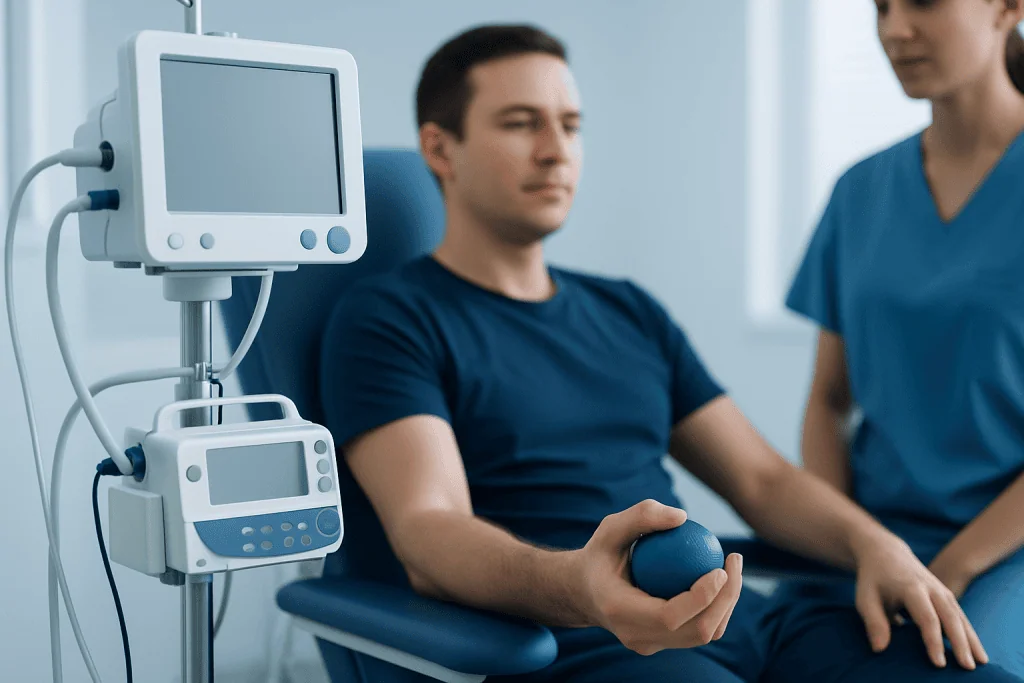
Stress often produces a physical stress response: tighter muscles, shallower breathing, faster heart rate, and heightened alertness. Repetitive squeezing and releasing may help a person notice and reduce muscle tension, especially in the hands, wrists, and forearms. This physical action can act as a cue to relax other areas of the body, such as the shoulders and jaw.
There is also an attentional effect. When the brain is overloaded, a simple sensory task may briefly interrupt spiraling thoughts or help a person stay present. This is similar to why some people benefit from grounding exercises, fidget tools, or paced breathing. The stress ball itself is not “treating” stress biologically; rather, it may support a calming behavior pattern.
Another possible benefit is habit substitution. A person who tends to bite nails, pick at skin, tap excessively, or grip the steering wheel tightly may redirect that energy toward a safer action. In these situations, a stress ball may reduce some tension-related behaviors without addressing the root cause. That is still useful, but expectations should remain realistic.
Stress balls may also be used in hand therapy or recovery settings, where clinicians sometimes recommend gentle squeezing exercises for grip strength or dexterity. However, stress relief use and rehabilitation use are not the same. Anyone with hand pain, arthritis, nerve symptoms, or recent injury should ask a clinician before using resistance devices regularly.
What the evidence says

Research on stress stress balls specifically is limited compared with the larger body of evidence on stress management overall. Studies on tactile tools, fidgeting devices, and hand exercises suggest that repetitive physical actions can improve comfort, attention, or short-term perceived stress for some users. However, the effect is usually modest, and results are not consistent enough to support broad claims that stress balls reliably reduce anxiety or major stress on their own.
What is well supported by medical evidence is that stress responds best to multi-part care. Techniques with stronger evidence include regular exercise, adequate sleep, mindfulness-based practices, cognitive behavioral strategies, social support, and treatment of underlying medical or mental health conditions. A stress ball may work best when paired with these approaches rather than replacing them.
In clinics, doctors often encourage low-risk coping tools if they help a patient avoid harmful habits and feel more in control. For example, using a stress ball during a difficult phone call or before a presentation may help some people manage immediate tension. But if symptoms include frequent panic, persistent worry, poor sleep, chest discomfort, low mood, or functional impairment, broader evaluation is more important than relying on a hand-held device.
The most balanced conclusion is this: stress balls are plausible, practical, and generally safe for short-term relief, but evidence does not support them as a standalone medical treatment. They are best viewed as one small tool within a wider self-care and healthcare plan.
Potential benefits, limitations, and side effects
Possible benefits of stress balls are straightforward. They are portable, require no power source, and can be used quietly in many settings. Some people report that squeezing helps them focus during meetings, reduce physical restlessness, or transition into a calmer state after a stressful moment. They may be especially helpful for people who notice stress mainly in their muscles.
Limitations are equally important. A stress ball cannot diagnose why a person is stressed, and it cannot treat insomnia, panic attacks, depression, trauma-related symptoms, or severe anxiety. It may also become a passive ritual that feels productive without bringing meaningful improvement if other causes of stress remain unaddressed.
There can also be physical downsides. Overuse may lead to hand fatigue or worsening pain in people with tendon irritation, arthritis, carpal tunnel syndrome, or grip-related overuse injuries. If squeezing causes pain, tingling, weakness, or numbness, the activity should be stopped and reviewed by a clinician. A softer device or less frequent use may be more appropriate.
A practical way to use a stress ball safely is to keep effort gentle to moderate, not forceful. It should feel calming, not strenuous. If stress is accompanied by ongoing headaches, jaw clenching, stomach symptoms, or signs of an anxiety disorder, the next step should be medical guidance rather than simply increasing use of self-help gadgets.
How to use a stress ball effectively
People who find stress balls helpful usually use them intentionally rather than constantly. A simple approach is to squeeze slowly for a few breaths, then release fully and notice whether the shoulders, jaw, and hands soften as well. This turns the stress ball from a repetitive habit into a cue for body awareness and relaxation.
It can also help to pair the stress ball with another evidence-based method. Examples include diaphragmatic breathing, a short mindfulness practice, or a brief pause from a stressful task. Used this way, the object becomes part of a coping routine instead of the whole routine.
- Use it during short periods of tension, such as before a presentation or while commuting.
- Keep the grip gentle and stop if there is pain.
- Combine squeezing with slow exhalation.
- Do not use it as a substitute for sleep, breaks, exercise, or mental health care.
- Choose a texture and firmness that feels comfortable in the hand.
If stress is becoming frequent or disruptive, it may help to explore structured care such as counseling, relaxation training, or medical review. In some cases, clinicians may recommend psychiatric evaluation or psychological support when symptoms point to more than routine daily stress.
When stress may point to a larger health issue
Not all stress is simply a reaction to a busy day. Sometimes what feels like “stress” may actually be an underlying anxiety disorder, depression, burnout, sleep disorder, thyroid problem, medication effect, or another medical issue. If symptoms are persistent, out of proportion to the situation, or affecting daily functioning, a broader assessment is reasonable.
Warning signs include panic symptoms, repeated racing thoughts, inability to relax, frequent tearfulness, irritability, loss of interest, poor concentration, or sleep that stays disrupted for weeks. Physical symptoms such as ongoing palpitations, chest tightness, dizziness, digestive upset, or headaches should also be taken seriously, especially if they are new, severe, or recurrent.
For people with a known mental health condition, a stress ball may still be a useful coping aid, but it should sit alongside evidence-based treatment rather than replace it. Depending on the situation, doctors may consider screening for depression or other related conditions and discuss therapy, lifestyle measures, or medication when appropriate.
Because stress affects both body and mind, care is often most effective when it is multidisciplinary. Near the end of the care pathway, if specialist support is needed, Acibadem International’s multidisciplinary specialists and JCI-accredited hospitals diagnose and treat stress-related and mental health conditions for international patients.
When to seek medical care
A person should seek medical care if stress feels constant, overwhelming, or difficult to control despite self-care efforts. Professional help is also appropriate if stress starts to interfere with sleep, work, school, relationships, appetite, or day-to-day activities. A stress ball may provide a brief pause, but persistent symptoms deserve proper assessment.
Urgent medical attention is needed for chest pain, shortness of breath, fainting, confusion, or sudden neurological symptoms, because these are not symptoms to explain away as stress without evaluation. Immediate help is also important if there are thoughts of self-harm, hopelessness, or feeling unsafe.
It is also sensible to ask for help if hand use itself becomes painful. Repeated squeezing should not trigger swelling, numbness, weakness, or wrist pain. In that setting, a clinician may assess for overuse, nerve compression, or conditions affecting the joints and soft tissues, and may recommend physical therapy and rehabilitation when needed.
In summary, stress stress balls can be part of healthy coping, but they are not a substitute for medical care when symptoms are persistent, severe, or changing. The goal is not to avoid help; it is to use simple tools wisely while addressing the real cause of distress.
Frequently asked questions
Do stress stress balls really work?
They may work for some people as a short-term coping aid. The main benefit is usually brief relief of physical tension or restless energy, not treatment of the underlying cause of stress.
Can a stress ball help with anxiety?
A stress ball may help a person feel grounded during mild anxious moments, especially when combined with slow breathing. It should not be considered a treatment for an anxiety disorder or panic symptoms that are frequent, intense, or disruptive.
Is it safe to use a stress ball every day?
For most people, gentle daily use is safe. It should not cause hand pain, cramping, numbness, or tingling, and people with arthritis, tendon problems, or nerve issues should use caution and seek advice if symptoms worsen.
Are stress balls better than fidget toys?
Not necessarily. Some people prefer squeezing, while others respond better to tactile or movement-based tools, and the best choice is the one that helps without causing distraction or discomfort.
Can children use stress balls?
Many children can use them safely with supervision and age-appropriate materials. They may be helpful during homework, travel, or stressful transitions, but persistent worry, school problems, or behavior changes should still be discussed with a pediatrician or mental health professional.
What should a person do if stress balls are not enough?
If symptoms keep returning or affect sleep, mood, concentration, or relationships, broader stress management is usually needed. Helpful next steps may include lifestyle review, counseling, structured relaxation techniques, and medical evaluation for anxiety, depression, or physical health causes.
References
- World Health Organization
- National Institute of Mental Health
- American Psychological Association
- National Center for Complementary and Integrative Health
- Centers for Disease Control and Prevention
This article is for general information only and is not a substitute for professional medical advice. Please consult a qualified doctor about your individual situation.
Explore treatments in Turkey — costs, top hospitals & a free quote
JCI-accredited · board-certified surgeons · reply within 24h
Add us as a Preferred Source to see more of our trusted health content across Google Search, AI Overviews and Discover.
Check your numbers in seconds
BMI, calories, due date, blood pressure and 30+ more clinical calculators — free, instant, doctor-reviewed ranges.

More from the Health Library
Misophonia: A Complete Medical Overview
Pelvic Rest: What Patients Need to Know
Optician: An Evidence-Based Guide for Patients
Vomiting Green Emesis — Explained by Medical Evidence, Not Myths

Penis Sleeve: What Patients Need to Know