Stretching Activities: An Evidence-Based Guide for Patients

Stretching is most helpful when performed regularly, gently, and without bouncing or forcing a position. Dynamic stretching is generally better before activity, while slower static stretching often suits a cool-down or separate flexibility session.
Key Takeaways
- Stretching is most helpful when performed regularly, gently, and without bouncing or forcing a position.
- Dynamic stretching is generally better before activity, while slower static stretching often suits a cool-down or separate flexibility session.
- Stretching may improve flexibility and short-term feelings of stiffness, but it does not reliably prevent all injuries or replace strength training.
- A stretch should feel like mild tension, not sharp pain, numbness, tingling, or joint instability.
- People with recent injury, surgery, significant pain, or certain health conditions should seek individual advice before starting a stretching routine.
Stretching activities are controlled movements that take joints through a comfortable range of motion and gently lengthen muscles. They can support flexibility, help relieve feelings of tightness, and complement regular physical activity, but they should be tailored to a person’s health, goals, and symptoms.
What Are Stretching Activities and What Can They Do?
Stretching activities are deliberate movements or positions designed to improve or maintain flexibility: the ability of muscles and surrounding tissues to allow comfortable movement at a joint. They may involve holding a muscle in a lengthened position, moving repeatedly through a controlled range, or using techniques guided by a rehabilitation professional. Common examples include a calf stretch against a wall, gentle neck movements, shoulder rolls, and a hamstring stretch.
For many people, regular stretching can make everyday movement feel easier, particularly when prolonged sitting, repetitive work, exercise, or aging contributes to a sense of tightness. It can help improve range of motion over time when practised consistently. Stretching may also provide a calming pause during the day, especially when paired with steady breathing and attention to posture.
Its benefits have limits. Stretching is not a universal cure for pain, and it does not consistently prevent sports injuries on its own. It also cannot replace aerobic activity, muscle-strengthening exercise, balance training, sleep, or medical care when these are needed. A balanced movement plan usually includes all of these elements in proportions that suit the individual.
Choosing the Right Type of Stretch
Different stretching activities serve different purposes. Dynamic stretching uses smooth, controlled movements that repeatedly take a joint through its available range. Examples include arm circles, gentle leg swings while holding support, walking lunges, and controlled trunk rotations. It is often useful as part of a warm-up before exercise because it gradually prepares the body for the movements to come.
Static stretching involves moving into a comfortable position and holding it without bouncing. A person might, for example, stretch the calf with hands against a wall or gently bring the heel toward the buttock to stretch the front of the thigh. Static stretches are commonly performed after activity or as a separate flexibility session, when the body is warm. Holding a stretch calmly can be appropriate, provided it does not cause pain.
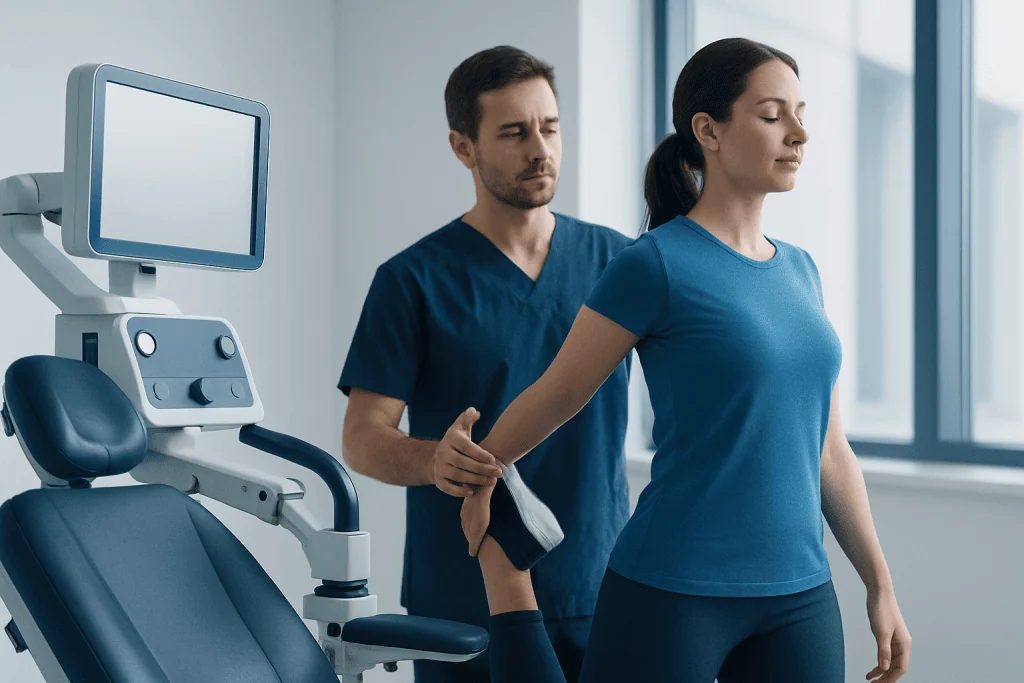
Other approaches include active stretching, where a person uses their own muscles to hold a position, and assisted stretching, where a clinician, trainer, or device provides help. Partner-assisted stretches require particular caution because another person may unintentionally push beyond a safe range. Ballistic stretching, which uses forceful bouncing movements, is generally not suitable for most people because it can increase the likelihood of muscle strain or joint irritation.
How to Stretch Safely and Effectively

Good technique matters more than achieving an impressive range of motion. Before deeper static stretching, a brief warm-up such as easy walking, cycling, or gentle movement can increase circulation and make movement more comfortable. The stretch should be gradual. A mild pulling sensation or tension in the target area can be normal; sharp, pinching, burning, or electric pain is a sign to stop.
Breathing steadily can help prevent unnecessary muscle guarding. People should avoid holding their breath, jerking into a position, or comparing their flexibility with others. The body’s range of motion varies naturally according to anatomy, age, activity level, prior injury, and health conditions. The aim is comfortable, functional movement rather than extreme flexibility.
For general flexibility, many adults can stretch major muscle groups on two or more days each week. A stretch may be held for a brief period and repeated as comfortable, with total time gradually increasing as tolerance improves. However, the most appropriate frequency and approach can differ for athletes, people recovering from an injury, older adults, and those with medical conditions. Consistency over weeks is more useful than occasional forceful stretching sessions.
- Move slowly into and out of each position.
- Keep the joint aligned and avoid twisting or locking it forcefully.
- Stretch both sides, while recognizing that one side may naturally feel different.
- Use a chair, wall, or stable surface for balance when needed.
- Stop and seek advice if symptoms worsen during or after stretching.
A Practical Whole-Body Stretching Routine
A simple routine can be adapted to daily life and does not require special equipment. After a few minutes of gentle movement, a person may begin with the neck and shoulders. Slow shoulder rolls, gentle side-bending of the neck, and chest-opening movements can be useful for people who spend long periods at a desk. Neck stretches should remain especially light; the head should not be pulled or forced with the hands.
For the upper body, gentle reaches overhead, arm-across-chest stretches, and forearm stretches may support comfortable movement. For the back and hips, controlled trunk rotations, a comfortable hip-flexor stretch, and a seated or lying knee-to-chest movement can be options. People with back pain should choose movements that do not reproduce their symptoms and should avoid assuming that one exercise is right for every type of back problem.
For the lower body, calf stretches, supported quadriceps stretches, hamstring stretches, and gentle gluteal stretches are commonly included. A chair can provide support for standing movements, which may be particularly helpful for people who are less steady on their feet. After exercise, slower static stretches may be appropriate. Before activities such as brisk walking, running, tennis, or cycling, dynamic movements that resemble the planned activity are often a better choice.
A routine should be adjusted around real-life goals. Someone preparing to walk may focus on ankles, calves, hips, and thighs, while someone with computer-based work may prioritize the chest, shoulders, upper back, wrists, and hips. If a specific body area remains persistently tight or painful despite sensible self-care, an assessment can identify whether reduced mobility, muscle weakness, joint disease, nerve irritation, or another issue may be involved.
Stretching, Pain, and Common Health Concerns
It is common to feel temporary muscle tightness after unfamiliar activity, prolonged inactivity, or a demanding workout. Gentle movement and comfortable stretching may help some people feel better, but pain should not be pushed through. Delayed muscle soreness often settles with time, relative rest, hydration, and a gradual return to activity. Intense stretching of a sore muscle is unlikely to speed recovery and may make it feel worse.
People with osteoarthritis, osteoporosis, inflammatory arthritis, hypermobility, disc-related back symptoms, tendon problems, or nerve symptoms may need more specific advice. For example, someone with joint hypermobility may benefit more from controlled strengthening and stability work than from repeatedly stretching already flexible joints. Similarly, a person with heel pain or a tendon condition may need a planned loading program rather than aggressive stretching alone.
Recent surgery, fractures, joint replacement, ligament injury, or stroke can also affect which movements are safe and when to begin them. Rehabilitation programmes are individualized because tissues heal at different rates and precautions vary. A physiotherapist or doctor can recommend safe movement progression and determine whether osteoporosis or another underlying condition changes the approach to exercise.
Medication use can matter as well. Sedating medicines, blood-pressure medicines, and conditions affecting balance may increase fall risk during standing stretches. People should use stable support, avoid stretching on slippery surfaces, and choose seated or lying options if dizziness or unsteadiness is a concern.
Supporting Flexibility Beyond Stretching
Flexibility is only one part of physical function. Strength helps muscles support joints through their range of motion, while balance training can reduce fall risk and endurance activity supports heart and lung health. Regular walking, cycling, swimming, resistance exercises, yoga, tai chi, and daily functional movement can all contribute to mobility when selected appropriately.
Long periods in one position can contribute to stiffness even in people who exercise regularly. Brief movement breaks during the day may be more practical than one lengthy stretching session. Standing up, changing position, taking a short walk, and gently moving the shoulders, ankles, and hips can interrupt prolonged sitting or standing. Ergonomic adjustments at work may also help reduce repeated strain.
Hydration, adequate sleep, and recovery between demanding workouts support general wellbeing, although drinking extra water does not directly make muscles more flexible. For people beginning an activity programme after a long inactive period, starting slowly is important. If pain, weakness, or reduced function is limiting activity, a clinician may recommend a structured rehabilitation assessment or physical therapy and rehabilitation plan.
When to Seek Medical Care
Medical advice is appropriate when pain is severe, persistent, unexplained, or prevents normal walking, work, sleep, or daily activities. A person should stop stretching and seek prompt assessment for sudden swelling, a visible deformity, inability to bear weight, marked weakness, or a suspected fracture, dislocation, or muscle tear. These symptoms may require more than home care.
Urgent medical evaluation is important for numbness or tingling that is new or worsening, loss of bladder or bowel control, weakness in an arm or leg, fever with severe back or joint pain, or pain after a significant fall or accident. Chest pain, shortness of breath, fainting, or symptoms suggesting a heart or neurological emergency should not be attributed to muscle tightness and require emergency care.
For less urgent concerns, a doctor or physiotherapist can assess recurring stiffness, reduced joint movement, persistent neck or back discomfort, or pain that repeatedly returns with exercise. Acibadem International’s multidisciplinary specialists and JCI-accredited hospitals can assess musculoskeletal concerns and provide individualized care for international patients. The safest stretching programme is one that fits the person’s diagnosis, current function, and goals.
Frequently asked questions
How often should stretching activities be done?
For general flexibility, stretching major muscle groups on two or more days per week can be helpful, and some people prefer brief daily sessions. Regular, comfortable practice is more important than intense stretching. Individual needs may differ depending on activity level, injury history, and health conditions.
Is it better to stretch before or after exercise?
Dynamic stretching is often better before exercise because it uses controlled movement to prepare the body for activity. Static stretching is commonly performed after exercise or during a separate flexibility session. A short, gentle warm-up is useful before more sustained stretching.
Should stretching hurt?
No. A stretch may create mild tension or a pulling sensation, but it should not cause sharp pain, burning, numbness, tingling, or joint instability. If discomfort continues after stopping, the person should avoid that movement and consider professional advice.
Can stretching activities prevent injuries?
Stretching may improve flexibility and may be one useful part of a warm-up or exercise routine. However, it does not reliably prevent all injuries by itself. Appropriate training progression, strength, balance, technique, recovery, and protective equipment are also important.
Can people with back pain do stretching activities?
Some people with back pain benefit from gentle movement and selected stretches, but the correct approach depends on the cause of pain. Movements that increase pain, numbness, or leg weakness should be stopped. Persistent, severe, or recurrent back symptoms should be assessed by a qualified clinician.
Are stretching activities safe for older adults?
Yes, gentle stretching can be valuable for older adults when performed within a comfortable range and with attention to balance. Using a chair, wall, or other stable support can reduce fall risk. Those with osteoporosis, recent fractures, dizziness, or significant joint disease should ask a healthcare professional which movements are suitable.
References
- American College of Sports Medicine
- Centers for Disease Control and Prevention
- National Institute of Arthritis and Musculoskeletal and Skin Diseases
- World Health Organization
This article is for general information only and is not a substitute for professional medical advice. Please consult a qualified doctor about your individual situation.
Joint and spine care in Turkey — expert assessment & treatment
JCI-accredited · board-certified surgeons · reply within 24h
Add us as a Preferred Source to see more of our trusted health content across Google Search, AI Overviews and Discover.