Stroke vs Migraine Aura: When Sudden Numbness or Vision Changes Need Emergency Help
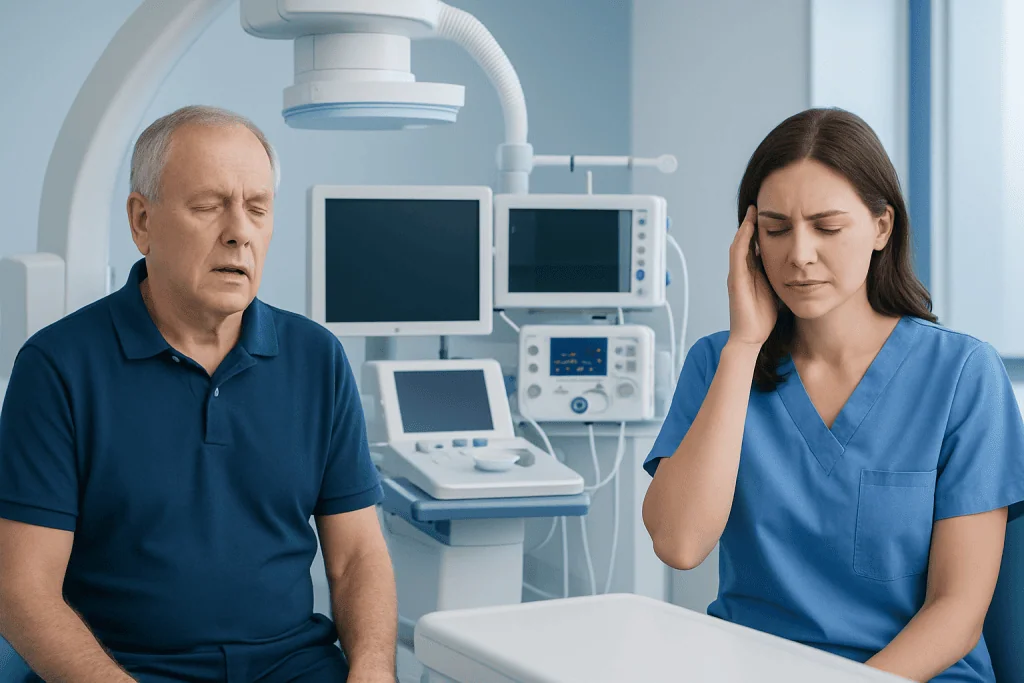
Stroke symptoms usually start suddenly and may include weakness, speech difficulty, facial droop, or vision loss. Migraine aura often causes positive sensory or visual symptoms such as flashing lights, zigzags, or tingling that gradually spread over minutes.
Key Takeaways
- Stroke symptoms usually start suddenly and may include weakness, speech difficulty, facial droop, or vision loss.
- Migraine aura often causes positive sensory or visual symptoms such as flashing lights, zigzags, or tingling that gradually spread over minutes.
- It is not always possible to tell stroke from migraine aura at home, especially if symptoms are new, severe, or unusual.
- Emergency assessment is essential if symptoms are sudden, one-sided, involve speech or walking, or do not match a person’s usual migraine pattern.
- Brain imaging and a neurological examination help doctors distinguish stroke, transient ischemic attack, and migraine aura.
- People with recurring migraine aura should still seek urgent care for any first-time, different, or prolonged episode.
Stroke and migraine aura can both cause sudden numbness, tingling, or visual changes, which is why they are sometimes confused. The safest rule is simple: any new or sudden neurological symptom should be treated as a possible stroke until a doctor confirms otherwise.
Overview: Why stroke and migraine aura are confused
Stroke and migraine aura can both affect the brain in ways that change sensation, vision, speech, or movement. A person may suddenly notice numbness in an arm, shimmering lights, blind spots, trouble finding words, or dizziness. Because these symptoms overlap, it can be difficult for patients and families to know whether the problem is a migraine episode or a medical emergency.
The most important point is that stroke must never be missed. A stroke happens when blood flow to part of the brain is blocked or when bleeding occurs in or around the brain. A migraine aura, by contrast, is a temporary neurological disturbance that can happen before or during a migraine attack and sometimes even without headache. Although migraine aura is usually not dangerous on its own, it can closely resemble a stroke at the start.
Doctors often use the pattern of symptoms, the timing, a physical examination, and brain imaging to tell them apart. At home, however, there is no fully reliable way to make that distinction. If symptoms are sudden, severe, one-sided, or different from a person’s usual migraine pattern, emergency evaluation is the safest choice.
Symptoms: how each condition can feel
Stroke symptoms often begin abruptly. They may include weakness or numbness on one side of the face or body, trouble speaking or understanding speech, sudden confusion, loss of balance, severe dizziness, or sudden vision loss in one or both eyes. Some people also have a sudden, very severe headache, especially with bleeding in the brain.
Migraine aura commonly causes visual symptoms first. These may include flashing lights, zigzag lines, shimmering patterns, blind spots, or distorted vision. Aura can also cause tingling that starts in the fingers and slowly moves up the arm or into the face, as well as trouble finding words. In many people, the aura is followed by a headache, nausea, or sensitivity to light and sound, but not always.
One useful clue is the type of symptom. Stroke more often causes a loss of function, such as weakness, numbness, inability to speak clearly, or loss of vision. Migraine aura more often causes added or positive symptoms, such as flashing lights, sparkling shapes, or tingling that spreads gradually. Even so, this is only a clue, not a rule, and overlap does happen.
- Possible stroke pattern: sudden facial droop, arm weakness, speech trouble, loss of vision, unsteady walking
- Possible migraine aura pattern: visual shimmering, zigzags, tingling that spreads over several minutes, followed by headache
- Emergency red flag: any first-time neurological symptom, especially if sudden or one-sided
Timing clues: sudden onset versus gradual spread

The timing of symptoms is often one of the most helpful differences. Stroke symptoms usually reach maximum intensity quickly, often within seconds to minutes. A person may be well one moment and then suddenly unable to lift an arm, speak clearly, or see properly.
Migraine aura tends to build more gradually. Symptoms may start small and then spread over 5 to 60 minutes. For example, a blind spot may slowly enlarge, or tingling may begin in the hand and then move up the arm and into the face. This gradual march is more typical of aura than stroke.
Even this pattern is not perfect. Some strokes can seem less dramatic at first, and some migraine auras can feel sudden. A transient ischemic attack, sometimes called a mini-stroke, can also cause symptoms that improve quickly but still signal a serious risk of future stroke. Any sudden neurological change deserves urgent medical attention, even if it goes away.
If there is uncertainty, it is safest to act as though the event could be a stroke. Emergency treatment for stroke is time-sensitive, and rapid assessment may help protect brain function. People with suspected stroke or transient ischemic attack should not wait to see whether symptoms settle on their own.
Causes and risk factors
Stroke is most often caused by a blocked artery in the brain, known as an ischemic stroke, or by bleeding, known as a hemorrhagic stroke. Major risk factors include high blood pressure, diabetes, high cholesterol, smoking, atrial fibrillation and other heart rhythm problems, obesity, lack of exercise, older age, and a personal or family history of stroke or vascular disease.
Migraine aura is related to temporary changes in brain activity and signaling. It is more common in people with a personal or family history of migraine. Triggers can include stress, lack of sleep, hormonal changes, dehydration, skipped meals, certain foods, or bright light, although triggers vary widely from person to person. A person may have migraine with aura for many years in a fairly predictable pattern.
Some patients have both migraine and vascular risk factors, which can make the situation more complicated. In addition, migraine with aura has been associated with a slightly higher risk of stroke in some groups, especially in people who smoke or use estrogen-containing contraceptives. This does not mean every aura is dangerous, but it does mean prevention and risk-factor control matter.
A careful medical history helps doctors understand the likely cause of symptoms. Still, when warning signs point toward stroke, immediate assessment takes priority over trying to identify a trigger at home.
Diagnosis: how doctors tell the difference
Doctors begin with a neurological examination and a clear history of what happened. They will ask when symptoms started, how quickly they developed, whether they spread, whether there was headache, and whether the person has had similar episodes before. They also assess blood pressure, blood sugar, heart rhythm, balance, eye movements, speech, and strength.
Brain imaging is often essential because symptoms alone may not be enough to separate stroke from migraine aura. Depending on the situation, doctors may use emergency CT scanning to look for bleeding or other urgent problems, and MRI to detect areas of reduced blood flow or subtle brain changes. Blood tests, heart monitoring, and vascular imaging may also be used to look for underlying causes.
If speech changes, weakness, facial droop, or persistent visual loss are present, urgent stroke protocols may be activated right away. When symptoms strongly suggest migraine aura and imaging is reassuring, doctors may then focus on migraine management and follow-up. The goal is not only to identify the cause of the current episode but also to reduce the risk of future events.
In specialized centers, neurologists, emergency physicians, neuroradiologists, and vascular teams may work together to evaluate suspected stroke quickly. This team-based approach is especially valuable when symptoms are unclear or when treatment decisions are time-sensitive.
Treatment options and emergency care
Treatment depends entirely on the cause. If the problem is a stroke, emergency care may include medicines to dissolve a clot in selected patients, procedures to remove a clot, treatment for bleeding, blood pressure management, and close neurological monitoring. Because these treatments must be given within specific time windows, quick arrival at the hospital is very important. In some cases, doctors may consider mechanical thrombectomy for a blocked brain artery.
If symptoms are due to migraine aura, treatment usually focuses on relieving migraine symptoms and preventing future attacks. This may include resting in a calm, dark room, treating headache and nausea as advised by a doctor, and discussing preventive strategies if auras are frequent or disruptive. A person with recurrent aura may benefit from follow-up with a neurologist or headache specialist.
It is important not to self-diagnose a first episode as “just migraine,” especially if there is weakness, trouble speaking, difficulty walking, or loss of vision. Taking a wait-and-see approach can delay stroke treatment. Calling emergency services is safer than driving if stroke is possible.
For international patients needing advanced neurological evaluation, Acibadem International’s multidisciplinary specialists and JCI-accredited hospitals diagnose and treat stroke and migraine-related neurological symptoms using coordinated emergency and specialty care.
Prevention and self-care
Stroke prevention focuses on managing vascular risk factors. This includes controlling blood pressure, blood sugar, and cholesterol, stopping smoking, staying physically active, maintaining a healthy weight, limiting alcohol, and taking prescribed medications as directed. People with atrial fibrillation or other heart conditions should follow their cardiology treatment plan carefully.
Migraine aura self-care often involves identifying and reducing triggers where possible. Helpful habits may include regular sleep, steady hydration, not skipping meals, stress management, and keeping a symptom diary. A diary can help a doctor identify patterns and decide whether preventive treatment may be useful.
Patients who already have diagnosed migraine aura should still review any changes with a clinician. Auras that last longer than usual, become more frequent, happen for the first time later in life, or begin to include new symptoms deserve medical attention. A familiar history of migraine can be reassuring, but it should not override emergency warning signs.
- Know common stroke warning signs and teach them to family members.
- Seek routine care for blood pressure, diabetes, cholesterol, and heart rhythm problems.
- Track migraine patterns, triggers, and symptom duration.
- Ask a doctor whether birth control, smoking, or other factors may affect stroke risk.
When to seek emergency help
Emergency help is needed if numbness, weakness, speech trouble, or vision changes start suddenly, especially on one side of the body. The same is true for sudden severe dizziness, trouble walking, facial droop, or a severe unexplained headache. It is better to be evaluated urgently and find out it was migraine than to miss a stroke.
Immediate care is especially important if the episode is the first of its kind, feels different from a usual migraine aura, lasts longer than expected, or does not fully resolve. Symptoms during pregnancy, after a head injury, or in someone with major stroke risk factors also deserve urgent evaluation.
Family members can help by using the FAST stroke check: Face drooping, Arm weakness, Speech difficulty, Time to call emergency services. If stroke is suspected, note the time symptoms began or the last time the person was known to be well. This information helps the medical team decide on the safest and most effective treatment.
After emergency care, follow-up matters too. Whether the cause turns out to be stroke, TIA, or migraine aura, a doctor can explain the diagnosis, arrange further testing if needed, and help lower the chance of future episodes.
Frequently asked questions
Can a migraine aura happen without a headache?
Yes. Some people have aura without a significant headache afterward, a pattern sometimes called silent migraine. Because this can still resemble a stroke, any first-time or unusual episode should be assessed by a doctor.
Is tingling more likely to be migraine aura than stroke?
Tingling that gradually spreads over several minutes can be more typical of migraine aura. However, numbness or tingling can also happen with stroke, so sudden or one-sided symptoms should be treated as urgent.
How long does migraine aura usually last?
Migraine aura often lasts between 5 and 60 minutes, although the exact timing varies. Symptoms that are prolonged, very different from normal, or accompanied by weakness or speech trouble need prompt medical evaluation.
What vision changes are more concerning for stroke?
Sudden loss of vision, especially in one eye or one side of the visual field, is concerning for stroke or TIA. Flashing lights or zigzag patterns that gradually spread are more often linked with aura, but they still may need medical assessment if they are new or unusual.
If symptoms go away quickly, is it still an emergency?
Yes. Symptoms that resolve can be a transient ischemic attack, which is a warning sign of possible future stroke. Rapid medical evaluation helps identify the cause and reduce future risk.
Can younger people have stroke, or is it usually migraine?
Younger adults can have both migraine aura and stroke. Age can influence the likelihood of each condition, but it does not make stroke impossible, so sudden neurological symptoms should not be ignored.
References
- World Stroke Organization
- American Heart Association
- National Institute of Neurological Disorders and Stroke
- American Migraine Foundation
- Centers for Disease Control and Prevention
This article is for general information only and is not a substitute for professional medical advice. Please consult a qualified doctor about your individual situation.
Migraine in Turkey — costs, top hospitals & a free quote
JCI-accredited · board-certified surgeons · reply within 24h
Add us as a Preferred Source to see more of our trusted health content across Google Search, AI Overviews and Discover.
Check your numbers in seconds
BMI, calories, due date, blood pressure and 30+ more clinical calculators — free, instant, doctor-reviewed ranges.