Stye Eye — Explained by Medical Evidence, Not Myths

A stye eye is usually a localized eyelid gland infection or inflammation that often settles with home care. Warm compresses are the main first step and can help the blocked gland drain naturally.
Key Takeaways
- A stye eye is usually a localized eyelid gland infection or inflammation that often settles with home care.
- Warm compresses are the main first step and can help the blocked gland drain naturally.
- A stye is different from a chalazion, which is usually less painful and more chronic.
- Contact lens use, eye makeup, blepharitis, and touching the eyes with unclean hands can raise risk.
- Medical care is important if swelling spreads, vision changes, pain becomes severe, or the lump does not improve.
A stye eye is a small, painful lump on or near the eyelid, usually caused by inflammation or infection of an oil gland at the lash line. Most styes improve on their own with warm compresses and gentle eyelid care, but some need medical assessment if they persist, worsen, or affect vision.
What Is a Stye Eye?
A stye eye is a small, tender lump that develops on the eyelid, often close to the eyelashes. Doctors may call it a hordeolum. It usually forms when an oil-producing gland in the eyelid becomes blocked and inflamed, sometimes with bacterial involvement. Although it can look concerning, a stye is usually limited to the eyelid and often improves within days to a couple of weeks.
There are two main types. An external stye develops near the base of an eyelash, while an internal stye forms deeper inside the eyelid. Both can cause redness, swelling, soreness, and a feeling that something is irritating the eye. The condition is common and is not usually dangerous when recognized and managed appropriately.
A stye is often confused with a chalazion. The difference matters because a chalazion is typically caused by a blocked oil gland without active infection and may be less painful, firmer, and slower to go away. If a patient has repeated eyelid lumps, a doctor may help distinguish a stye from a chalazion or from other eyelid conditions that can look similar.
How a Stye Usually Feels and Looks
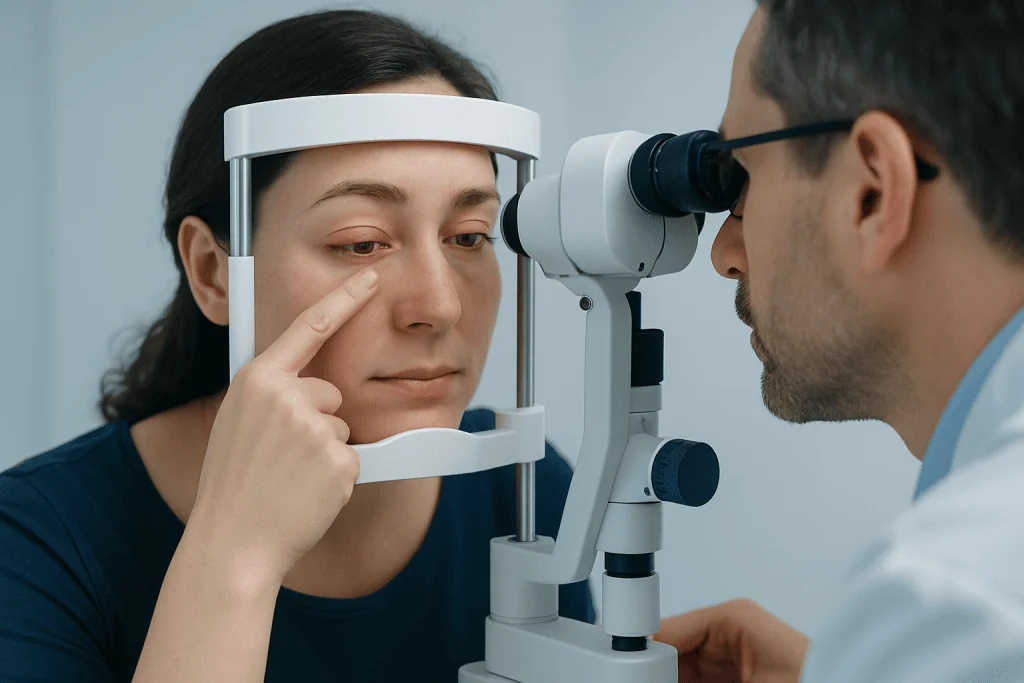
The most common symptom of stye eye is a painful or tender bump on the eyelid. The area may look red, swollen, and slightly shiny, and the eyelid can feel heavy or sore when blinking. Some people notice a visible yellow or white spot where the gland is draining, similar to a small pimple on the eyelid margin.
Other symptoms can include tearing, crusting around the lashes, sensitivity to light, and a gritty sensation. Mild discomfort is common, but significant eye pain is less typical and should prompt more careful assessment. The eye itself may feel irritated, even though the main problem is usually in the eyelid rather than the eyeball.
Because eyelid problems can overlap, symptoms may also occur alongside chronic lid irritation known as blepharitis. This can make the eyelid edges look flaky, greasy, or inflamed and can increase the chance of recurrent styes.
- Painful or tender eyelid lump
- Redness and localized swelling
- Tearing or watery eye
- Crusting at the lash line
- Feeling of irritation when blinking
- Occasional sensitivity to light
Why Styes Happen: Causes and Risk Factors

Most styes begin when a small gland in the eyelid becomes blocked. Oil and debris can build up, creating an environment where inflammation develops and bacteria that normally live on the skin can multiply. The result is a localized swollen lump that may become painful as pressure increases in the gland.
Several everyday factors can make styes more likely. Rubbing the eyes with unwashed hands, sleeping in eye makeup, using old or contaminated cosmetics, and not cleaning contact lenses properly can all contribute. Recurrent styes are more common in people with eyelid inflammation, oily skin, rosacea, or a history of clogged eyelid glands.
General health can also play a role. People with diabetes or skin conditions that affect the face and eyelids may have a higher chance of eyelid gland problems. Frequent recurrence does not necessarily mean a serious illness, but repeated episodes are a reason to discuss underlying triggers and preventive care with a clinician.
Stye or Something Else?
Not every eyelid lump is a stye. A chalazion, for example, may follow a blocked gland but is often less painful and more persistent. Allergic swelling, cysts, eyelid inflammation, and less commonly other growths can also affect the lid. This is one reason why a lump that does not improve as expected should be assessed rather than repeatedly self-treated.
Doctors usually tell these conditions apart by the pattern of pain, location, duration, and whether the surrounding skin is inflamed. A stye tends to be more sudden in onset and more tender. A chalazion often feels rounder and firmer and may remain after the active inflammation has settled.
Another important distinction is between a localized stye and more widespread infection of the eyelid tissues. If redness and swelling spread beyond a small area, or if fever and increasing pain develop, the concern may shift toward orbital cellulitis or related infections, which need prompt medical evaluation.
How Doctors Diagnose a Stye Eye
Diagnosis is usually straightforward and based on symptoms and examination of the eyelid. A doctor will look at the position of the lump, the amount of swelling, whether lashes or gland openings are involved, and whether the redness is limited or spreading. In most cases, scans or laboratory tests are not needed.
The eye itself may also be checked to make sure vision is unaffected and that there is no deeper problem. If the patient has repeated episodes, the doctor may ask about contact lens hygiene, makeup practices, skin conditions, rosacea, diabetes, and chronic eyelid irritation. This helps guide prevention as much as treatment.
When an eyelid lump is unusual, long-lasting, or recurrent in the same spot, an eye specialist may consider other diagnoses. This is especially important in older adults or if there are atypical features such as persistent thickening, lash loss, or poor response to standard care.
Treatment Options and Safe Home Care
The main early treatment for stye eye is a warm compress. Applying a clean, warm cloth to the closed eyelid for several minutes, several times a day, can help soften the blockage and encourage natural drainage. Gentle eyelid hygiene may also help, especially if crusting or blepharitis is present. Squeezing, popping, or scraping the lump should be avoided because this can worsen inflammation or spread infection.
During healing, it is wise to pause eye makeup and contact lens use until the eyelid has improved. If pain is bothersome, a doctor or pharmacist can advise on appropriate over-the-counter pain relief. Some patients need prescription treatment if the inflammation is more significant, if there is associated eyelid infection, or if the stye does not improve as expected.
When a stye is large, persistent, or recurrent, an eye specialist may recommend a minor procedure to drain it or evaluate whether it is actually a chalazion. In selected cases, clinicians may also treat contributing conditions such as chronic eyelid gland blockage. Depending on the findings, patients may be guided toward a detailed eye examination or, if a persistent noninfectious lump remains, procedures used for chalazion surgery.
For people with repeat episodes, long-term eyelid hygiene can be an important part of care. If rosacea or meibomian gland dysfunction is contributing, an ophthalmologist may suggest a broader eyelid management plan rather than treating each flare in isolation.
Prevention and Everyday Self-Care
Many styes cannot be completely prevented, but good eyelid habits can reduce the chance of recurrence. Washing hands before touching the eyes, removing makeup before sleep, replacing old eye cosmetics, and keeping contact lenses and lens cases clean are simple practical steps. Shared makeup should be avoided.
People who often develop eyelid crusting or gland blockage may benefit from regular lid hygiene even when no stye is present. This can include warm compresses and gentle cleansing of the lash line using products recommended by a clinician. The goal is to keep the gland openings clear and reduce irritation.
Managing related conditions also matters. If a person has rosacea, dandruff-like eyelid scaling, dry eye symptoms, or repeated inflamed lids, medical guidance may help break the cycle. Preventive care is often most effective when it addresses both the eyelid lump and the reasons it keeps returning.
Near the end of the care pathway, some patients benefit from specialist input. Acibadem International’s multidisciplinary specialists in JCI-accredited hospitals evaluate and treat eye and eyelid conditions for international patients when further assessment is needed.
When to Seek Medical Care
Most styes improve with time and supportive care, but some situations call for medical advice. A patient should seek assessment if the lump does not begin to improve after several days of warm compresses, if it keeps returning, or if the eyelid swelling becomes more widespread. Ongoing or recurrent lumps deserve attention because they may need prescription treatment or a different diagnosis.
Urgent medical care is important if there is severe pain, fever, rapidly increasing redness, vision changes, difficulty opening the eye, or swelling that extends into the surrounding face. These features are less typical of a simple stye and may suggest a deeper or spreading infection.
Children, older adults, contact lens users, and people with diabetes or weakened immune systems may need earlier medical review. In some cases, clinicians may coordinate eye evaluation with other supportive services if symptoms are complex or prolonged.
Frequently asked questions
Is a stye eye contagious?
A stye itself is not usually considered highly contagious in the way some eye infections are. However, the bacteria involved can spread by shared towels, cosmetics, or touching the eyes, so good hand and eyelid hygiene is important.
How long does a stye usually last?
Many styes begin to improve within a few days and resolve within one to two weeks. If the lump persists longer, becomes firmer, or is no longer painful, it may have turned into a chalazion and should be reassessed.
Should a stye be popped or squeezed?
No. Squeezing a stye can irritate the eyelid further, increase swelling, and may spread infection into nearby tissues. Warm compresses are a safer way to encourage the gland to drain naturally.
Can makeup or contact lenses be used with a stye?
It is usually best to avoid eye makeup and contact lenses until the stye has healed. These can irritate the eyelid, delay recovery, and may reintroduce bacteria if the products or lenses are not perfectly clean.
What is the difference between a stye and a chalazion?
A stye is usually more tender, red, and sudden in onset because it involves active inflammation of an eyelid gland. A chalazion is often less painful, more chronic, and feels like a firm lump caused by a blocked gland.
When should someone worry about a stye?
Medical care is important if there is severe pain, vision change, fever, spreading redness, or swelling that affects opening the eye. A lump that keeps returning or does not improve with warm compresses should also be examined.
References
- American Academy of Ophthalmology
- National Eye Institute
- Mayo Clinic
- Merck Manual Professional Edition
- NHS
This article is for general information only and is not a substitute for professional medical advice. Please consult a qualified doctor about your individual situation.
Explore treatments in Turkey — costs, top hospitals & a free quote
JCI-accredited · board-certified surgeons · reply within 24h
Add us as a Preferred Source to see more of our trusted health content across Google Search, AI Overviews and Discover.