Submucosal Fibroid: An Evidence-Based Guide for Patients

Submucosal fibroids grow beneath the uterine lining and project partly or fully into the uterine cavity. Heavy or prolonged menstrual bleeding is a common symptom, although some people have no symptoms.
Key Takeaways
- Submucosal fibroids grow beneath the uterine lining and project partly or fully into the uterine cavity.
- Heavy or prolonged menstrual bleeding is a common symptom, although some people have no symptoms.
- Ultrasound, saline infusion sonography, hysteroscopy, and sometimes MRI can clarify the fibroid’s size and location.
- Treatment depends on symptoms, fibroid characteristics, reproductive plans, age, and personal preferences.
- Hysteroscopic removal is often an option for suitable submucosal fibroids because it is performed through the vagina and cervix.
- Urgent assessment is important for very heavy bleeding, fainting, severe pelvic pain, or possible pregnancy complications.
A submucosal fibroid is a benign growth in the wall of the uterus that extends toward the uterine cavity. Its location can make even a small fibroid more likely to cause heavy menstrual bleeding, anemia, or difficulties with fertility, but many people can be treated effectively with individualized care.
Overview: what is a submucosal fibroid?
A submucosal fibroid is a noncancerous growth made of smooth muscle and fibrous tissue that develops in the uterus. Fibroids are also called leiomyomas or myomas. A submucosal fibroid begins just beneath the endometrium, the lining of the uterus, and grows inward toward the uterine cavity. It may be entirely within the uterine wall, partly protrude into the cavity, or be attached to the cavity by a narrower base.
Fibroids are common during the reproductive years and are not the same as cancer. Their effects depend more on their position than on their size. Because a submucosal fibroid can alter the shape of the uterine cavity or interfere with the lining that sheds during a period, it is particularly associated with heavy menstrual bleeding and may affect fertility or pregnancy in some people.
Not every submucosal fibroid needs treatment. When it does cause symptoms, anemia, repeated pregnancy loss, infertility, or a cavity distortion that is relevant to a person’s reproductive goals, a gynecologist can discuss observation, medicines, and procedures. Care is individualized rather than based on fibroid size alone.
How submucosal fibroids may affect daily life
Menstrual bleeding is the symptom most often linked to submucosal fibroids. Periods may become heavier, last longer than usual, include clots, or require frequent changes of pads or tampons. Ongoing blood loss can lead to iron-deficiency anemia, which may cause tiredness, shortness of breath with activity, headaches, paleness, dizziness, or reduced exercise tolerance.
Some people experience pelvic pressure, cramping, lower back discomfort, or a feeling of fullness, though these symptoms are often more prominent with fibroids that grow outward from the uterus. A submucosal fibroid may also contribute to bleeding between periods. Symptoms can overlap with other gynecological conditions, including adenomyosis, endometrial polyps, hormonal changes, and, less commonly, problems affecting the uterine lining.
Fertility effects are variable. Fibroids that significantly bulge into or distort the uterine cavity may make implantation more difficult and can be associated with miscarriage or certain pregnancy complications. However, many people with fibroids conceive and have healthy pregnancies. A fertility specialist or gynecologist can help determine whether a particular fibroid is likely to be clinically important.
Why fibroids develop and who is more likely to have them
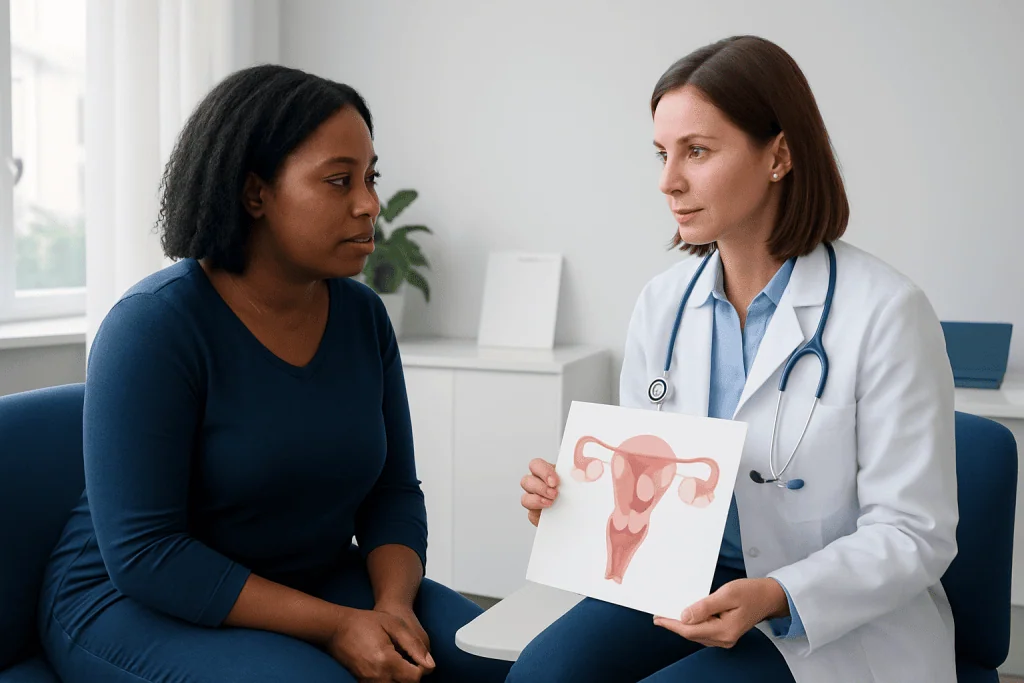
The precise cause of fibroids is not fully understood. Their growth appears to be influenced by reproductive hormones, especially estrogen and progesterone, as well as genetic and cellular factors. Fibroids commonly develop during the reproductive years, may enlarge during pregnancy, and often shrink after menopause as hormone levels decline. Growth patterns are unpredictable, and a fibroid may remain stable for years.
Factors associated with a greater likelihood of fibroids include a family history of fibroids, increasing age before menopause, and having had no prior pregnancy. Body weight and some metabolic factors may also be relevant. These associations do not mean that a person has caused their fibroids, and there is no proven lifestyle change that can reliably prevent one from developing.
Submucosal fibroids are categorized by how much of the growth extends into the uterine cavity versus the uterine muscle. This classification helps clinicians plan treatment. A fibroid largely within the cavity may be more straightforward to remove hysteroscopically than one that extends deeply into the uterine wall, although the best approach always depends on imaging findings and individual circumstances.
Diagnosis and assessment
A clinician usually begins with a discussion of menstrual patterns, pelvic symptoms, medications, pregnancy plans, and medical history. A pelvic examination may identify an enlarged or irregularly shaped uterus, but smaller fibroids and their exact location cannot always be determined by examination alone. Blood tests may be used to check for anemia or iron deficiency when bleeding is heavy.
Transvaginal ultrasound is often the first imaging test. It can identify many fibroids and assess their size and position. If the relationship to the uterine cavity is unclear, saline infusion sonography may be recommended. In this test, sterile fluid is gently placed into the uterus during an ultrasound to outline the cavity more clearly. MRI can provide additional detail when there are multiple fibroids, complex findings, or procedure planning needs.
Hysteroscopy is another useful assessment tool. A thin camera is passed through the vagina and cervix into the uterus, allowing the clinician to directly view the cavity. It can confirm whether a fibroid projects into the cavity and, in selected cases, may be combined with treatment. A doctor may also investigate other possible sources of abnormal bleeding, particularly when symptoms are new, persistent, or occur after menopause.
Treatment options: choosing care around symptoms and goals
Watchful waiting can be appropriate when symptoms are absent or manageable and there are no concerns about anemia or fertility. Follow-up may include review of symptoms, blood tests when indicated, and repeat imaging if the clinical picture changes. Fibroids often become less troublesome after menopause, but any bleeding after menopause should be assessed promptly rather than assumed to be due to a fibroid.
Medicines can help control heavy bleeding or pain but do not remove a fibroid. Depending on the person’s health and reproductive plans, a clinician may discuss anti-inflammatory pain relievers, tranexamic acid for menstrual bleeding, hormonal contraception, a levonorgestrel-releasing intrauterine device when the cavity allows its placement, or medicines that temporarily lower hormone stimulation. The benefits, side effects, and suitability of each option should be reviewed with a qualified clinician.
For a symptomatic submucosal fibroid that protrudes into the uterine cavity, hysteroscopic myomectomy is often considered. During this procedure, instruments are passed through the vagina and cervix, without abdominal incisions, to remove the fibroid from inside the uterus. Some larger or more deeply embedded fibroids may require a staged procedure or a different surgical approach, such as laparoscopic or open myomectomy.
Other procedures may be considered in selected situations, including uterine artery embolization or radiofrequency ablation. These options may not be equally suitable for people who wish to become pregnant in the future, so fertility goals should be discussed before treatment. Hysterectomy, the removal of the uterus, is definitive treatment for fibroids and may be considered when symptoms are severe and childbearing is complete, but it is not the only option.
Self-care, monitoring and preparing for an appointment
Self-care cannot dissolve a submucosal fibroid, but it can support wellbeing while a person is being assessed or receiving treatment. Tracking period dates, bleeding volume, clots, pain, and related symptoms can give the clinician useful information. People with heavy periods may benefit from asking whether they should be checked for anemia and whether iron-rich foods or an iron supplement are appropriate for them.
Regular movement, adequate sleep, balanced meals, and stress-management practices support general health, but they should not replace medical assessment of heavy bleeding. Supplements marketed for fibroid treatment may not be effective and can interact with medicines or affect planned procedures. It is sensible to discuss any supplement, herbal product, or major dietary change with a healthcare professional.
Before a gynecology visit, it may help to prepare questions about the fibroid’s exact location, whether it changes the uterine cavity, the likely impact on fertility, and the expected benefits and limitations of each option. People planning pregnancy can ask whether treatment before conception is advisable. Acibadem International’s multidisciplinary specialists and JCI-accredited hospitals diagnose and treat uterine fibroids for international patients when specialist evaluation is needed.
When to seek medical care
A person should arrange a medical appointment for periods that are consistently heavier or longer than usual, bleeding between periods, pelvic pain or pressure that persists, or symptoms of anemia such as ongoing fatigue, dizziness, palpitations, or breathlessness. Assessment is also important when difficulties conceiving, recurrent miscarriage, or concerns during fertility evaluation may be related to a fibroid.
Urgent medical care is needed for bleeding that soaks through menstrual products very rapidly, fainting, chest pain, severe weakness, severe or sudden pelvic pain, fever with pelvic symptoms, or any concern for pregnancy-related bleeding or pain. These symptoms can have causes other than fibroids and should be evaluated without delay.
Bleeding after menopause should always be discussed with a doctor, even in someone known to have fibroids. Although fibroids are benign, postmenopausal bleeding requires assessment to identify the cause and ensure appropriate care.
Frequently asked questions
Is a submucosal fibroid cancer?
No. A submucosal fibroid is a benign, or noncancerous, uterine growth. Fibroids do not usually turn into cancer, but new or changing symptoms should still be assessed by a clinician.
Can a small submucosal fibroid cause heavy bleeding?
Yes. Even a relatively small fibroid may cause significant bleeding if it extends into the uterine cavity. Its position can disrupt the uterine lining and the uterus’s normal ability to control menstrual bleeding.
Can a submucosal fibroid affect fertility?
It can, particularly when it changes the shape of the uterine cavity. Some submucosal fibroids may interfere with embryo implantation or be associated with miscarriage, but many people with fibroids can conceive. An individualized fertility assessment is the best way to understand the likely effect.
Can a submucosal fibroid be removed without abdominal surgery?
Often, yes. Many suitable submucosal fibroids can be removed by hysteroscopic myomectomy, using instruments passed through the vagina and cervix. Whether this is appropriate depends on the fibroid’s size, depth, number, and position.
Will a submucosal fibroid go away on its own?
Fibroids do not usually disappear during the reproductive years, although their size may remain stable or change over time. They often shrink after menopause due to lower hormone levels. Symptoms, rather than size alone, help guide whether treatment is needed.
Should a submucosal fibroid be treated before pregnancy?
Not always. Treatment may be recommended if the fibroid substantially distorts the uterine cavity, causes troublesome symptoms, or is thought likely to affect fertility or pregnancy outcomes. The decision should be made with a gynecologist or fertility specialist after imaging and discussion of reproductive plans.
References
- American College of Obstetricians and Gynecologists
- National Institute for Health and Care Excellence
- Mayo Clinic
- U.S. National Library of Medicine
- World Health Organization
This article is for general information only and is not a substitute for professional medical advice. Please consult a qualified doctor about your individual situation.
Explore treatments in Turkey — costs, top hospitals & a free quote
JCI-accredited · board-certified surgeons · reply within 24h
Add us as a Preferred Source to see more of our trusted health content across Google Search, AI Overviews and Discover.

More from the Health Library

Bald People — Explained by Medical Evidence, Not Myths

Collagen: What Patients Need to Know

Depo Shot: What Patients Need to Know

Zestril: An Evidence-Based Guide for Patients

Muscle Strain Belly: An Evidence-Based Guide for Patients