

Sunburn and Aloe — Explained by Medical Evidence, Not Myths

Aloe vera may soothe pain, tightness, and dryness from mild sunburn. Aloe does not reverse sun damage or reliably speed healing on its own.
Key Takeaways
- Aloe vera may soothe pain, tightness, and dryness from mild sunburn.
- Aloe does not reverse sun damage or reliably speed healing on its own.
- Cool compresses, moisturizer, fluids, and sun avoidance are key parts of care.
- Severe blistering, fever, dehydration, or burns over large areas need medical evaluation.
- Prevention with shade, clothing, and broad-spectrum sunscreen is the best approach.
Sunburn and aloe are often discussed together because aloe vera gel can cool and soothe mild sunburned skin. Medical evidence suggests it may help with comfort, but it is not a cure and does not replace proper skin care, hydration, and medical attention when burns are severe.
Overview: What to Know About Sunburn and Aloe
Sunburn and aloe are linked because aloe vera gel can provide a cooling, soothing feeling on mildly burned skin. The best current medical understanding is that aloe may help relieve discomfort and support the skin barrier, but it is not a proven way to undo sun damage or dramatically shorten healing time.
Sunburn is a form of skin injury caused by too much ultraviolet radiation, usually from the sun but sometimes from tanning beds. The skin becomes inflamed, which leads to redness, warmth, pain, and later peeling. In more serious cases, swelling, blistering, headache, nausea, or dehydration can occur.
Aloe can be a reasonable part of home care for mild sunburn if the product is gentle and the skin is not badly blistered. It works best when combined with other evidence-based measures such as cooling the skin, applying a bland moisturizer, drinking fluids, and staying out of the sun while the skin heals.
How Sunburn Affects the Skin
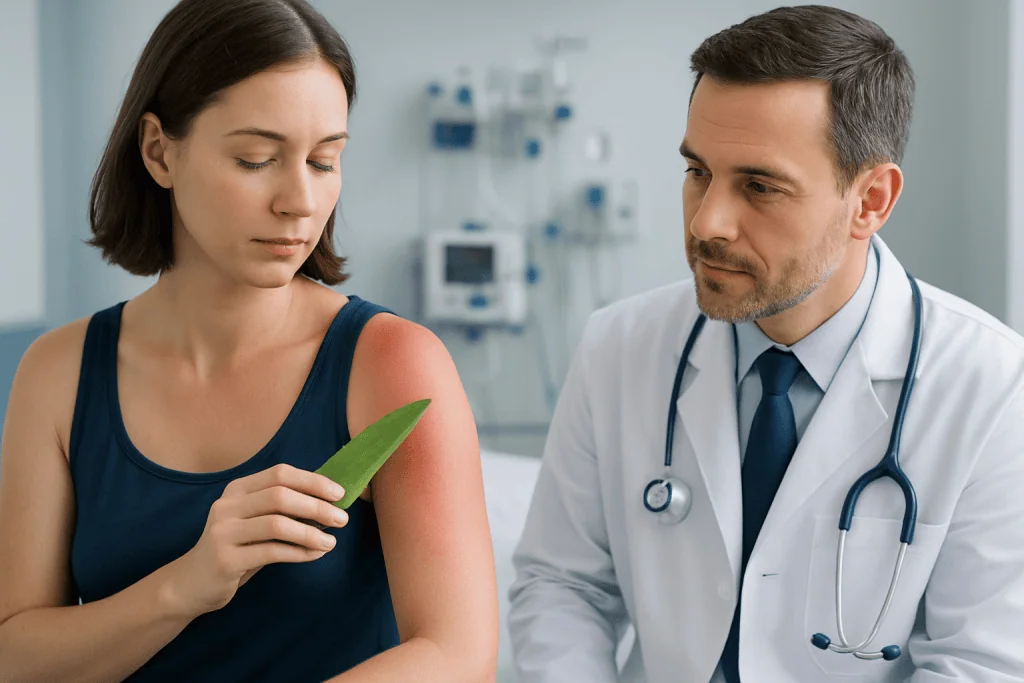
Ultraviolet rays damage skin cells and trigger inflammation. This is why sunburned skin often feels hot, tender, swollen, and sensitive to touch. Symptoms may not peak right away; pain and redness can become worse several hours after exposure and may continue to intensify over the next day.
The visible redness of sunburn can look different depending on skin tone. In lighter skin, it may appear pink or bright red. In darker skin, the burn may look more subtle, with tenderness, warmth, swelling, or areas that appear darker than usual. Later, the skin may peel as damaged cells are shed.
Even a sunburn that heals within days represents real DNA damage to the skin. Repeated burns increase long-term risks such as early skin aging and skin cancer. This is one reason clinicians focus not only on treating symptoms but also on prevention and skin protection after recovery.
What Aloe Vera Can and Cannot Do

Aloe vera is a plant-based gel widely used for minor skin irritation. It contains water and compounds that may have soothing, moisturizing, and mild anti-inflammatory effects. For some people, this can reduce the feeling of heat, dryness, and tightness that often come with a mild sunburn.
What aloe cannot do is “pull out” the heat, repair deep skin injury overnight, or erase ultraviolet damage. Claims that aloe alone heals all burns quickly are not supported by strong clinical evidence. It should be viewed as a comfort measure rather than a complete treatment.
Not every aloe product is the same. Some gels contain alcohol, fragrance, menthol, or added dyes that may sting or irritate damaged skin. A simple aloe gel or a bland moisturizer is usually a better choice. If a product causes burning, itching, or rash, it should be washed off and avoided.
People with sensitive skin can also react to aloe itself, although this is not common. Patch testing a small area first may be sensible if the person has a history of skin allergies or eczema. If the skin is severely blistered, open, or looks infected, self-treatment with aloe is not enough and medical assessment is more appropriate.
Evidence-Based Home Care for Mild Sunburn
For a mild sunburn, the first step is to get out of the sun. Cooling the skin with a cool shower, bath, or damp compress can reduce discomfort. The water should be cool rather than icy, because extreme cold can further irritate already damaged skin.
After cooling, a gentle moisturizer can help reduce dryness and tightness. Aloe gel may be used if it is fragrance-free and does not irritate the skin. The goal is to support comfort and moisture, not to scrub or aggressively treat the area. Skin should be patted dry gently rather than rubbed.
Hydration is also important because sunburn can increase fluid loss, especially after a long hot day outdoors. Wearing loose, soft clothing and avoiding more sun exposure while healing can prevent extra irritation. If pain is significant, a doctor or pharmacist can advise on suitable over-the-counter pain relief.
- Use cool compresses or a cool shower.
- Apply a gentle moisturizer or simple aloe gel.
- Drink fluids and rest if feeling overheated.
- Avoid picking or peeling the skin.
- Stay out of direct sunlight until the skin has recovered.
Common Myths About Sunburn and Aloe
One common myth is that aloe is always better than any other moisturizer. In reality, comfort varies from person to person, and a plain, fragrance-free moisturizer may work just as well for many people. The most important feature is that the product is gentle and does not further irritate the skin.
Another myth is that the more aloe used, the faster the skin will heal. Thick layers do not necessarily improve recovery and can sometimes feel sticky or uncomfortable. Frequent, light application of a suitable product is usually more practical than using very large amounts.
It is also a myth that home remedies can safely replace medical care for all sunburns. Butter, oils, toothpaste, and other internet remedies can trap heat or irritate the skin. If there is severe pain, large blisters, signs of dehydration, or widespread burns, prompt medical attention matters more than trying additional home treatments.
Finally, some people assume tanning beds are a safer way to get color without burning. They are not. Artificial ultraviolet exposure can injure the skin in the same basic way and contributes to long-term skin damage. Articles about skin cancer often emphasize that preventing ultraviolet injury is a major part of protecting skin health.
When to Seek Medical Care
Medical care is recommended if a sunburn is severe, covers a large part of the body, or causes significant blistering. Care is also important if there are symptoms beyond the skin itself, such as fever, chills, confusion, dizziness, headache, vomiting, or signs of dehydration. These can suggest a more serious reaction to heat and sun exposure.
Children, older adults, and people with chronic illnesses may need earlier assessment because they can become dehydrated more easily or may have more sensitive skin. People taking medicines that increase photosensitivity should also speak with a clinician if they develop an intense reaction after sun exposure.
Medical evaluation may include checking for dehydration, infection, or deeper skin damage, and advising on the safest treatment plan. In cases where the diagnosis is uncertain, a clinician may also consider whether another skin condition is mimicking sunburn, such as eczema flare, contact dermatitis, or a medication-related rash.
Treatment, Follow-Up, and Prevention
Most mild sunburns improve with supportive care over several days. If blistering occurs, the blisters should generally be left intact rather than popped, because the overlying skin helps protect against infection. If the burned area becomes increasingly red, swollen, tender, or starts to drain pus, medical review is needed.
Some people with severe burns or uncertain symptoms may benefit from specialist assessment, particularly when blistering is extensive or healing is delayed. Depending on the situation, clinicians may recommend dermatology evaluation or, for unusual or changing pigmented lesions noticed after sun exposure, mole mapping as part of longer-term skin surveillance.
Prevention remains the most effective strategy. This includes seeking shade, wearing sun-protective clothing and a broad-brimmed hat, using broad-spectrum sunscreen, and reapplying it as directed, especially after swimming or sweating. Avoiding peak sun intensity and skipping tanning beds also lowers the chance of future burns.
For people who have repeated severe sun reactions or other skin concerns, specialist advice can help identify risk factors and create a practical prevention plan. Near the end of the care pathway, Acibadem International’s multidisciplinary specialists in JCI-accredited hospitals diagnose and treat skin conditions for international patients when further assessment is needed.
Frequently asked questions
Does aloe vera help sunburn heal faster?
Aloe vera may help a mild sunburn feel better by cooling and moisturizing the skin. However, current evidence does not show that it reliably reverses skin damage or dramatically speeds healing on its own.
Is fresh aloe from a plant better than store-bought gel?
Fresh aloe may feel soothing for some people, but it is not automatically better. Store-bought products can be suitable if they are simple, fragrance-free, and do not contain alcohol or other irritating additives.
Can aloe be used on blistered sunburn?
If the burn is badly blistered, widespread, or very painful, medical advice is preferred rather than relying on aloe alone. Broken or severe blistering skin can be more vulnerable to infection and may need professional care.
What should not be put on sunburn?
Products that can irritate or trap heat, such as heavily fragranced creams, harsh exfoliants, and unproven home remedies, are best avoided. The safest approach is usually cool water, a gentle moisturizer or simple aloe gel, hydration, and sun avoidance.
How long does a mild sunburn usually last?
Many mild sunburns begin improving within a few days, though peeling and dryness may continue a little longer. Recovery time depends on how intense the ultraviolet exposure was and how much skin was affected.
When is sunburn serious enough for a doctor?
A doctor should be contacted if there are large blisters, severe pain, fever, dizziness, vomiting, confusion, or signs of dehydration. Medical care is also sensible when a large body area is burned or when symptoms do not improve as expected.
References
- American Academy of Dermatology
- Centers for Disease Control and Prevention
- World Health Organization
- National Cancer Institute
This article is for general information only and is not a substitute for professional medical advice. Please consult a qualified doctor about your individual situation.
Explore treatments in Turkey — costs, top hospitals & a free quote
JCI-accredited · board-certified surgeons · reply within 24h
Add us as a Preferred Source to see more of our trusted health content across Google Search, AI Overviews and Discover.

More from the Health Library



Related Specialists

Prof. Dr. Uğur Işık
Pediatric Neurology
Prof. Dr. Tansu Küçük
Gynecology & Obstetrics
Dr. Tuğba Emüroğlu
Internal Medicine
Prof. Dr. Leyla Ağaoğlu
Pediatrics