Syphilis Rash Explained: Common Triggers and Red Flags

A syphilis rash often appears in the secondary stage of infection and may involve the palms of the hands and soles of the feet. The rash is commonly non-itchy and can look different from person to person, which makes self-diagnosis unreliable.
Key Takeaways
- A syphilis rash often appears in the secondary stage of infection and may involve the palms of the hands and soles of the feet.
- The rash is commonly non-itchy and can look different from person to person, which makes self-diagnosis unreliable.
- Syphilis is diagnosed with a medical evaluation and blood tests, and treatment usually involves antibiotics.
- Prompt care helps prevent complications and reduces the risk of passing the infection to others.
- Any unexplained rash with genital sores, swollen lymph nodes, fever, or recent sexual exposure should be medically assessed.
Syphilis rash is most often a non-itchy skin eruption that appears during secondary syphilis, commonly on the trunk, palms, or soles. Because it can resemble many other skin conditions, proper testing is important to confirm the cause and start treatment early.
What is a syphilis rash?
A syphilis rash is a skin change that most often develops during the secondary stage of syphilis, a sexually transmitted infection caused by the bacterium Treponema pallidum. It is commonly described as a widespread, non-itchy rash that may appear on the trunk, arms, legs, and especially the palms of the hands and soles of the feet. Not every person with syphilis develops the same rash, and in some people it can be subtle or easy to overlook.
The rash does not happen immediately after exposure. Syphilis usually begins with a primary stage, often marked by a painless sore called a chancre at the site where the infection entered the body. If the infection is not treated, the bacteria can spread through the bloodstream and lead to secondary syphilis, when rash and other body-wide symptoms may appear.
Because a syphilis rash can mimic eczema, psoriasis, allergic reactions, viral rashes, and other skin conditions, appearance alone is not enough to confirm the diagnosis. A clinician considers the full picture, including symptoms, sexual history, examination findings, and blood testing. People who want a broader overview of the infection itself may find it helpful to read about syphilis.
How the rash looks and where it appears
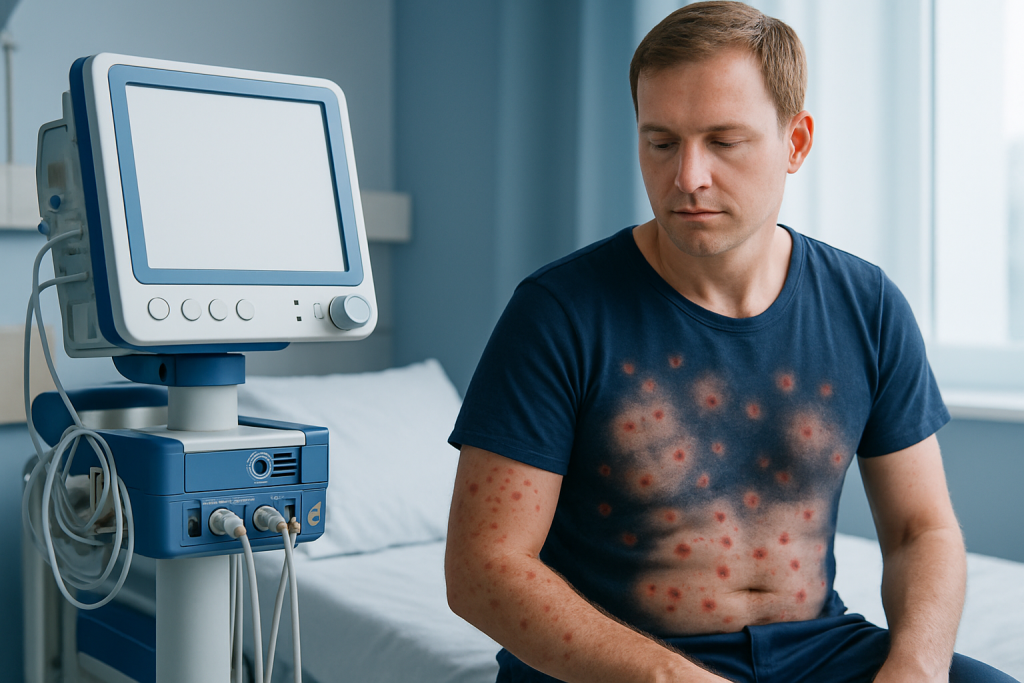
The appearance of syphilis rash varies. In many cases, it consists of small reddish-brown or copper-colored spots or slightly raised bumps. The rash may be faint or more noticeable, flat or rough, and it can involve a few areas or much of the body. Although it is often non-itchy, that is not a strict rule, and some people may notice mild irritation.
One of the most recognized clues is rash on the palms and soles. This location is less common in many routine skin problems, so it often raises clinical suspicion for secondary syphilis. Still, other illnesses can also affect these areas, so testing remains essential.
Secondary syphilis can also cause moist, wart-like lesions in warm body folds or the genital and anal region. These lesions, called condyloma lata, are highly infectious. Other skin findings may include patchy hair loss or sores in the mouth. Because these signs overlap with other infections and inflammatory skin diseases, medical evaluation is the safest next step.
- Common sites: trunk, arms, legs, palms, and soles
- Possible appearance: spots, bumps, scaly patches, or broad flat lesions
- Itch: often absent, but mild itching can occur
- Associated findings: mouth sores, swollen lymph nodes, fever, fatigue, patchy hair loss
Common triggers and why the rash develops

The rash is not triggered by a food, detergent, heat, or stress in the way some other rashes are. Instead, it develops because the syphilis infection has progressed from a local infection to a systemic one. As the bacteria spread through the body, the immune response and tissue involvement can produce skin and mucous membrane changes.
This means the true “trigger” is untreated infection rather than a skin contact exposure. A person may not realize they have syphilis because the first sore can be painless and may heal on its own. Healing of the sore does not mean the infection is gone. Without treatment, the bacteria remain in the body and can later cause rash and other symptoms.
Risk factors for syphilis include unprotected sexual contact, having multiple sexual partners, contact with a partner who has syphilis, and previous sexually transmitted infections. Syphilis can affect anyone who is sexually active. During pregnancy, untreated syphilis can also be passed to the baby, which is why timely diagnosis is especially important.
Other symptoms that may occur with syphilis rash
A syphilis rash often appears alongside other symptoms of secondary syphilis. These can include fever, sore throat, swollen lymph nodes, fatigue, muscle aches, headaches, and unintended weight loss. Some people also develop painless sores or patches inside the mouth, around the genitals, or near the anus.
Patchy hair loss is another possible sign. This can appear as thinning hair or small irregular areas of hair loss on the scalp, beard, or eyebrows. While this symptom is less common than rash, it can be a helpful clue when it occurs together with other findings.
Symptoms may come and go, which can create false reassurance. Even if the rash fades without treatment, the infection can remain active and move into a latent stage. Over time, untreated syphilis may cause serious complications affecting the nervous system, heart, eyes, or other organs. For this reason, any suspected case should be evaluated rather than monitored at home alone.
How doctors diagnose syphilis rash
Doctors diagnose syphilis rash by combining a physical examination with laboratory testing. A clinician asks about symptoms, recent sexual exposures, past sexually transmitted infections, pregnancy status if relevant, and whether there has been a painless sore before the rash appeared. The skin and mucous membranes are carefully examined because lesions in the mouth, genital area, or body folds can provide important clues.
The main tests are blood tests that look for antibodies related to syphilis. In some cases, samples may also be taken from a sore if one is present. Depending on the situation, a doctor may recommend testing for other sexually transmitted infections as well, since co-infections can occur. This may include broader STD checkup services when appropriate.
If symptoms suggest complications involving the brain, eyes, or ears, additional evaluation may be needed. The goal is not only to confirm syphilis, but also to identify the stage and rule out other conditions that may look similar, such as drug eruptions, fungal infections, pityriasis rosea, viral illnesses, or autoimmune skin diseases.
Treatment options and what to expect
Syphilis is treated with antibiotics prescribed by a qualified clinician. The exact treatment plan depends on the stage of infection, symptoms, allergy history, and whether there are signs of complications. Completing treatment as advised is important, even if the rash or other symptoms improve quickly.
After treatment begins, the rash usually fades over time, but follow-up matters. Doctors often repeat blood tests after treatment to make sure the infection is responding as expected. Sexual partners may also need evaluation and treatment to prevent reinfection and further spread.
People should avoid sexual contact until a doctor says it is safe, and they should inform recent partners so those individuals can be tested. If the diagnosis is uncertain or the skin findings are unusual, a person may be assessed through dermatology or infectious diseases services. Near the end of the care pathway, Acibadem International’s multidisciplinary specialists and JCI-accredited hospitals also evaluate and treat international patients with suspected or confirmed syphilis.
Self-care, prevention, and reducing future risk
There is no home remedy that cures syphilis rash, because the rash is a sign of infection inside the body rather than a surface skin problem. General skin care can improve comfort, such as using mild cleansers, avoiding harsh products, and not scratching irritated areas. However, these steps do not treat the underlying cause.
The best prevention is safer sexual practice and regular testing when risk is present. Correct condom use can lower risk, although it does not fully eliminate it because sores can occur in areas not covered by a condom. Open communication with partners and prompt testing after a possible exposure are also important.
Anyone with a past diagnosis should attend follow-up visits and blood testing as recommended. This helps confirm that treatment worked and can identify reinfection early. If there are other genital symptoms, such as ulcers or discharge, doctors may evaluate for related conditions including genital herpes if clinically appropriate.
When to seek medical care
Medical care should be sought promptly for any unexplained rash that affects the palms or soles, especially if it appears with a painless genital sore, mouth sores, swollen lymph nodes, fever, or recent sexual exposure. Even when the rash is mild and not itchy, it should not be ignored if there is any possibility of syphilis.
Urgent assessment is also important during pregnancy, because untreated syphilis can harm the developing baby. A person should seek earlier care if they have eye symptoms, hearing changes, severe headache, confusion, weakness, or other neurological symptoms, as these may suggest more serious involvement.
Because many rashes look alike, it is reasonable to avoid self-diagnosis and over-the-counter treatment delays. A qualified doctor can guide testing, treatment, partner management, and follow-up in a confidential and supportive way.
Frequently asked questions
Is syphilis rash always on the palms of the hands and soles of the feet?
No. The palms and soles are classic locations, but the rash can also appear on the trunk, arms, legs, or multiple areas at once. Some people have only subtle skin changes, which is why testing is important.
Does a syphilis rash itch?
Often it does not itch, which is one reason it may be overlooked. However, symptoms vary, and mild itching can happen in some cases. Itch alone cannot rule syphilis in or out.
Can a syphilis rash go away on its own?
Yes, the rash can fade even without treatment, but that does not mean the infection is gone. Syphilis can remain in the body and later cause serious complications. Proper medical treatment is still needed.
How soon after exposure does syphilis rash appear?
The rash usually appears during secondary syphilis, after the initial stage with a chancre sore. Timing varies from person to person, so there is no single exact schedule. A doctor can advise on the right testing window after possible exposure.
What can be mistaken for a syphilis rash?
Syphilis rash can resemble eczema, psoriasis, pityriasis rosea, fungal infections, drug reactions, and viral rashes. It may also be confused with other sexually transmitted infections that cause skin or mucosal lesions. Because there are many look-alikes, diagnosis should be confirmed with medical testing.
Is syphilis rash contagious?
The rash itself is a sign of an active infection, and some associated lesions, especially moist lesions in skin folds or the genital area, can be highly infectious. Transmission occurs through sexual contact with infectious sores or lesions. A person should avoid sexual contact until they have been assessed and treated as advised.
This article is for general information only and is not a substitute for professional medical advice. Please consult a qualified doctor about your individual situation.
Explore treatments in Turkey — costs, top hospitals & a free quote
JCI-accredited · board-certified surgeons · reply within 24h
Add us as a Preferred Source to see more of our trusted health content across Google Search, AI Overviews and Discover.

Dermatology Specialists at Acibadem



More from the Health Library

Does Apple Cider Vinegar Go Bad? Here Is What the Evidence Says

Brain eating bacteria: Common Causes, Warning Signs, and When to Worry

Hypertension Headache: Common Causes, Related Conditions, and When to See a Doctor

Type 1 vs Type 2 Diabetes: Key Differences and How Doctors Tell Them Apart

How Long Does Lexapro Stay in Your System? Here Is What the Evidence Says