Tampa Minimally Invasive Spine Surgery Center: Procedure, Recovery and Results

Minimally invasive spine surgery is an approach, not one single operation; it may include decompression, discectomy, or spinal fusion. It is most appropriate when symptoms, examination findings, and imaging identify a specific spinal problem that has not improved with appropriate non-surgical care.
Key Takeaways
- Minimally invasive spine surgery is an approach, not one single operation; it may include decompression, discectomy, or spinal fusion.
- It is most appropriate when symptoms, examination findings, and imaging identify a specific spinal problem that has not improved with appropriate non-surgical care.
- Many people walk on the day of or day after surgery, but full recovery can range from weeks to several months depending on the procedure.
- Potential advantages include smaller incisions and less soft-tissue disruption, while risks such as infection, nerve injury, blood clots, and incomplete symptom relief still exist.
- A qualified spine surgeon should explain the expected benefit, alternatives, recovery plan, and risks for the individual diagnosis.
A Tampa minimally invasive spine surgery center typically evaluates whether small-incision spine techniques can safely relieve nerve compression, stabilize an unstable spinal segment, or treat selected disc problems. These procedures may reduce muscle disruption compared with traditional open surgery, but suitability, recovery, and outcomes depend on the diagnosis, surgical level, and overall health.
Tampa Minimally Invasive Spine Surgery Center: What It Means
A Tampa minimally invasive spine surgery center generally provides assessment and treatment for people with spinal conditions that may be managed through smaller incisions and specialized surgical instruments. The goal is not simply to make an incision smaller. It is to reach the affected part of the spine while limiting unnecessary disruption to surrounding muscles and soft tissues, where this can be done safely and effectively.
Minimally invasive spine surgery (MISS) can be used for several procedures, including removal of a disc fragment pressing on a nerve, widening a narrowed spinal canal, and fusion of unstable spinal segments. It may be performed in the neck, middle back, or lower back. The exact technique is chosen based on the location and cause of symptoms, not on the size of the incision alone.
People often seek an evaluation because of persistent back or neck pain, pain traveling into an arm or leg, numbness, weakness, or difficulty walking. Surgery is usually considered only after a careful diagnosis and a discussion of non-surgical options, unless there is a neurological emergency or progressive loss of function.
How Minimally Invasive Spine Surgery Works
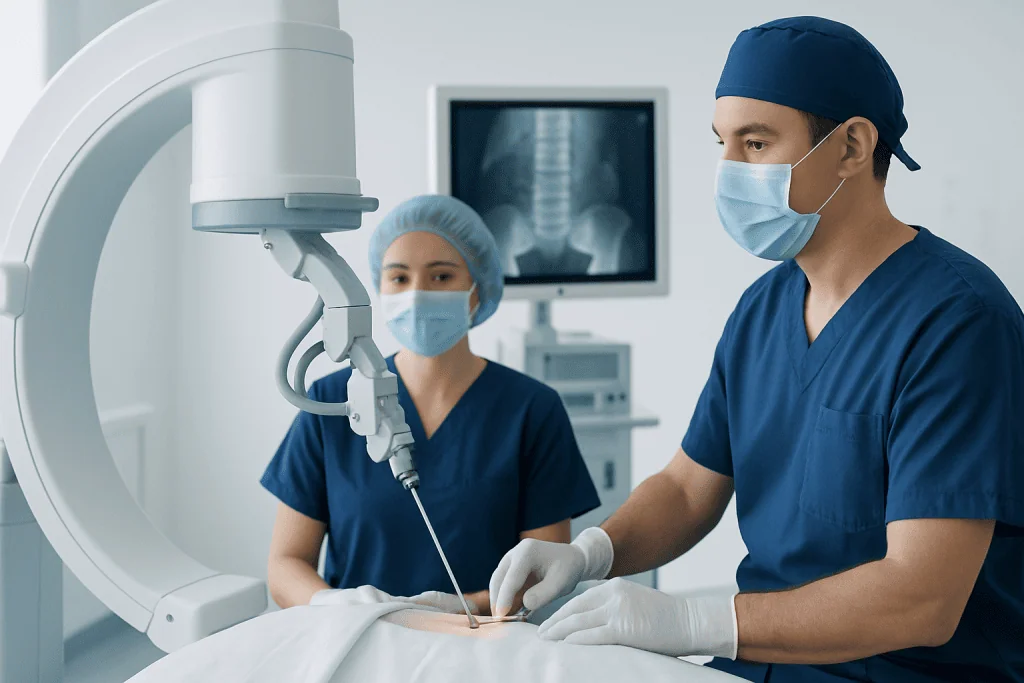
During minimally invasive surgery, the surgeon may use X-ray guidance, a surgical microscope, an endoscope, or real-time nerve monitoring to identify the correct spinal level and protect nearby structures. Small tubular retractors can create a working channel through the muscles rather than requiring broad muscle stripping. Specialized instruments are then passed through this channel to perform the planned procedure.
For nerve compression, the surgeon may remove part of a thickened ligament, enlarged facet joint, bone spur, or herniated disc material. This is commonly described as decompression, laminectomy, laminotomy, foraminotomy, or microdiscectomy, depending on the anatomy and technique. For instability, deformity, or some cases of recurrent disc disease, the surgeon may place screws, rods, cages, and bone-grafting material to support a fusion.
Imaging such as MRI, CT, and standing X-rays helps surgical planning, but scans are interpreted alongside symptoms and the physical examination. Findings such as disc bulges are common and do not always cause symptoms. Effective care focuses on a clear match between the abnormality seen on imaging and the person’s clinical problem.
Candidacy and Conditions That May Be Treated
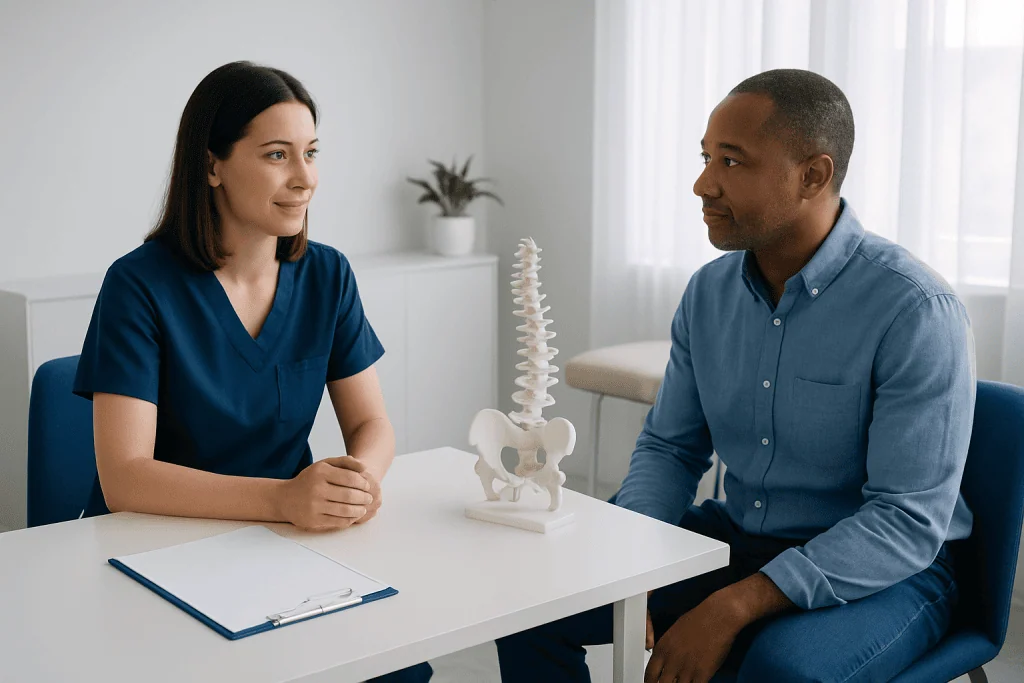
Appropriate candidates have a defined spinal diagnosis, symptoms that meaningfully affect daily life, and a reasonable expectation that surgery will address the source of those symptoms. A person may be considered after physical therapy, activity modification, pain-management approaches, or injections have not provided adequate relief. However, the best treatment pathway varies considerably between individuals.
Conditions that may be treated with minimally invasive techniques include selected cases of lumbar disc herniation, spinal stenosis, degenerative spondylolisthesis, and some forms of spinal instability. For example, a herniated disc can irritate a nearby nerve and lead to sciatica, while spinal stenosis can narrow the spaces available for nerves. These conditions may overlap, and they require individualized assessment.
Not every spinal condition is suitable for a minimally invasive approach. Complex deformity, extensive multilevel disease, prior surgery with substantial scar tissue, severe osteoporosis, infection, tumor, or particular patterns of instability may require a different method. A surgeon should explain why a minimally invasive, open, combined, or non-surgical plan is recommended. When fusion is appropriate, spinal fusion surgery may be discussed as part of a personalized treatment plan.
- Symptoms should correspond to a specific anatomical problem.
- General health should allow anesthesia and rehabilitation.
- Patients should understand that surgery may improve nerve-related symptoms more predictably than longstanding generalized back pain.
Step-by-Step: What Happens Before, During and After Surgery
Before surgery, the care team reviews medical history, medications, allergies, prior operations, imaging, and anesthesia risks. Patients may need blood tests, heart or lung evaluation, or guidance on adjusting certain medicines. Smoking cessation, diabetes management, nutrition, and a practical plan for help at home can all support safer recovery.
On the day of surgery, anesthesia is provided and the patient is positioned carefully. The surgeon confirms the correct surgical site, uses imaging to verify the spinal level, and makes one or more small incisions. Through a tubular access system or other minimally invasive platform, the surgeon performs the decompression, disc removal, fusion, or other planned repair. The incision is then closed and covered with a dressing.
After surgery, the team monitors pain control, movement, wound status, and neurological function. Many patients are encouraged to stand and walk with support soon after surgery when medically appropriate. Some procedures are performed as day surgery, while others require a hospital stay, especially when fusion or treatment of multiple levels is involved.
How Long Does It Take to Recover from Minimally Invasive Spine Surgery?
Recovery from minimally invasive spine surgery varies by procedure and by the person’s condition before surgery. After a straightforward minimally invasive discectomy or decompression, some people return to light daily activities within days to a few weeks, although lifting, bending, driving, and work restrictions may continue longer. Nerve healing can be gradual, so numbness or weakness may take weeks or months to improve.
Recovery after minimally invasive fusion is usually longer. Walking commonly begins early, but bone healing and a progressive return to heavier work, sports, and unrestricted activity can take several months. The surgeon’s instructions are based on the surgical level, number of levels treated, stability of the spine, occupation, and progress during follow-up.
Rehabilitation may include guided walking, posture education, gentle mobility exercises, and later strengthening. Physical therapy is not identical for every person; starting too early or advancing too quickly can be unhelpful. Follow-up appointments allow the team to review wound healing, symptoms, medications, and, when needed, imaging.
How Painful Is Minimally Invasive Spine Surgery?
It is normal to have pain and stiffness after spine surgery, but minimally invasive approaches may cause less muscle-related discomfort than some open procedures because they can reduce soft-tissue disruption. Pain is influenced by the operation performed, the number of spinal levels treated, pre-existing pain, anxiety, sleep, and individual healing. A smaller incision does not mean the procedure is minor or pain-free.
Clinicians commonly use a multimodal pain-management plan that may include non-opioid medicines, limited use of other pain medicines when appropriate, ice or heat guidance, early gentle movement, and strategies to prevent constipation. Patients should take medication only as prescribed and inform the team if pain is worsening rather than gradually improving.
Leg or arm pain caused by nerve compression may improve quickly after successful decompression, while altered sensation can take longer. New severe pain, increasing weakness, loss of bowel or bladder control, fever, or wound drainage should be reported promptly because these symptoms need medical assessment.
What Is the Success Rate of Minimally Invasive Spine Surgery?
There is no single success rate for minimally invasive spine surgery because it covers different operations for different conditions. Outcomes depend strongly on whether the procedure is correctly matched to the diagnosis, the severity and duration of nerve damage, the presence of instability, smoking status, diabetes, bone health, body weight, rehabilitation, and other factors.
For example, surgery to relieve a clearly compressed nerve may provide meaningful improvement in radiating arm or leg pain when clinical symptoms and imaging align. In contrast, surgery is less predictable for nonspecific back pain without an identifiable structural cause. A surgeon should define what “success” means in practical terms, such as improved walking tolerance, reduced radiating pain, better function, preservation of neurological function, or improved stability.
Potential benefits of a minimally invasive approach can include smaller incisions, reduced blood loss in selected procedures, and earlier mobility. Risks remain possible and include infection, bleeding, blood clots, spinal fluid leak, nerve injury, persistent or recurrent symptoms, failure of a fusion to heal, and the need for further treatment. Discussing benefits and risks in the context of an individual case is essential.
Who Is the Best Spine Surgeon in Tampa?
There is no universally “best” spine surgeon for every person or condition. The most suitable specialist is a board-qualified orthopedic spine surgeon or neurosurgeon with appropriate experience in the specific diagnosis and procedure being considered, who communicates clearly and recommends treatment based on the patient’s needs rather than a single technique.
During a consultation, it is reasonable to ask about the diagnosis, why surgery is or is not advised, expected improvement, alternatives, the surgeon’s experience with the proposed procedure, possible complications, and the planned rehabilitation. A second opinion can be particularly valuable when major fusion surgery, multilevel treatment, revision surgery, or an uncertain diagnosis is involved.
For international patients, Acibadem International’s multidisciplinary specialists and JCI-accredited hospitals can assess spine conditions and coordinate diagnostic, surgical, and rehabilitation care. The priority should remain an informed decision based on a careful clinical evaluation and shared discussion of realistic goals.
When to Seek Medical Care
Persistent neck or back pain should be assessed by a qualified clinician when it limits work, sleep, walking, self-care, or usual activities; travels into an arm or leg; or is accompanied by numbness, tingling, or weakness. Early assessment can help distinguish conditions that may improve with conservative care from those requiring specialist input.
Urgent medical care is needed for new or rapidly worsening weakness, numbness in the groin or saddle area, loss of bladder or bowel control, fever with severe back pain, or severe pain after a significant injury. These symptoms can indicate conditions that require prompt evaluation.
People considering surgery should seek care from a spine specialist who can review symptoms, examination findings, and imaging together. Questions about recovery, work restrictions, travel, and rehabilitation should be addressed before the procedure so expectations and planning are clear.
Frequently asked questions
Is minimally invasive spine surgery safer than open spine surgery?
Minimally invasive surgery may reduce soft-tissue disruption in selected operations, but it is not automatically safer for every patient or condition. Both minimally invasive and open techniques have potential benefits and risks, and the safest approach is the one that provides adequate treatment for the specific spinal problem.
Can minimally invasive spine surgery be performed for spinal stenosis?
Yes, selected cases of spinal stenosis can be treated with minimally invasive decompression techniques. The surgeon removes tissue or bone that is narrowing the space around nerves, but the method depends on the location of stenosis, spinal stability, and the number of levels involved.
Will minimally invasive spine surgery leave a scar?
Yes, all surgery leaves a scar, although minimally invasive procedures often use smaller incisions than traditional open approaches. Scar appearance changes over time and can be influenced by skin type, wound healing, infection, sun exposure, and individual factors.
How soon can someone walk after minimally invasive spine surgery?
Many people are encouraged to walk with assistance on the day of surgery or the following day, if medically appropriate. The amount of walking and the pace of activity progression depend on the operation, balance, pain control, and the surgeon’s instructions.
Can a disc herniation return after minimally invasive discectomy?
A disc herniation can recur at the same level after discectomy, although many people experience meaningful relief after removal of the disc material compressing a nerve. Maintaining a gradual return to activity, following rehabilitation guidance, and addressing modifiable health factors may support recovery, but cannot eliminate recurrence risk.
Is physical therapy needed after minimally invasive spine surgery?
Physical therapy is often part of recovery, though its timing and content vary. Some patients begin with walking and simple movement guidance, then progress to structured therapy when healing and surgical restrictions allow.
References
- American Academy of Orthopaedic Surgeons
- American Association of Neurological Surgeons
- National Institute of Neurological Disorders and Stroke
- North American Spine Society
- Mayo Clinic
This article is for general information only and is not a substitute for professional medical advice. Please consult a qualified doctor about your individual situation.
Minimally Invasive in Turkey — costs, top hospitals & a free quote
JCI-accredited · board-certified surgeons · reply within 24h
Add us as a Preferred Source to see more of our trusted health content across Google Search, AI Overviews and Discover.

Robotic Surgery
Robot-assisted procedures across urology, gynecology and general surgery for greater precision and faster recovery.