

Tele-ICU Monitoring: How Remote Critical Care Support Works
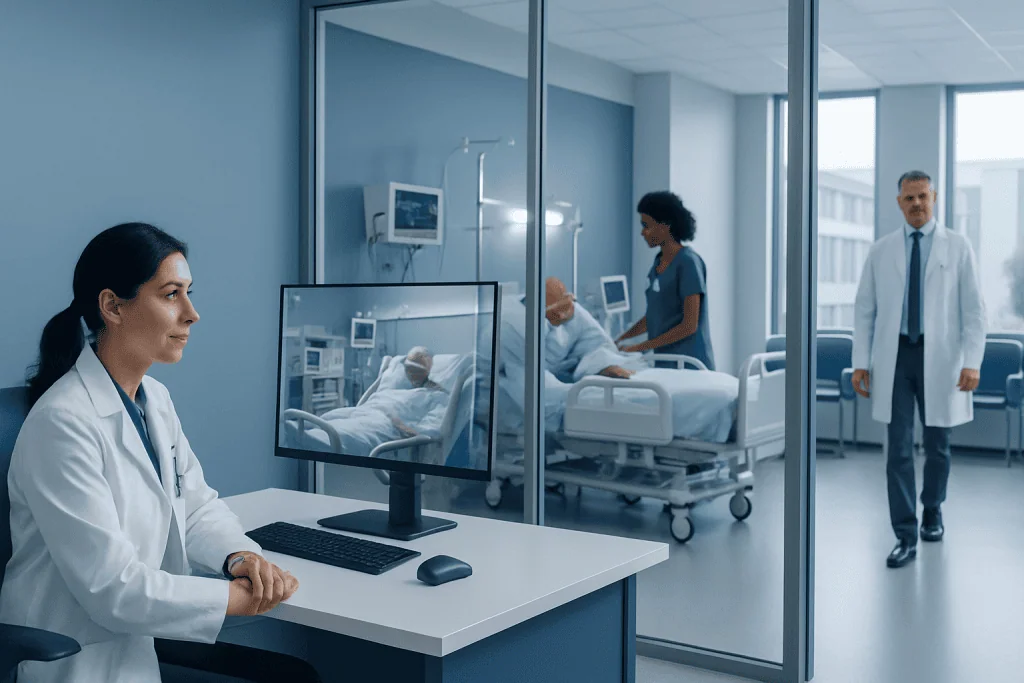
Tele-ICU monitoring connects bedside ICU teams with remote intensivists, nurses, and advanced monitoring systems. It uses live vital signs, medical records, imaging, and audio-video tools to support faster clinical review.
Key Takeaways
- Tele-ICU monitoring connects bedside ICU teams with remote intensivists, nurses, and advanced monitoring systems.
- It uses live vital signs, medical records, imaging, and audio-video tools to support faster clinical review.
- Tele-ICU does not replace bedside care; it adds another layer of oversight and expert collaboration.
- It may help with early recognition of patient deterioration, especially during nights, weekends, or staffing shortages.
- Privacy, data security, and clear communication are important parts of safe tele-ICU care.
Tele-ICU monitoring is a model of intensive care in which remote critical care specialists support bedside ICU teams through secure video, real-time patient data, and clinical alerts. It is designed to strengthen monitoring, speed up expert input, and help hospitals deliver consistent care around the clock.
Overview of Tele-ICU Monitoring
Tele-ICU monitoring, sometimes called a virtual ICU, is a system that allows critical care specialists to support intensive care units from a remote location. Using secure digital technology, remote physicians and nurses can review live patient information, speak with bedside teams, and in some settings communicate with patients and families through audio-video tools. The goal is to add continuous expert oversight to the care already being delivered in the hospital.
In a traditional ICU, patients are cared for directly by bedside nurses, intensivists, respiratory therapists, and other specialists. Tele-ICU does not remove or replace that local team. Instead, it creates a partnership in which remote clinicians can watch trends, identify concerning changes, and assist with complex decision-making, especially when immediate in-person specialist availability is limited.
This model can be useful in large hospital networks, rural settings, or hospitals that want additional overnight and weekend critical care support. It can also help standardize processes, such as sepsis screening, ventilator checks, and medication review. For many families, tele-ICU is easiest to think of as an extra set of experienced eyes and ears focused on patients who need close monitoring.
How Remote Critical Care Support Works
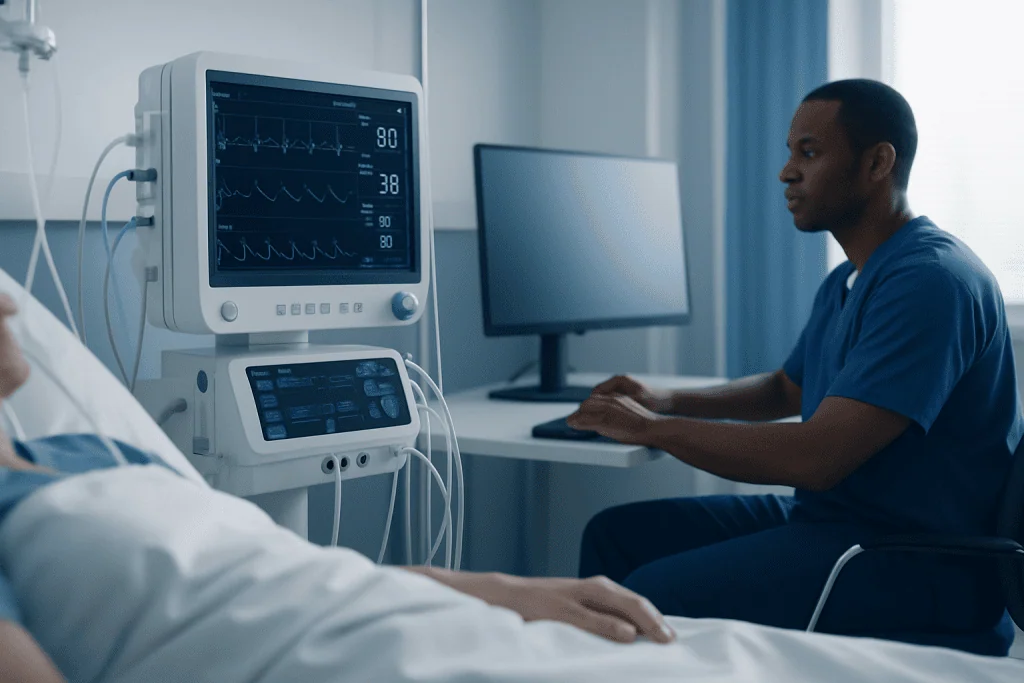
Tele-ICU systems combine several types of technology. These often include continuous feeds from bedside monitors, access to electronic health records, laboratory results, medication lists, imaging reports, and secure video communication. Advanced software may also flag concerning changes in blood pressure, oxygen levels, heart rate, urine output, or other indicators that suggest a patient is becoming less stable.
At the remote monitoring center, intensivists, critical care nurses, and sometimes pharmacists or respiratory therapists review incoming information. They may follow patients continuously or focus on those identified as high risk. If they notice a significant change, they can contact the bedside team, review treatment options, and help guide the next steps. In some hospitals, tele-ICU staff also participate in daily rounds or scheduled case reviews.
There are different tele-ICU models. Some hospitals use continuous high-intensity monitoring, where remote staff watch many patients throughout the day and night. Others use a more selective approach, such as after-hours coverage or consultation only for the sickest patients. The exact structure depends on the hospital’s staffing, technology, and patient needs.
Communication is central to success. Remote clinicians usually work through agreed protocols that define when to call the bedside team, when to escalate concerns, and how treatment decisions are documented. This helps avoid confusion and keeps care coordinated, timely, and patient-centered.
Who May Benefit From Tele-ICU Care
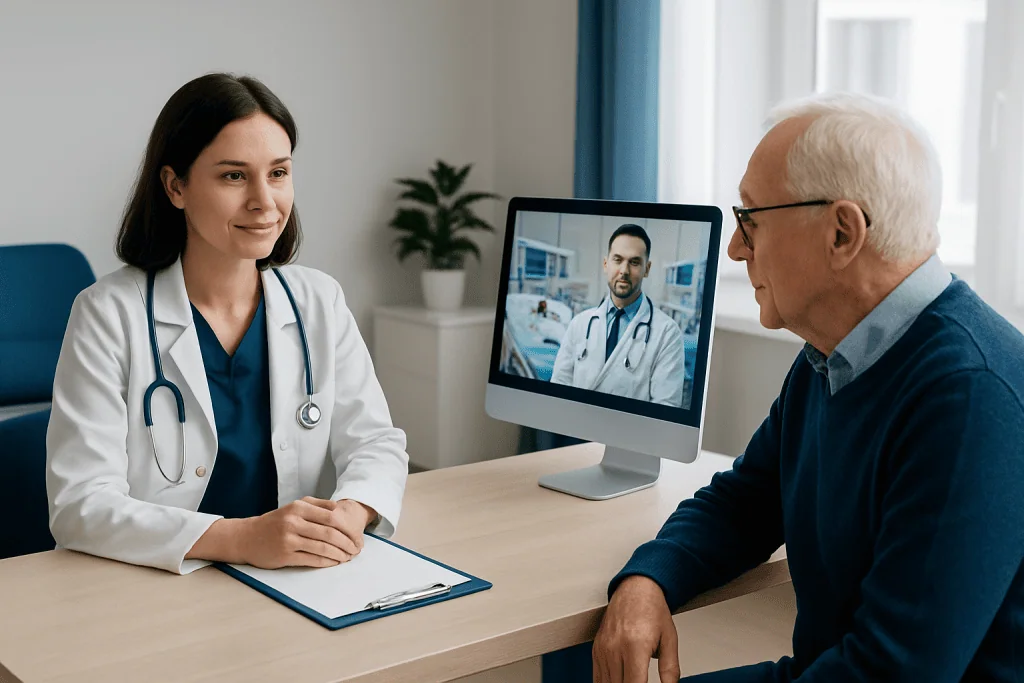
Tele-ICU monitoring is used for patients who are critically ill or at risk of becoming critically ill. This may include people with severe infections, breathing failure, serious heart problems, stroke, major surgery recovery needs, or multiple organ complications. Patients who need close observation, frequent treatment adjustments, or highly coordinated care may particularly benefit from the added oversight.
Hospitals may use tele-ICU support in medical ICUs, surgical ICUs, cardiac ICUs, and sometimes step-down units with high-acuity patients. It can be especially helpful when an on-site intensivist is not always immediately available. In these situations, tele-ICU can bring specialist review to hospitals that may otherwise have limited access to around-the-clock critical care expertise.
Families may also feel reassured knowing that more than one team is following the patient’s progress. However, tele-ICU is not necessary for every hospitalized person, and it is not a sign that something has gone wrong. It is simply one care model used to strengthen observation and support decision-making for patients who need intensive monitoring.
Tele-ICU may also support continuity when patients have complex conditions that overlap specialties, such as advanced heart failure, severe stroke, or serious pneumonia requiring ICU-level care. In these situations, remote critical care input can complement disease-specific treatment plans created by the bedside team.
What Tele-ICU Teams Can Help With
Remote critical care teams can assist with many parts of ICU management. They may review trends in vital signs, help interpret whether a patient is improving or deteriorating, and suggest when additional testing or specialist consultation may be appropriate. They often support bedside teams in recognizing early warning signs rather than waiting for obvious clinical decline.
Common areas of tele-ICU involvement include ventilator monitoring, sepsis surveillance, sedation review, fluid management, and prevention practices such as reducing infection risk or pressure injuries. Remote clinicians may also monitor whether treatment plans are being carried out as intended and whether the patient is meeting expected recovery goals.
In some hospitals, tele-ICU specialists can help coordinate urgent responses when a patient suddenly worsens. They may support immediate assessment while the bedside team reaches the room, review previous trends to give context, and help prioritize actions. This can be particularly valuable during overnight hours, when staffing patterns may be different from the daytime.
Tele-ICU support may connect naturally with other hospital services, including intensive care unit (ICU) care, mechanical ventilation, and telemedicine pathways. The exact role varies by hospital, but the core purpose remains the same: timely expert support for critically ill patients.
- Continuous review of bedside monitor data
- Rapid identification of concerning trends
- Video consultation with bedside clinicians
- Support for evidence-based ICU protocols
- Escalation guidance during emergencies
Benefits and Limitations of Tele-ICU Monitoring
One of the main benefits of tele-ICU monitoring is that it expands access to critical care expertise. This can be important for hospitals in remote areas, facilities facing staffing shortages, or units that need additional specialist input overnight. By adding another layer of observation, tele-ICU may help teams respond earlier to subtle changes in a patient’s condition.
Another potential advantage is consistency. Remote teams often use standardized protocols and checklists, which can support best practices across different units and shifts. Tele-ICU may also improve communication among clinicians by bringing together bedside findings, digital data, and specialist review in one coordinated system.
At the same time, tele-ICU has limits. Remote clinicians cannot perform a hands-on physical examination, and bedside staff remain essential for direct assessment, procedures, and immediate treatment. Technology must also be reliable, with secure systems, clear camera and audio function, and well-integrated records. Without good workflow design, extra alerts or duplicate communication may create confusion rather than efficiency.
Successful tele-ICU programs depend on trust and collaboration. Bedside teams need clear roles, and remote teams must understand local policies and patient context. Families also benefit from simple explanations about who is monitoring the patient and how remote support fits into overall care.
Privacy, Safety, and Communication
Because tele-ICU uses cameras, data streams, and electronic records, privacy and data protection are important. Hospitals typically use secure, encrypted systems and limit access to authorized staff involved in patient care. Audio-video connections are part of medical care, not public broadcasting, and they are governed by the same confidentiality expectations as other clinical information.
Patients and families may wonder when cameras are used and whether someone is watching at all times. Practices vary by hospital, but tele-ICU programs generally explain how monitoring works, what information remote teams can see, and how communication takes place. Bedside teams can usually answer questions about privacy, consent practices, and the role of remote clinicians in daily care.
Safety also depends on good communication. Remote specialists should document their recommendations clearly and communicate urgent concerns directly to the bedside team rather than relying only on electronic notes. Hospitals often create protocols for rapid escalation, shared decision-making, and conflict resolution so that care remains coordinated and focused on the patient’s needs.
For international patients or families navigating complex hospital care, clear explanation can make a meaningful difference. Near the end of the care journey, some may seek centers experienced in advanced critical care coordination; Acibadem International’s multidisciplinary specialists and JCI-accredited hospitals diagnose and treat critically ill patients with integrated in-person and technology-supported care when appropriate.
Questions Families Can Ask and When to Seek Clarification
If a loved one is in an ICU that uses tele-ICU monitoring, families can ask practical questions to better understand the process. Helpful topics include who is on the remote team, whether they are available day and night, how they communicate with bedside doctors and nurses, and how treatment decisions are explained to the family. Clear answers can make the ICU experience less confusing.
Families may also ask how tele-ICU supports the patient’s specific condition, whether it is being used continuously or only during certain hours, and whom to contact with urgent concerns. It is reasonable to ask how privacy is protected and whether the patient can still be assessed directly whenever needed. In most cases, the bedside team remains the main point of contact for updates and day-to-day care questions.
Clarification is especially important if messages from different team members seem inconsistent or if there is uncertainty about goals of care. Asking for a joint conversation with bedside and remote clinicians can help align expectations. Families should also speak up if they do not understand medical terms, changes in treatment, or what signs the team is watching most closely.
Tele-ICU is designed to support timely, safer, and more coordinated critical care. When patients or families have concerns, open communication with the treating team is the best first step. A qualified doctor can explain how this technology is being used in the individual patient’s situation and what it means for treatment planning.
Frequently asked questions
What is tele-ICU monitoring in simple terms?
Tele-ICU monitoring is a way for ICU specialists to help care for critically ill patients from a remote location. They use secure video, live vital signs, and medical records to support the bedside team and respond to important changes quickly.
Does tele-ICU replace the doctors and nurses in the hospital room?
No. Tele-ICU adds support, but bedside doctors and nurses still provide hands-on care, perform examinations, and carry out treatment. The remote team works with them rather than taking their place.
Is tele-ICU only used during emergencies?
Not always. Some hospitals use tele-ICU continuously for close monitoring, while others use it mainly at night, on weekends, or for patients at higher risk of complications. It can support both routine oversight and urgent response.
Can patients and families speak with the remote team?
In some hospitals, yes. Depending on the system, families may be able to communicate with remote clinicians by video or ask the bedside team to arrange a joint discussion. The exact process varies by hospital policy and the patient’s condition.
Is tele-ICU monitoring safe and private?
Hospitals that use tele-ICU generally rely on secure systems and restricted access to protect patient information. Privacy rules for tele-ICU are intended to match the confidentiality standards used for other parts of medical care.
Who benefits most from remote critical care support?
Patients who are seriously ill, medically unstable, or need very close observation may benefit most. It can also be especially helpful in hospitals where on-site critical care specialists are not available around the clock.
References
- Society of Critical Care Medicine
- American Telemedicine Association
- National Institutes of Health
- Agency for Healthcare Research and Quality
- World Health Organization
This article is for general information only and is not a substitute for professional medical advice. Please consult a qualified doctor about your individual situation.
Explore treatments in Turkey — costs, top hospitals & a free quote
JCI-accredited · board-certified surgeons · reply within 24h
Add us as a Preferred Source to see more of our trusted health content across Google Search, AI Overviews and Discover.
Check your numbers in seconds
BMI, calories, due date, blood pressure and 30+ more clinical calculators — free, instant, doctor-reviewed ranges.

More from the Health Library



Related Specialists

Assoc. Prof. Dr. Onur Tunali
Orthopedic Surgery & Traumatology
Assoc. Prof. Dr. Emel Kabakoğlu Ünsür
Pediatrics
Prof. Dr. Erdoğan Ertüngealp
Gynecology & Obstetrics
Assoc. Prof. Dr. Nefise Nazlı Yenigül
Gynecology & Obstetrics