Tendons: An Evidence-Based Guide for Patients

Tendons connect muscles to bones and help joints move smoothly and efficiently. Common tendon problems include overuse irritation, degeneration, tears, and inflammation around the tendon.
Key Takeaways
- Tendons connect muscles to bones and help joints move smoothly and efficiently.
- Common tendon problems include overuse irritation, degeneration, tears, and inflammation around the tendon.
- Pain, stiffness, swelling, and weakness that worsen with movement may suggest a tendon problem.
- Early assessment can help guide treatment and reduce the risk of long-term pain or rupture.
- Treatment often includes rest, physical therapy, gradual return to activity, and sometimes injections or surgery.
Tendons are strong bands of connective tissue that attach muscle to bone and make movement possible. When tendons are overused, strained, or injured, they can become painful and less efficient, but many problems improve with timely diagnosis, activity changes, and appropriate treatment.
Overview: what tendons are and why they matter
Tendons are tough, flexible cords of connective tissue that attach muscles to bones. They transmit the force created by muscle contraction, allowing a person to walk, lift, grip, jump, turn the head, or simply keep posture. Although they are very strong, tendons are not as elastic as muscles, so they can become irritated or injured when placed under repeated strain or sudden force.
Healthy tendons help joints move efficiently and also contribute to stability. They are found throughout the body, including the shoulder, elbow, wrist, hand, hip, knee, ankle, and foot. Well-known examples include the Achilles tendon at the back of the ankle, the rotator cuff tendons in the shoulder, and the patellar tendon below the kneecap.
Patients often use the word “tendonitis” for any tendon pain, but tendon disorders are more varied than simple inflammation. Some problems involve short-term irritation after overuse, while others reflect gradual wear within the tendon structure itself. This distinction matters because treatment usually focuses not only on reducing pain, but also on restoring strength, flexibility, and load tolerance.
A tendon problem may develop in athletes, office workers, manual laborers, or older adults. In many cases, symptoms improve with conservative care. However, persistent pain, marked weakness, or a suspected tear should be assessed by a qualified clinician so that the injury is not overlooked or allowed to worsen.
Common tendon problems and symptoms
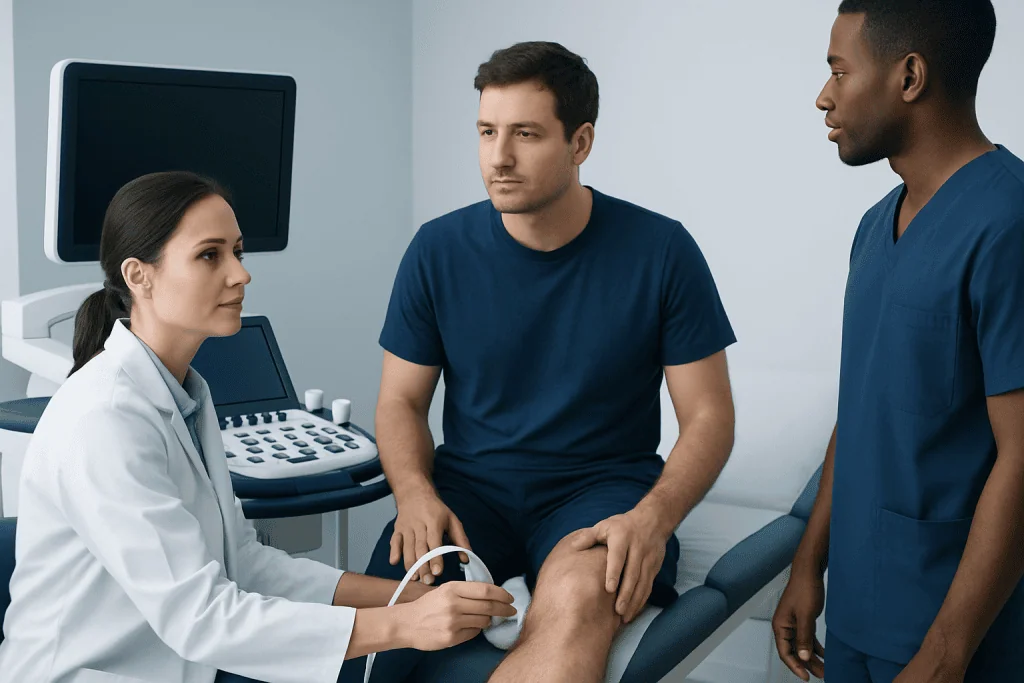
Tendon disorders include tendinopathy, tendinitis, tenosynovitis, and tendon tears. Tendinopathy is a broad term for pain and dysfunction in a tendon, often caused by repeated mechanical stress. Tendinitis usually refers to inflammation, while tenosynovitis affects the tendon sheath, the tissue surrounding certain tendons. A tear may be partial or complete, with symptoms ranging from mild pain to significant loss of function.
Symptoms depend on the tendon involved, but many patients notice localized pain that increases with movement or exercise. Stiffness after rest, tenderness to touch, mild swelling, and reduced strength are also common. Some people describe a burning or aching sensation during activity, while others notice discomfort mainly the next day.
Different areas of the body can produce different patterns. For example, Achilles tendon problems may cause heel or ankle pain during walking or running, while shoulder tendon problems may make it difficult to reach overhead or sleep on one side. Hand and wrist tendon irritation can interfere with gripping, typing, or lifting. In more severe cases, a tendon tear may cause a sudden snapping feeling, bruising, or a noticeable drop in strength.
- Pain during or after movement
- Morning stiffness or stiffness after inactivity
- Tenderness along a specific tendon
- Mild swelling or warmth
- Weakness, reduced grip, or limited range of motion
- A popping sensation or sudden loss of function in a rupture
Causes and risk factors
Most tendon problems develop because of repeated loading without enough recovery time. This can happen with sports such as running, tennis, basketball, or weight training, but it can also occur with work and daily activities. Repetitive overhead reaching, prolonged typing, frequent lifting, or sudden increases in training intensity can all overload a tendon.
Age is another important factor. As people get older, tendons can become less resilient and may heal more slowly after strain. Tight muscles, poor movement mechanics, weak supporting muscles, and inadequate warm-up may further increase stress on the tendon. Previous injury can also raise the risk of future tendon pain.
Some health conditions and medications can contribute. Diabetes, inflammatory arthritis, obesity, and certain metabolic disorders may affect tendon health. In some cases, medicines such as fluoroquinolone antibiotics or long-term corticosteroid exposure are associated with a higher risk of tendon injury, particularly rupture. This does not mean a person should stop prescribed treatment on their own, but it does mean new tendon pain should be discussed promptly with a doctor.
Sudden trauma can also cause tendon tears. A forceful jump, a fall, an attempt to lift something unexpectedly heavy, or a sports injury may overload the tendon beyond its limits. Because several painful conditions around joints can mimic tendon disorders, doctors may also consider related problems such as rotator cuff tear or carpal tunnel syndrome when symptoms involve the shoulder or wrist and hand.
How tendon problems are diagnosed
Diagnosis begins with a medical history and physical examination. The clinician typically asks when the pain started, what movements make it worse, whether there was a sudden injury, and how symptoms affect daily activities. During the examination, they may check tenderness, swelling, strength, flexibility, and the way the joint moves under load.
In many cases, a careful clinical assessment is enough to identify a likely tendon problem and start treatment. However, imaging may be helpful if symptoms are severe, if a tear is suspected, or if pain does not improve as expected. Ultrasound can show tendon thickening, tears, and inflammation around the tendon, while MRI provides more detailed images of soft tissues and nearby structures.
X-rays do not show tendons directly, but they may be used to look for bone changes, calcification, or other causes of pain. Blood tests are not routinely needed for simple overuse injuries, though they may be considered if the doctor suspects an inflammatory or systemic condition.
Accurate diagnosis matters because tendon pain can overlap with muscle strain, joint arthritis, bursitis, nerve compression, or ligament injury. An individualized treatment plan works best when it is based on the specific tendon involved, the severity of symptoms, and the patient’s activity goals.
Treatment options for tendon pain and injury
Treatment depends on the tendon affected and whether the problem is due to overuse, degeneration, or a tear. For many patients, the first steps include modifying activities that trigger pain, reducing sudden high-load movements, and allowing time for the tendon to settle. This is not the same as complete inactivity. Controlled, gradual loading is often important because tendons generally respond well to progressive rehabilitation.
Physical therapy is a cornerstone of care. A therapist may guide stretching, strengthening, balance training, and movement retraining tailored to the specific tendon. Eccentric or heavy slow resistance exercises are commonly used in some forms of tendinopathy. Other supportive measures may include ice after activity, short-term pain relief medicines when appropriate, taping, braces, or footwear adjustments.
If symptoms persist, a doctor may consider additional treatments depending on the diagnosis. These may include imaging-guided assessment, injections in selected cases, or specialist procedures. For patients with mobility-limiting pain, a structured physical therapy and rehabilitation program is often central to recovery. When a major tear or rupture is present, orthopedic surgery may be discussed to restore function.
Recovery time varies. Mild overuse problems may improve over weeks, while chronic tendinopathy or postoperative recovery can take much longer. Patience matters, because returning too quickly to the same load that caused the problem can delay healing. In selected complex cases, doctors may also coordinate care with sports medicine specialists to plan a safe return to work or exercise.
Prevention and self-care for healthier tendons
Preventing tendon problems usually means managing load rather than avoiding activity altogether. Tendons adapt best when exercise increases gradually and recovery is built in. Sudden jumps in running distance, training intensity, or repetitive work demands are common triggers, especially after a period of reduced activity.
Regular strengthening helps muscles and tendons tolerate stress more efficiently. Flexible movement patterns, good technique, and supportive footwear may also reduce unnecessary strain. People who repeat the same motion at work or in sport may benefit from varying tasks, taking short breaks, and reviewing ergonomics or training form.
General health also supports tendon health. Managing weight, blood sugar, and inflammatory conditions may reduce risk over time. Adequate sleep and balanced nutrition support recovery after exercise and injury. Smoking cessation may also be helpful because smoking can impair tissue healing.
- Warm up before sport or heavy activity
- Increase exercise volume gradually
- Use proper technique and equipment
- Strengthen supporting muscles regularly
- Rest or modify activity when pain starts to build
- Seek advice early if symptoms persist beyond a short period
When to seek medical care
Many mild tendon aches improve with a short period of relative rest and gradual return to activity, but medical evaluation is important when symptoms are significant or persistent. Patients should seek care if pain lasts more than a few weeks, keeps returning, interferes with walking, work, sleep, or exercise, or is associated with obvious weakness.
Urgent assessment is advisable if there is a sudden sharp pain followed by a popping sensation, rapid swelling, bruising, visible deformity, or inability to move the joint normally. These features may suggest a partial or complete tendon rupture. Fever, marked redness, or severe swelling should also be assessed promptly because they can indicate another condition requiring treatment.
People with diabetes, inflammatory joint disease, or medication-related risk factors should mention these to their doctor, as they may affect diagnosis and healing. If a tendon problem is part of a broader musculoskeletal picture, the clinician may also look for related issues such as meniscus tear or shoulder impingement, depending on symptoms and examination findings.
For international patients who need specialist assessment, Acibadem International’s multidisciplinary teams in JCI-accredited hospitals evaluate and treat tendon disorders using orthopedic, rehabilitation, and imaging expertise. The right time to seek help is before pain causes lasting weakness, compensation, or loss of activity.
Frequently asked questions
What do tendons do in the body?
Tendons connect muscles to bones and transfer the force that produces movement. They also help stabilize joints during daily activities such as walking, lifting, and gripping.
What is the difference between tendonitis and tendinopathy?
Tendonitis usually refers to inflammation of a tendon, often after a recent overload. Tendinopathy is a broader term that includes pain and structural changes within a tendon, especially when symptoms develop over time.
Can a tendon heal on its own?
Some mild tendon problems improve with rest, activity modification, and gradual rehabilitation. However, persistent pain or a suspected tear should be assessed because untreated tendon injuries can become chronic or lead to rupture.
How long does tendon recovery take?
Recovery time varies widely depending on the tendon involved, the severity of injury, and the patient’s overall health. Minor irritation may improve in weeks, while long-standing tendinopathy or a tear can take several months to recover fully.
Should exercise be avoided when a tendon hurts?
Not always. Complete rest is usually not necessary for every tendon problem, and carefully guided exercise is often part of treatment. The goal is to reduce aggravating loads while maintaining safe, progressive movement under professional advice.
When is surgery needed for a tendon injury?
Surgery may be considered if there is a complete rupture, a significant partial tear, or symptoms that do not improve with conservative treatment. The decision depends on the tendon involved, the person’s function, and their activity needs.
References
- American Academy of Orthopaedic Surgeons
- National Institute of Arthritis and Musculoskeletal and Skin Diseases
- Mayo Clinic
- National Health Service
- American College of Sports Medicine
This article is for general information only and is not a substitute for professional medical advice. Please consult a qualified doctor about your individual situation.
Joint and spine care in Turkey — expert assessment & treatment
JCI-accredited · board-certified surgeons · reply within 24h
Add us as a Preferred Source to see more of our trusted health content across Google Search, AI Overviews and Discover.