Tennis Elbow: A Complete Medical Overview

Tennis elbow is usually caused by repetitive strain of the forearm tendons attached to the outer elbow. Pain often worsens with gripping, lifting, shaking hands, or extending the wrist.
Key Takeaways
- Tennis elbow is usually caused by repetitive strain of the forearm tendons attached to the outer elbow.
- Pain often worsens with gripping, lifting, shaking hands, or extending the wrist.
- Diagnosis is mainly based on symptoms and a physical examination; imaging is not always necessary.
- Most cases improve with rest from aggravating activities, targeted exercises, and conservative treatment.
- Medical review is important if pain is severe, ongoing, linked to injury, or affecting daily function.
Tennis elbow is a common overuse condition that causes pain on the outside of the elbow, often from repeated gripping, lifting, or wrist movement rather than tennis itself. Most people improve with activity changes, exercise-based rehabilitation, and other non-surgical treatments, although persistent symptoms may need specialist evaluation.
Overview
Tennis elbow, also called lateral epicondylitis or lateral elbow tendinopathy, is a condition that causes pain on the outer part of the elbow. It happens when the tendons that help move the wrist and fingers become irritated or develop small areas of degeneration from repeated strain. Despite its name, tennis elbow is not limited to athletes. It often affects people whose work, hobbies, or daily routines involve repeated gripping, twisting, lifting, typing, tool use, or wrist extension.
The condition commonly develops gradually. A person may first notice mild discomfort when lifting a kettle, opening a jar, carrying bags, or shaking hands. Over time, pain can become more persistent and may reduce grip strength. Although symptoms can be frustrating, tennis elbow is usually manageable, and many people recover with non-surgical care.
Tennis elbow differs from sudden traumatic injuries such as fractures or ligament tears. It is more often an overuse problem that builds up over weeks or months. This is why treatment usually focuses on reducing tendon strain, improving tendon healing, and restoring strength and movement in a gradual way.
Symptoms and How It Feels
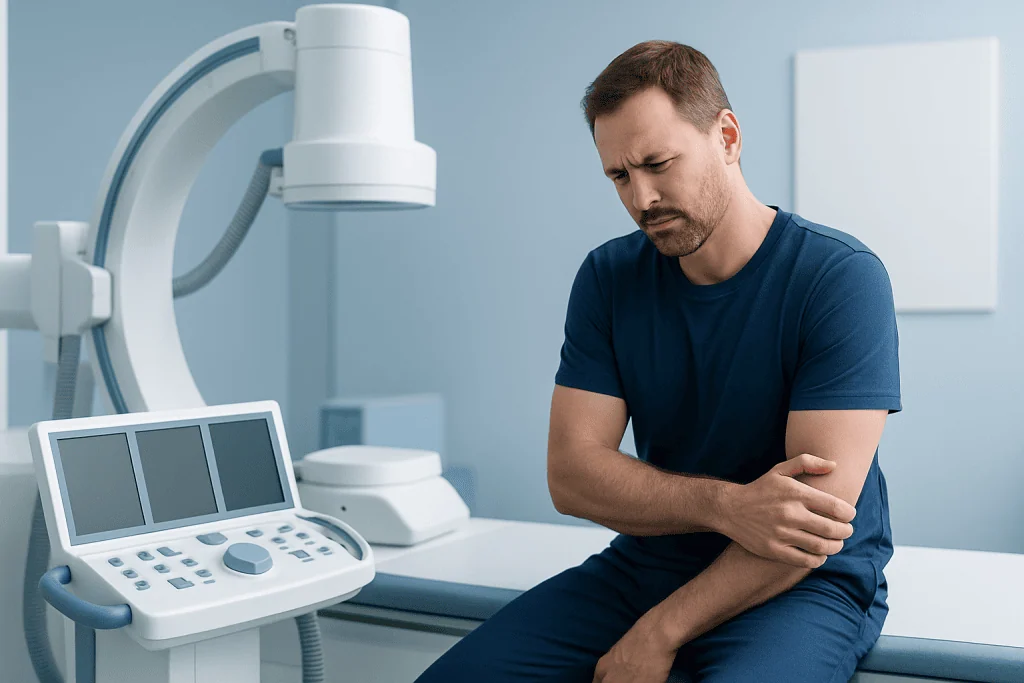
The main symptom of tennis elbow is pain or tenderness on the outside of the elbow, near the bony prominence called the lateral epicondyle. The pain may stay local or travel down the forearm. It often gets worse during activities that involve gripping, lifting, squeezing, twisting, or bending the wrist backward.
Some people describe the discomfort as a dull ache, while others feel a sharper pain when using the arm. Simple activities such as holding a coffee cup, turning a doorknob, using a screwdriver, typing for long periods, or lifting an object with the palm facing down can trigger symptoms. Grip strength may feel weaker, even if arm movement seems mostly normal.
Symptoms can affect the dominant or non-dominant arm, depending on which side is used more often. The condition can range from mild to more disruptive. A clinician may also consider other causes of elbow pain, such as golfer’s elbow, nerve irritation, arthritis, or problems originating from the neck or shoulder, especially if the symptoms do not match the typical pattern.
- Pain on the outer side of the elbow
- Tenderness when pressing the bony outer elbow
- Pain with gripping, lifting, or twisting
- Discomfort when extending the wrist or fingers
- A feeling of reduced hand or forearm strength
Causes and Risk Factors

Tennis elbow is usually linked to repeated stress on the extensor tendons of the forearm, especially the tendon connected to the extensor carpi radialis brevis muscle. These tendons help stabilize the wrist during hand and arm activities. Repetitive loading can lead to microscopic damage and a cycle of pain, reduced capacity, and continued irritation if the tendon is not given time and support to recover.
Many cases are not caused by sports. Repetitive office tasks, manual labor, gardening, painting, cooking, racquet sports, weight training, and frequent use of hand tools can all contribute. Sudden increases in activity, poor technique, equipment issues, and inadequate conditioning may also raise risk. For tennis players, factors such as racket grip size, string tension, stroke mechanics, and training volume can play a role.
Certain patterns make tennis elbow more likely. It is often seen in adults who perform repeated forearm work, particularly when tasks combine force and repetition. Risk may also be higher in people who smoke, have physically demanding jobs, or continue painful activity without modifying it. However, tennis elbow can also occur in otherwise healthy people with no clear single cause.
How Tennis Elbow Is Diagnosed
Diagnosis is usually based on a medical history and physical examination. A doctor will ask where the pain is felt, what activities trigger it, how long it has been present, and whether there was any injury. During the examination, the outer elbow is gently pressed to check for tenderness, and certain movements of the wrist and fingers may be tested against resistance to reproduce symptoms.
Imaging is not always needed for straightforward cases. However, tests may be considered if symptoms are severe, unusual, prolonged, or not improving with treatment. Ultrasound or MRI can help assess the tendon and look for other problems. X-rays may be used if arthritis, bone injury, or another structural cause is suspected.
Careful evaluation matters because several conditions can mimic tennis elbow. These include radial tunnel syndrome, elbow arthritis, ligament injuries, referred pain from the neck, and less commonly infection or inflammatory disease. In some cases, specialists may recommend assessment through orthopedic rehabilitation or a broader orthopedic evaluation to guide recovery and rule out related musculoskeletal issues.
Treatment Options
Most people with tennis elbow improve without surgery. Early treatment usually focuses on reducing strain while keeping the arm as active as possible within tolerable limits. This often means adjusting tasks, avoiding repeated painful gripping, improving ergonomics, and using the opposite hand when practical. Short-term pain relief may come from ice, rest periods, or medicines recommended by a doctor.
Exercise-based rehabilitation is a central part of treatment. Specific stretching and progressive strengthening exercises for the forearm, wrist, shoulder, and upper limb can help the tendon adapt and recover. A physical therapist may teach eccentric loading, isometric exercises, posture correction, and ways to gradually return to sport or work. Some people also benefit from a brace or counterforce strap, although this is usually used alongside exercise rather than instead of it.
If symptoms persist, a clinician may discuss additional options. These can include supervised physical therapy and rehabilitation, activity-specific retraining, or selected injection treatments when appropriate. The best approach depends on the person’s symptoms, goals, work demands, and examination findings. Surgery is usually reserved for a small number of people with long-lasting symptoms that do not improve after a substantial trial of conservative care.
When surgery is considered, the aim is generally to remove damaged tissue and improve tendon attachment or function. Recovery still requires rehabilitation and a gradual return to activity. Because many cases improve over time, surgery is not the first treatment for most people.
Prevention and Self-care
Preventing tennis elbow often means reducing repeated tendon overload. Small changes in how the arm is used can make a meaningful difference. It helps to take regular breaks during repetitive tasks, vary hand positions, use both hands when possible, and avoid tightly gripping tools or sports equipment for long periods.
Strength and flexibility also matter. A structured program that improves forearm, shoulder, and upper back strength may support better arm mechanics and reduce stress on the elbow. Warming up before sport or exercise, progressing activity gradually, and correcting technique can be especially helpful for racquet sports, gym training, and manual tasks.
Self-care during recovery should be practical and consistent rather than overly restrictive. A person does not always need complete rest, and long periods of avoiding all activity can lead to stiffness and weakness. Instead, the goal is to stay active while reducing movements that clearly aggravate pain.
- Modify or pause the activity that triggers symptoms
- Use lighter grip pressure when possible
- Take short breaks during repetitive work
- Build forearm and shoulder strength gradually
- Check sports technique and equipment setup
- Seek guidance if symptoms persist beyond a few weeks
When to Seek Medical Care
Many cases of tennis elbow can be managed with self-care and guided rehabilitation, but medical attention is important in some situations. A doctor should assess elbow pain that is severe, keeps returning, interrupts sleep, limits daily function, or does not start improving after several weeks of activity modification and exercise.
Prompt evaluation is also advisable if symptoms began after a fall or direct injury, if the elbow is visibly swollen or deformed, or if there is redness, warmth, fever, numbness, marked weakness, or difficulty moving the arm. These features may suggest a different problem that needs more urgent care.
For persistent or complex cases, a multidisciplinary assessment may help identify contributing factors such as technique, work demands, shoulder weakness, or nerve-related pain. Acibadem International’s multidisciplinary specialists and JCI-accredited hospitals diagnose and treat tennis elbow for international patients, including rehabilitation-focused care when needed.
Frequently asked questions
What is tennis elbow exactly?
Tennis elbow is an overuse condition affecting the tendons on the outside of the elbow. It causes pain and tenderness, usually from repeated wrist and forearm movements rather than from a single injury.
Does tennis elbow only happen to tennis players?
No. Many people who develop tennis elbow do not play tennis at all. It is common in jobs and hobbies that involve repetitive gripping, lifting, tool use, typing, or twisting motions.
How long does tennis elbow take to heal?
Recovery time varies from person to person. Some improve within weeks, while others need several months of consistent activity changes and rehabilitation. Symptoms often improve gradually rather than all at once.
Is exercise safe with tennis elbow?
Yes, in many cases exercise is an important part of treatment when it is done correctly. Gentle, progressive strengthening and stretching can help the tendon recover, but exercises should be tailored to symptoms and ideally guided by a qualified clinician or therapist.
Will I need surgery for tennis elbow?
Most people do not need surgery. Non-surgical care such as load modification, rehabilitation exercises, and supportive treatment helps many patients. Surgery is generally considered only when symptoms remain significant after a prolonged period of appropriate conservative care.
Can tennis elbow come back?
Yes, it can return if the same overloading factors continue. Addressing technique, work setup, strength, and repetitive strain can reduce the chance of recurrence and support longer-term recovery.
References
- American Academy of Orthopaedic Surgeons
- National Institute of Arthritis and Musculoskeletal and Skin Diseases
- American Society for Surgery of the Hand
- National Health Service
- Mayo Clinic
This article is for general information only and is not a substitute for professional medical advice. Please consult a qualified doctor about your individual situation.
Joint and spine care in Turkey — expert assessment & treatment
JCI-accredited · board-certified surgeons · reply within 24h
Add us as a Preferred Source to see more of our trusted health content across Google Search, AI Overviews and Discover.