Therapy Hyperbaric: Diagnosis, Outlook, and Modern Treatment Approaches

Therapy hyperbaric increases the amount of oxygen dissolved in the blood by using a pressurized chamber. It is used for specific medical conditions such as carbon monoxide poisoning, decompression sickness, certain non-healing wounds, and radiation-related tissue injury.
Key Takeaways
- Therapy hyperbaric increases the amount of oxygen dissolved in the blood by using a pressurized chamber.
- It is used for specific medical conditions such as carbon monoxide poisoning, decompression sickness, certain non-healing wounds, and radiation-related tissue injury.
- Diagnosis focuses on the underlying condition and whether hyperbaric treatment is appropriate and safe for that person.
- Treatment is usually given as a series of sessions, often alongside wound care, infection treatment, surgery, or rehabilitation.
- Possible side effects include ear pressure, temporary vision changes, and, rarely, oxygen-related complications or lung pressure injury.
- Prompt medical review is important for urgent conditions such as gas embolism, carbon monoxide exposure, or sudden symptoms after diving.
Therapy hyperbaric, also called hyperbaric oxygen therapy, is a medical treatment that delivers oxygen in a pressurized chamber to help the body heal in carefully selected conditions. It is not a cure-all, but it can be an important part of treatment when doctors confirm the right indication, assess safety, and monitor response over time.
Overview: what therapy hyperbaric is and how it works
Therapy hyperbaric is a medical treatment in which a person breathes near-100% oxygen inside a specially designed pressurized chamber. The increased pressure allows more oxygen to dissolve into the blood plasma and reach tissues that may be damaged, swollen, infected, or receiving too little oxygen. In the right setting, this can support healing and help other treatments work more effectively.
This approach is called hyperbaric oxygen therapy, or HBOT. It is used for a defined group of conditions rather than for general wellness. Doctors consider it when there is evidence that extra oxygen under pressure may improve tissue recovery, limit injury, or assist the body in fighting certain infections.
Therapy hyperbaric may be delivered in a monoplace chamber, which treats one person at a time, or a multiplace chamber, which treats several patients under the supervision of trained staff. During treatment, the person is monitored closely, and the care team checks for comfort, equalization of ear pressure, and any early signs of side effects.
When therapy hyperbaric may be recommended
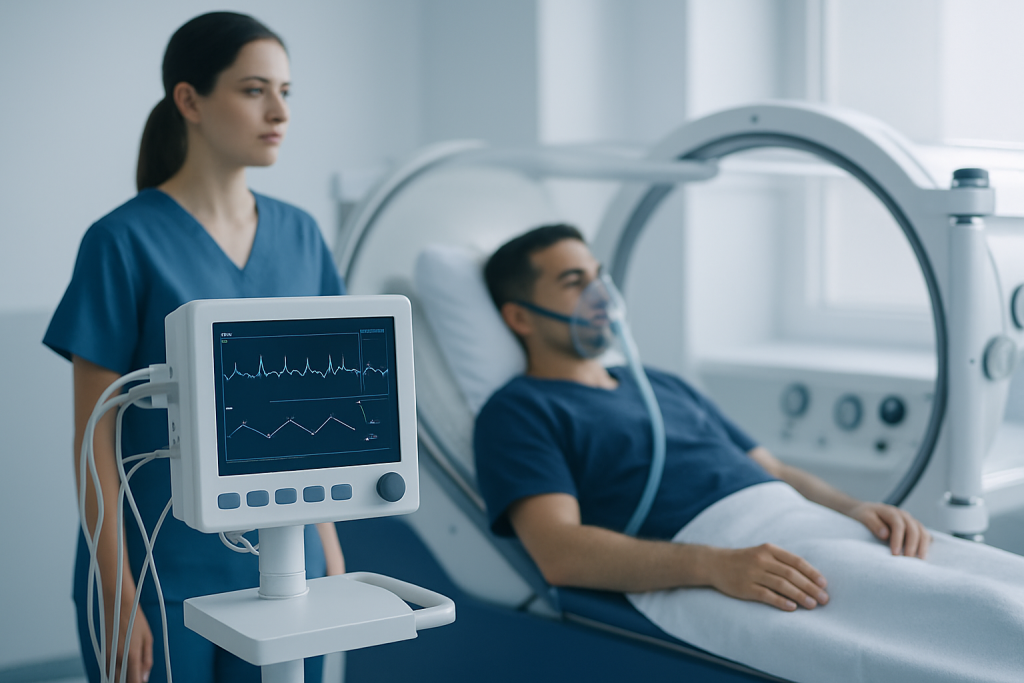
Hyperbaric oxygen therapy is most helpful when there is a clear medical indication. Common accepted uses include decompression sickness after diving, arterial gas embolism, carbon monoxide poisoning, selected severe infections, crush injury, compromised skin grafts or flaps, certain burns, and some chronic wounds that have not healed with standard care.
Doctors may also use therapy hyperbaric for tissue injury caused by radiation therapy, such as radiation damage to the jaw, bladder, or other soft tissues. In these situations, oxygen under pressure may support blood vessel growth and improve healing in tissue that has become scarred or poorly supplied.
For people with non-healing wounds, treatment is usually one part of a broader plan. A patient may also need assessment for circulation problems, infection, nutrition, pressure relief, and blood sugar control. For example, a diabetic foot wound may need evaluation within the context of diabetic foot problems as well as targeted wound management.
Not every wound, infection, or pain condition benefits from therapy hyperbaric. A specialist decides whether the expected benefit is realistic and whether standard treatment alone would be enough. This careful selection is one reason the therapy is generally managed in dedicated centers.
Symptoms and situations that can lead to evaluation

People are usually referred for therapy hyperbaric because of a diagnosed condition, not because of a single symptom alone. However, certain patterns can prompt urgent evaluation. A diver who develops joint pain, dizziness, numbness, weakness, chest symptoms, or confusion after a dive may need immediate assessment for decompression illness or gas embolism.
Someone exposed to smoke or exhaust fumes may be evaluated for carbon monoxide poisoning if they have headache, nausea, dizziness, weakness, confusion, or loss of consciousness. In these cases, therapy hyperbaric may be considered alongside emergency oxygen treatment and supportive care.
In chronic conditions, the clues are often slower to develop. These can include wounds that remain open despite standard care, tissue that appears damaged after radiation treatment, or infections that are not improving as expected. Persistent pain, swelling, discoloration, drainage, or poor healing may lead a doctor to investigate whether the underlying tissue is not receiving enough oxygen.
Some patients are referred after surgery when a graft or flap is not getting adequate blood flow. Others may be assessed after trauma, especially if swelling and tissue injury threaten recovery. The need for therapy hyperbaric depends on the full clinical picture rather than on symptoms alone.
Diagnosis and pre-treatment assessment
There is no single test that proves a person needs therapy hyperbaric. Instead, diagnosis begins with identifying the underlying condition and confirming that HBOT is an evidence-based option for it. Doctors review the medical history, the timeline of symptoms, any recent diving or toxic exposure, wound characteristics, and prior treatments.
The assessment may include blood tests, wound cultures, oxygen level checks, and imaging studies. Depending on the problem, doctors may use X-rays, CT, MRI, vascular ultrasound, or other tests to understand the depth of injury, blood supply, infection risk, or the presence of trapped gas. If a wound is involved, patients may also need a detailed wound care treatment plan.
Before starting therapy hyperbaric, the team also screens for safety. Particular attention is given to lung disease, recent ear or sinus problems, uncontrolled fever, claustrophobia, and certain medications that may increase risks. An untreated pneumothorax, which is air trapped around the lung, is a major reason not to start treatment until the problem has been addressed.
For some conditions, doctors reassess progress during the course of treatment rather than waiting until the end. This may include repeat examination of wound size, signs of infection, pain, tissue color, and sometimes imaging. The goal is to confirm that treatment remains appropriate and is contributing to overall recovery.
Modern treatment approaches and what a session is like
A therapy hyperbaric session usually lasts around one to two hours, although timing varies by condition and protocol. The person enters the chamber, pressure is increased gradually, and oxygen is delivered while clinical staff monitor how they feel. Many people notice pressure in the ears similar to an airplane descent and are taught ways to equalize it.
Most conditions require more than one session. Acute emergencies such as carbon monoxide poisoning or decompression illness may be treated urgently with a smaller number of sessions over a short period. Chronic wounds or radiation injuries often need a longer course delivered over days or weeks, depending on the response and the overall care plan.
Modern treatment approaches emphasize that HBOT works best as part of multidisciplinary care. A non-healing wound may also need vascular surgery if poor circulation is limiting healing, antibiotics if infection is present, debridement to remove unhealthy tissue, and careful off-loading to reduce pressure. In selected complex cases, specialists may combine HBOT with plastic and reconstructive surgery to support tissue repair.
During treatment, safety protocols are strict because oxygen-rich environments require special precautions. Patients receive instructions about clothing, skin products, electronic devices, and other items that cannot go into the chamber. The care team also watches for discomfort, anxiety, and early side effects so adjustments can be made promptly.
Outlook, benefits, and possible risks
The outlook with therapy hyperbaric depends mainly on the underlying condition, how quickly treatment begins, and whether other necessary treatments are also in place. In urgent problems such as decompression sickness or carbon monoxide poisoning, timely therapy may reduce ongoing tissue injury. In chronic problems such as radiation damage or difficult wounds, improvement can be gradual and may take a full course before the benefit is clear.
Potential benefits include improved oxygen delivery to tissue, support for new blood vessel formation, reduced swelling in some settings, and better control of certain infections when combined with standard medical care. Even so, HBOT is not suitable for every condition, and a good response is not guaranteed. Doctors usually discuss realistic goals before treatment begins.
Side effects are often mild and temporary, but they matter. Ear discomfort or middle-ear barotrauma is the most common problem because of pressure changes. Some people also experience sinus pressure, temporary tiredness, or short-term vision changes, especially with repeated sessions.
More serious complications are uncommon but can include oxygen toxicity leading to seizures, lung barotrauma, or worsening of an unrecognized pneumothorax. Careful screening and supervised treatment help reduce these risks. For this reason, therapy hyperbaric should be provided under experienced medical oversight rather than used casually or for unproven claims.
Self-care, preparation, and practical considerations
Patients can help treatment go smoothly by following the center’s instructions before each session. This may include arriving with clean, product-free skin, avoiding certain items in the chamber, taking regular medicines unless told otherwise, and letting staff know about congestion, ear pain, fever, or a recent change in health. Good communication allows the team to adapt treatment safely.
Self-care also means supporting the condition that led to referral. Wound patients may need blood sugar control, good nutrition, smoking cessation, and pressure relief. People recovering from injury may need rehabilitation, rest, and follow-up imaging or specialist review. Therapy hyperbaric works best when the whole recovery plan is addressed.
Smoking is especially important to discuss because it reduces oxygen delivery and can counteract the goals of treatment. Patients should also tell the team if they feel anxious in enclosed spaces, as reassurance and practical coping strategies may help. If standard equalization techniques are difficult, ear evaluation may be needed before treatment continues.
Near the end of care, doctors review whether treatment goals were met and what follow-up is needed. At Acibadem International, multidisciplinary specialists in JCI-accredited hospitals evaluate suitable patients for therapy hyperbaric and coordinate wound, surgical, infectious disease, and rehabilitation care for international patients when needed.
When to seek medical care
Urgent medical care is needed after diving if a person develops chest pain, shortness of breath, confusion, weakness, trouble walking, numbness, severe fatigue, or loss of consciousness. Emergency evaluation is also important after possible carbon monoxide exposure, especially if headache, dizziness, nausea, fainting, or altered mental status occurs.
Medical review should also be arranged for wounds that are not healing, areas of tissue that become darker or more painful, signs of infection such as fever or increasing drainage, or symptoms that appear after radiation treatment. A doctor can determine whether therapy hyperbaric is appropriate or whether another treatment should come first.
Anyone with new ear pain, severe sinus pressure, breathing symptoms, or marked anxiety during a treatment course should tell the care team promptly. These symptoms do not always mean treatment must stop, but they should be assessed to keep care safe and effective.
Frequently asked questions
What is therapy hyperbaric used for?
Therapy hyperbaric is used for specific medical conditions where extra oxygen under pressure may support healing or limit injury. Examples include decompression sickness, carbon monoxide poisoning, selected non-healing wounds, some serious infections, and certain radiation-related tissue injuries.
Is therapy hyperbaric the same as oxygen therapy at home?
No. Home oxygen therapy provides oxygen at normal atmospheric pressure, while therapy hyperbaric uses a pressurized chamber to increase the amount of oxygen dissolved in the blood. That pressure change is a key part of how hyperbaric treatment works.
How many hyperbaric sessions does a person usually need?
The number of sessions depends on the condition being treated. Emergency problems may require only a few sessions, while chronic wounds or radiation injuries often need a longer course over several weeks. The treating doctor reviews progress and adjusts the plan as needed.
Is therapy hyperbaric painful?
The treatment itself is not usually painful, but some people feel pressure in the ears or sinuses as the chamber pressurizes. This is similar to the feeling during air travel and can often be relieved by swallowing, yawning, or other equalizing techniques taught by staff.
Who should not have therapy hyperbaric?
An untreated pneumothorax is a major reason to avoid hyperbaric treatment until it has been managed. Doctors also use caution in people with certain lung conditions, recent ear or sinus problems, uncontrolled fever, claustrophobia, or medicines that may increase oxygen-related risks.
Can therapy hyperbaric cure a chronic wound by itself?
Usually not. For chronic wounds, hyperbaric treatment is typically one part of a larger plan that may include wound cleaning, infection treatment, circulation assessment, blood sugar management, nutrition support, and pressure relief. The best results generally come from combining these approaches.
References
- Undersea and Hyperbaric Medical Society
- U.S. Food and Drug Administration
- Mayo Clinic
- National Health Service
- Merck Manual
This article is for general information only and is not a substitute for professional medical advice. Please consult a qualified doctor about your individual situation.
Explore treatments in Turkey — costs, top hospitals & a free quote
JCI-accredited · board-certified surgeons · reply within 24h
Add us as a Preferred Source to see more of our trusted health content across Google Search, AI Overviews and Discover.