Thrombectomy for Stroke: Who Is a Good Candidate and How Fast It Must Be Done

Thrombectomy is mainly used for ischemic stroke caused by a large artery blockage in the brain. Treatment is highly time-sensitive, but some people may still benefit beyond the first few hours if imaging shows salvageable brain tissue.
Key Takeaways
- Thrombectomy is mainly used for ischemic stroke caused by a large artery blockage in the brain.
- Treatment is highly time-sensitive, but some people may still benefit beyond the first few hours if imaging shows salvageable brain tissue.
- Not every person with stroke is a candidate; doctors assess symptoms, brain scans, clot location, timing, and overall health.
- Thrombectomy may be performed alone or together with clot-busting medicine, depending on the situation.
- Immediate emergency evaluation is essential because stroke treatment decisions cannot be made safely at home.
Thrombectomy for stroke is an emergency procedure used to remove a blood clot from a blocked brain artery in carefully selected patients. The best results usually depend on rapid recognition, fast brain imaging, and treatment without delay.
Overview
Thrombectomy for stroke is a minimally invasive emergency procedure used to remove a blood clot from a blood vessel supplying the brain. It is most often used for an ischemic stroke, which happens when blood flow is blocked rather than when bleeding occurs. The goal is to reopen the artery quickly and help save brain tissue that has not yet been permanently damaged.
Doctors usually perform this procedure in patients with a large vessel occlusion, meaning a clot in one of the brain’s larger arteries. Through a catheter inserted into a blood vessel, often in the groin or wrist, a specialist guides devices to the blockage and removes the clot. This is why thrombectomy is also called mechanical thrombectomy.
Thrombectomy is not suitable for every stroke. It is a specialized treatment that depends on the type of stroke, where the clot is located, how severe the symptoms are, and how much time has passed since symptoms began. Advanced imaging plays a major role in deciding who is likely to benefit.
Who Is a Good Candidate?
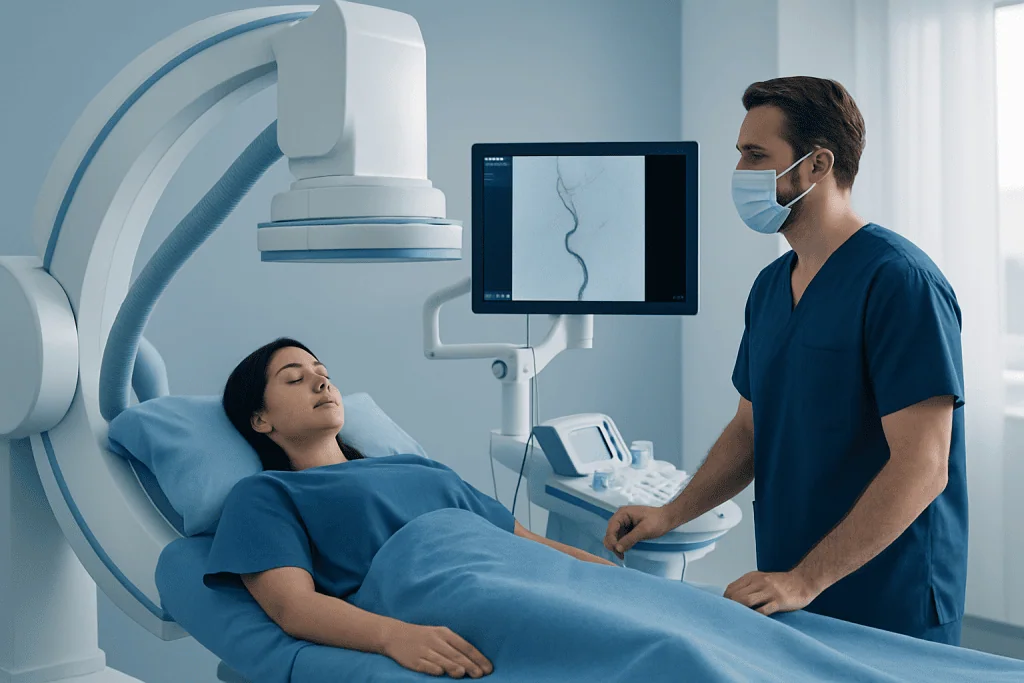
A good candidate for thrombectomy for stroke is usually someone with signs of an acute ischemic stroke caused by a blockage in a large brain artery. Doctors look for symptoms such as sudden weakness on one side, difficulty speaking, facial drooping, vision loss, severe neglect, or a sudden inability to move or understand language. The severity and pattern of symptoms can suggest a large-vessel blockage, but brain imaging is needed to confirm it.
Time matters, but timing alone does not decide eligibility. Many patients are assessed within the first 6 hours after symptoms begin, when the benefit is often greatest. However, some people may still qualify up to 24 hours after last known well if specialized imaging shows that part of the brain is at risk but not yet irreversibly injured.
Doctors also consider factors such as the patient’s age, pre-stroke functional status, the size of the already injured brain area, and whether there are reasons the procedure may be too risky. In some cases, a person may receive intravenous clot-dissolving medicine before thrombectomy if they arrive in time and meet criteria. These treatments are complementary, not competing, options in selected patients.
- Confirmed ischemic stroke rather than bleeding
- Blockage in a large artery that can be reached by catheter
- Symptoms significant enough to suggest meaningful disability
- Imaging showing brain tissue that may still be saved
- No major contraindication to the procedure
How Fast It Must Be Done

Thrombectomy for stroke should be done as quickly as possible. In stroke care, every minute counts because brain cells can be injured when blood flow is interrupted. Even when a patient still falls within a recommended treatment window, earlier treatment is linked with a better chance of preserving brain function.
The fastest benefit is usually seen when thrombectomy is performed within 6 hours of symptom onset or the last time the person was known to be well. Still, modern stroke systems do not rely only on the clock. Advanced CT or MRI imaging can identify patients who may benefit later, sometimes up to 24 hours, especially if the blocked artery is large and the area of permanent injury remains limited.
Because of this, a person should never wait at home to see if symptoms improve. Emergency medical services can alert the hospital in advance, which helps speed up brain scans, stroke team activation, and transfer to a center able to perform thrombectomy when needed. Rapid transport and immediate evaluation are just as important as the procedure itself.
How Doctors Confirm the Diagnosis
When a stroke is suspected, the first step is urgent imaging to determine whether the stroke is caused by a clot or by bleeding. A non-contrast CT scan of the head is commonly used first because it is fast and helps rule out hemorrhagic stroke. Thrombectomy is generally used for clot-related stroke, not for bleeding in the brain.
Doctors then often use CT angiography or MR angiography to look at the brain’s blood vessels and identify a large-vessel blockage. In some cases, CT perfusion or MRI-based perfusion imaging is also used to estimate how much brain tissue is already damaged and how much may still be rescued. This helps decide whether thrombectomy is appropriate, especially when the exact time of stroke onset is unclear.
Alongside imaging, the stroke team reviews the patient’s symptoms, medical history, medications, and overall stability. Blood tests, heart monitoring, and physical examination help guide the broader treatment plan. These steps happen rapidly and in parallel because delaying treatment can reduce the chance of recovery.
What the Procedure Involves
Mechanical thrombectomy is usually performed by a specialist in interventional neurology, neuroradiology, or a related field. After the patient is prepared, the doctor inserts a thin catheter into a blood vessel and advances it toward the blocked artery in the brain using imaging guidance. Devices such as stent retrievers or aspiration catheters are then used to capture or suction out the clot.
The procedure may be done with sedation or, in some situations, general anesthesia. The choice depends on the patient’s condition, ability to remain still, airway safety, and the team’s judgment. The main aim is to restore blood flow quickly while minimizing any interruption in care.
Thrombectomy is often part of a broader stroke pathway. Some patients may also receive stroke treatment measures such as blood pressure control, oxygen support, swallowing assessment, and close neurological monitoring. If a patient has been transferred to a comprehensive stroke center, they may also undergo specialized interventional neuroradiology evaluation as part of the procedure planning.
Benefits, Risks, and Recovery
The main benefit of thrombectomy for stroke is the chance to restore blood flow and reduce long-term disability. In the right patient, it can improve the odds of regaining speech, movement, independence, or other important functions. The degree of recovery varies widely and depends on how fast the artery is reopened, the area of the brain involved, and the person’s health before the stroke.
Like any invasive procedure, thrombectomy has risks. Possible complications include bleeding in the brain, damage to the blood vessel, movement of clot fragments to another artery, reaction to contrast dye, or failure to fully reopen the vessel. Although these risks are taken seriously, doctors weigh them against the risks of leaving a major artery blocked, which can lead to severe permanent disability.
Recovery does not end when the clot is removed. Patients often need hospital monitoring, treatment to prevent another stroke, and rehabilitation. Depending on the deficits, care may include physiotherapy, occupational therapy, speech-language therapy, and management of underlying causes such as atrial fibrillation, carotid artery disease, high blood pressure, diabetes, or high cholesterol. Some patients also require neurological rehabilitation after the acute phase.
Prevention and Self-Care After Stroke
After a stroke, prevention becomes a central part of care. Doctors try to identify why the clot formed so that future risk can be reduced. Treatment may include antiplatelet medicine, anticoagulation for certain heart rhythm problems, blood pressure control, cholesterol-lowering therapy, and management of diabetes or sleep apnea when present.
Lifestyle measures support medical treatment. Stopping smoking, limiting alcohol, staying physically active as advised, choosing a heart-healthy eating pattern, and maintaining follow-up appointments all help lower the chance of another stroke. Families are often encouraged to learn the warning signs of stroke and to keep emergency numbers easily available.
People who have had a stroke may also need emotional support and practical planning at home. Fatigue, mood changes, and cognitive difficulties are common during recovery. A structured rehabilitation plan and regular review by a stroke specialist can help patients adjust safely and monitor for complications or recurrent symptoms, including those related to stroke.
When to Seek Emergency Help
Any sudden sign of stroke should be treated as a medical emergency. Warning signs can include facial drooping, arm weakness, speech difficulty, sudden confusion, sudden vision loss, severe dizziness, imbalance, or a sudden severe headache. Even if symptoms improve after a few minutes, emergency assessment is still necessary.
It is safest to call emergency services rather than travel by private car when possible. Emergency teams can start assessment early and direct the patient to the most appropriate hospital. This is especially important if thrombectomy may be needed, because not all hospitals perform the procedure.
People with known risk factors such as atrial fibrillation, previous transient ischemic attack, prior stroke, or vascular disease should be especially alert to new neurological symptoms. Acibadem International’s multidisciplinary specialists and JCI-accredited hospitals diagnose and treat stroke for international patients, including advanced catheter-based therapies when appropriate. Still, the immediate priority in any suspected stroke is urgent local emergency evaluation without delay.
Frequently asked questions
What is thrombectomy for stroke?
Thrombectomy for stroke is a procedure that removes a blood clot from a blocked artery in the brain. It is mainly used for ischemic stroke caused by a large-vessel occlusion and is performed through a catheter rather than open surgery.
Is everyone with a stroke eligible for thrombectomy?
No. Doctors first need to confirm that the stroke is caused by a clot rather than bleeding and that the blockage is in a large artery that can be reached. They also assess timing, imaging findings, symptom severity, and the patient’s overall medical condition.
How soon should thrombectomy be performed?
It should be done as quickly as possible because earlier treatment generally leads to better outcomes. Many patients are treated within 6 hours, but some may still benefit later if advanced imaging shows brain tissue that can still be saved.
Can thrombectomy be done after clot-busting medicine?
Yes. In eligible patients, intravenous clot-dissolving medicine may be given first and thrombectomy may follow if a large artery remains blocked. The stroke team decides this based on timing, imaging, and individual risk factors.
What are the risks of thrombectomy?
Possible risks include bleeding in the brain, blood vessel injury, contrast-related problems, or failure to remove the clot completely. Even so, in carefully selected patients, the potential benefits can outweigh these risks because untreated large-vessel stroke can cause major disability.
What happens after thrombectomy?
After the procedure, the patient is closely monitored in the hospital for neurological changes and complications. Recovery may involve medicines to prevent another stroke, testing to find the cause, and rehabilitation for movement, speech, or daily activities.
References
- World Stroke Organization
- American Heart Association
- National Institute of Neurological Disorders and Stroke
- European Stroke Organisation
- Centers for Disease Control and Prevention
This article is for general information only and is not a substitute for professional medical advice. Please consult a qualified doctor about your individual situation.
Explore treatments in Turkey — costs, top hospitals & a free quote
JCI-accredited · board-certified surgeons · reply within 24h
Add us as a Preferred Source to see more of our trusted health content across Google Search, AI Overviews and Discover.

More from the Health Library



Related Specialists

Yaren Kasal
Physical Medicine & Rehabilitation
Dr. Hakan Özbay
Orthopedic Surgery & Traumatology
Dr. Suat Sevgen
Emergency Service
Prof. Dr. A. Bülent Oktay
Urology