

Thrombophlebitis: Diagnosis, Outlook, and Modern Treatment Approaches

Thrombophlebitis means a vein is inflamed and has an associated blood clot. Superficial thrombophlebitis often causes a tender, red, cord-like vein near the skin.
Key Takeaways
- Thrombophlebitis means a vein is inflamed and has an associated blood clot.
- Superficial thrombophlebitis often causes a tender, red, cord-like vein near the skin.
- Deep vein involvement can be more serious because of the risk of clot extension or pulmonary embolism.
- Diagnosis commonly relies on medical history, examination, and duplex ultrasound.
- Treatment may include walking, compression, pain relief, blood thinners, or vein procedures depending on the location and extent.
Thrombophlebitis is inflammation of a vein associated with a blood clot, most often in the legs. It may affect a superficial vein near the skin or a deeper vein, and the outlook is usually good when it is recognized early and treated appropriately.
Overview: what thrombophlebitis is and why it matters
Thrombophlebitis is a condition in which a vein becomes inflamed and a blood clot forms within it. In many people, it affects a superficial vein close to the skin, especially in the legs. In others, it involves a deeper vein, which may overlap with deep vein thrombosis and needs closer medical attention.
The symptoms and outlook depend mainly on where the clot is located, how large it is, and whether it is spreading. Superficial thrombophlebitis is often uncomfortable but limited, while clots in deeper veins can carry a risk of traveling to the lungs. For that reason, careful assessment is important rather than assuming every painful vein is minor.
Modern care focuses on identifying which cases can be treated conservatively and which need anticoagulation or further vascular evaluation. This more tailored approach helps reduce complications while avoiding unnecessary treatment.
How thrombophlebitis feels: common signs and symptoms

Superficial thrombophlebitis usually causes localized symptoms along the course of a vein. A person may notice redness, warmth, tenderness, or a firm cord-like area under the skin. The surrounding area can feel sore, and mild swelling may occur nearby.
When deeper veins are involved, symptoms may be less visible but more concerning. The leg may become swollen, heavy, tight, or painful, especially in the calf or thigh. Some people notice only one swollen leg, discomfort when standing or walking, or skin that feels warmer than the other side.
Not every case causes obvious symptoms. Some vein clots are found during imaging for another reason, while others first come to attention because of a complication such as shortness of breath. Symptoms that may suggest a clot has moved to the lungs include sudden breathlessness, chest pain, coughing, or faintness, and these require urgent medical assessment.
Why it happens: causes and risk factors
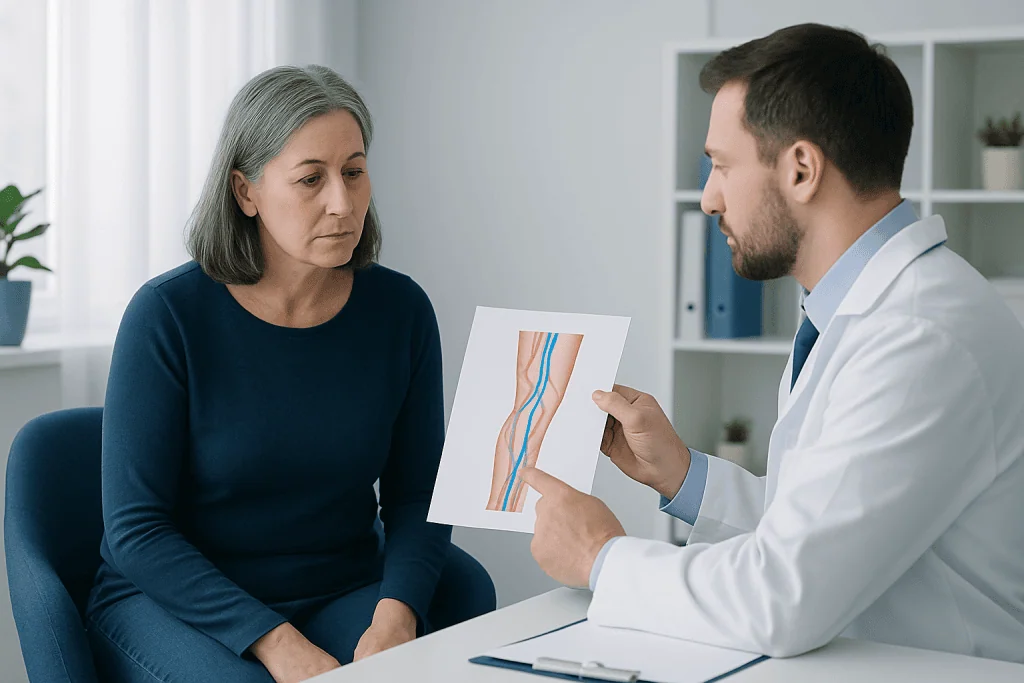
Thrombophlebitis develops when factors promote clot formation and irritate the vein wall. Common examples include reduced blood flow during prolonged immobility, injury to the vein after a cannula or injection, and conditions that make the blood more likely to clot. Varicose veins are a frequent setting for superficial thrombophlebitis.
Risk factors include recent surgery, hospitalization, long-distance travel, pregnancy and the weeks after delivery, estrogen-containing medications, active cancer, smoking, obesity, older age, and a personal or family history of clotting. Some people have inherited or acquired clotting tendencies that increase risk even without an obvious trigger.
Doctors also consider whether thrombophlebitis could be related to another vascular condition. For example, recurrent superficial clots in abnormal leg veins may be seen together with varicose veins. In less common situations, a vein clot can be linked to inflammation, infection, or an underlying medical disorder that needs separate evaluation.
How doctors confirm the diagnosis
Diagnosis begins with a careful history and physical examination. The clinician will ask when symptoms began, whether there was recent travel, surgery, pregnancy, or intravenous line placement, and whether the person has had previous clots. On examination, the pattern of redness, swelling, tenderness, and the exact location of the affected vein offer useful clues.
Because symptoms alone cannot reliably distinguish a superficial clot from a deeper one, duplex ultrasound is commonly used. This test combines standard imaging with blood-flow assessment and can show where the clot is, whether it extends toward the deep venous system, and whether nearby veins are affected. It is painless and is the main test that guides treatment decisions.
Blood tests are sometimes used in selected situations, but they do not replace imaging. If the event seems unprovoked, recurrent, unusually extensive, or associated with a strong family history, the doctor may recommend further evaluation for clotting disorders or other underlying causes. In complex cases, vascular specialists may also coordinate advanced imaging or follow-up studies.
Modern treatment approaches and outlook
Treatment depends on whether thrombophlebitis is superficial or deep, how close it is to a junction with a deep vein, the extent of the clot, the person’s symptoms, and their overall risk factors. Many superficial cases are treated with walking, leg elevation when resting, warm compresses, and anti-inflammatory pain relief if appropriate for the individual. Compression stockings may also be advised to reduce discomfort and support circulation.
When a superficial clot is extensive, located near the saphenofemoral or saphenopopliteal junction, or associated with significant risk factors, anticoagulant medication may be recommended for a period of time. If deep vein thrombosis is present, treatment more often includes blood thinner treatment to reduce the risk of clot growth and pulmonary embolism. The choice and duration are individualized by the treating doctor.
Some patients benefit from addressing the underlying vein problem once the acute episode has settled. In people with recurrent symptoms or troublesome venous reflux, options such as varicose veins treatment may be discussed. If there is concern about chronic venous disease, specialists may assess whether a broader vascular surgery plan is appropriate.
The outlook is often favorable, especially for isolated superficial thrombophlebitis treated early. Symptoms may improve over days to weeks, although firmness along the vein can take longer to settle. The main reason follow-up matters is to confirm that the clot is not extending and to reduce the chance of recurrence or long-term vein symptoms.
Daily care, prevention, and reducing recurrence
Self-care can support recovery, but it should complement medical advice rather than replace it. Staying mobile is usually encouraged because gentle walking helps circulation. Elevating the leg during rest, using compression if recommended, and avoiding prolonged sitting or standing can ease discomfort and swelling.
Prevention focuses on reducing clot risk in everyday life and during higher-risk periods. Helpful measures may include moving regularly during long journeys, drinking enough fluid, managing weight, stopping smoking, and following post-surgery advice about mobilization and prescribed anticoagulation. People with a previous clot should tell healthcare teams before any operation, pregnancy-related care, or long-haul travel.
Long-term prevention also means addressing contributors such as varicose veins or chronic venous insufficiency when they are causing repeated episodes. For some patients, doctors may recommend review by a vascular specialist to discuss whether preventive treatment of abnormal veins could lower future risk and improve leg comfort.
When to seek medical care
Medical review is advisable for any new painful, red, swollen, or cord-like vein, especially in the leg. Assessment is particularly important if symptoms appeared after surgery, a long flight, pregnancy, hospital admission, or use of an intravenous line. Even when the problem seems superficial, ultrasound may be needed to check whether a deeper vein is involved.
Urgent care is needed if there is sudden shortness of breath, chest pain, coughing up blood, fainting, or marked one-sided leg swelling. These symptoms may suggest a pulmonary embolism or an extensive deep vein clot and should not be ignored. A clinician should also review fever, spreading redness, or worsening pain, as infection or another cause may need treatment.
For international patients who need specialist evaluation, Acibadem International’s multidisciplinary teams in JCI-accredited hospitals diagnose and treat thrombophlebitis and related venous conditions with coordinated vascular care.
Frequently asked questions
Is thrombophlebitis the same as deep vein thrombosis?
Not exactly. Thrombophlebitis is a broad term for vein inflammation with a clot, and it can affect superficial veins or deeper veins. Deep vein thrombosis refers specifically to a clot in a deep vein and usually requires more urgent assessment and treatment.
Can superficial thrombophlebitis be serious?
It is often limited and improves with conservative care, but it should not always be dismissed. In some cases, the clot can extend toward the deep venous system or occur alongside deep vein thrombosis. That is why a doctor may recommend ultrasound even when the vein is close to the skin.
How long does thrombophlebitis take to heal?
Pain and redness often begin to improve within days to a few weeks, depending on the extent and location of the clot. A firm vein under the skin can last longer and may take several weeks to soften. Recovery is usually smoother when the person follows the treatment plan and attends follow-up if advised.
Do all people with thrombophlebitis need blood thinners?
No. Blood thinners are more likely to be used when the clot is in a deep vein, is close to a deep-vein junction, is extensive, or the person has higher-risk features. Smaller superficial clots may be treated with mobility, compression, warm compresses, and pain relief, depending on the doctor's assessment.
What activities should be avoided with thrombophlebitis?
Most people are encouraged to keep moving rather than stay in bed, unless a doctor advises otherwise. Prolonged immobility should be avoided, and activities should be adjusted if they worsen pain significantly. Travel, exercise, and compression use should be discussed with a clinician based on the clot's location and severity.
Can thrombophlebitis come back?
Yes, recurrence is possible, especially if underlying risk factors remain. Varicose veins, clotting disorders, cancer, smoking, obesity, or repeated periods of immobility can all increase future risk. Preventive steps and follow-up for underlying vein problems can help lower the chance of another episode.
References
- World Health Organization
- Centers for Disease Control and Prevention
- National Heart, Lung, and Blood Institute
- Society for Vascular Surgery
- American Heart Association
This article is for general information only and is not a substitute for professional medical advice. Please consult a qualified doctor about your individual situation.
Explore treatments in Turkey — costs, top hospitals & a free quote
JCI-accredited · board-certified surgeons · reply within 24h
Add us as a Preferred Source to see more of our trusted health content across Google Search, AI Overviews and Discover.

More from the Health Library



Related Specialists
Dr. Mazlum Batu
Emergency Service
Assoc. Prof. Dr. Cüneyt Narin
Cardiovascular Surgery
Prof. Dr. Cem Aygün
Gastroenterology
Dr. Mehmet Can Şahin
Inpatient Clinic Physicians Clinical Service