Tibial Nerve: An Evidence-Based Guide for Patients

The tibial nerve carries signals for movement and feeling in parts of the calf, ankle, sole, and toes. Common problems include compression near the ankle, injury after trauma, and nerve irritation linked to swelling or structural changes.
Key Takeaways
- The tibial nerve carries signals for movement and feeling in parts of the calf, ankle, sole, and toes.
- Common problems include compression near the ankle, injury after trauma, and nerve irritation linked to swelling or structural changes.
- Symptoms may include burning foot pain, numbness, tingling, or weakness, especially in the sole of the foot.
- Diagnosis often combines a physical exam with imaging or nerve tests when symptoms persist or the cause is unclear.
- Treatment may include rest, activity changes, physical therapy, supportive footwear, medicines, injections, or surgery in selected cases.
- Prompt medical evaluation is important if symptoms are severe, progressive, or follow an injury.
The tibial nerve is a major nerve in the lower leg and foot that helps control movement and sensation. When it becomes irritated, compressed, or injured, it can cause pain, tingling, numbness, burning, or weakness that often affects walking and daily comfort.
Overview: what the tibial nerve does
The tibial nerve is one of the main nerves of the leg. It is a branch of the sciatic nerve and travels down the back of the knee and calf, then passes behind the inner ankle and into the foot. Along this path, it helps muscles work and carries sensation from parts of the lower leg, heel, sole, and toes.
For patients, the most important point is simple: if the tibial nerve is compressed, stretched, inflamed, or injured, the foot and ankle may not feel or function normally. Symptoms can include pain, burning, tingling, numbness, or weakness. The exact pattern depends on which part of the nerve is affected.
This topic is often discussed only in relation to one condition, tarsal tunnel syndrome. However, tibial nerve problems are broader than that. Symptoms may arise from sports injuries, fractures, diabetes-related nerve disease, cysts, swelling, scar tissue, or pressure from nearby structures. Understanding the nerve’s route helps explain why symptoms can start at the ankle but affect the sole or toes.
Common symptoms of tibial nerve problems

Tibial nerve symptoms vary from mild irritation to more noticeable loss of function. Many people describe burning, tingling, pins-and-needles, or numbness on the bottom of the foot. Some feel aching or electric-shock-like pain around the inner ankle that spreads into the arch, heel, or toes.
Movement symptoms are also possible. The tibial nerve helps control muscles involved in foot and toe movement, so weakness may lead to difficulty pushing off while walking, toe curling problems, or reduced balance. Symptoms may worsen after standing for long periods, walking, running, or wearing tight footwear.
Patterns that may suggest tibial nerve involvement include:
- Burning pain behind the inner ankle or in the sole of the foot
- Tingling or numbness in the heel, arch, or toes
- Pain that becomes worse with activity and eases with rest
- Sensitivity to touch or pressure around the ankle
- Weakness in foot muscles or changes in walking
These symptoms can overlap with other conditions, including plantar fasciitis, lower back nerve irritation, or more generalized peripheral neuropathy. A medical assessment helps identify whether the tibial nerve is the main source of the problem.
Causes and risk factors
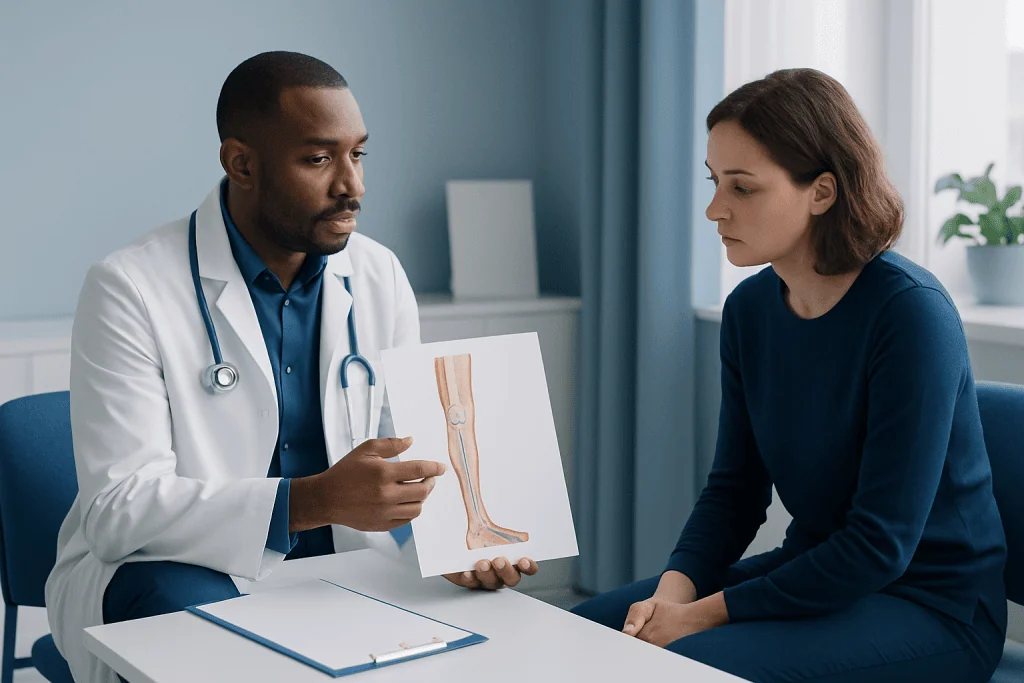
Tibial nerve problems can develop anywhere along the nerve’s course, but compression near the ankle is especially common. In tarsal tunnel syndrome, the nerve is squeezed as it passes through a narrow space behind the inner ankle. Swelling, tendon inflammation, ganglion cysts, varicose veins, flat feet, or scar tissue may contribute to this pressure.
Injury is another important cause. Fractures, ankle sprains, dislocations, falls, or sports-related trauma can directly damage the nerve or create swelling around it. Repetitive strain from running, jumping, prolonged standing, or certain work activities may also irritate the nerve over time.
Some health conditions increase risk by making nerves more vulnerable or by changing surrounding tissues. Diabetes, inflammatory arthritis, obesity, and fluid retention can all play a role. Less commonly, masses, severe deformity, or nerve entrapment higher up in the leg may be responsible.
Doctors usually consider both local and whole-body causes. This matters because successful treatment is not just about easing pain; it also means identifying what is pressing on or affecting the nerve in the first place.
How diagnosis is made
Diagnosis starts with a detailed history and physical examination. A clinician will ask where symptoms are felt, when they began, what makes them better or worse, and whether there has been an injury, foot shape change, medical condition, or recent increase in activity. The pattern of numbness, pain, and weakness offers useful clues.
During the examination, the doctor may check sensation, muscle strength, reflexes, gait, foot alignment, and tenderness along the nerve. Tapping over the nerve behind the ankle may reproduce tingling in some people. Because symptoms can overlap with spine, vascular, or tendon problems, the exam usually aims to rule out other common causes as well.
If symptoms are persistent, severe, or not explained by the exam alone, additional tests may be recommended. These can include ultrasound or MRI to look for swelling, cysts, tendon problems, or structural compression, and nerve conduction studies or electromyography to assess nerve function. In some situations, a clinician may also suggest electromyography (EMG) testing to help localize the problem and understand its severity.
Imaging such as MRI is often most helpful when a structural cause is suspected or surgery is being considered. Test choice depends on symptoms, examination findings, and whether the goal is to confirm nerve irritation, identify a compressing structure, or exclude another diagnosis.
Treatment options for tibial nerve irritation or injury
Treatment depends on the cause, severity, and duration of symptoms. Mild or early cases often improve with conservative care. This may include reducing activities that trigger pain, using better-cushioned or more supportive footwear, modifying exercise, and treating swelling or inflammation. Some patients benefit from arch support or orthotics, especially if foot mechanics contribute to pressure on the nerve.
Medicines may be used to relieve pain or calm inflammation, depending on the clinical situation and a patient’s overall health. Physical therapy can also be valuable. Therapy may focus on flexibility, strengthening, gait mechanics, nerve gliding, ankle stability, and reducing strain on the foot and ankle. When appropriate, a structured physical therapy and rehabilitation program can support recovery and function.
If a specific compressive problem is found, treatment may target that cause directly. Examples include managing inflammation, aspirating or addressing a cyst in selected cases, or using guided injections when clinically suitable. People with diabetes or another underlying medical condition may need that condition optimized as part of nerve care.
Surgery is usually reserved for persistent symptoms, progressive weakness, or a clear compressive lesion that does not improve with nonsurgical treatment. If there is ongoing nerve compression in the spine or another linked structural problem, a clinician may discuss whether evaluation by a specialist is needed, sometimes including neurosurgery input when the source is not limited to the ankle or foot.
Prevention and self-care
Not every tibial nerve problem can be prevented, but several habits may lower risk or reduce flare-ups. Footwear matters: shoes that fit well, support the arch, and avoid excess pressure around the ankle can help. For runners or active adults, gradual training increases are generally safer than sudden changes in intensity or distance.
Weight management, diabetes control, and prompt treatment of ankle injuries may also protect nerve health. People with flat feet, high-impact activity levels, or jobs that involve long hours standing may benefit from early foot and ankle support before symptoms become established.
Simple self-care steps can be useful when symptoms are mild:
- Rest from activities that repeatedly trigger pain
- Use supportive shoes and consider clinician-recommended orthotics
- Apply ice after overuse if swelling is present
- Stretch and strengthen only under appropriate guidance if pain is ongoing
- Monitor for progression, especially increasing numbness or weakness
Self-care should not replace assessment when symptoms persist. Ongoing numbness, weakness, or unexplained pain deserves professional evaluation so the nerve is not exposed to prolonged pressure.
When to seek medical care
Medical attention is appropriate if foot or ankle symptoms last more than a short time, interfere with walking, wake a person at night, or keep returning. Evaluation is especially important when there is numbness, muscle weakness, balance difficulty, or pain after an injury.
Urgent assessment is needed if symptoms begin suddenly after significant trauma, if the foot becomes noticeably weak, or if there is rapidly worsening numbness. Care should also be sought if symptoms occur together with signs of infection, marked swelling, skin color changes, or severe back pain with leg symptoms.
A clinician can determine whether the tibial nerve is involved and whether another condition is more likely. Near the end of the care pathway, some patients may benefit from multidisciplinary evaluation. Acibadem International’s specialists in neurology, orthopedics, rehabilitation, and related fields, working in JCI-accredited hospitals, diagnose and treat tibial nerve conditions for international patients.
Frequently asked questions
What is the tibial nerve responsible for?
The tibial nerve helps control muscles in the lower leg and foot and carries sensation from parts of the heel, sole, and toes. Because it serves both movement and feeling, irritation can cause both pain and weakness.
Where is tibial nerve pain usually felt?
Pain is often felt behind the inner ankle, in the heel, arch, sole, or toes. Some people describe burning, tingling, or electric sensations rather than sharp pain alone.
Can tibial nerve problems go away on their own?
Mild symptoms caused by temporary irritation may improve with rest, footwear changes, and reduced strain. However, persistent or worsening symptoms should be checked by a doctor to look for nerve compression or another underlying cause.
Is tibial nerve pain the same as plantar fasciitis?
No. Plantar fasciitis usually causes heel pain related to the plantar fascia, while tibial nerve problems often include tingling, numbness, burning, or radiating discomfort. The two can feel similar, so a clinical evaluation is helpful.
How do doctors test for tibial nerve damage?
Doctors begin with a history and physical examination focused on sensation, strength, gait, and nerve tenderness. If needed, they may recommend imaging such as ultrasound or MRI, or nerve tests such as nerve conduction studies and EMG.
When is surgery needed for a tibial nerve problem?
Surgery is usually considered only when conservative treatment does not help, symptoms are progressive, or a structural cause is clearly compressing the nerve. The decision depends on symptom severity, test results, and the likely source of pressure.
References
- National Institute of Neurological Disorders and Stroke
- American Academy of Orthopaedic Surgeons
- Merck Manual
- Mayo Clinic
- National Institute of Arthritis and Musculoskeletal and Skin Diseases
This article is for general information only and is not a substitute for professional medical advice. Please consult a qualified doctor about your individual situation.
Joint and spine care in Turkey — expert assessment & treatment
JCI-accredited · board-certified surgeons · reply within 24h
Add us as a Preferred Source to see more of our trusted health content across Google Search, AI Overviews and Discover.