Top Rated Hair Transplant: How to Choose Safely

Online ratings can be useful, but they do not replace verified medical credentials. FUE and FUT can both be safe when performed by an appropriately qualified team.
Key Takeaways
- Online ratings can be useful, but they do not replace verified medical credentials.
- FUE and FUT can both be safe when performed by an appropriately qualified team.
- A thorough hair-loss diagnosis is essential before deciding on surgery.
- Hair transplantation redistributes existing follicles and does not stop future hair loss.
- Clear consent, sterile standards, and supervised aftercare are central to a safe experience.
A top rated hair transplant should be judged by clinical safety, the surgeon’s qualifications, individualized planning, and long-term follow-up rather than online ratings alone. The right technique and clinic depend on the cause of hair loss, donor-hair availability, health history, and realistic goals.
Understanding a top rated hair transplant
A top rated hair transplant is not defined by a star score, a celebrity result, or one surgical technique. The safest choice is a clinic where an appropriately qualified clinician diagnoses the hair loss, confirms candidacy, explains realistic outcomes and risks, and provides responsible follow-up.
Patient reviews may offer insight into communication, organization, and recovery support, but they are subjective and can be incomplete. More meaningful signs of quality include a documented consultation, transparent information about who performs each part of the procedure, sterile surgical protocols, and photographs that show consistent results in patients with similar hair characteristics.
Hair transplantation moves healthy follicles from a donor area, usually the back or sides of the scalp, to thinning areas. It does not create new follicles or necessarily prevent ongoing thinning in untreated hair, so long-term planning is important.
Assessment and candidacy before surgery
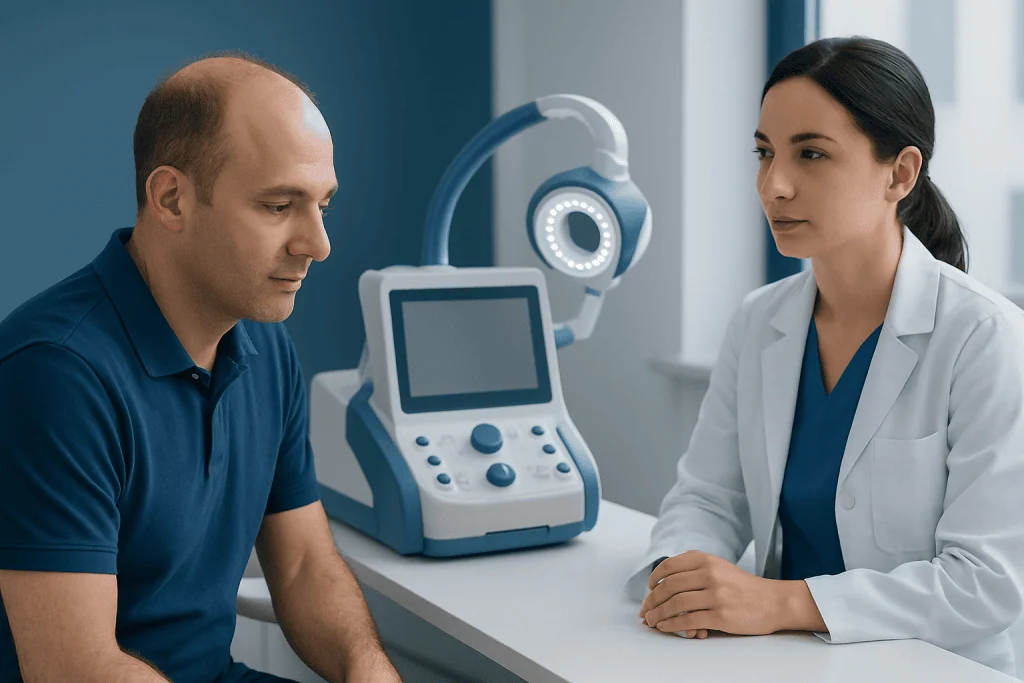
Before recommending surgery, a clinician should assess the pattern and timing of hair loss, family history, scalp health, medications, nutrition, hormonal factors, and relevant medical conditions. Pattern hair loss is common, but sudden shedding, patchy loss, scalp inflammation, or scarring may need different investigation and treatment.
Good candidates commonly have stable or reasonably predictable hair loss, enough healthy donor hair, a healthy scalp, and goals that can be achieved with the available follicles. People with very limited donor density, active scalp disease, uncontrolled medical problems, or rapidly progressing loss may need treatment or further assessment before surgery is considered.
Medical treatment may help preserve existing hair and can sometimes be used before or after transplantation, depending on the diagnosis and the person’s health needs. A qualified clinician should discuss options, possible side effects, and whether a second opinion from a dermatologist is appropriate.
How hair transplant methods work

The two established harvesting approaches are follicular unit excision, usually called FUE, and follicular unit transplantation, often called FUT or strip surgery. In FUE, individual follicular units are removed through tiny circular incisions. In FUT, a narrow strip of donor scalp is removed and divided into follicular units, leaving a linear donor scar.
Which hair transplant is the most safest?
No single method is the safest for every person. FUE avoids a linear scar and may suit people who prefer shorter hairstyles, while FUT can be useful when a larger number of grafts is needed and donor characteristics are suitable. Both techniques require careful donor-area planning; overharvesting with FUE or poor scar management with FUT can affect the final result.
Terms such as direct hair implantation and robotic hair transplantation describe ways grafts may be placed or assisted, rather than proven safer alternatives for everyone. The surgeon’s assessment, technical skill, infection-control standards, and conservative use of donor hair matter more than a procedure label.
Choosing the doctor and clinic
How to choose the best hair transplant doctor?
When considering how to choose a hair transplant surgeon, patients should verify the doctor’s license and relevant specialist training through official regulatory sources where possible. They should ask how often the doctor performs hair restoration, whether the doctor designs the hairline and creates recipient sites, and which tasks are performed by trained assistants. A safe consultation includes examination of the scalp and donor area, not simply a quote based on photographs.
Where is the safest place to get a hair transplant?
The safest place is a properly licensed or regulated medical setting with clear infection-prevention procedures, appropriate anesthesia monitoring, emergency protocols, and planned postoperative access to the clinical team. Patients should be able to identify the responsible doctor, understand how complications are handled, and receive written information in a language they understand. Traveling abroad can be appropriate when these standards and follow-up arrangements are clearly established.
For people asking how do I choose a good hair transplant clinic or how to choose a hair transplant clinic, warning signs include pressure to book quickly, guarantees of density, vague answers about the surgeon’s role, or promises that every patient needs the same number of grafts. The same principles apply to how to choose a hair transplant doctor: prioritize medical assessment, openness, and continuity of care over advertising claims.
What happens on procedure day
Planning begins before surgery with confirmation of the hairline design, treatment area, expected graft range, and consent. A natural-looking plan considers age, future hair-loss patterns, facial proportions, donor supply, and the possibility that further treatment may be needed later.
Most procedures are performed as outpatient surgery under local anesthetic, with sedation used in selected cases. The clinical team prepares the donor area, removes follicular units using the agreed technique, and keeps the grafts protected until placement.
The surgeon then makes very small recipient sites at angles and directions intended to match natural hair growth. Grafts are placed carefully, with finer hairs often used along the hairline and larger follicular units used where additional coverage is needed.
Before leaving, the patient receives instructions about washing, sleeping position, activity, medications if prescribed, and follow-up. It is important to follow the treating team’s advice and not change regular medicines, including blood-thinning medicines, without guidance from the prescribing clinician.
Recovery, benefits, and possible risks
Short-term swelling, redness, small scabs, tenderness, itching, and temporary numbness can occur after a hair transplant. Scabs commonly clear over the first one to two weeks with gentle care. Transplanted hairs often shed during the early weeks; visible new growth commonly starts after several months, with the appearance continuing to mature over roughly a year or longer.
The main potential benefit is more natural coverage using a person’s own growing hair. Results depend on donor quality, the extent of hair loss, graft survival, scalp characteristics, hairstyle, and the continued health of non-transplanted hair.
Possible complications include bleeding, infection, delayed healing, noticeable scarring, folliculitis, persistent numbness, uneven growth, poor graft survival, and an unnatural-looking hairline. Temporary shedding of nearby existing hair, sometimes called shock loss, may also happen. Conservative planning and careful postoperative care can reduce risks, but no procedure can eliminate them entirely.
Patients should contact the treating clinic promptly for increasing pain, fever, spreading redness, pus-like drainage, significant bleeding, or rapidly worsening swelling. Early clinical review can help identify whether normal healing support or additional treatment is needed.
When to seek medical care
Medical assessment should be sought before booking surgery if hair loss is sudden, patchy, accompanied by burning, scaling, pain, or scarring, or occurs with other symptoms such as fatigue or unexplained weight changes. A dermatologist or other qualified clinician can determine whether an underlying condition needs treatment first. After surgery, urgent medical advice is appropriate for signs of infection, an allergic reaction, uncontrolled bleeding, or severe worsening symptoms.
What did Elon Musk use to regrow hair?
There is no verified public medical record explaining what treatment Elon Musk used for his hair. Changes seen in public photographs cannot confirm whether someone had a hair transplant, used medication, changed grooming practices, or used another approach. Celebrity results should not be used to predict an individual’s suitability for surgery or likely outcome.
For international patients, Acibadem International’s multidisciplinary specialists at JCI-accredited hospitals can assess hair loss and discuss medically appropriate hair restoration options and follow-up planning.
Frequently asked questions
Do hair transplants work for every type of hair loss?
No. Hair transplantation is most often considered for stable pattern hair loss when there is enough healthy donor hair. Autoimmune, inflammatory, scarring, or sudden hair-loss conditions may need medical treatment and stabilization before surgery can be considered.
Does FUE leave scars?
FUE leaves small circular scars in the donor area, although they may be less noticeable than the linear scar associated with FUT. Scar visibility depends on skin healing, hair length, graft extraction pattern, and the quality of surgical technique.
Can women have a hair transplant?
Some women are suitable candidates, particularly when hair loss is localized and the donor area is strong. Because diffuse thinning and medical causes of hair loss are more common in women, a careful diagnosis is especially important before planning surgery.
Are hair transplant results permanent?
Transplanted follicles are generally selected from areas that are more resistant to pattern hair loss, so they can provide lasting growth. However, surrounding non-transplanted hair may continue to thin, which can change the overall appearance over time.
Can hair-loss medicines be used after a transplant?
In some cases, medical treatment is recommended to help protect existing hair and support a longer-term plan. The choice depends on the diagnosis, health history, reproductive considerations, and advice of the treating clinician.
How can a patient evaluate before-and-after photos?
Photos should show consistent lighting, angle, hair length, and styling so that results can be compared fairly. They are most useful when the clinic can explain the patient’s starting pattern, donor characteristics, treatment plan, and time since surgery.
References
- American Academy of Dermatology Association
- International Society of Hair Restoration Surgery
- U.S. Food and Drug Administration
- National Institute of Arthritis and Musculoskeletal and Skin Diseases
This article is for general information only and is not a substitute for professional medical advice. Please consult a qualified doctor about your individual situation.
Hair transplant in Turkey — costs, graft counts & a free assessment
JCI-accredited · board-certified surgeons · reply within 24h
Add us as a Preferred Source to see more of our trusted health content across Google Search, AI Overviews and Discover.