Trap Exercises: An Evidence-Based Guide for Patients

Trap exercises should train all parts of the trapezius, not only shoulder shrugging. Balanced movement of the shoulder blades often matters as much as muscle strength.
Key Takeaways
- Trap exercises should train all parts of the trapezius, not only shoulder shrugging.
- Balanced movement of the shoulder blades often matters as much as muscle strength.
- Pain during exercise is a sign to modify, pause, or seek professional advice.
- Good posture, gradual progression, and rest help prevent irritation and overuse.
- Persistent pain, weakness, numbness, or limited motion should be assessed by a clinician.
Trap exercises are movements that strengthen and coordinate the trapezius muscles, which help support the neck, shoulders, and shoulder blades. When chosen carefully and performed with good technique, they can improve posture, reduce strain, and support recovery from everyday muscle tension or certain overuse problems.
Overview: What trap exercises are and who may benefit
Trap exercises are exercises for the trapezius, a large muscle that runs from the neck across the upper back and out toward the shoulders. The trapezius has upper, middle, and lower fibers, and each part helps with different tasks such as lifting the shoulders, rotating the shoulder blades, and supporting the arms during reaching and lifting. A well-designed routine usually trains more than one part of this muscle.
Many people search for trap exercises because of neck tightness, desk-related posture strain, shoulder fatigue, or a desire to improve upper-body strength. In many cases, the goal is not simply to make the upper traps stronger. It is often more helpful to improve coordination between the trapezius, shoulder blade stabilizers, neck muscles, and rotator cuff so the shoulders and neck move more efficiently.
For generally healthy adults, trap exercises can be part of fitness, rehabilitation, or prevention. They may help people who spend long periods at a computer, carry bags often, perform overhead work, or return to exercise after a period of inactivity. However, exercises should be tailored if a person has a recent injury, severe pain, or a medical condition affecting the neck, shoulder, or nerves.
Understanding the trapezius: why balanced training matters
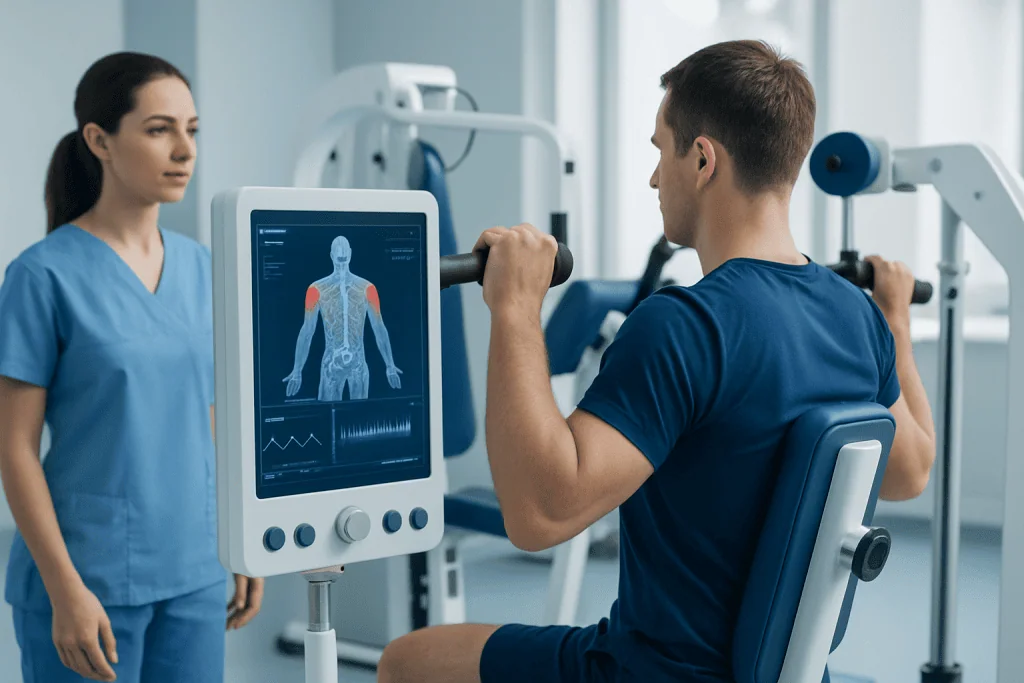
The upper trapezius helps elevate the shoulder girdle and assists neck movements. The middle trapezius helps pull the shoulder blades back, while the lower trapezius helps depress and upwardly rotate the shoulder blades. These actions are especially important when lifting the arms overhead, maintaining posture, and keeping the shoulder joint moving smoothly.
Focusing only on shrugs can overload the upper traps while neglecting the middle and lower fibers. For some people, this can contribute to a pattern in which the neck and upper shoulders work too hard while the lower shoulder blade muscles do too little. That imbalance may be associated with tension, poor shoulder mechanics, or discomfort during reaching, lifting, or exercise.
Balanced trap exercises often include gentle strengthening, posture awareness, shoulder blade control, and mobility work for the chest and thoracic spine. This broader approach may be especially helpful in people with work-related tightness or recurrent shoulder strain. It also overlaps with rehabilitation approaches used for some cases of shoulder impingement syndrome and related movement problems.
Common signs the trapezius may need attention

People do not always feel trapezius problems in the same way. Some notice aching at the top of the shoulders, stiffness along the neck, or fatigue between the shoulder blades. Others report that their shoulders round forward by the end of the day, or that overhead reaching becomes uncomfortable. These symptoms can come from many causes, but muscle imbalance and postural strain are common contributors.
Warning signs during activity include pinching with arm elevation, headaches that seem linked to neck tension, or a feeling that one shoulder sits higher than the other. In some cases, the issue is not isolated to the trapezius. The problem may involve the neck joints, rotator cuff, shoulder blade mechanics, or nerve irritation, so symptoms should be considered in context.
Trap exercises are most appropriate when discomfort appears to be mechanical or activity-related and there are no red-flag symptoms. If a person has significant weakness, a recent fall, visible deformity, fever, unexplained weight loss, chest pain, or symptoms spreading into the arm with numbness or tingling, medical evaluation is important before starting a home program.
Evidence-based trap exercises and how to perform them safely
A practical trap program usually combines low-load control exercises with progressive strengthening. Helpful examples include shoulder blade setting, wall slides, prone Y and T raises, rows, face pulls, and farmer carries. For some people, shrugs can also be useful, but they work best when combined with exercises for the middle and lower trapezius rather than used alone.
Shoulder blade setting is a simple starting point. The person stands or sits tall and gently draws the shoulder blades slightly back and down without forcing the chest upward or tensing the neck. Wall slides can then build on this pattern by teaching the shoulder blades to rotate upward as the arms move overhead. Prone Y raises tend to target lower trapezius activity, while T raises and rows can support the middle trapezius and posture muscles.
General form principles matter. Movements should be slow and controlled, with steady breathing and no shrugging unless the exercise specifically calls for it. The neck should stay relaxed, and the motion should come from the shoulder blades and shoulders rather than from arching the low back. A mild sense of muscle work is expected, but sharp pain is a reason to stop and adjust.
A simple progression is to begin with body weight or light resistance, complete a small number of well-controlled repetitions, and increase load only when symptoms remain stable. If a person is recovering from a painful shoulder problem, a clinician may recommend a personalized program that includes physical therapy and rehabilitation and, if shoulder pathology is suspected, assessment by specialists familiar with orthopedics and traumatology.
Mistakes to avoid: when trap exercises can make symptoms worse
One common mistake is doing too much too soon. Adding heavy shrugs, upright rows, or repeated overhead work before the shoulder blades can move well may increase neck or shoulder irritation. Another mistake is continuing through pain in the belief that discomfort always means the muscles are working. In rehabilitation and preventive exercise, quality of movement is more important than forcing intensity.
Poor posture during training can also reduce the benefit of trap exercises. If the head juts forward, the ribs flare, or the shoulders stay elevated the whole time, the upper traps and neck may dominate the movement. This is one reason mirrors, video feedback, or coaching can be helpful. Even small changes in alignment can make the exercise feel more targeted and comfortable.
People sometimes overlook related areas that affect trapezius function. Tight chest muscles, limited thoracic spine mobility, weak rotator cuff muscles, or underlying neck pain can all interfere with progress. In some cases, persistent upper-trapezius tightness is a compensation pattern rather than a primary strength problem. When symptoms continue despite a careful program, further evaluation may be needed to look for conditions such as cervical disc herniation or other musculoskeletal causes.
Self-care, recovery, and how often to train
For general conditioning, trap exercises are often performed two or three times per week with rest between harder sessions. A smaller daily routine of posture resets, gentle mobility, and low-load activation may be appropriate for desk workers or people with mild stiffness. The right schedule depends on the person’s symptoms, training background, and other activities involving the neck and shoulders.
Warm-up can improve comfort and movement quality. Useful options include gentle shoulder rolls, thoracic extension over a chair back, chest-opening stretches, and easy rowing motions with a resistance band. After exercise, some people benefit from light stretching, heat for muscle tension, or short walks to avoid staying in one position too long.
Recovery is not only about exercise selection. Sleep position, workstation setup, carrying habits, and stress management can influence trapezius tension. Frequent breaks from prolonged sitting, keeping screens at a comfortable height, and avoiding cradling the phone between the ear and shoulder can all reduce strain. If symptoms interfere with daily life, guided rehabilitation may be more effective than repeated self-directed trial and error.
When a broader shoulder or neck problem is present, clinicians may combine exercise with imaging or specialist assessment. Depending on the findings, care may involve medical check-up pathways or consultation with teams experienced in musculoskeletal and spine-related problems. Acibadem International’s multidisciplinary specialists and JCI-accredited hospitals diagnose and treat these concerns for international patients.
When to seek medical care
Most mild muscle tightness improves with rest, activity modification, and gradual exercise. Medical care is appropriate if pain lasts more than a few weeks, keeps returning, limits work or sleep, or does not improve with a sensible home approach. Evaluation is also important if the pain started after trauma, heavy lifting, or a sudden movement.
A doctor should assess symptoms such as arm weakness, numbness, tingling, clumsiness, severe headaches linked to neck pain, or pain that travels below the shoulder. Urgent care is needed for chest pain, shortness of breath, sudden severe weakness, loss of balance, or symptoms suggesting infection or a major injury. These problems are not typical signs of simple trapezius strain.
During a clinical visit, the doctor may examine posture, neck movement, shoulder strength, reflexes, and the way the shoulder blades move. Some people may be referred for rehabilitation, while others may need further imaging or specialist review. Individual assessment helps distinguish muscle tension from tendon injury, joint irritation, or nerve-related conditions.
Frequently asked questions
Are trap exercises good for neck pain?
They can be helpful when neck discomfort is related to posture, muscle fatigue, or poor shoulder blade control. However, neck pain has many causes, so exercises should be gentle and stopped if they increase symptoms. Persistent or radiating pain should be assessed by a clinician.
Do trap exercises only mean shoulder shrugs?
No. Shoulder shrugs mainly emphasize the upper trapezius, while a complete program should also train the middle and lower parts of the muscle. Rows, wall slides, and prone Y or T raises are common examples used for more balanced training.
How often should trap exercises be done?
For many people, strengthening exercises two or three times per week is a reasonable starting point. Gentle posture and mobility work may be done more often. The best frequency depends on symptoms, overall activity level, and recovery.
Should trap exercises hurt?
A mild feeling of effort or muscle fatigue is normal, but sharp, pinching, or spreading pain is not. Exercise should usually feel controlled and tolerable during and after the session. If symptoms worsen, the movement may need to be changed or paused.
Can trap exercises help posture?
Yes, in many cases they can support better posture by improving shoulder blade control and endurance. They work best when combined with ergonomic changes, chest mobility, and regular movement breaks. Posture is a habit as well as a strength issue.
When should someone see a doctor instead of trying exercises at home?
A doctor should be consulted if pain is severe, follows an injury, lasts more than a few weeks, or comes with weakness, numbness, or tingling. Medical advice is also important if symptoms disturb sleep or daily activities. These features can suggest a problem beyond simple muscle tightness.
This article is for general information only and is not a substitute for professional medical advice. Please consult a qualified doctor about your individual situation.
Joint and spine care in Turkey — expert assessment & treatment
JCI-accredited · board-certified surgeons · reply within 24h
Add us as a Preferred Source to see more of our trusted health content across Google Search, AI Overviews and Discover.

More from the Health Library

Bruising in stomach area: Symptoms, Causes, and Treatment — Complete Patient Guide

Jaw and Chest Tightness — Explained by Medical Evidence, Not Myths

Lung Consolidation: A Complete Medical Overview

Chipotle Gluten Free — Explained by Medical Evidence, Not Myths

Hypertrophic Scar: An Evidence-Based Guide for Patients