Treatment for Salivary Gland Tumor: How It Works, Results and What to Expect

Most salivary gland tumors are evaluated with imaging and a needle biopsy before treatment is planned. Surgery is commonly the primary treatment and aims to remove the tumor while preserving important nerves and nearby structures whenever possible.
Key Takeaways
- Most salivary gland tumors are evaluated with imaging and a needle biopsy before treatment is planned.
- Surgery is commonly the primary treatment and aims to remove the tumor while preserving important nerves and nearby structures whenever possible.
- Radiation therapy may be used after surgery or as a main treatment when surgery is not appropriate.
- Outlook varies widely because salivary gland cancers include many different tumor types and grades.
- A new, persistent or enlarging lump near the jaw, cheek, mouth or neck should be assessed by a qualified clinician.
Treatment for salivary gland tumor is individualized according to whether the tumor is benign or cancerous, its gland of origin, size, grade and whether it has spread. Surgery is often the main treatment, while radiation therapy and systemic medicines may be recommended for certain cancers or more advanced disease.
Overview: How Treatment for Salivary Gland Tumor Works
Treatment for salivary gland tumor begins with identifying exactly what the lump is. Salivary gland tumors can arise in the major glands, including the parotid glands in front of the ears, the submandibular glands beneath the jaw and the sublingual glands under the tongue. They may also develop in many small salivary glands located throughout the mouth, throat and upper airway.
Many salivary gland tumors are benign, meaning they do not spread to distant organs. Others are malignant, or cancerous, and require treatment designed to control the tumor locally and reduce the chance of recurrence or spread. The treatment plan depends on the tumor’s pathology, size, location, grade, stage, symptoms and the person’s general health.
A team may include an ear, nose and throat surgeon or head and neck surgeon, medical oncologist, radiation oncologist, radiologist, pathologist, dentist and rehabilitation professionals. This coordinated approach is especially important because facial movement, speech, swallowing, saliva production and appearance can all be affected by the tumor location and its treatment.
Assessment, Diagnosis and Candidacy for Treatment
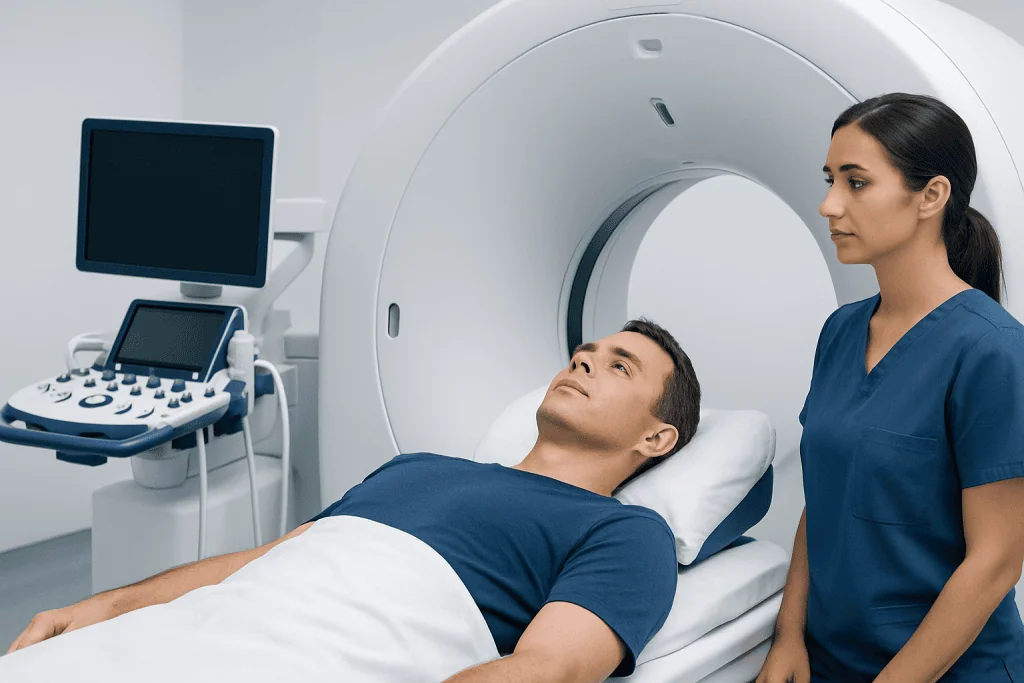
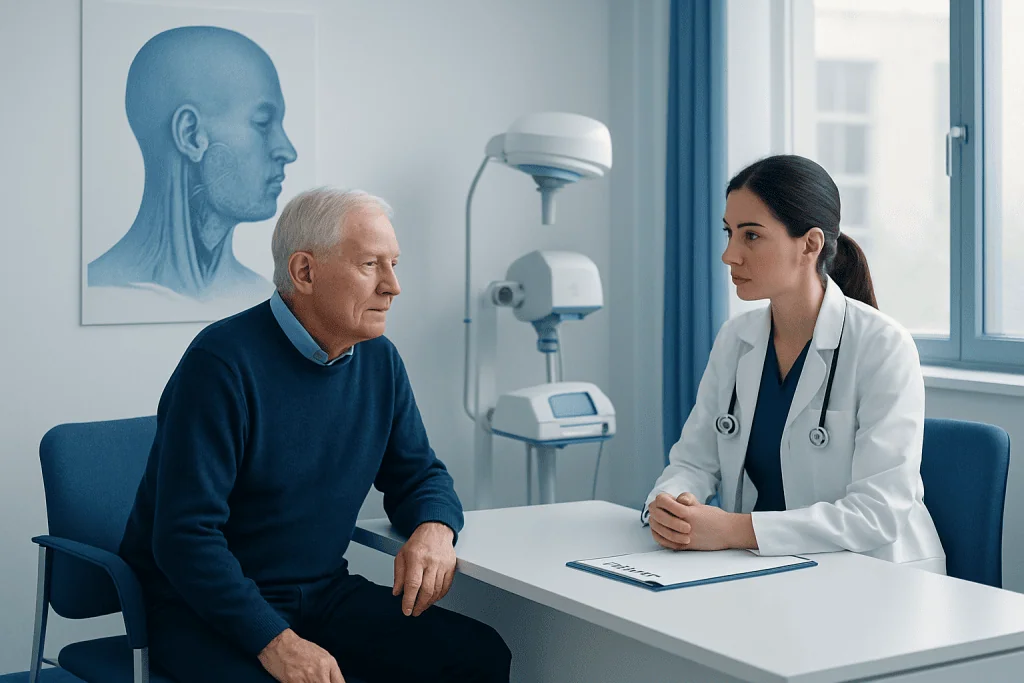
Before recommending treatment, clinicians usually perform a careful examination of the face, mouth, throat and neck. They ask about changes such as a painless lump, pain, numbness, facial weakness, difficulty swallowing, dry mouth or a change in voice. A facial nerve examination is particularly important for tumors in or near the parotid gland.
Ultrasound, CT, MRI or PET/CT imaging may help show the tumor’s size, its relationship to nerves and blood vessels, and whether lymph nodes or other areas need assessment. A fine-needle aspiration or core needle biopsy is often used to collect cells or tissue. Although a biopsy can strongly guide planning, the final diagnosis may sometimes depend on examination of the entire tumor after surgery.
People may be candidates for surgery when the tumor can be removed safely and their overall health permits an operation. For cancerous tumors, the team also considers whether there is evidence of spread, whether the tumor has high-risk features and whether radiation or drug treatment should be added. Some people may need treatment adapted because of prior radiation, other illnesses or the tumor’s proximity to critical structures.
- Benign tumors are often removed if they are enlarging, symptomatic or uncertain in diagnosis.
- Low-grade cancers may be treated with surgery alone in selected situations.
- Higher-grade, larger or lymph-node-positive cancers may need combined treatment.
Treatment Pathway: Surgery, Radiation and Medicines
Surgery is the central treatment for many salivary gland tumors. The goal is complete removal with an appropriate margin of surrounding tissue where feasible, while preserving normal function. The procedure may involve removal of part or all of a salivary gland, nearby soft tissue, and sometimes lymph nodes in the neck if there is known or suspected cancer spread.
For a parotid tumor, surgeons carefully identify and protect the facial nerve whenever the tumor is not invading it. If a cancer directly involves the nerve, a portion may need to be removed to achieve cancer control. Reconstructive techniques, nerve repair or nerve grafting may be considered in selected cases. The planned extent of surgery is discussed before the procedure, although final decisions can depend on findings during surgery and pathology results.
Radiation therapy uses focused high-energy radiation to treat microscopic cancer cells that may remain after surgery or to manage cancer when surgery is not suitable. It is more often considered for high-grade tumors, close or positive surgical margins, nerve involvement, lymph-node disease or locally advanced cancer. Modern planning aims to reduce radiation exposure to surrounding healthy tissues, but dry mouth, skin changes, mouth soreness and swallowing effects can still occur.
Systemic treatment, such as chemotherapy, targeted therapy or immunotherapy, is not needed for most localized tumors. It may be considered for recurrent, unresectable or metastatic disease, depending on the cancer subtype and biomarker testing. The oncology team can explain whether molecular testing may identify a treatment option for a particular tumor. A specialist assessment for head and neck cancer treatment can help coordinate these decisions.
What Happens During Salivary Gland Surgery?
Before surgery, the care team reviews imaging, biopsy findings, medications, allergies and anesthesia considerations. Patients may be asked to stop or adjust certain medicines, such as blood-thinning drugs, only under guidance from the prescribing clinician. The surgeon explains the planned incision, the possible need for reconstruction, expected hospital stay and practical recovery arrangements.
Most salivary gland operations are performed under general anesthesia. The surgeon makes an incision chosen to provide safe access while considering healing and cosmetic outcomes. The tumor and an appropriate amount of gland tissue are removed. In operations involving the parotid gland, facial nerve monitoring may be used to support identification and protection of facial nerve branches.
A drain may be placed temporarily to remove fluid from the surgical area. Removed tissue is examined by a pathologist, who determines the tumor type, grade, margins and other features that affect the next steps. If cancer is confirmed, the multidisciplinary team reviews the pathology results to decide whether observation, radiation therapy or additional treatment is appropriate.
For people traveling for care, Acibadem International’s multidisciplinary specialists and JCI-accredited hospitals can evaluate and treat salivary gland tumors, with planning that includes surgery, oncology care and follow-up needs.
Recovery Timeline, Benefits and Possible Risks
Recovery varies with the type and extent of surgery, whether reconstruction was needed and whether further treatments are planned. Some patients go home within one or a few days, while larger operations may require a longer stay. Pain, swelling, bruising, tightness and temporary numbness around the incision are common early experiences and usually improve gradually.
Follow-up visits are used to check wound healing, remove a drain or stitches if needed, review pathology and monitor facial movement, swallowing and saliva-related symptoms. People are generally advised to follow the surgeon’s instructions on wound care, activity, diet and return to work. If radiation therapy is recommended, it usually begins after adequate surgical healing.
The potential benefits of surgery include obtaining a definitive diagnosis, relieving symptoms and removing a benign or cancerous tumor. For cancer, complete removal may offer the best chance of local control when it can be achieved safely. Treatment choices are always balanced against the potential effect on nearby nerves, saliva production and quality of life.
Possible surgical risks include bleeding, infection, fluid collection, scar changes, salivary leakage and temporary or permanent nerve weakness. Facial weakness can affect eye closure, smiling or lower-lip movement, particularly after parotid surgery. Other possible effects include numbness around the ear, dry mouth, changes in taste or sweating and flushing near the cheek while eating, known as Frey syndrome. The individual risk depends on the tumor’s location and extent, and the surgical team can explain what is most relevant in each case.
How Serious Is a Salivary Gland Tumor?
How serious a salivary gland tumor is depends first on whether it is benign or malignant. Benign tumors do not spread to distant parts of the body, but they can enlarge over time, cause discomfort or affect nearby nerves and structures. Some benign tumors are removed because they are growing, causing symptoms or cannot be reliably distinguished from cancer without surgery.
Salivary gland cancers range from low-grade tumors that may grow slowly to aggressive, high-grade tumors that can recur or spread. Features that can suggest a need for prompt assessment include rapid growth, pain, facial numbness or weakness, skin changes over the lump, difficulty opening the mouth or enlarged neck lymph nodes. These signs do not confirm cancer, but they should not be ignored.
Pathology is essential because salivary gland cancer is not one single disease. Tumor subtype, grade, stage, surgical margins, lymph-node involvement and response to treatment all influence seriousness and outlook. Early assessment allows the team to clarify the diagnosis and discuss the most appropriate treatment approach.
How Long Does Salivary Gland Cancer Take to Spread?
There is no single timeline for how long salivary gland cancer takes to spread. Some low-grade cancers can remain localized or grow slowly for years, while some high-grade cancers may behave more quickly. The rate of growth and spread cannot be predicted accurately from symptoms alone.
Spread may occur first to nearby tissues or lymph nodes in the neck, while some subtypes have a tendency to spread through nerves or, later, to distant sites such as the lungs or bones. Imaging, biopsy results and surgical pathology help clinicians estimate the risk more reliably than the length of time a lump has been noticed.
A persistent, enlarging or unexplained lump should therefore be assessed rather than watched indefinitely. Prompt evaluation does not mean that a lump is cancerous; it means that any needed treatment can be planned before the problem becomes more complex.
How Serious Is Salivary Gland Surgery?
Salivary gland surgery is a significant procedure because salivary glands sit near important nerves, muscles and blood vessels. However, it is a well-established operation performed by experienced head and neck surgeons, with the approach tailored to the affected gland and tumor characteristics. The seriousness of the operation ranges from relatively limited removal of a small benign lesion to more extensive surgery for an invasive cancer.
Operations on the parotid gland require particular attention to the facial nerve. In the submandibular region, surgeons also consider nerves involved in lower-lip movement and tongue function. A detailed preoperative discussion helps patients understand the intended benefits, alternatives and possible functional effects in their individual situation.
After surgery, rehabilitation may be useful for facial weakness, shoulder movement after neck surgery, swallowing changes or speech concerns. Supportive care from physiotherapists, speech and language therapists, dietitians and dental professionals can be an important part of recovery when needed.
What Is the Life Expectancy of Someone With Salivary Gland Cancer?
Life expectancy with salivary gland cancer varies too much for one figure to be meaningful for every person. It depends on the specific cancer type, grade, stage, size, location, lymph-node involvement, whether the cancer can be completely removed and the person’s overall health. Many people with localized, lower-grade cancers have successful treatment and long-term follow-up without recurrence.
Higher-grade, recurrent or metastatic cancers generally have a more uncertain outlook and may require combined or ongoing treatments. Even within the same stage, different salivary gland cancer subtypes can behave differently. The treating team can provide the most personalized discussion after reviewing pathology and imaging results.
Regular follow-up is important because some salivary gland cancers can recur years after initial treatment. Follow-up commonly includes clinical examinations, symptom review and imaging when appropriate. This surveillance is intended to detect changes early and also address long-term effects of treatment.
When to Seek Medical Care
Medical assessment is recommended for a lump or swelling near the ear, jaw, under the jaw, in the mouth or in the neck that persists for more than a few weeks, grows or feels firm. A dentist, primary care clinician or ear, nose and throat specialist can arrange the appropriate examination and imaging.
More urgent assessment is appropriate if a lump is associated with facial weakness, new numbness, significant pain, trouble swallowing, difficulty breathing, unexplained weight loss, skin ulceration or rapidly increasing size. These symptoms can have causes other than cancer, but they should be evaluated without delay.
After treatment, patients should contact their care team about fever, worsening redness or drainage from an incision, uncontrolled pain, new facial weakness, difficulty closing an eye, dehydration or trouble eating and drinking. Ongoing follow-up is also important even when recovery appears to be going well.
Frequently asked questions
Can a salivary gland tumor be treated without surgery?
Some tumors can be managed without surgery, depending on the diagnosis and circumstances. Radiation therapy may be used when surgery is not appropriate, and systemic treatment may be considered for advanced, recurrent or metastatic cancer. However, surgery remains the main treatment for many localized salivary gland tumors.
Are most salivary gland tumors cancerous?
No. Many salivary gland tumors, especially those arising in the parotid gland, are benign. A biopsy and imaging assessment are needed because the chance of cancer differs according to the gland involved and the characteristics of the tumor.
Will facial weakness after parotid surgery be permanent?
Facial weakness after parotid surgery may be temporary, particularly if the facial nerve was stretched or handled during removal of a nearby tumor. Recovery can take weeks to months. Permanent weakness is more likely when a cancer has invaded the nerve or when nerve removal is necessary for cancer control.
Is radiation therapy always needed after salivary gland cancer surgery?
No. Some small, low-grade cancers that have been completely removed may not need radiation therapy. Radiation is more commonly recommended when pathology shows higher-risk features, such as a high-grade tumor, close or involved margins, nerve involvement or lymph-node spread.
Can a benign salivary gland tumor come back after surgery?
Some benign tumors can recur, particularly if they are difficult to remove completely or have features associated with recurrence. The risk depends on the exact tumor type and surgical findings. Follow-up appointments help monitor healing and identify any changes early.
What should someone expect at the first specialist appointment?
The specialist will review symptoms, medical history, imaging and any biopsy results, then examine the mouth, face and neck. Further imaging or a needle biopsy may be recommended if they have not already been performed. The discussion should include likely diagnoses, treatment options, expected recovery and questions about preserving function.
References
- National Cancer Institute
- American Cancer Society
- National Comprehensive Cancer Network
- American Society of Clinical Oncology
- European Society for Medical Oncology
This article is for general information only and is not a substitute for professional medical advice. Please consult a qualified doctor about your individual situation.
Oncology care in Turkey — second opinion and treatment plan
JCI-accredited · board-certified surgeons · reply within 24h
Add us as a Preferred Source to see more of our trusted health content across Google Search, AI Overviews and Discover.