Treatment for Severe Hearing Loss in Child: How It Works, Results and What to Expect
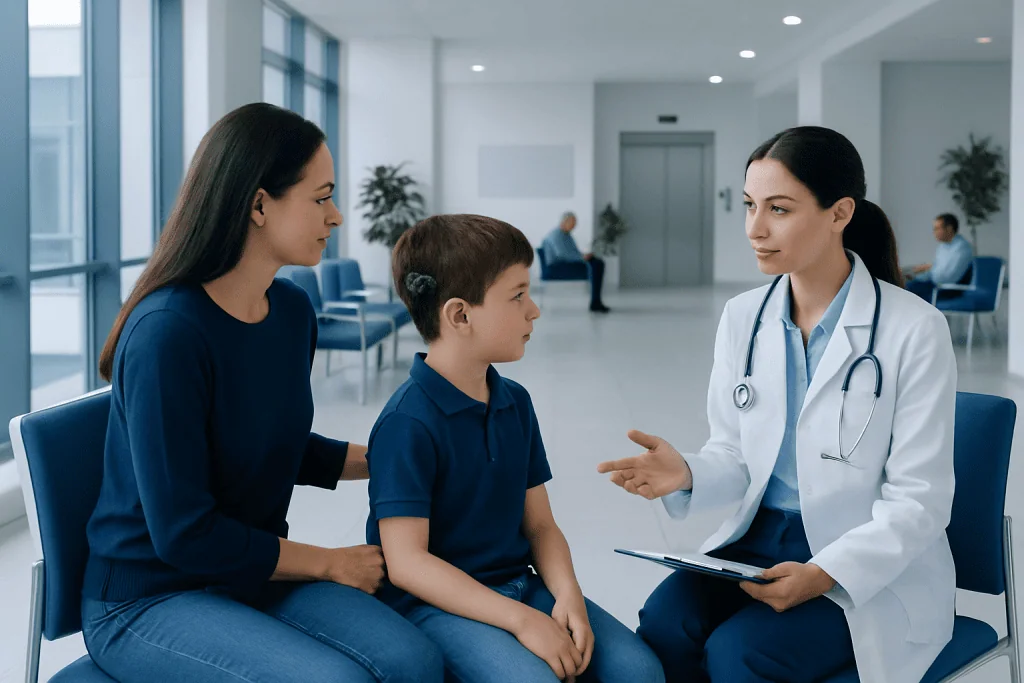
Severe childhood hearing loss needs prompt assessment by a pediatric hearing-care team. Hearing aids may help when usable hearing remains; cochlear implants may be considered when they do not provide enough access to sound.
Key Takeaways
- Severe childhood hearing loss needs prompt assessment by a pediatric hearing-care team.
- Hearing aids may help when usable hearing remains; cochlear implants may be considered when they do not provide enough access to sound.
- Treatment usually combines technology with speech, language, listening and school support.
- Not every hearing loss can be reversed, but many children can improve access to sound and communication.
- Emotional reactions such as frustration or anger may reflect communication barriers and deserve supportive attention.
Treatment for severe hearing loss in child is individualized and may include hearing aids, cochlear implants, medical or surgical treatment for an underlying cause, and ongoing speech, language and educational support. Early assessment and consistent follow-up help children access sound and develop communication in ways that suit their needs and family goals.
Overview: How treatment for severe hearing loss in child works
Treatment for severe hearing loss in child begins with identifying how much hearing is present, whether one or both ears are affected, and where in the hearing pathway the problem occurs. The care plan may include hearing devices, treatment of an ear condition, surgery in selected cases, communication therapy and support at home and school. The aim is not simply to make sounds louder; it is to give the child meaningful access to speech, environmental sounds and communication.
For children with severe sensorineural hearing loss, hearing aids may be tried first if testing shows that they provide useful sound access. When appropriately fitted hearing aids do not provide adequate benefit, a cochlear implant assessment may be recommended. A cochlear implant bypasses damaged sensory cells in the inner ear and directly stimulates the hearing nerve, allowing the brain to interpret sound signals.
Early support matters because hearing contributes to spoken-language development, learning and social interaction. However, children of different ages can benefit from treatment. Families can work with audiologists, ear, nose and throat specialists, speech and language therapists, educators and, when needed, developmental or psychological specialists to choose a plan that respects the child’s needs and preferred communication approach.
Symptoms, causes and why early assessment matters
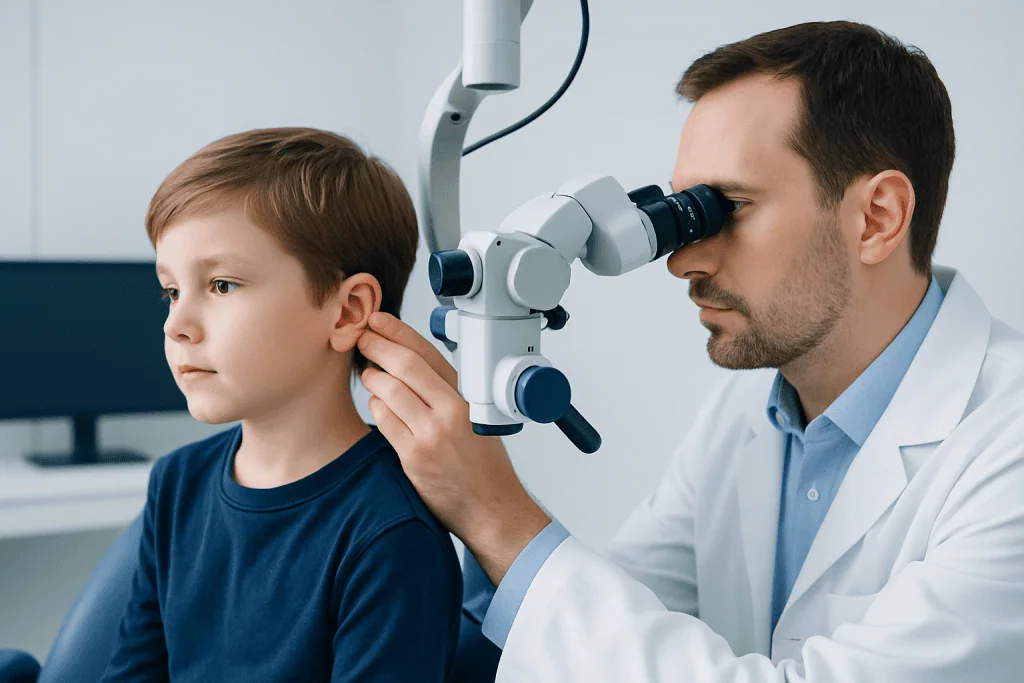
Signs of significant hearing loss can look different at different ages. Babies may not startle to loud sound, turn toward voices or develop expected babbling patterns. Older children may seem to ignore calls, ask for repetition, turn one ear toward a speaker, increase screen volume, have unclear speech, struggle to follow classroom discussion or appear tired after listening in noisy places.
Hearing loss may be present at birth or develop later. Causes include genetic factors, infections during pregnancy or childhood, complications around birth, fluid or infection in the middle ear, certain medicines, injury, noise exposure and disorders affecting the inner ear or hearing nerve. Sometimes no single cause is found. A full evaluation can also clarify whether the loss is conductive, sensorineural or mixed, as treatment options differ.
Severe hearing loss is not always obvious, particularly when it affects one ear or worsens gradually. Newborn screening is valuable, but it does not replace later attention to communication and listening milestones. Parents, caregivers and teachers should arrange hearing testing when they have concerns, even if a child passed an earlier screen.
Related ENT concerns, such as repeated ear infections or persistent fluid, may need separate evaluation. These can sometimes add a conductive component to an existing hearing difficulty and can affect how well a child hears through a hearing aid.
Candidacy and the evaluation before treatment

Children are assessed individually rather than by hearing-test results alone. A pediatric audiologist performs age-appropriate tests to measure hearing levels, speech detection or recognition when possible, middle-ear function and the benefit obtained from hearing aids. For younger children, behavioral testing may be combined with objective tests that measure responses from the ear or hearing pathway.
An ear, nose and throat specialist examines the ears and reviews the medical history. Imaging of the inner ear and hearing nerve may be needed when cochlear implantation is being considered. Some children may also be offered genetic assessment, infection testing or a developmental review, depending on their history and clinical findings.
For cochlear implant candidacy, the team considers severe-to-profound hearing loss, limited benefit from well-fitted hearing aids, the anatomy of the inner ear and hearing nerve, general health for anesthesia, and whether the family can participate in follow-up and rehabilitation. Children who use sign language or another visual communication system can still benefit from hearing care; the best communication plan is individualized and should support full language access.
Families can learn more about the implant pathway through cochlear implant treatment. A trial with properly programmed hearing aids and documented listening progress is often an important part of the decision-making process.
Hearing aids and cochlear implants: step by step
Hearing aids amplify and shape sound according to the child’s hearing profile. After fitting, the audiologist checks that the devices deliver sound at safe and helpful levels, often using measurements in the ear canal. Parents receive guidance on daily wear, battery or charging routines, cleaning and recognizing device problems. Regular adjustments are essential as a child grows and listening needs change.
A cochlear implant has an internal part placed during surgery and an external sound processor worn after healing. During the operation, performed under general anesthesia, the surgeon makes an incision behind the ear, places the internal receiver under the skin and inserts an electrode array into the cochlea. The procedure and the appropriate hospital stay vary with the child’s health and surgical plan.
Several weeks after surgery, the external processor is fitted and activated. This first activation is the start of rehabilitation, not the final result. Audiology appointments are used to program, or map, the processor so sound signals are comfortable and useful. The brain needs time and repeated listening experience to learn how to interpret the new information.
Speech and language therapy, listening practice and classroom planning are central parts of care after device fitting. Some children also benefit from assistive listening systems, captioning, visual supports or sign-language services. The team should review progress regularly and adapt support as school and communication demands change.
Benefits, risks and recovery timeline
The potential benefit of hearing aids or cochlear implants is improved access to sound. This may support awareness of voices and environmental sounds, speech perception, spoken-language learning and participation in family or school activities. Outcomes vary widely and depend on factors such as the cause and duration of hearing loss, age at support, hearing nerve function, consistent device use, rehabilitation and access to language-rich communication.
After hearing-aid fitting, children commonly begin using the devices right away, with follow-up adjustments over the next weeks and months. After cochlear implant surgery, the incision generally needs time to heal before activation. Sound perception often develops gradually after activation, and progress continues over months to years with regular programming and therapy.
Hearing aids can cause discomfort, feedback or skin irritation if they do not fit well, but these issues are usually manageable with adjustment. Cochlear implantation has surgical risks, including infection, bleeding, dizziness, changes in taste, facial nerve injury, device failure and complications related to anesthesia. The operation can also affect any remaining natural hearing in the implanted ear. The surgical team explains the child-specific risks before consent.
Families should contact the care team if there is increasing pain, fever, redness or swelling around a surgical site, fluid drainage from the ear, sudden change in hearing response, or a device that is not working as expected. Prompt review helps address medical or technical problems safely.
Can a child outgrow hearing loss?
A child does not usually outgrow permanent sensorineural hearing loss, because damage to the inner ear’s sensory cells or the hearing nerve generally does not heal on its own. However, children can develop stronger communication, listening skills and confidence with appropriate support, and the practical impact of hearing loss may become more manageable over time.
Some temporary or fluctuating hearing loss can improve when its cause is treated. For example, middle-ear fluid, earwax blockage or an acute ear infection may reduce hearing for a period and may resolve with observation or medical care. Persistent or repeated middle-ear problems should be assessed because they can affect speech and learning during important developmental stages.
Even when a known cause is temporary, repeat hearing testing is important. It confirms whether hearing has returned to the expected level and identifies children who need further support.
Can hearing loss be improved?
Whether hearing loss can be improved depends on its cause and type. Conductive hearing loss caused by wax, fluid, infection or some structural ear conditions may improve with appropriate medical or surgical treatment. Permanent inner-ear hearing loss is less likely to be medically reversible, but hearing aids, cochlear implants and communication rehabilitation can substantially improve a child’s access to sound.
Improvement should be measured broadly. Alongside hearing-test results, clinicians consider the child’s ability to notice sound, understand speech in suitable conditions, communicate needs, participate at school and interact comfortably with others. A child may make meaningful progress even if hearing tests remain in the severe range.
Protecting remaining hearing is also important. Families can reduce exposure to very loud recreational noise, use hearing protection when appropriate and seek medical advice before giving medicines that may affect hearing. These measures do not replace treatment, but they support long-term ear health.
What are the consequences of hearing loss?
Without adequate access to communication, severe hearing loss can affect speech and language development, literacy, classroom learning, relationships and independence. The effect is not the same for every child. It depends on when hearing loss began, the consistency of hearing support, access to language, other developmental needs and the responsiveness of family and school environments.
Children may miss incidental learning, such as overhearing conversations, instructions or new vocabulary. Listening in a noisy classroom can be especially demanding. Practical accommodations may include preferential seating, visual instructions, teacher-facing communication, captioning, an assistive microphone system and coordinated support from educational specialists.
Hearing loss does not define intelligence, personality or future potential. With timely evaluation, reliable communication access and individualized educational support, children with hearing loss can learn, build relationships and participate fully in family and community life.
What is the relationship between hearing loss and anger?
Hearing loss does not directly cause anger, but it can contribute to frustration. A child may become upset when they cannot understand speech, are repeatedly corrected for missing instructions, feel excluded from conversations or become tired from concentrating on listening. These reactions can be misunderstood as defiance when they are actually signs of a communication barrier.
Supportive strategies include getting the child’s attention before speaking, facing them, reducing background noise, using short and clear instructions, checking understanding and giving them time to respond. Teachers and caregivers should use consistent communication approaches and avoid assuming that a child has heard a message simply because they are looking toward the speaker.
Persistent anger, distress, withdrawal, changes in sleep or school difficulties should be discussed with the child’s doctor. A hearing review may be needed, and counseling or developmental support can help the child and family manage emotional and social challenges.
When to seek medical care
Parents or caregivers should arrange a hearing assessment promptly if a child does not respond consistently to sound or voices, has delayed speech or language, seems to hear only from one side, frequently asks for repetition, has difficulties at school, or shows a sudden change in hearing. Sudden hearing loss, severe ear pain, ear discharge, dizziness, facial weakness or hearing loss after a head injury needs urgent medical assessment.
Children already diagnosed with severe hearing loss should have planned follow-up with their hearing-care team. Device checks, hearing tests, therapy reviews and school support meetings help ensure that the plan continues to match their development. It is also important to review a child sooner if they stop tolerating a hearing device, their responses to sound change or communication progress slows.
Acibadem International’s multidisciplinary specialists and JCI-accredited hospitals support diagnosis and treatment planning for children with hearing loss, including hearing-device assessment, cochlear implant care and rehabilitation for international patients.
Frequently asked questions
What is the best treatment for severe hearing loss in a child?
The best treatment depends on the cause, degree and type of hearing loss, as well as the child’s age and communication needs. It may include hearing aids, treatment of middle-ear disease, cochlear implants, speech and language therapy, sign-language support and educational accommodations. A pediatric audiologist and ENT specialist can help families compare appropriate options.
How soon should a child with severe hearing loss receive treatment?
Assessment and support should begin as soon as hearing loss is suspected or confirmed. Early access to sound and language supports communication development, but children can benefit from intervention at many ages. The clinical team can explain which steps are most time-sensitive for an individual child.
Will a cochlear implant make a child hear normally?
A cochlear implant does not restore natural hearing, and results differ between children. It provides sound information that the brain learns to interpret over time. Regular use, device programming, therapy and a language-rich environment all contribute to progress.
Can a child use hearing aids and still need a cochlear implant?
Yes. Hearing aids are often used during assessment and may provide enough benefit for some children. If well-fitted hearing aids do not give sufficient access to speech and sound, the team may discuss cochlear implant candidacy. Some children use a cochlear implant in one ear and a hearing aid in the other, depending on their hearing profile.
How can parents support a child with severe hearing loss at home?
Parents can encourage consistent use of prescribed hearing devices, attend follow-up appointments and create communication-friendly routines. Facing the child, reducing unnecessary background noise, reading together and responding to all forms of communication can be helpful. Speech therapists and teachers of children who are deaf or hard of hearing can provide individualized home strategies.
Is anger common in children with hearing loss?
Some children may show frustration, irritability or anger when communication is difficult or listening is exhausting. These feelings are not inevitable and should not be treated as a personality trait. Checking hearing access, improving communication supports and seeking professional guidance for persistent distress can help.
References
- World Health Organization
- Centers for Disease Control and Prevention
- National Institute on Deafness and Other Communication Disorders
- American Academy of Pediatrics
- American Speech-Language-Hearing Association
This article is for general information only and is not a substitute for professional medical advice. Please consult a qualified doctor about your individual situation.
Explore treatments in Turkey — costs, top hospitals & a free quote
JCI-accredited · board-certified surgeons · reply within 24h
Add us as a Preferred Source to see more of our trusted health content across Google Search, AI Overviews and Discover.