Treatment of a Bulging Disc in Lower Back: How It Works, Results and What to Expect

A bulging lumbar disc may cause no symptoms, or it may irritate a nearby nerve and cause back pain, sciatica, numbness, or weakness. Most people begin with conservative treatment, including staying gently active, physiotherapy, and clinician-guided pain management.
Key Takeaways
- A bulging lumbar disc may cause no symptoms, or it may irritate a nearby nerve and cause back pain, sciatica, numbness, or weakness.
- Most people begin with conservative treatment, including staying gently active, physiotherapy, and clinician-guided pain management.
- Epidural injections can provide temporary relief for selected people with nerve-root pain, but they do not repair the disc itself.
- Surgery is usually reserved for persistent disabling symptoms, progressive weakness, or emergency signs of cauda equina syndrome.
- Urgent medical assessment is needed for new bladder or bowel problems, numbness around the genitals or buttocks, or rapidly worsening leg weakness.
Treatment of a bulging disc in the lower back is usually tailored to symptoms rather than scan findings alone. Many people improve with non-surgical care, while injections or surgery may be considered when pain, weakness, or nerve compression continues despite appropriate treatment.
Overview: How a Bulging Disc Is Treated
Treatment of a bulging disc in lower back usually begins without surgery. The goal is to reduce pain and nerve irritation, preserve movement, and help the person return safely to everyday activities. A bulging disc is a disc that extends beyond its usual boundary; it is not always the cause of pain, because disc bulges are also common on scans in people without symptoms.
The lower-back discs cushion the bones of the spine. If a bulge narrows space around a nerve root, it can produce pain travelling into the buttock or leg, often called sciatica. Treatment decisions are based on the pattern and severity of symptoms, physical examination findings, daily function, and, when needed, imaging rather than on the scan result alone.
Many episodes improve over time with a structured non-surgical plan. When symptoms remain severe or a nerve is significantly affected, a spine specialist may discuss procedures such as an epidural injection or lumbar disc surgery.
Symptoms and the Role of Nerve Compression
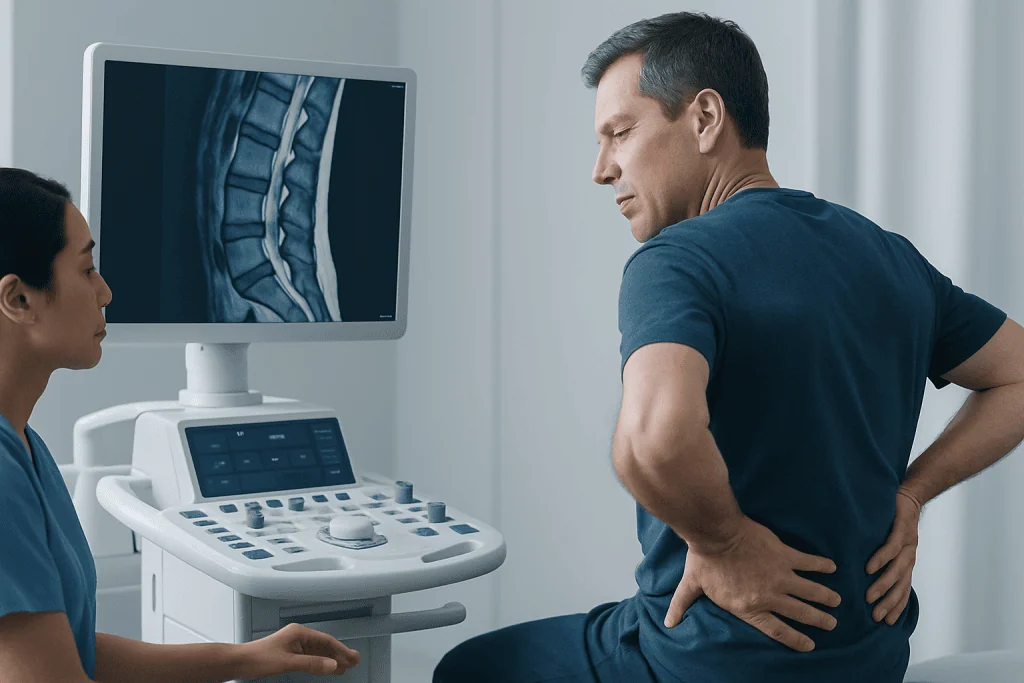
A lower-back disc bulge can cause local aching, stiffness, or pain that is worse with certain positions and movements. When the bulge irritates or compresses a nerve root, symptoms may extend down one leg. These can include burning or electric-shock-like pain, tingling, altered sensation, or weakness in the foot, ankle, or leg.
Symptoms vary according to the disc level and the nerve involved. For example, some people notice pain down the back of the leg, while others have discomfort in the outer leg, shin, or top of the foot. A clinician will check strength, sensation, reflexes, walking, and nerve-tension signs to determine whether a lumbar nerve is likely to be involved.
A disc bulge differs from a disc herniation, although the terms are sometimes used loosely. A herniation usually involves a more focal displacement of disc material and may be more likely to irritate a nerve. The same principles of evaluation and symptom-guided care apply to lumbar disc herniation.
How Non-Surgical Treatment Works
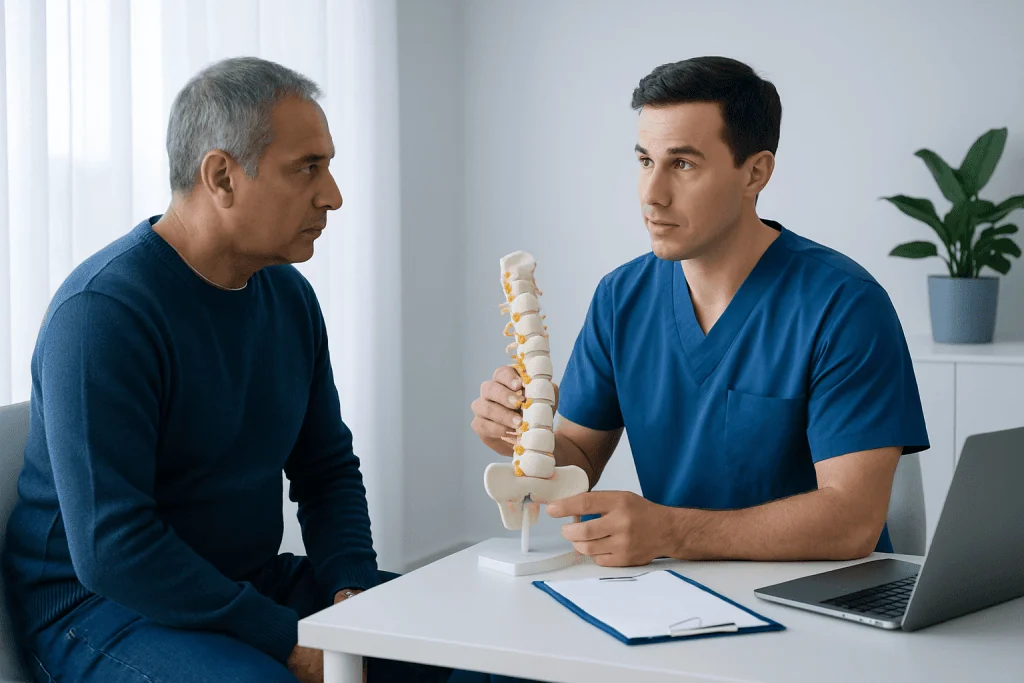
For most people, the first phase of care focuses on keeping the spine moving without repeatedly provoking severe symptoms. Complete bed rest is generally not helpful and can delay recovery. Short periods of relative rest may be appropriate during intense pain, but gentle walking and gradual return to normal activities are commonly encouraged as tolerated.
Physiotherapy can help restore comfortable movement, strengthen trunk and hip muscles, improve lifting and posture habits, and support a stepwise return to work, exercise, or sport. The exact programme should be individualized. Some people benefit from exercises that reduce leg symptoms, while others need a different approach depending on their movement pattern and examination findings.
A doctor may recommend pain-relieving medicines or anti-inflammatory medicines when appropriate, considering a person’s medical history, kidney and stomach health, blood-thinning medication, and other treatments. Heat or cold packs may offer short-term comfort. These measures aim to make movement and rehabilitation possible; they are not a substitute for assessment when neurological symptoms are present.
- Stay as active as symptoms allow, avoiding repeated movements that clearly worsen leg pain.
- Use a gradual rehabilitation plan rather than returning suddenly to heavy lifting or high-impact activity.
- Seek individualized advice before starting medicines, particularly during pregnancy or with chronic medical conditions.
When Injections or Surgery May Be Considered
If leg pain related to a compressed nerve remains limiting despite appropriate conservative care, a specialist may consider an image-guided epidural steroid injection. The medicine is placed near the irritated nerve to reduce inflammation and may provide a period of pain relief that helps a person participate in rehabilitation. Response varies, and an injection does not remove the disc bulge or prevent every recurrence.
Surgery is not routinely needed for a bulging disc. It may be considered when leg pain remains severe and disabling, objective weakness persists or progresses, or symptoms and imaging clearly show nerve compression that has not responded to non-surgical care. The most common operation for a symptomatic lumbar disc herniation is a discectomy or microdiscectomy, in which the surgeon removes the portion of disc material pressing on the nerve.
The expected benefit of surgery is usually faster relief of leg pain for appropriately selected patients. Back pain may improve less predictably because it can have several sources. A spine surgeon will explain whether symptoms, examination findings, and imaging support surgery and whether a non-operative approach remains reasonable.
What Happens During Lumbar Disc Surgery
Before surgery, the care team reviews symptoms, medicines, medical conditions, imaging, and anaesthetic suitability. The surgical plan is based on the affected spinal level and nerve. Patients are usually asked about medicines that can increase bleeding risk and are given individualized instructions for eating, drinking, and preparation before the procedure.
During a discectomy or microdiscectomy, the patient receives anaesthesia. The surgeon makes a small incision in the lower back and carefully accesses the affected area of the spine. Using magnification or minimally invasive techniques where suitable, the surgeon removes disc fragments or tissue that are compressing the nerve while preserving as much normal structure as possible.
After the procedure, the person is monitored as the anaesthetic wears off and is usually encouraged to stand and walk when it is safe. Hospital stay depends on the procedure, overall health, pain control, and recovery progress. The surgical team provides specific instructions for wound care, activity, driving, work, and follow-up.
Recovery, Benefits and Possible Risks
Recovery from a painful disc episode is individual. With conservative care, improvement may occur over several weeks, although numbness or weakness can take longer to settle. A rehabilitation plan often progresses from comfortable walking and mobility work to strengthening, work-specific activities, and eventually higher-demand exercise.
After lumbar disc surgery, many people experience earlier improvement in radiating leg pain, but recovery still requires pacing. Light daily activities may resume relatively soon for some patients, while heavier physical work, prolonged sitting, twisting, and lifting usually require a more gradual return. Follow-up appointments help the team assess healing, nerve recovery, and readiness for activity progression.
Potential benefits of surgery include relief of nerve-related leg pain, improved walking and function, and prevention of further nerve damage in selected cases. Risks, although uncommon, can include infection, bleeding, blood clots, fluid leak around spinal nerves, nerve injury, ongoing symptoms, scar-related pain, and recurrent disc herniation. A surgeon can discuss the individual balance of expected benefits and risks before treatment.
Self-Care and Reducing Future Episodes
Not every disc problem can be prevented, but spine-friendly habits can reduce avoidable strain and support long-term function. Regular physical activity, progressive core and hip strengthening, good sleep, and maintaining a weight that is appropriate for the individual can all be helpful. Smoking cessation is also important, as smoking can negatively affect spinal-disc health and surgical healing.
When lifting, it can help to keep the object close to the body, bend through the hips and knees, avoid twisting while carrying a load, and ask for help with heavy or awkward objects. Workstation adjustments and regular movement breaks may be useful for people who sit or drive for long periods.
Symptoms should guide activity. Mild discomfort during recovery can be common, but increasing pain that travels farther down the leg, new numbness, or weakness should be discussed with a clinician. People should avoid repeatedly testing painful movements or following aggressive exercise programmes that significantly worsen nerve symptoms.
When to Seek Medical Care
A medical assessment is appropriate for persistent lower-back pain, leg pain, tingling, numbness, or weakness, especially when symptoms interfere with sleep, walking, work, or daily life. A clinician can identify other possible causes of pain and determine whether imaging or referral to a spine specialist is needed. Imaging is not always necessary early on, but it can be important when symptoms are severe, unusual, or not improving.
Urgent medical care is needed for new difficulty controlling the bladder or bowel, inability to pass urine, numbness in the groin, genitals, or buttock area, or rapidly worsening leg weakness. These can be signs of serious nerve compression requiring prompt assessment. Immediate evaluation is also important after major trauma or when back pain occurs with fever, unexplained weight loss, or a history that raises concern for infection or cancer.
Acibadem International’s multidisciplinary spine specialists in JCI-accredited hospitals evaluate and treat lower-back disc conditions for international patients, coordinating imaging, rehabilitation, pain management, and surgery when needed.
Frequently asked questions
Can a bulging disc in the lower back heal without surgery?
Many people improve without surgery as inflammation settles and the body adapts over time. Activity modification, physiotherapy, and clinician-guided pain management are often effective. Surgery may be considered if disabling nerve symptoms persist or weakness progresses.
How long does it take for a bulging disc to improve?
The timeline varies depending on the degree of nerve irritation, overall health, work demands, and treatment response. Some people improve over several weeks, while recovery from numbness or weakness may take longer. Ongoing or worsening symptoms should be reviewed by a clinician.
Is walking good for a bulging disc in the lower back?
Gentle walking is often helpful because it prevents prolonged inactivity and can support recovery. The distance and pace should be adjusted so that symptoms do not significantly worsen. If walking causes increasing leg weakness, severe pain, or new neurological symptoms, medical advice is needed.
What is the best treatment for a bulging disc?
There is no single best treatment for everyone. The appropriate plan depends on whether the disc is causing back pain alone or compressing a nerve, as well as the severity and duration of symptoms. Most treatment plans begin conservatively and progress only if necessary.
When is surgery needed for a bulging disc?
Surgery may be appropriate for persistent, severe leg pain that has not improved with suitable non-surgical treatment, or for confirmed nerve compression with worsening weakness. Emergency surgery may be needed for symptoms suggesting cauda equina syndrome, such as bladder or bowel changes and saddle-area numbness. A spine surgeon determines suitability after a full assessment.
Can a bulging disc return after surgery?
A recurrent disc herniation can occur after surgery, although many people recover well. Following the rehabilitation plan, returning gradually to lifting and exercise, and avoiding smoking can support recovery. New recurrent leg pain, numbness, or weakness should be assessed by the treating team.
References
- National Institute of Neurological Disorders and Stroke
- American Academy of Orthopaedic Surgeons
- North American Spine Society
- National Institute for Health and Care Excellence
This article is for general information only and is not a substitute for professional medical advice. Please consult a qualified doctor about your individual situation.
Joint and spine care in Turkey — expert assessment & treatment
JCI-accredited · board-certified surgeons · reply within 24h
Add us as a Preferred Source to see more of our trusted health content across Google Search, AI Overviews and Discover.