Tremor in Children: Causes, Evaluation, and When to See a Specialist
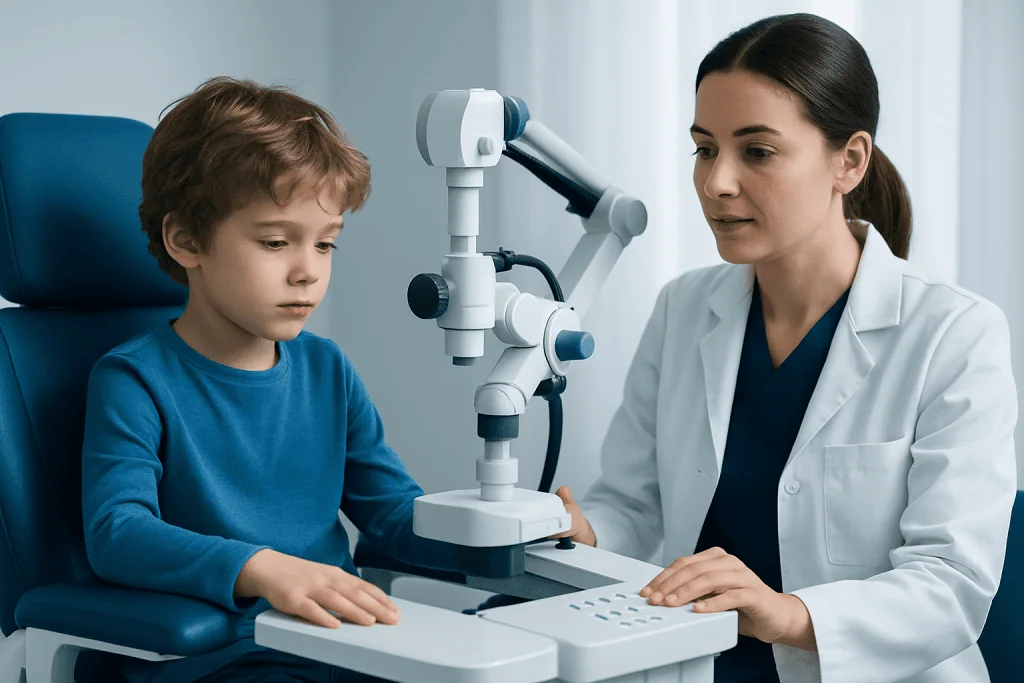
Tremor in children can have many causes, from normal physiologic shaking to neurological, metabolic, medication-related, or inherited conditions. The pattern of tremor matters: when it happens, which body parts are involved, and whether other symptoms are present help guide diagnosis.
Key Takeaways
- Tremor in children can have many causes, from normal physiologic shaking to neurological, metabolic, medication-related, or inherited conditions.
- The pattern of tremor matters: when it happens, which body parts are involved, and whether other symptoms are present help guide diagnosis.
- A pediatric neurologist may recommend blood tests, imaging, or other studies when tremor is new, progressive, or associated with weakness, imbalance, or developmental concerns.
- Treatment depends on the cause and may include reassurance, trigger management, therapy, medication review, or condition-specific care.
- Children should be assessed promptly if tremor starts suddenly, follows a head injury, or appears with seizures, severe headache, confusion, or difficulty walking.
Tremor in children means rhythmic, involuntary shaking of part of the body, most often the hands. Many causes are mild or temporary, but careful evaluation is important when tremor is persistent, worsening, or affects daily life.
Overview of tremor in children
Tremor in children refers to repeated, rhythmic shaking that happens without the child intending it. It may affect the hands, arms, head, voice, legs, or, less commonly, other parts of the body. Parents often notice it when a child is holding a spoon, writing, reaching for an object, or trying to keep the hands still.
Not all shaking is the same. Some children have a very mild, normal physiologic tremor that becomes more noticeable with stress, tiredness, fever, excitement, or too much caffeine. Others may have tremor related to medication side effects, thyroid problems, low blood sugar, anxiety, inherited movement disorders, or neurological conditions.
In many cases, tremor is not dangerous, but it should not be ignored if it is persistent, worsening, one-sided, or interfering with school, handwriting, eating, sports, or sleep. A structured medical evaluation helps determine whether the tremor is benign, temporary, or a sign of an underlying problem that needs treatment.
Symptoms and types of tremor
Children with tremor may describe their hands as shaky, weak, or hard to control, although true weakness is not always present. Parents may notice messy handwriting, difficulty using utensils, spilling drinks, shaky drawing, or trembling during tasks that require fine motor control. In some children, the tremor is subtle and appears only in stressful situations; in others, it is visible daily.
Doctors often classify tremor by when it occurs. Rest tremor appears when a body part is relaxed. Action tremor happens with movement and includes postural tremor, seen when holding the arms out, and intention tremor, which becomes more obvious as the hand approaches a target. This pattern can offer important clues about the cause.
Associated features are also important. A child may have headache, dizziness, imbalance, stiffness, clumsiness, developmental regression, behavior changes, weight loss, palpitations, or fatigue. These symptoms do not automatically mean something serious, but they help guide the next steps in assessment.
- Physiologic tremor: a mild, often normal tremor that may increase with stress or fatigue
- Essential tremor: an action tremor that can run in families
- Intention tremor: more noticeable during goal-directed movement
- Rest tremor: less common in children and may need closer evaluation
- Functional tremor: tremor related to altered nervous system function rather than structural disease
Causes and risk factors
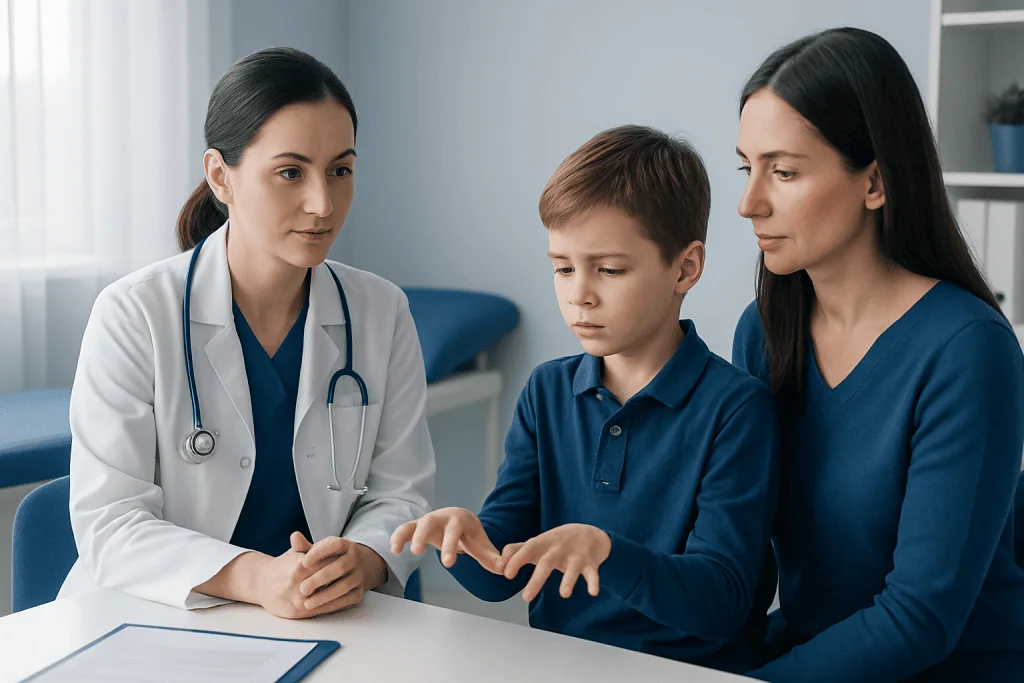
The causes of tremor in children range from common and temporary to rare and more complex. A normal physiologic tremor may become more visible when a child is anxious, sleep-deprived, physically exhausted, feverish, or has had caffeine or certain energy drinks. Some medicines, including stimulants, asthma medications, and some antidepressants, can also increase shakiness in sensitive children.
Medical conditions may contribute as well. Thyroid overactivity, low blood sugar, dehydration, electrolyte imbalance, liver or kidney disease, and some vitamin or nutritional problems can lead to tremor. Inherited movement disorders such as essential tremor are another possibility, especially when there is a family history of similar shaking in parents or grandparents.
Neurological causes are less common but important to consider. These may include cerebellar disorders, head injury, demyelinating disease, certain metabolic or genetic conditions, and other disorders that affect how the brain controls movement. Depending on the child’s symptoms, specialists may also consider other movement disorders such as Parkinsonian syndromes, although classic Parkinson’s disease is rare in children.
Risk factors that make evaluation more important include sudden onset, steadily progressive symptoms, tremor affecting only one side, associated weakness or imbalance, changes in school performance or development, and tremor that interferes with daily activities. A detailed history often provides the first and most useful clues.
How tremor is evaluated in children
Evaluation begins with a careful medical history and neurological examination. The doctor will ask when the tremor started, whether it is constant or intermittent, what makes it better or worse, and whether it happens at rest or during activity. They will also review medications, recent illness, sleep patterns, stress, family history, and any accompanying symptoms such as headaches, weakness, falls, or changes in behavior.
During the examination, the clinician may watch the child write, draw a spiral, hold the arms outstretched, pour water, touch a target, or perform other age-appropriate tasks. This helps define the tremor pattern and assess coordination, muscle tone, reflexes, gait, eye movements, and strength. In many children, the exam can strongly narrow the possible causes.
Tests are chosen according to the suspected cause rather than done routinely for every child. Blood tests may check glucose, thyroid function, liver and kidney function, electrolytes, and other metabolic markers. If there are signs suggesting a structural brain problem or cerebellar involvement, MRI imaging may be recommended. In selected cases, further evaluation can include neurophysiology studies, genetic testing, or referral for neurology assessment.
The aim of evaluation is not only to name the tremor type but also to determine whether it is affecting the child’s quality of life and whether treatment is needed. Reassurance may be enough for some children, while others benefit from a broader multidisciplinary plan.
Treatment options
Treatment for tremor in children depends on the cause. If the tremor is a mild physiologic tremor, no specific medical treatment may be needed. In these cases, improving sleep, reducing stress, maintaining hydration, and avoiding caffeine or stimulants can make a noticeable difference. If a medication seems to be contributing, the prescribing doctor may consider adjusting or changing it.
When an underlying medical condition is found, treatment focuses on that condition. Correcting thyroid imbalance, managing low blood sugar, addressing nutritional deficiency, or treating a neurological disorder may reduce or resolve the tremor. Some children with persistent essential tremor or function-limiting shaking may be considered for medication, but decisions are individualized and made carefully by a pediatric specialist.
Supportive therapies can also help. Occupational therapy may improve handwriting, utensil use, and fine motor tasks. Physical therapy may be helpful when balance or coordination is affected. If emotional stress worsens tremor, psychological support and practical coping strategies can be valuable, especially for school-age children and teenagers.
For children with more complex movement disorders, care may involve pediatric neurologists, rehabilitation specialists, psychologists, and other experts. In some cases, further workup and management overlap with specialized movement disorder care to better define the tremor type and tailor treatment.
Prevention and self-care at home
Not every type of tremor can be prevented, but simple daily habits may reduce symptoms and help families track patterns. A regular sleep schedule, balanced meals, good hydration, and steady physical activity support the nervous system and can lessen shakiness triggered by fatigue or low energy. Limiting caffeine-containing drinks, supplements, and other stimulants is especially important in older children and adolescents.
Parents can keep a short symptom diary noting when the tremor appears, how long it lasts, what the child was doing, and whether there were triggers such as stress, hunger, fever, or medication timing. Videos recorded at home can also be useful, since tremor may not always be visible during a clinic visit. These observations often help the specialist make a more accurate diagnosis.
At school and home, practical adjustments may reduce frustration. Larger-grip pens, extra time for handwriting, covered cups, and supportive seating may help children whose tremor affects fine motor tasks. Reassurance matters too: children should understand that the symptom is being taken seriously and that many causes are manageable.
When to see a specialist
A child should be evaluated by a doctor if tremor persists, recurs often, worsens over time, or interferes with everyday activities. Referral to a pediatric neurologist is especially helpful when the tremor is difficult to classify, starts at a very young age, or occurs together with developmental delays, coordination problems, unusual eye movements, or muscle stiffness.
Urgent medical care is needed if tremor begins suddenly and is accompanied by severe headache, confusion, seizures, weakness, difficulty speaking, trouble walking, or recent head injury. These features suggest that the shaking may be part of a broader neurological problem rather than an isolated tremor.
Families who need specialist evaluation may benefit from centers with pediatric neurology, imaging, rehabilitation, and laboratory support in one setting. Acibadem International’s multidisciplinary specialists and JCI-accredited hospitals evaluate and treat children with tremor and related neurological conditions for international patients when specialist care is needed.
Even when the cause turns out to be mild, an expert assessment can bring reassurance, practical guidance, and a plan for monitoring. Early evaluation is the best way to understand what the tremor means for that particular child.
Frequently asked questions
Is tremor in children always a sign of a serious neurological disease?
No. Many children have mild tremor related to normal physiologic shaking, stress, fatigue, fever, or medication effects. However, persistent or worsening tremor should still be assessed to rule out medical or neurological causes.
What is the most common type of tremor seen in children?
A mild enhanced physiologic tremor is common and may become more noticeable with anxiety, lack of sleep, or stimulants such as caffeine. Essential tremor can also occur in children, especially when there is a family history.
How do doctors tell whether a child’s tremor is benign or needs more testing?
Doctors look at when the tremor happens, what body parts are involved, whether it affects daily activities, and whether other neurological or medical symptoms are present. The child’s history, physical examination, and selected tests help determine whether further evaluation is needed.
Can anxiety cause tremor in children?
Yes. Anxiety, excitement, and stress can make a normal physiologic tremor more obvious, especially in the hands. Still, tremor should not automatically be blamed on anxiety without a proper medical review.
Will my child need an MRI for tremor?
Not always. MRI is usually reserved for children whose symptoms, examination findings, or history suggest a structural or neurological cause that needs imaging. Many children can be evaluated first through history, examination, and basic laboratory tests.
Can tremor in children be treated?
Yes, but treatment depends on the cause. Some children only need reassurance and lifestyle adjustments, while others need treatment for an underlying condition, therapy to improve function, or follow-up with a pediatric neurologist.
References
- American Academy of Pediatrics
- National Institute of Neurological Disorders and Stroke
- MedlinePlus
- Merck Manual Professional Edition
- International Parkinson and Movement Disorder Society
This article is for general information only and is not a substitute for professional medical advice. Please consult a qualified doctor about your individual situation.
Tremor in Turkey — costs, top hospitals & a free quote
JCI-accredited · board-certified surgeons · reply within 24h
Add us as a Preferred Source to see more of our trusted health content across Google Search, AI Overviews and Discover.

More from the Health Library



Related Specialists

Prof. Dr. Javad Parvizi
Orthopedic Surgery & Traumatology
Assoc. Prof. Dr. Murat Baştopcu
Cardiovascular Surgery
Dt. Emin Gökalp Baş
Oral & Dental Health
Dr. Funda Helvacıoğlu
Cardiology