Tympanic Membrane — Explained by Medical Evidence, Not Myths

The tympanic membrane, or eardrum, helps transmit sound and protects the middle ear from water, bacteria, and injury. Common problems include infection-related inflammation, fluid buildup, pressure injury, and perforation from trauma or sudden pressure changes.
Key Takeaways
- The tympanic membrane, or eardrum, helps transmit sound and protects the middle ear from water, bacteria, and injury.
- Common problems include infection-related inflammation, fluid buildup, pressure injury, and perforation from trauma or sudden pressure changes.
- Many small tympanic membrane perforations heal on their own, but persistent pain, drainage, fever, dizziness, or hearing loss should be assessed by a doctor.
- Diagnosis usually involves an ear examination and sometimes hearing tests or specialized imaging when complications are suspected.
- Keeping the ear dry and avoiding cotton swabs or inserting objects into the ear can help prevent additional damage.
The tympanic membrane is the eardrum: a thin, delicate tissue that vibrates with sound and forms a barrier between the outer and middle ear. When it becomes inflamed, scarred, or perforated, symptoms such as pain, hearing changes, ringing, or drainage can occur, and treatment depends on the cause and severity.
What the Tympanic Membrane Is and Why It Matters
The tympanic membrane is the medical name for the eardrum. It is a thin, flexible layer of tissue that separates the outer ear canal from the middle ear. Its main jobs are to vibrate in response to sound and to act as a protective barrier, helping keep water, bacteria, and debris away from the delicate structures deeper in the ear.
When sound waves enter the ear canal, they strike the tympanic membrane and cause it to move. These tiny movements are passed to the hearing bones in the middle ear, which then send sound energy onward to the inner ear. Because of this role, even a small problem affecting the tympanic membrane can influence hearing quality.
The eardrum is also important for pressure balance. The middle ear connects to the back of the nose through the Eustachian tube, which helps equalize pressure on both sides of the membrane. If pressure is not balanced, the tympanic membrane may feel stretched, retracted, or painful, especially during colds, flights, or rapid altitude changes.
How the Eardrum Is Structured
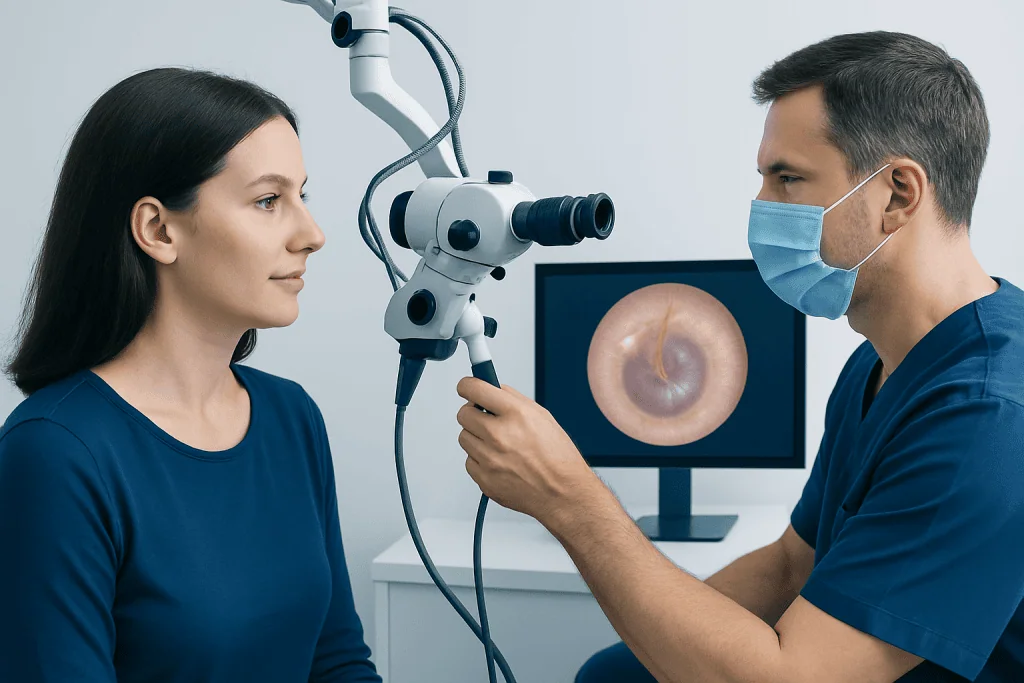
Although it looks simple, the tympanic membrane has a specialized structure. It is thin yet strong enough to respond to sound while resisting ordinary daily stress. It has layers of tissue that provide flexibility and support, and it is positioned at a slight angle rather than lying flat at the end of the ear canal.
Doctors often describe parts of the tympanic membrane by their appearance during an ear examination. A healthy eardrum is usually pearly gray and semi-transparent. Changes in color, shape, or mobility can suggest infection, fluid behind the membrane, scarring, retraction, or a perforation.
The eardrum works closely with the middle ear bones and surrounding ear spaces. For this reason, symptoms that seem to involve only the outer ear may actually reflect a problem deeper inside. Conditions such as ear infection or Eustachian tube dysfunction can affect the membrane’s movement and comfort even when no tear is present.
Symptoms of Tympanic Membrane Problems

Symptoms vary depending on whether the tympanic membrane is irritated, infected, under pressure, or torn. Some people notice sudden sharp ear pain, while others mainly experience muffled hearing or a sensation of fullness. Ringing in the ear, called tinnitus, may also occur.
If the membrane is perforated, there may be drainage from the ear. This fluid can be clear, bloody, or pus-like depending on the cause. In some cases, pain improves suddenly after a rupture because built-up pressure in the middle ear is released, but hearing may temporarily worsen.
Other symptoms can point to a more significant ear problem rather than the membrane alone. These include dizziness, spinning sensation, nausea, fever, marked hearing loss, or facial weakness. Children may show fewer specific symptoms and instead become irritable, pull at the ear, sleep poorly, or seem less responsive to sound.
- Ear pain or pressure
- Muffled or reduced hearing
- Ear drainage
- Ringing or buzzing in the ear
- A popping sensation after pressure changes or injury
- Dizziness or balance symptoms in some cases
Common Causes and Risk Factors
Infection is one of the most common reasons the tympanic membrane becomes inflamed or perforated. A middle ear infection can cause pressure from trapped fluid and pus, stretching the eardrum until it becomes painful and, in some cases, tears. Repeated infections may also lead to scarring or long-term changes in the membrane.
Trauma is another important cause. This may happen if an object is inserted into the ear canal, including cotton swabs, hairpins, or earbuds used improperly. A direct blow to the ear, a head injury, a loud blast, or sudden pressure changes from diving or air travel can also damage the eardrum. These pressure-related injuries are known as barotrauma.
Some people are more likely to develop eardrum problems than others. Risk factors include frequent upper respiratory infections, allergies that affect Eustachian tube function, a history of chronic ear disease, smoking exposure, and activities involving rapid pressure shifts. Ongoing middle ear disease, including conditions such as cholesteatoma, can also affect the tympanic membrane and requires specialist care.
How Doctors Diagnose Tympanic Membrane Conditions
Diagnosis usually begins with a medical history and a careful ear examination. A doctor may ask about recent infections, flying, swimming, trauma, ear cleaning habits, and hearing changes. Using an otoscope, the doctor can look for redness, bulging, fluid, retraction, perforation, crusting, or drainage.
Sometimes a more detailed microscopic ear examination is needed, especially if the view is blocked by wax or if a small perforation is suspected. Hearing tests may be recommended when symptoms persist, when hearing loss seems significant, or when surgery is being considered. These tests help determine how well sound is moving through the ear and whether the inner ear is also affected.
Additional tests are selected based on the situation rather than used routinely. Tympanometry can assess eardrum movement and middle ear pressure. Imaging may be considered if there is concern about complications, chronic disease, or nearby bone involvement. In many cases, people with persistent perforations or repeated infections are referred for ENT evaluation and treatment to guide next steps safely.
Treatment Options and Healing
Treatment depends on the cause of the tympanic membrane problem. If there is infection, the doctor may recommend medication based on the type and severity of the problem. If there is pressure-related discomfort without infection, supportive care and treatment of nasal congestion or allergies may help improve Eustachian tube function.
Many small perforations heal on their own over several weeks. During this time, keeping the ear dry is important. Doctors often advise avoiding swimming, using ear protection while showering, and not placing drops into the ear unless they are specifically prescribed and known to be safe for a perforated eardrum.
Persistent perforations, repeated infections, or more significant hearing loss may need procedural or surgical treatment. Depending on the individual case, an ear specialist may recommend repair of the eardrum, often called tympanoplasty, or other surgery if middle ear disease is present. If hearing remains affected after recovery, further assessment through audiology evaluation may be useful to clarify the degree and type of hearing change.
Antibiotics are not necessary for every ear complaint, and pain alone does not always mean the eardrum is torn. This is one reason medical assessment matters: treatment should match the cause. A careful diagnosis helps avoid unnecessary medication while making sure complications are not missed.
Prevention and Self-Care
Simple habits can help protect the tympanic membrane. The most important is not inserting objects into the ear canal. Even cotton swabs can push wax deeper, irritate the canal, or accidentally tear the eardrum. In most cases, the ear cleans itself naturally, and wax only needs treatment if it causes symptoms or blocks examination.
Protecting the ear during pressure changes can also reduce risk. Swallowing, yawning, or chewing during flights may help equalize pressure. People with colds, sinus congestion, or allergies may be more prone to discomfort during altitude change and may benefit from discussing preventive measures with a clinician before travel or diving.
General measures that lower infection risk are also helpful. Good hand hygiene, avoiding tobacco smoke exposure, and managing allergy symptoms may support healthier Eustachian tube function. For people with recurring ear problems, follow-up with an ENT specialist can help address underlying causes rather than only treating repeated flare-ups.
When to Seek Medical Care
Medical care is advisable if ear pain is severe, if hearing suddenly changes, or if fluid drains from the ear. Evaluation is also important after a head injury, after a loud blast, or after a pressure-related event such as diving or flying if symptoms do not settle promptly. Children with fever, persistent crying, or possible hearing difficulty should also be examined.
Urgent assessment is especially important if ear symptoms are accompanied by dizziness, vomiting, facial weakness, high fever, worsening headache, or significant bleeding. These features can suggest a more complicated problem that needs prompt attention. Ongoing symptoms after an apparent perforation also deserve review, even if pain has improved.
Near the end of evaluation and treatment planning, some people may need multidisciplinary care, especially when chronic infection, hearing loss, or surgical repair is involved. Acibadem International’s multidisciplinary specialists and JCI-accredited hospitals diagnose and treat ear conditions for international patients, including cases that require advanced ENT assessment or eardrum repair.
Frequently asked questions
Is the tympanic membrane the same as the eardrum?
Yes. Tympanic membrane is the medical term for the eardrum. It is the thin tissue that separates the outer ear from the middle ear and helps convert sound waves into mechanical vibrations for hearing.
Can a torn tympanic membrane heal by itself?
Many small perforations do heal on their own, especially if infection is controlled and the ear is kept dry. Healing time varies, so follow-up is important if symptoms continue or hearing does not improve.
What does a perforated eardrum feel like?
A perforated eardrum may cause sudden pain, a popping sensation, ear drainage, reduced hearing, ringing, or dizziness. Some people notice that intense pressure pain improves after the tear occurs because trapped fluid or pressure is released.
Should water be kept out of the ear if the tympanic membrane is damaged?
Yes, in most cases doctors advise keeping the ear dry when a perforation is present or suspected. Water entering the middle ear can increase irritation or infection risk, so it is best to ask a clinician how to protect the ear during bathing or swimming.
Can cotton swabs damage the tympanic membrane?
Yes. Cotton swabs can push wax deeper into the ear canal and may injure the eardrum if inserted too far. The ear usually cleans itself, so objects should not be placed inside the canal unless a clinician advises it.
When is surgery needed for tympanic membrane problems?
Surgery may be considered when a perforation does not heal, infections keep returning, or hearing loss remains significant. An ENT specialist decides this after examining the ear and, when needed, reviewing hearing test results.
References
- American Academy of Otolaryngology–Head and Neck Surgery
- National Institute on Deafness and Other Communication Disorders
- Merck Manual Professional Edition
- Mayo Clinic
- Centers for Disease Control and Prevention
This article is for general information only and is not a substitute for professional medical advice. Please consult a qualified doctor about your individual situation.
Explore treatments in Turkey — costs, top hospitals & a free quote
JCI-accredited · board-certified surgeons · reply within 24h
Add us as a Preferred Source to see more of our trusted health content across Google Search, AI Overviews and Discover.