Under Arm Pain Left: Possible Causes and When to Seek Care

Left underarm pain is commonly caused by muscle strain, irritation of the skin, or a temporary swollen lymph node. Pain that changes with arm or shoulder movement is more likely to involve muscles, tendons, joints, or nerves.
Key Takeaways
- Left underarm pain is commonly caused by muscle strain, irritation of the skin, or a temporary swollen lymph node.
- Pain that changes with arm or shoulder movement is more likely to involve muscles, tendons, joints, or nerves.
- A new persistent lump, unexplained swelling, fever, breast changes, or ongoing pain should be assessed by a clinician.
- Sudden chest pressure, shortness of breath, fainting, sweating, or pain spreading to the arm, jaw, back, or shoulder requires emergency care.
- Most causes are treatable, and an examination can guide whether tests such as imaging or blood work are needed.
Under arm pain left is often related to a minor muscle or skin problem, but it may also arise from lymph nodes, nerves, the shoulder, chest, or breast tissue. The pattern of pain and any associated symptoms help determine whether home care, a routine appointment, or urgent assessment is appropriate.
Overview: What Can Under Arm Pain Left Mean?
Under arm pain left can happen for several reasons. Many cases are linked to overuse of the chest, shoulder, or upper-arm muscles; friction or inflammation of the skin; or a lymph node reacting to a recent infection. These causes are often temporary and improve as the underlying irritation settles.
The left armpit is close to the shoulder, ribs, chest wall, breast tissue, and important nerves and lymph nodes. For this reason, discomfort may begin in the armpit itself or be felt there after starting in another nearby area. Pain may be sharp, aching, burning, tender to touch, or present only during particular movements.
Less commonly, pain under the left arm can be part of a chest or heart-related problem. Symptoms such as pressure or tightness in the chest, breathlessness, nausea, sweating, or pain spreading to the jaw or left arm should not be assumed to be a muscle problem and need urgent medical attention.
How the Pain Pattern Can Offer Clues
The timing and behavior of pain can provide useful information, although they cannot confirm a diagnosis on their own. Pain that begins after lifting, exercise, repetitive work, a new workout, or carrying a heavy bag may point toward strained muscles around the chest wall, shoulder, or upper arm. It may worsen when the arm is raised, rotated, or pulled across the body.
Tenderness in the skin, redness, a rash, shaving irritation, or a painful bump may suggest a local skin or hair-follicle condition. A small tender lump may be an enlarged lymph node, particularly after a cold, skin infection, vaccination, or infection affecting the hand or arm on the same side.
Burning, tingling, numbness, or pain that travels down the arm can occur when a nerve is irritated in the neck, shoulder, or upper chest. Pain linked with breast swelling, a breast lump, nipple changes, or changes in skin texture should be evaluated, regardless of sex.
- Movement-related pain: often musculoskeletal or nerve-related.
- Visible skin changes: may indicate irritation, infection, or an inflammatory condition.
- A lump or swelling: may involve lymph nodes, skin structures, or breast tissue.
- Chest symptoms: may require urgent assessment, especially if new or severe.
Common Causes of Left Underarm Pain

Muscle strain is one of the most frequent explanations. The pectoral chest muscles, muscles between the ribs, shoulder muscles, and muscles of the upper arm can all cause pain near the armpit. Strain may occur after exercise, sports, lifting, coughing, poor posture, or repeated overhead activity. Minor injuries usually improve gradually with rest and avoiding movements that clearly aggravate symptoms.
Skin-related causes include contact irritation from deodorants or detergents, ingrown hairs, inflamed hair follicles, cysts, and boils. Hidradenitis suppurativa is a long-term inflammatory skin condition that can cause recurring painful nodules, drainage, and scarring in areas such as the armpits. Recurrent painful underarm lumps should be discussed with a clinician rather than repeatedly treated at home.
Lymph nodes can become enlarged when the immune system responds to infection or inflammation. A node may feel tender and mobile for a short period, particularly alongside a recent sore throat, viral illness, skin wound, or vaccination. Nodes that are enlarging, hard, fixed in place, unexplained, or present for several weeks need medical review.
Other possible sources include shoulder disorders, arthritis, rib or chest-wall inflammation, and nerve irritation from the neck. Breast cancer is not the most common reason for armpit pain, but a persistent underarm lump or breast change deserves timely assessment because lymph nodes in the armpit are connected with the breast and chest area.
Could It Be Related to the Heart or Chest?
Heart-related discomfort does not always feel like severe central chest pain. Some people experience pressure, heaviness, squeezing, burning, or discomfort that spreads into the left shoulder, arm, upper back, neck, jaw, or underarm. It can occur with exertion or emotional stress, but symptoms may also occur at rest.
Features that make a heart or lung cause more concerning include chest pressure, shortness of breath, cold sweating, nausea, dizziness, palpitations, fainting, or a sudden sense of being unwell. These symptoms can occur with conditions such as a heart attack or a blood clot in the lung, and they require emergency assessment rather than waiting to see whether the pain passes.
Not all chest-wall pain is cardiac. Pain that is clearly reproduced by pressing on a sore muscle or moving the shoulder is more often musculoskeletal. Even so, people with new symptoms, known heart disease, diabetes, high blood pressure, high cholesterol, or a history of smoking should seek medical advice promptly if there is any doubt. Coronary artery disease can cause chest discomfort that radiates beyond the chest.
How Doctors Assess Underarm Pain
A clinician will ask when the pain started, what it feels like, whether it is linked to activity, and whether there has been a recent illness, injury, vaccination, new product use, or skin lesion. They will also ask about chest symptoms, arm weakness or numbness, fever, weight changes, and breast or lymph-node concerns.
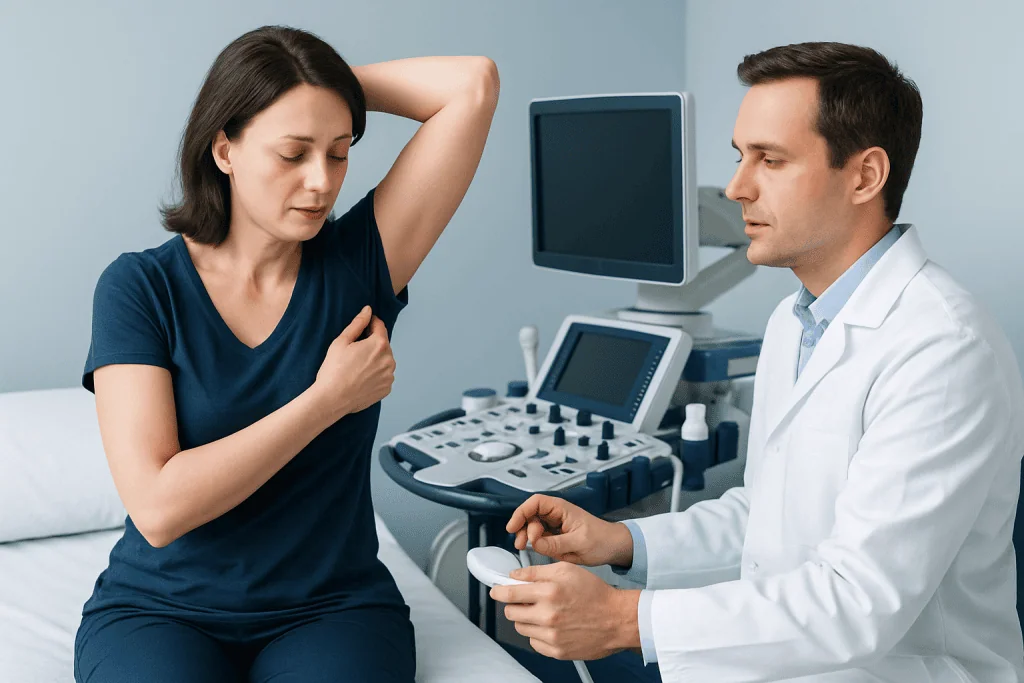
The examination may include the skin of the armpit, lymph nodes, breast or chest tissue when appropriate, shoulder movement, neck, arm strength, and circulation. Depending on the findings, a clinician may recommend blood tests, an ultrasound of the armpit or breast area, a chest X-ray, mammography, electrocardiography, or other imaging.
Testing is not needed for every person with a mild, recent muscle strain. It is more likely to be useful when pain is persistent, there is a lump or swelling, symptoms are unexplained, or the history suggests a problem involving the breast, chest, heart, nerves, or infection. A careful assessment helps avoid both unnecessary testing and delayed diagnosis.
Treatment and Self-Care
Treatment depends on the cause. For a mild suspected muscle strain, reducing activities that trigger pain for a short time, maintaining gentle comfortable movement, and using a cool or warm compress may help. Over-the-counter pain relief may be appropriate for some people, but it should be used according to the label and after checking with a pharmacist or clinician if there are medical conditions, pregnancy, or regular medicines to consider.
Skin irritation may improve by avoiding fragranced or irritating products, wearing loose breathable clothing, and pausing shaving or waxing until the skin heals. Squeezing boils, cysts, or swollen lumps is not recommended because it can worsen inflammation or infection. Antibiotics, drainage, or specialist skin treatment may be needed for certain infections or recurrent conditions.
Shoulder, nerve, or chest-wall conditions may benefit from targeted rehabilitation once a clinician has identified the likely cause. Physical therapy and rehabilitation can support recovery by addressing movement, strength, posture, and safe return to activity when appropriate.
If an underlying breast, cardiac, infectious, or inflammatory condition is found, treatment will focus on that diagnosis. The aim is not only to control pain but also to manage the cause and reduce the chance of recurrence.
When to Seek Medical Care
Emergency care is needed for underarm pain left accompanied by new chest pressure or pain, shortness of breath, fainting, cold sweats, nausea, severe dizziness, or pain spreading to the jaw, back, shoulder, or arm. Emergency assessment is also appropriate for sudden severe symptoms, particularly in people with known heart or vascular disease.
A prompt medical appointment is advisable for a new or persistent lump in the armpit or breast, increasing swelling, redness with fever, pus or drainage, severe pain, an unexplained rash, or pain after a significant injury. Medical review is also important for numbness, weakness, persistent tingling, or reduced ability to move the shoulder or arm.
If the pain is mild but does not begin to improve within a reasonable period, keeps returning, or has no clear explanation, a clinician can help identify the cause. Acibadem International’s multidisciplinary specialists and JCI-accredited hospitals diagnose and treat a range of conditions affecting the breast, skin, musculoskeletal system, nerves, and heart for international patients.
Frequently asked questions
Is under arm pain left usually serious?
Most cases are not serious and are related to muscle strain, skin irritation, or a temporary reactive lymph node. However, persistent pain, a lump, fever, breast changes, or chest symptoms should be assessed by a healthcare professional.
Can a swollen lymph node cause pain under the left arm?
Yes. Lymph nodes in the armpit can become tender and enlarged while the body responds to an infection, inflammation, or sometimes a recent vaccination. A node that persists, grows, feels hard, or is not associated with an obvious cause should be checked.
Can sleeping position cause left armpit pain?
An awkward sleeping position can put pressure on the shoulder, chest wall, or nerves and lead to temporary discomfort around the armpit. Pain that continues despite changing position, or that is associated with numbness, weakness, or chest symptoms, should be medically reviewed.
When should left armpit pain be treated as an emergency?
It should be treated as an emergency if it occurs with chest pressure, breathlessness, sweating, nausea, fainting, severe dizziness, or pain radiating to the jaw, back, shoulder, or arm. These symptoms can indicate a potentially serious heart or lung problem.
Can breast problems cause underarm pain left?
Breast tissue and lymph nodes are connected to the underarm, so some breast conditions can cause armpit discomfort or a lump. A new breast lump, underarm lump, nipple discharge, skin dimpling, or persistent unexplained pain should be evaluated.
What should a person avoid doing with a painful armpit lump?
They should avoid squeezing, puncturing, or repeatedly pressing the lump, as this may increase irritation or introduce infection. It is safer to keep the area clean, avoid friction, and arrange an assessment if the lump is painful, enlarging, persistent, or accompanied by fever.
References
- American Heart Association
- Centers for Disease Control and Prevention
- National Health Service
- Mayo Clinic
- American Academy of Dermatology
This article is for general information only and is not a substitute for professional medical advice. Please consult a qualified doctor about your individual situation.
Joint and spine care in Turkey — expert assessment & treatment
JCI-accredited · board-certified surgeons · reply within 24h
Add us as a Preferred Source to see more of our trusted health content across Google Search, AI Overviews and Discover.