Understanding Blue Light Therapy: A Complete Patient Guide
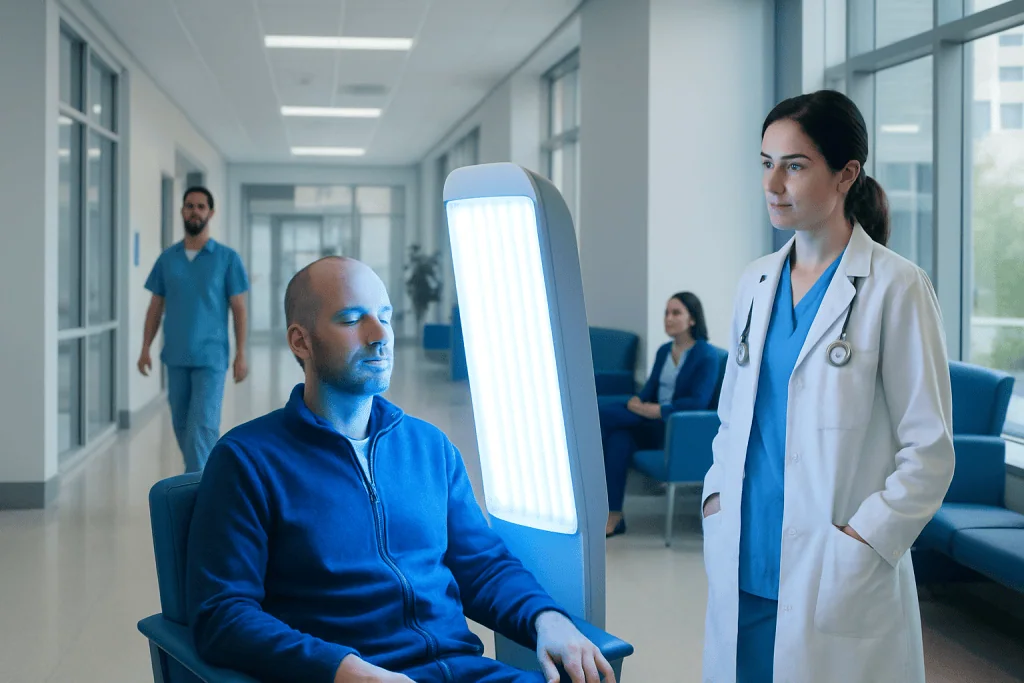
Blue light therapy uses specific wavelengths of visible light for medical purposes. It is commonly used for some skin conditions and for newborn jaundice under clinical supervision.
Key Takeaways
- Blue light therapy uses specific wavelengths of visible light for medical purposes.
- It is commonly used for some skin conditions and for newborn jaundice under clinical supervision.
- Treatment plans vary by condition, device type, skin sensitivity, and overall health.
- Possible side effects are usually mild but can include irritation, dryness, or light sensitivity.
- Medical evaluation is important because not every rash, acne flare, or skin lesion is suitable for blue light therapy.
Blue light therapy is a targeted treatment that uses a specific part of the visible light spectrum to help manage certain medical conditions, most often in dermatology and newborn care. Its benefits, risks, and results depend on why it is used, how it is delivered, and whether treatment is supervised by a qualified clinician.
What blue light therapy is and how it works
Blue light therapy is a treatment that exposes the skin or body to carefully controlled blue wavelengths of visible light. In medical settings, this light is used because it can create useful biological effects without the ionizing radiation associated with X-rays or similar technologies. The exact goal depends on the condition being treated. In some cases, blue light helps reduce bacteria on the skin. In others, it influences chemical processes in the body, such as the breakdown of bilirubin in newborn jaundice.
Rather than being a single treatment for one illness, blue light therapy is better understood as a tool. Doctors use it in different ways: as a stand-alone therapy, alongside medicines, or as part of a broader dermatology or neonatal care plan. The amount of light, length of exposure, treatment schedule, and type of device are all tailored to the person’s age, diagnosis, skin type, and overall health.
It is also important to separate medical blue light therapy from cosmetic home devices and from general screen-related “blue light” discussions. Consumer products may use lower-powered light and may not have the same evidence, precision, or safety standards as supervised medical treatment. For this reason, patients should not assume that all blue light devices work the same way or are suitable for the same problems.
When blue light therapy may be used
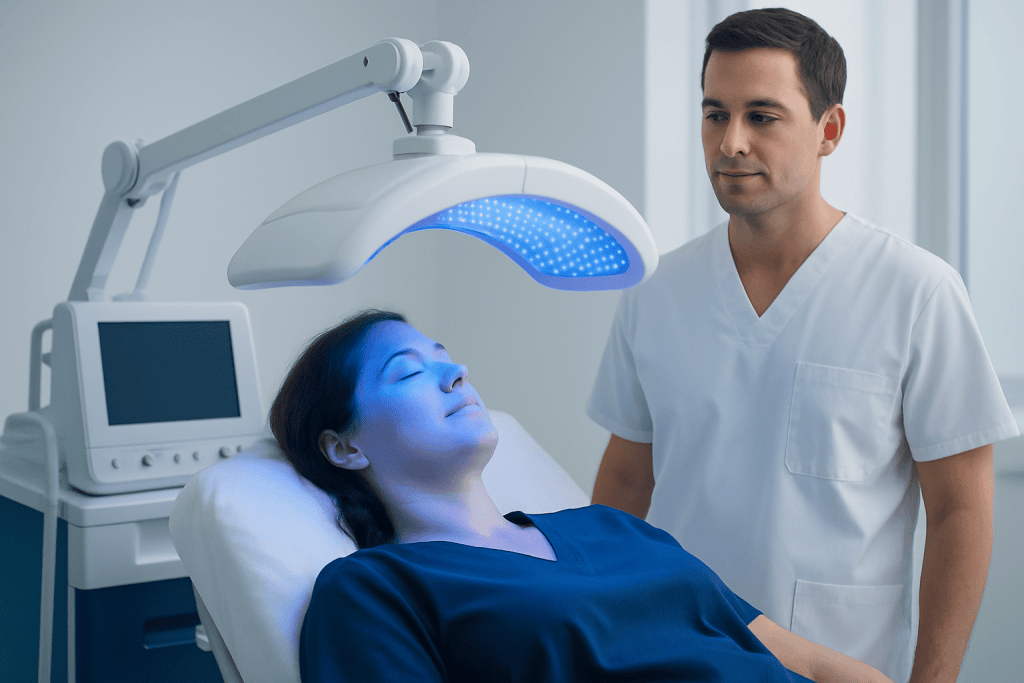
Blue light therapy is most commonly discussed in relation to skin care and newborn medicine. In dermatology, it may be used for inflammatory acne because certain blue wavelengths can affect acne-related bacteria on the skin. It may also have a role in selected precancerous skin changes when used in combination with a light-sensitizing medication, although that approach is often part of a broader photodynamic treatment plan rather than simple blue light exposure alone.
In newborn care, blue light phototherapy is a standard treatment for jaundice caused by elevated bilirubin. The light changes bilirubin into forms that the baby’s body can remove more easily. This use is very different from dermatology treatment: it involves different equipment, safety monitoring, and clinical goals.
In selected cases, a doctor may discuss blue light therapy as part of care for conditions related to skin inflammation, sun-damaged areas, or difficult acne that has not improved enough with skin care and medications. People who are concerned about persistent acne may also benefit from medical evaluation for related problems such as acne. Because skin changes can sometimes look similar, a proper diagnosis matters before choosing any light-based treatment.
- Inflammatory acne in some adolescents and adults
- Newborn jaundice under pediatric supervision
- Certain sun-damaged or precancerous skin lesions as part of a specialist-directed plan
- Selected situations where a dermatologist recommends light-based care alongside other treatments
Who may benefit and who may need extra caution

People who may benefit from blue light therapy are those with a clearly diagnosed condition that responds to this type of light. For acne, it may be considered when breakouts are persistent, when topical products cause irritation, or when a clinician wants to reduce reliance on some medications. For newborn jaundice, the benefit is often clear and time-sensitive, but the therapy must be guided and monitored by the neonatal team.
Extra caution is needed for people with very sensitive skin, a history of reactions to light, or medical conditions that increase photosensitivity. Certain medications can also make the skin or eyes more sensitive to light. These may include some antibiotics, acne medicines, anti-inflammatory drugs, and herbal products. A full medication review is therefore an important part of safe treatment planning.
Blue light therapy may not be appropriate for unexplained pigmented spots, suspicious moles, rapidly changing skin lesions, or skin symptoms that might have another cause. For example, a red, scaly patch may not simply be acne or irritation. It could represent eczema, psoriasis, infection, or even a precancerous lesion that needs a different approach. When there is uncertainty, a dermatologist may recommend examination, dermoscopy, or biopsy before treatment. Patients considering specialist skin care may be evaluated through dermatology assessment and treatment to confirm whether light therapy is appropriate.
What happens before, during, and after treatment
Before treatment, the doctor first confirms the diagnosis and reviews skin type, symptoms, medications, and any history of sensitivity to light. Photographs may be taken to track response over time. If the treatment is for acne or a sun-damaged lesion, the skin is usually cleansed and prepared. If photodynamic therapy is planned, a light-sensitizing agent may be applied first and allowed time to absorb before the light exposure begins.
During treatment, protective eyewear is typically used when needed. The light source is positioned at a planned distance from the treatment area, and the session lasts for a set amount of time based on the device and clinical goal. Some people feel warmth, mild stinging, dryness, or temporary redness. In newborn jaundice, babies are placed under special blue light units or on fiberoptic pads while clinicians monitor hydration, temperature, and bilirubin levels.
After treatment, the skin may feel slightly dry or irritated for a short period. The care team may recommend gentle cleansing, fragrance-free moisturizer, and sun protection. If a photosensitizing medicine was used, stricter light avoidance may be needed for a period after the session. Follow-up helps determine whether more sessions are needed and whether the response is adequate. For patients with associated concerns about suspicious skin lesions or ongoing sun damage, doctors may also coordinate care through specialist dermatology treatment or further skin evaluation.
Benefits, limits, and possible side effects
One advantage of blue light therapy is that it can target certain skin-related processes without systemic exposure to a drug. For some people with acne, it may reduce inflammatory lesions and complement a broader skin care routine. In newborn jaundice, it is a well-established treatment that can lower bilirubin safely when used correctly. For selected precancerous skin lesions, blue-light-based approaches may treat abnormal tissue while preserving surrounding skin.
At the same time, blue light therapy has limits. It is not a universal solution for all acne, all rashes, or all skin lesions. Some conditions respond only partially, and many patients still need additional therapies such as topical medicines, oral treatment, procedural care, or lesion-specific treatment. Results may take multiple sessions, and improvement can vary from person to person.
Side effects are often mild and temporary but may include redness, dryness, peeling, tenderness, itching, or a feeling of heat during treatment. Some people notice temporary darkening or lightening of the skin, especially if the skin is already inflamed. Eye protection is important because bright therapeutic light can be uncomfortable and, in some settings, may pose avoidable risk without proper shielding.
Rarely, symptoms such as severe pain, blistering, marked swelling, intense burning, or worsening rash can occur, particularly if the skin is highly sensitive or if a photosensitizing product is involved. If treatment is being considered for lesions related to sun damage, patients may also need evaluation for conditions such as skin cancer so that the correct treatment path is chosen.
How it compares with other treatment options
For acne, blue light therapy is one option among several evidence-based treatments. Others include topical retinoids, benzoyl peroxide, topical antibiotics, oral antibiotics, hormonal treatments in selected patients, and isotretinoin for severe or resistant cases. The best choice depends on acne type, severity, scarring risk, skin sensitivity, and personal preferences. Light therapy may be helpful when a clinician wants a non-systemic option or an add-on to standard care, but it does not replace a full treatment plan in every case.
For sun-damaged or precancerous lesions, treatment options may include cryotherapy, curettage, topical prescription creams, laser-based procedures, photodynamic therapy, or surgical removal depending on the lesion. A suspicious or changing lesion should never be treated empirically at home with a consumer light device. Diagnosis comes first, because the safest and most effective treatment depends on exactly what the lesion is.
For jaundice in newborns, blue light phototherapy is a standard medical treatment, not a wellness intervention. Parents should not attempt to manage infant jaundice with home lamps or improvised light exposure. Babies need professional assessment because bilirubin levels, feeding, hydration, and timing all affect care decisions. In more complex cases, related pediatric evaluation may involve broader neonatal or pediatric care support.
Self-care, treatment expectations, and practical safety tips
Patients often do best when blue light therapy is combined with realistic expectations and a consistent care routine. For acne-prone skin, that usually means using a gentle cleanser, avoiding harsh scrubbing, choosing non-comedogenic products, and applying doctor-recommended moisturizers and sunscreen. Even when light therapy helps, it may take several sessions and continued skin care to maintain results.
People using prescription products should tell their doctor exactly what they apply to the skin and what medicines they take by mouth. This helps reduce the chance of photosensitivity reactions or unnecessary irritation. Home devices should be used only according to the manufacturer’s instructions and preferably after professional advice, especially if the person has darker skin tone concerns, sensitive skin, active dermatitis, eye disease, or a history of skin cancer.
General safety steps include protecting the eyes when advised, avoiding unapproved combinations of products and devices, and stopping treatment if the skin becomes very painful or blistered. Follow-up matters because response can be measured, the diagnosis can be reconsidered if needed, and the treatment plan can be adjusted. Near the end of a treatment journey, some patients may also require procedural follow-up for residual lesions through services such as oncology care when a skin lesion raises concern, though that depends entirely on the diagnosis.
Acibadem International’s multidisciplinary specialists and JCI-accredited hospitals evaluate and treat patients who may need blue light therapy or related dermatology and pediatric care, particularly when an international patient requires coordinated assessment.
When to seek medical care
Medical advice is appropriate when skin symptoms are persistent, painful, spreading, or not improving with standard skin care. A doctor should also assess acne that is causing scars, dark marks, emotional distress, or repeated flares despite treatment. Any lesion that bleeds, crusts, changes color, grows, or does not heal should be examined before any light-based treatment is considered.
Urgent medical attention is needed for severe skin reactions after treatment, including blistering, significant swelling, eye symptoms, or intense pain. Parents should seek prompt pediatric evaluation if a newborn appears very yellow, is difficult to wake, feeds poorly, or seems unusually floppy, because jaundice in babies needs proper testing and monitoring.
Professional assessment is also important before starting blue light therapy in people who are pregnant, take medicines that cause light sensitivity, have a history of skin cancer, or have autoimmune or inflammatory skin disease. A qualified doctor can confirm whether blue light therapy is suitable, whether a different treatment is safer, and what level of supervision is needed.
Frequently asked questions
What is blue light therapy mainly used for?
Blue light therapy is mainly used for selected skin conditions and for newborn jaundice in medical settings. In dermatology, it may help some people with inflammatory acne or certain sun-damaged skin changes when a specialist recommends it.
Does blue light therapy work for acne?
It can help some patients with inflammatory acne, especially as part of a broader treatment plan. Results vary, and many people still need other acne treatments such as topical medicines or prescription therapy.
Is blue light therapy safe?
When used appropriately, blue light therapy is generally considered safe. Mild redness, dryness, or irritation can happen, and medical supervision is especially important for newborns, people with sensitive skin, and anyone taking photosensitizing medications.
Can blue light therapy treat all skin problems?
No. Many skin conditions can look alike, and blue light therapy is not suitable for every rash, mole, or lesion. A doctor should confirm the diagnosis first, particularly if a spot is changing, bleeding, or not healing.
How many sessions of blue light therapy are usually needed?
The number of sessions depends on the condition being treated, the device used, and how the skin responds. Some people need a series of treatments over several weeks, while others may need only short-term or condition-specific therapy.
Can blue light therapy be done at home?
Some home devices are available, but they are not the same as supervised medical treatment. A person should speak with a qualified clinician before using one, especially if symptoms are severe, the diagnosis is uncertain, or the skin is very sensitive.
References
- American Academy of Dermatology
- American Academy of Pediatrics
- National Institute for Health and Care Excellence
- Mayo Clinic
- World Health Organization
This article is for general information only and is not a substitute for professional medical advice. Please consult a qualified doctor about your individual situation.
Explore treatments in Turkey — costs, top hospitals & a free quote
JCI-accredited · board-certified surgeons · reply within 24h
Add us as a Preferred Source to see more of our trusted health content across Google Search, AI Overviews and Discover.