Boerhaave Syndrome Is a Rupture of the Esophagus

Boerhaave syndrome is a full-thickness tear of the esophagus, usually triggered by forceful vomiting or retching. It lets stomach contents leak into the chest and is a medical emergency. Sudden severe chest pain after vomiting needs immediate emergency evaluation, since early treatment lowers the risk of serious complications.
Key Takeaways
- Boerhaave syndrome is a full-thickness tear of the esophagus, most often triggered by forceful vomiting or retching.
- Common warning signs include sudden severe chest pain, upper abdominal pain, vomiting, and trouble swallowing or breathing.
- Diagnosis usually involves urgent imaging, such as CT scan and contrast studies, to confirm the tear and look for leakage.
- Treatment may include fasting, IV fluids, antibiotics, drainage procedures, endoscopic therapy, or surgery depending on severity.
- Anyone with sudden chest pain after vomiting should seek emergency medical care right away.
You vomit hard, once or twice, and then a sudden, tearing pain grips your chest. That combination is one you should never wait out at home.
Boerhaave syndrome is a sudden tear in the wall of the esophagus, usually after forceful vomiting or severe retching. It is a medical emergency, but getting diagnosed and treated quickly can improve outcomes and help prevent serious complications.
What is Boerhaave syndrome?
Boerhaave syndrome is a spontaneous rupture of the esophagus, the tube that carries food and liquids from the mouth to the stomach. “Spontaneous” does not mean it happens without a trigger; instead, it means the tear is not caused by a medical procedure or an external injury. It most often occurs when pressure inside the esophagus rises sharply during forceful vomiting or retching.
The condition is uncommon, but it matters because the esophagus can leak saliva, stomach contents, and bacteria into the chest. That leakage can quickly irritate surrounding tissues and lead to infection, inflammation, and breathing problems. For that reason, Boerhaave syndrome is treated as a medical emergency.
Boerhaave syndrome is different from a superficial tear such as a Mallory-Weiss tear. In Boerhaave syndrome, the tear goes through the full thickness of the esophageal wall. A full-thickness rupture carries a much higher risk of serious complications and usually requires urgent hospital-based care.
Symptoms and early warning signs

The symptoms of Boerhaave syndrome often begin suddenly. Many people develop severe chest pain after vomiting, retching, or straining. The pain may spread to the back, neck, or upper abdomen, and it can feel sharp, tearing, or pressure-like. Because chest pain has many causes, the condition may at first resemble a heart problem, a stomach problem, or a lung emergency.
Other symptoms can include difficulty swallowing, pain when swallowing, shortness of breath, fever, sweating, nausea, and repeated vomiting. Some people notice swelling under the skin of the neck or chest caused by trapped air, although this is not always present. Weakness, rapid heartbeat, or confusion may occur if the body is under significant stress from infection or leakage.
Not every person has the same symptom pattern. A classic triad of vomiting, chest pain, and air under the skin is often described in medical teaching, but many patients do not show all three signs. So if symptoms come on suddenly after vomiting, get checked early rather than waiting for the full picture.
- Sudden severe chest pain after vomiting or retching
- Upper abdominal or back pain
- Trouble swallowing or painful swallowing
- Shortness of breath
- Fever or chills
- Rapid heartbeat or feeling faint
Why it happens: causes and risk factors
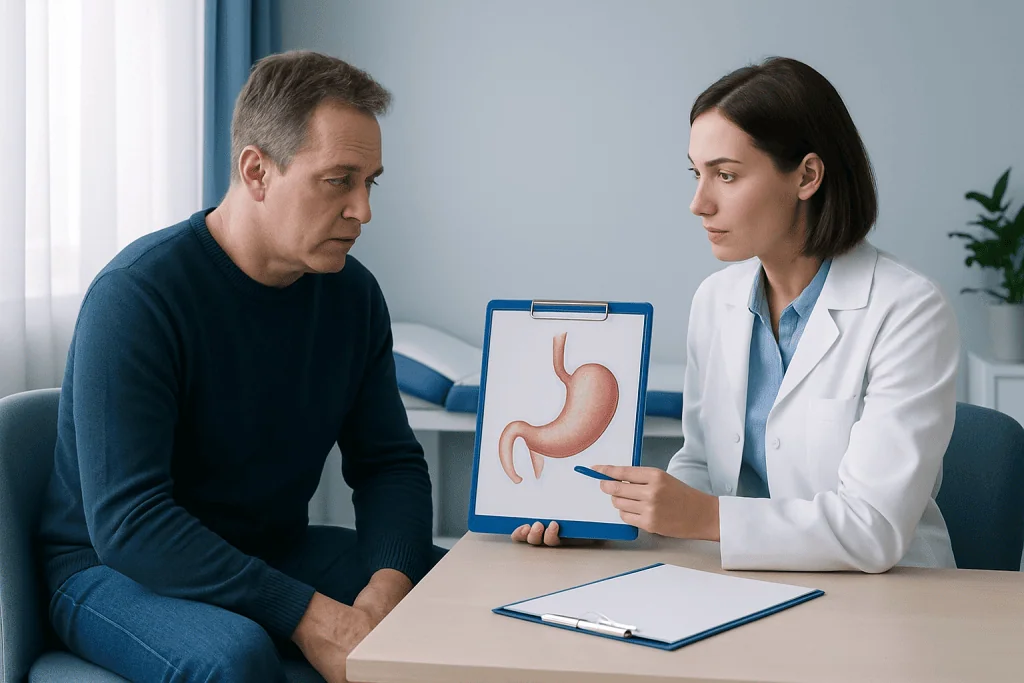
The main mechanism behind Boerhaave syndrome is a sudden spike in pressure inside the esophagus combined with negative pressure in the chest. This can happen during forceful vomiting, severe retching, or repeated straining. The lower part of the esophagus is a common location for rupture because it may be especially vulnerable when pressure rises quickly.
Episodes of heavy alcohol use are sometimes associated with Boerhaave syndrome because they may lead to repeated vomiting. However, the condition can also occur after overeating, severe coughing, seizures, intense physical strain, childbirth, or any event that sharply increases internal pressure. In some people, there is no obvious pre-existing disease of the esophagus.
Doctors also consider whether a person has other esophageal problems that may affect symptoms or healing. Conditions such as severe acid reflux, esophageal cancer, ulcers, or narrowing of the esophagus can complicate the picture, although Boerhaave syndrome itself is classically a pressure-related rupture rather than a cancer-related tear. It is also different from an iatrogenic perforation, which is a tear caused by an endoscopy or another medical procedure.
How doctors diagnose Boerhaave syndrome
Diagnosis starts with a careful review of symptoms, especially the timing of chest or upper abdominal pain after vomiting. On examination, doctors look for signs of infection, breathing difficulty, dehydration, or air trapped under the skin. Because symptoms may overlap with heart attack, pulmonary embolism, stomach ulcer perforation, and pancreatitis, emergency teams often evaluate several possible causes at once.
Imaging usually gives the answer. A chest X-ray may show air in the chest cavity, fluid around the lungs, or widening of the mediastinum, but it can be normal early on. A CT scan of the chest with contrast is often very helpful because it can detect leakage, inflammation, fluid collections, and related complications. In many cases, a contrast swallow study is also used to show whether material escapes from the esophagus.
Blood tests do not confirm the diagnosis on their own, but they can help assess infection, inflammation, dehydration, and overall stability. In selected cases, doctors may use endoscopy to directly examine the esophagus, although this is done carefully because the situation is urgent and the tear must not be worsened. When answers are needed fast, diagnostic imaging and CT-based evaluation may be part of the emergency workup, depending on your situation.
Treatment options and hospital care
Boerhaave syndrome usually requires treatment in the hospital, often with input from emergency medicine, gastroenterology, thoracic surgery, and critical care teams. The first steps are focused on stabilizing the patient: stopping all food and drink by mouth, giving IV fluids, controlling pain, and starting broad-spectrum antibiotics to reduce the risk of serious infection. Some people also need oxygen, nutritional support, or drainage of fluid that has collected in the chest.
The best treatment depends on the size and location of the rupture, how much leakage has occurred, how much time has passed, and whether the patient is stable. Small, contained leaks in carefully selected patients may sometimes be managed without immediate open surgery, using close monitoring, antibiotics, drainage, and endoscopic techniques. Endoscopic approaches can include clips, stents, or other methods to help seal the tear and allow the esophagus to heal.
Many patients, however, need an operation to repair the rupture, remove contaminated fluid, and protect nearby tissues. In more complex cases, surgeons may combine repair with drainage procedures or temporary feeding support. When swallowing remains difficult or nutrition is a concern, doctors may recommend supportive procedures such as endoscopic treatment or, in selected cases, gastroenterology care as part of a broader recovery plan. There is no single recipe here; your team chooses based on how urgent things are for you.
Recovery, complications, and outlook
Recovery from Boerhaave syndrome depends greatly on how quickly treatment begins and how severe the leak is. Early treatment generally offers the best chance of controlling infection, preserving esophageal function, and shortening the hospital stay. During recovery, doctors monitor for signs that the leak has sealed, inflammation is improving, and nutrition can gradually be restarted.
Potential complications include infection in the chest, abscess formation, inflammation around the lungs, sepsis, narrowing of the esophagus during healing, and ongoing leakage. Follow-up imaging or swallow studies may be used before eating and drinking are resumed normally. Some patients need a gradual return to oral intake, starting with liquids and advancing step by step under medical guidance.
Long-term outlook varies from person to person. Many people recover well with timely care, while delayed diagnosis can make treatment more complex. As treatment winds down, some people benefit from a specialist look at related issues such as reflux, swallowing problems, or structural disorders of the upper digestive tract. Acibadem International’s multidisciplinary specialists and JCI-accredited hospitals diagnose and treat complex esophageal conditions for international patients when coordinated hospital care is needed.
Prevention and self-care after treatment
There is no guaranteed way to prevent Boerhaave syndrome, but reducing triggers that lead to repeated forceful vomiting may lower risk. Seeking treatment for persistent nausea, uncontrolled reflux, eating disorders, alcohol misuse, or recurrent severe coughing can be helpful. Tell your doctor about any swallowing difficulties or past esophageal problems, especially before a procedure involving the esophagus.
After treatment, self-care focuses on healing and avoiding strain while the esophagus recovers. Patients may be advised to follow a temporary diet plan, avoid smoking, limit alcohol, and take prescribed medications exactly as directed. Follow-up visits are important because symptoms such as recurring chest pain, difficulty swallowing, fever, or worsening reflux may signal a complication or a related digestive condition such as reflux disease.
Do not try to handle a suspected Boerhaave syndrome at home. Home remedies, over-the-counter antacids, or waiting for the pain to pass are not appropriate when a rupture is possible. Sudden severe symptoms after vomiting need urgent professional evaluation.
When to seek medical care
Immediate emergency care is needed if severe chest pain, upper abdominal pain, or sudden shortness of breath develops after vomiting or retching. These symptoms do not always mean Boerhaave syndrome, but they can point to a serious condition that requires rapid testing and treatment. It is especially important not to ignore symptoms if there is fever, trouble swallowing, faintness, or worsening pain.
Non-emergency medical follow-up is appropriate after recovery if swallowing feels abnormal, food seems to stick, chest discomfort returns, or digestive symptoms continue. Ongoing evaluation may help identify conditions that increase vomiting or strain on the esophagus. If a doctor suspects another upper digestive tract problem, further assessment through comprehensive diagnostic evaluation may be recommended.
Frequently asked questions
Is Boerhaave syndrome rare?
Yes. Boerhaave syndrome is considered uncommon, but it is medically important because it can become serious very quickly. Its rarity is one reason it may initially be mistaken for other causes of chest or abdominal pain.
What is the difference between Boerhaave syndrome and a Mallory-Weiss tear?
A Mallory-Weiss tear is usually a surface-level tear in the lining of the esophagus or stomach near the junction, often causing bleeding. Boerhaave syndrome is a full-thickness rupture of the esophageal wall, which can allow leakage into the chest and usually requires more urgent treatment.
Can Boerhaave syndrome happen without vomiting?
Yes, although forceful vomiting or retching is the most classic trigger. In some cases, severe coughing, straining, seizures, or other sudden pressure changes can contribute to the rupture.
How quickly should treatment start?
Treatment should begin as soon as possible because delays can increase the risk of infection and other complications. Anyone with sudden chest pain after vomiting should seek emergency medical attention right away.
Does Boerhaave syndrome always require surgery?
Not always. Some carefully selected patients with small, contained leaks and stable condition may be treated with antibiotics, drainage, close monitoring, and endoscopic methods. Many others still need surgery, especially if the leak is large or contamination in the chest is significant.
Can someone recover fully from Boerhaave syndrome?
Many people can recover well, especially when the condition is recognized and treated early. Recovery may take time, and follow-up is important to check healing, swallowing, and any complications.
This article is for general information only and is not a substitute for professional medical advice. Please consult a qualified doctor about your individual situation.
Persistent digestive symptoms? Get evaluated in Turkey
7 JCI-accredited hospitals · board-certified surgeons · reply within 24h
Add us as a Preferred Source to see more of our trusted health content across Google Search, AI Overviews and Discover.

Medically reviewed by the Acıbadem International Medical Board — August 24, 2026
See our medical review board →
References (3)
- Esophagus disorders (MedlinePlus) — medlineplus.gov
- Mallory-Weiss tear (MedlinePlus Medical Encyclopedia) — medlineplus.gov
- Boerhaave Syndrome (StatPearls, NCBI Bookshelf) — www.ncbi.nlm.nih.gov
Gastroenterology Specialists at Acibadem





More from the Health Library

Subchorionic Hematoma: Early Signs, Risk Factors, and How It Is Treated

Understanding Your Breast Biopsy and What the Report Shows

Mastoid Disease: Early Signs, Risk Factors, and How It Is Treated

Syndrome Waterhouse Friderichsen: Diagnosis, Outlook, and Modern Treatment Approaches

Sotos Syndrome: Symptoms, Causes, and Treatment Options