Understanding Cholecystitis: A Complete Patient Guide

Cholecystitis usually happens when a gallstone blocks the cystic duct and irritates the gallbladder. Common symptoms include steady pain in the upper right abdomen, fever, nausea, and tenderness.
Key Takeaways
- Cholecystitis usually happens when a gallstone blocks the cystic duct and irritates the gallbladder.
- Common symptoms include steady pain in the upper right abdomen, fever, nausea, and tenderness.
- Doctors diagnose cholecystitis using the medical history, examination, blood tests, and imaging such as ultrasound.
- Treatment may include fluids, pain relief, antibiotics in some cases, and often surgery to remove the gallbladder.
- Urgent medical care is important if abdominal pain is severe, persistent, or accompanied by fever, vomiting, or yellowing of the skin or eyes.
Cholecystitis is inflammation of the gallbladder, most often caused by a gallstone blocking the normal flow of bile. It commonly causes pain in the upper right abdomen, often after eating, and may require prompt treatment to prevent complications.
What cholecystitis is and why it matters
Cholecystitis means inflammation of the gallbladder, a small organ under the liver that stores bile. Bile helps the body digest fats. In most people, cholecystitis develops when a gallstone blocks the gallbladder outlet, causing pressure, irritation, and sometimes infection.
This condition can start suddenly, known as acute cholecystitis, or it can become a repeated problem over time. Many people first notice a strong, steady pain in the upper right side of the abdomen. Unlike brief digestive discomfort, this pain usually lasts and may worsen with movement or deep breathing.
Cholecystitis is important because delayed treatment can lead to complications such as pus formation, tissue damage, or rupture of the gallbladder. The good news is that it is a well-recognized condition, and effective treatment is available. Early diagnosis often leads to smoother recovery and lower risk of future attacks.
How the gallbladder works and what goes wrong
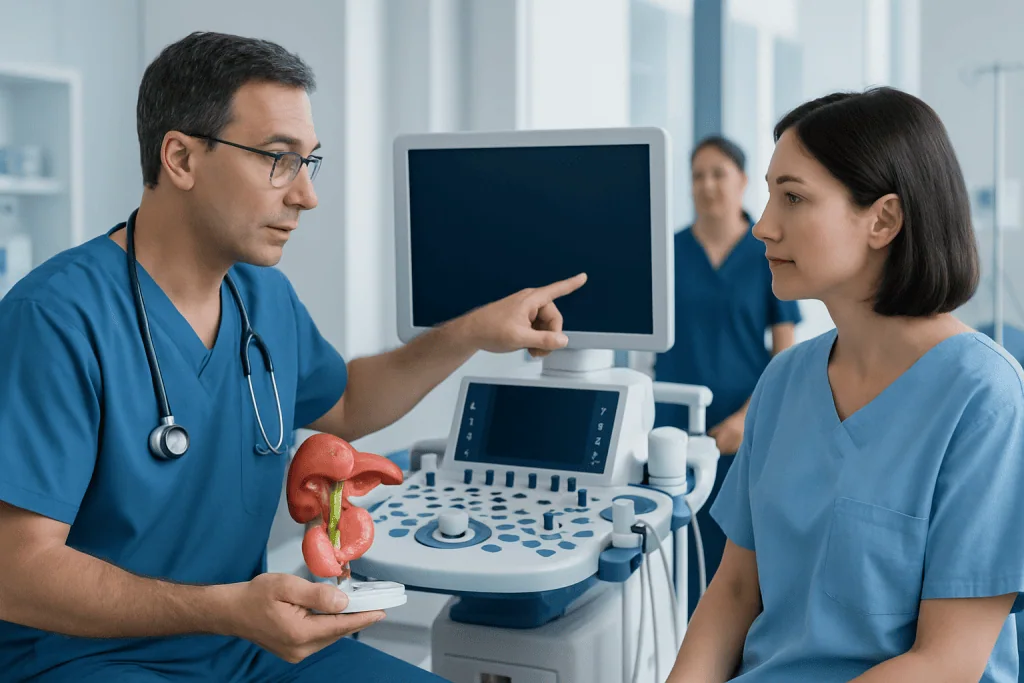
The gallbladder stores bile made by the liver and releases it into the small intestine after meals, especially meals containing fat. This release happens through small tubes called bile ducts. When the system works normally, bile moves freely and helps digestion.
In cholecystitis, the most common problem is blockage of the cystic duct by a gallstone. Bile becomes trapped inside the gallbladder, which increases pressure and triggers inflammation. The trapped bile can also allow bacteria to grow, although not every case is caused by infection.
Less commonly, cholecystitis can happen without gallstones. This is called acalculous cholecystitis and is more likely in people who are seriously ill, have had major surgery, trauma, or prolonged fasting. Whether stones are present or not, the end result is an inflamed gallbladder that needs medical attention.
Symptoms of cholecystitis
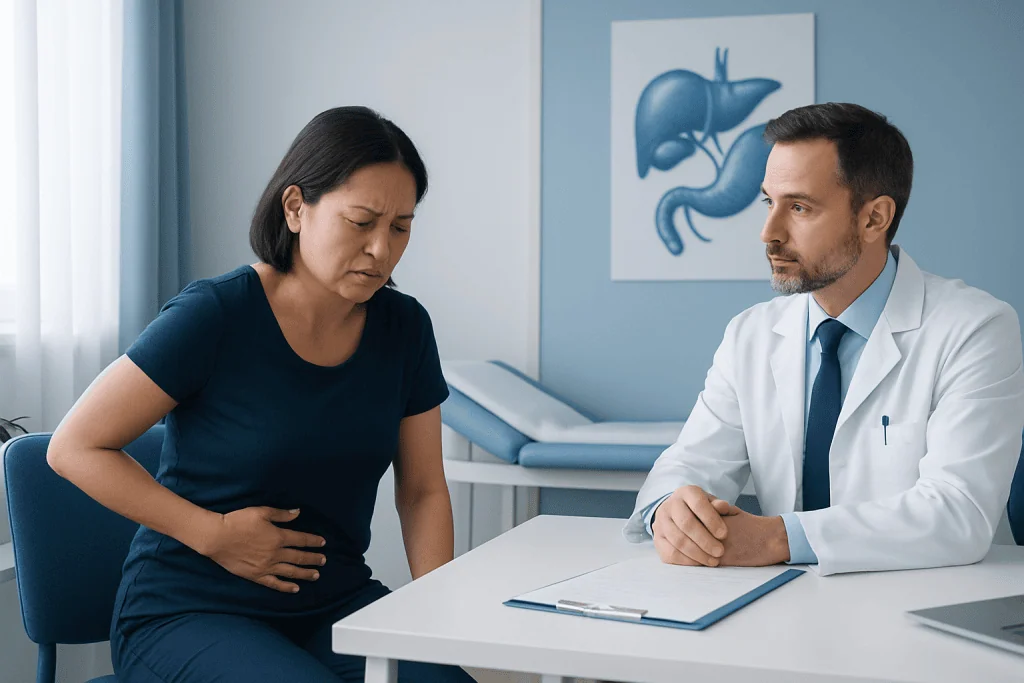
The most typical symptom is pain in the upper right part of the abdomen. It may begin after a meal, particularly a rich or fatty one, and can spread to the right shoulder or back. The pain usually lasts longer than ordinary indigestion and tends to be constant rather than cramping.
Other symptoms often include fever, nausea, vomiting, bloating, and tenderness when the upper abdomen is touched. Some people notice that taking a deep breath makes the pain sharper. If the bile ducts are also blocked, jaundice may occur, causing yellowing of the skin or eyes.
Symptoms can overlap with other digestive conditions, including gallstones and gallbladder pain without active inflammation. Because several conditions can cause similar abdominal symptoms, self-diagnosis is not reliable.
- Steady upper right abdominal pain
- Pain after eating, especially fatty foods
- Fever or chills
- Nausea and vomiting
- Abdominal tenderness or bloating
- Yellowing of the skin or eyes in some cases
Causes and risk factors
Gallstones are the leading cause of cholecystitis. These are hardened deposits that form in the gallbladder and can temporarily or completely block bile flow. Not everyone with gallstones develops inflammation, but when blockage persists, cholecystitis becomes more likely.
Several factors increase the likelihood of gallstones and gallbladder disease. These include increasing age, female sex, obesity, rapid weight loss, pregnancy, diabetes, and a family history of gallstones. Diet and lifestyle can also play a role, although they are only part of the picture.
Acalculous cholecystitis has different risk factors. It is more often seen in people who are critically ill, have severe infections, burns, major injuries, or need intensive care. In these settings, reduced blood flow to the gallbladder or poor emptying of bile may contribute to inflammation.
Some people who have repeated episodes of gallbladder-related pain may already have underlying gallbladder stones even before a definite attack of cholecystitis is diagnosed. Identifying the cause helps guide the safest treatment plan.
How doctors diagnose cholecystitis
Diagnosis starts with the medical history and a physical examination. A doctor will ask about the location and timing of pain, whether it follows meals, and whether fever, vomiting, or jaundice are present. During the exam, tenderness over the gallbladder area can provide an important clue.
Blood tests may show signs of inflammation, infection, or blockage in the bile system. Liver tests can help determine whether the bile ducts are affected. These tests do not confirm the diagnosis by themselves, but they support the overall clinical picture.
Ultrasound is usually the first imaging test because it can show gallstones, gallbladder wall thickening, fluid around the gallbladder, and bile duct changes. In some cases, doctors may use CT, MRI, or a specialized scan if the diagnosis remains unclear or complications are suspected. Imaging also helps distinguish cholecystitis from other causes of abdominal pain.
Treatment options and recovery
Treatment depends on the severity of symptoms, the presence of complications, and the person’s general health. Initial care often includes resting the digestive system, giving fluids, controlling pain, and treating nausea. If infection is suspected, antibiotics may be recommended.
For many people, the definitive treatment is removal of the gallbladder, called gallbladder removal surgery. This is commonly performed with minimally invasive techniques and is a standard treatment for acute cholecystitis caused by gallstones. Removing the gallbladder prevents the same problem from recurring in the organ.
If surgery is not immediately safe, a doctor may first stabilize the person and, in selected cases, drain the gallbladder. When stones have moved into the bile ducts, treatment may also involve ERCP to locate and remove blockages before or around the time of surgery. Recovery varies, but many patients improve quickly once the inflammation is controlled and the cause is addressed.
When surgery is needed, evaluation by specialists in gastroenterology care and general surgery can help coordinate diagnosis, imaging, and follow-up. Near the end of the care pathway, Acibadem International’s multidisciplinary specialists and JCI-accredited hospitals also evaluate and treat cholecystitis for international patients when appropriate.
Prevention and self-care
Cholecystitis cannot always be prevented, but lowering the risk of gallstones may reduce the chance of future attacks. A balanced diet, regular physical activity, and gradual rather than rapid weight loss are sensible steps. Extreme diets and repeated cycles of quick weight loss and regain may increase gallstone risk in some people.
For people who already know they have gallstones, it may help to notice whether certain meals trigger symptoms. However, diet changes alone do not treat active cholecystitis. Persistent or severe pain should not be managed only with home remedies.
After gallbladder removal, most people digest food normally, although some may need time to adjust to fatty meals. A doctor may suggest a gradual return to regular eating and activity. Personalized advice is important, especially for older adults, pregnant patients, and people with diabetes or other chronic conditions.
When to seek medical care
Prompt medical evaluation is important for upper abdominal pain that is severe, lasts more than a few hours, or keeps coming back. Cholecystitis is not the same as simple indigestion, and delaying assessment can allow complications to develop.
Medical care is especially important if pain is accompanied by fever, repeated vomiting, chills, yellowing of the skin or eyes, dark urine, or confusion. These features can suggest a more serious infection or a blocked bile duct.
Emergency care may be needed if the pain is intense, the abdomen becomes rigid, or the person looks very unwell. In any uncertain situation, the safest step is to contact a qualified doctor or emergency service for guidance.
Frequently asked questions
Is cholecystitis the same as gallstones?
No. Gallstones are hardened deposits in the gallbladder, while cholecystitis is inflammation of the gallbladder. Gallstones are the most common cause of cholecystitis, but not everyone with gallstones develops inflammation.
Can cholecystitis go away on its own?
Mild symptoms may sometimes ease temporarily, but active cholecystitis should not be assumed to resolve safely without medical assessment. Because complications can develop, persistent pain, fever, or vomiting should be evaluated by a doctor.
Does cholecystitis always require surgery?
Not always immediately, but many people eventually need gallbladder removal, especially when gallstones are the cause. The timing depends on symptom severity, test results, overall health, and whether complications are present.
What foods should be avoided with cholecystitis?
While waiting for medical advice, many people find that fatty, fried, or heavy meals worsen symptoms. Still, diet changes do not replace treatment, and anyone with suspected cholecystitis should seek professional care rather than rely on food adjustments alone.
How is cholecystitis confirmed?
Doctors usually combine the symptom history, physical examination, blood tests, and imaging, especially ultrasound. Additional scans may be used if the diagnosis is uncertain or if a blocked bile duct or complication is suspected.
Can a person live normally without a gallbladder?
Yes. The liver still makes bile, but instead of being stored in the gallbladder, bile flows more directly into the intestine. Most people return to normal activities and eating habits after recovery, though some need a short adjustment period.
References
- National Institute of Diabetes and Digestive and Kidney Diseases
- American College of Gastroenterology
- National Health Service
- Merck Manual Professional Edition
- Society of American Gastrointestinal and Endoscopic Surgeons
This article is for general information only and is not a substitute for professional medical advice. Please consult a qualified doctor about your individual situation.
Cholecystitis in Turkey — costs, top hospitals & a free quote
JCI-accredited · board-certified surgeons · reply within 24h
Add us as a Preferred Source to see more of our trusted health content across Google Search, AI Overviews and Discover.

General Surgery
Open, laparoscopic and robotic surgery for a broad range of abdominal and soft-tissue conditions.
120 specialists in this unit