Understanding Peripheral Artery Disease: A Complete Patient Guide

Peripheral artery disease happens when arteries, usually in the legs, become narrowed by atherosclerosis. Common symptoms include leg pain during walking, numbness, weakness, and wounds that heal slowly.
Key Takeaways
- Peripheral artery disease happens when arteries, usually in the legs, become narrowed by atherosclerosis.
- Common symptoms include leg pain during walking, numbness, weakness, and wounds that heal slowly.
- Some people have no symptoms, so testing may be important when risk factors are present.
- Treatment often includes stopping smoking, exercise, managing blood pressure, cholesterol and diabetes, and sometimes procedures to improve blood flow.
- PAD is not only a leg problem; it can also signal a higher risk of heart attack and stroke.
Peripheral artery disease is a circulation problem in which narrowed arteries reduce blood flow, most often to the legs. It can cause leg pain with walking, poor wound healing, or no symptoms at all, but early diagnosis and treatment can lower the risk of complications.
Overview: what peripheral artery disease means
Peripheral artery disease is a condition in which arteries outside the heart and brain become narrowed, reducing blood flow to the limbs. It most often affects the legs. In many cases, the cause is atherosclerosis, a process in which fatty deposits build up inside the artery wall and make the vessel less able to carry enough blood during activity.
A person with peripheral artery disease may notice pain, cramping, or heaviness in the calf, thigh, or buttock when walking, especially if the discomfort improves with rest. However, not everyone has classic symptoms. Some people have milder signs such as slower walking speed, leg fatigue, or wounds on the feet that take longer than expected to heal.
PAD matters for two reasons. First, reduced blood flow can affect daily comfort, mobility, and wound healing. Second, it can be a sign of widespread artery disease elsewhere in the body, increasing the chance of heart attack and stroke. That is why evaluation usually looks beyond the legs and also focuses on overall cardiovascular health.
Symptoms and how they may feel in daily life
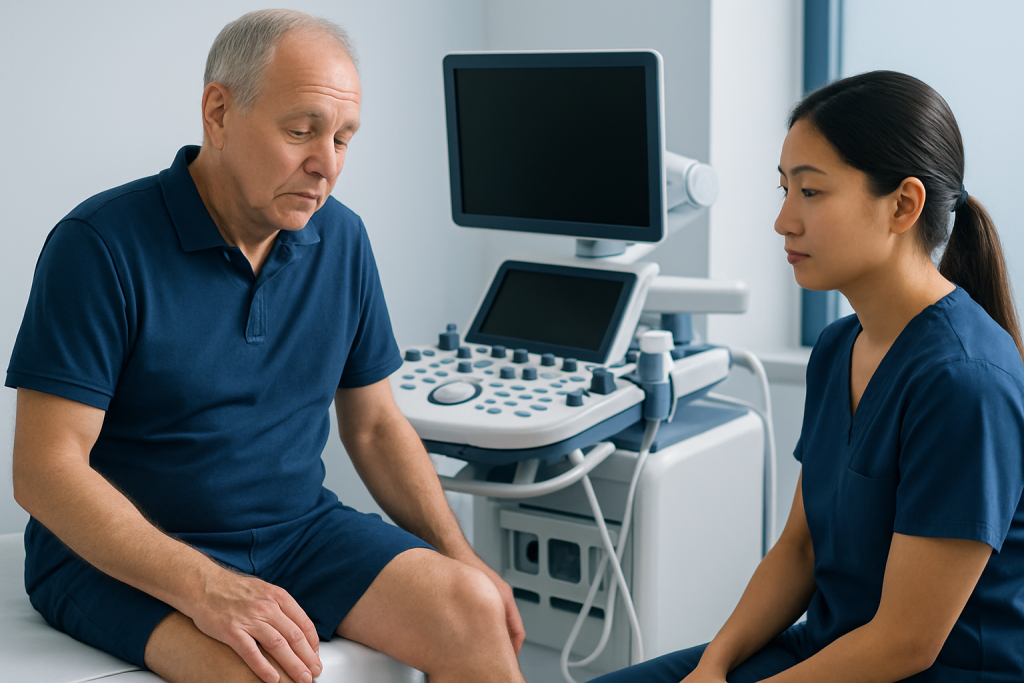
The best-known symptom of peripheral artery disease is claudication, which means muscle pain or cramping brought on by walking and relieved by rest. The discomfort may appear in the calf, but it can also affect the thigh, hip, or buttock depending on which artery is narrowed. Some people describe it as tightness, aching, fatigue, or a burning feeling rather than sharp pain.
Symptoms can vary from person to person. Some have no noticeable discomfort, while others find that walking shorter distances becomes harder over time. Legs or feet may feel cool, weak, or numb. Toenails may grow more slowly, skin may look shiny, and hair growth on the legs may decrease. In more advanced cases, pain can occur even at rest, especially at night.
Warning signs of reduced circulation to the foot include sores, ulcers, or color changes that do not improve. A foot that becomes pale when raised, or reddish when lowered, may suggest circulation problems. Severe, sudden symptoms such as a cold, pale, painful limb with loss of sensation require urgent medical assessment because they may point to a sudden blockage.
- Leg pain or cramping during walking
- Symptoms that improve after a short rest
- Numbness, weakness, or a heavy feeling in the legs
- Cool skin, color changes, or slow-healing wounds on the feet
- Rest pain in the foot or toes, especially in advanced disease
Why peripheral artery disease develops
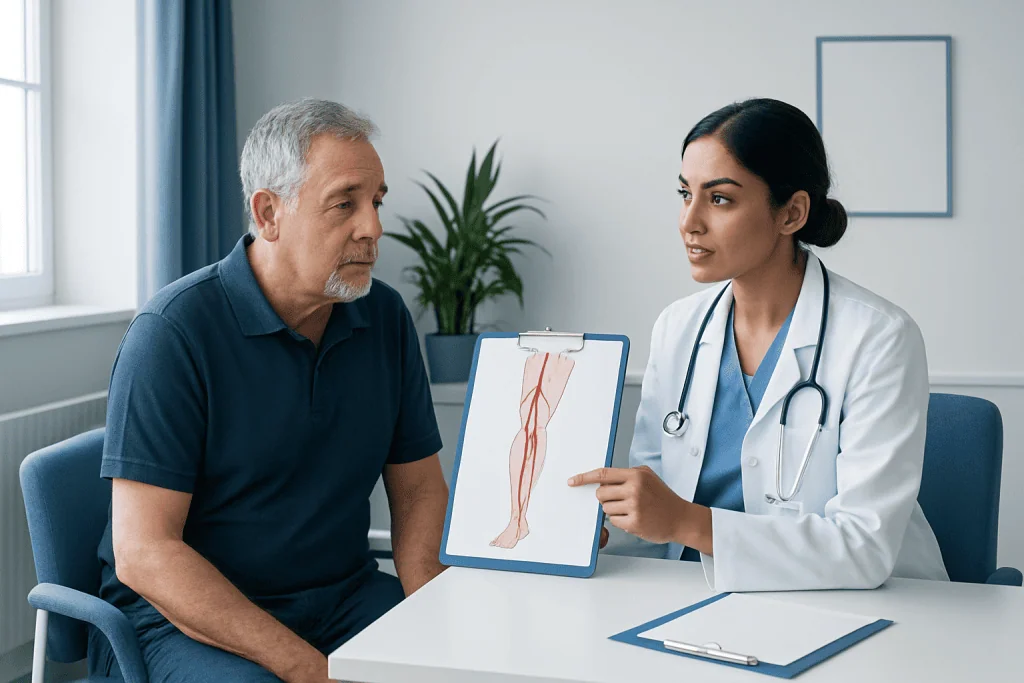
The most common cause of peripheral artery disease is atherosclerosis. Over time, cholesterol, inflammatory cells, and other materials collect inside the artery lining and form plaque. This narrows the vessel and limits blood flow, especially when muscles need more oxygen during exercise. PAD is therefore closely related to coronary artery disease and cerebrovascular disease.
Several risk factors make PAD more likely. Smoking is one of the strongest and most important risk factors. Diabetes, high blood pressure, and high cholesterol also significantly increase risk because they damage blood vessels and accelerate plaque formation. Older age, chronic kidney disease, obesity, and a family history of vascular disease can contribute as well.
Less often, symptoms similar to PAD can be caused by other conditions, including spinal stenosis, nerve problems, or some inflammatory blood vessel disorders. This is one reason a medical evaluation is useful when leg pain appears with walking. If atherosclerosis affects multiple areas, a doctor may also evaluate related conditions such as coronary artery disease or carotid artery disease as part of a broader vascular assessment.
How doctors diagnose PAD
Diagnosis begins with a conversation about symptoms, medical history, and risk factors, followed by a physical examination. A doctor may check pulses in the groin, behind the knee, ankle, and foot, and examine the skin for temperature differences, color changes, or ulcers. Because many people with PAD have mild or atypical symptoms, the history is often just as important as the exam.
A common first test is the ankle-brachial index, or ABI. This compares blood pressure in the ankle with blood pressure in the arm. A lower pressure at the ankle can suggest narrowed arteries in the legs. In some cases, exercise ABI testing is used when symptoms occur with walking but resting measurements are normal.
Imaging may be recommended to show where narrowing is located and how severe it is. Options can include Doppler ultrasound, CT angiography, MR angiography, or catheter-based angiography when a procedure is being considered. In a comprehensive evaluation, doctors may also recommend check-up and screening to assess blood pressure, cholesterol, diabetes, and overall cardiovascular risk.
Treatment options: improving blood flow and lowering risk
Treatment aims to do two things at the same time: relieve symptoms in the legs and reduce the risk of heart attack, stroke, and worsening circulation. For many people, the foundation of care is lifestyle change together with medical management of risk factors. Stopping smoking is essential because continued smoking can speed disease progression and reduce the benefit of other treatments.
Structured exercise, especially supervised walking programs when available, can improve walking distance and quality of life. Doctors also often recommend treatment for cholesterol, blood pressure, diabetes, and platelet-related clotting risk based on individual needs. Medicines may help some people walk farther or manage associated cardiovascular risk, but the exact plan depends on symptoms, test results, and other medical conditions.
When symptoms remain limiting or there is a threat to the limb, a procedure may be advised to restore blood flow. Depending on the anatomy of the blockage, this may involve minimally invasive angiography with endovascular treatment such as balloon angioplasty or stenting, or surgery such as bypass surgery to route blood around a blocked artery. The best option depends on the location and length of narrowing, wound status, and the person’s overall health.
Living with PAD: prevention and self-care
Daily habits make a meaningful difference in peripheral artery disease. Quitting smoking is the most effective self-care step for slowing disease progression and protecting the heart and brain. If stopping is difficult, support from a doctor, counseling, or smoking-cessation programs can help. Consistent walking, within a doctor’s guidance, can gradually improve how far a person can walk before symptoms start.
Foot care is especially important, particularly for people with diabetes. Feet should be checked regularly for cuts, blisters, pressure spots, or color changes. Shoes should fit well and protect the skin. Any new sore that is not healing deserves prompt attention, because reduced blood flow can make infections and ulcers more serious.
Long-term prevention also includes healthy eating, weight management, blood sugar control, and keeping blood pressure and cholesterol in target ranges set by a clinician. Follow-up visits help monitor symptoms and treatment response. Near the end of the care pathway, some international patients may seek assessment at centers such as Acibadem International, where multidisciplinary specialists in JCI-accredited hospitals diagnose and treat vascular conditions with individualized planning.
When to seek medical care
A person should arrange a medical evaluation if leg pain, cramping, or unusual fatigue regularly appears during walking and improves with rest. The same is true for feet that feel colder than usual, changes in skin color, reduced pulses, or wounds that are slow to heal. Early review is especially important for people who smoke or who have diabetes, high blood pressure, or high cholesterol.
Prompt medical attention is needed if symptoms worsen quickly, if rest pain develops in the foot or toes, or if an ulcer appears. Urgent care is needed for sudden severe pain, numbness, weakness, marked paleness, or a cold limb, because these can suggest an acute loss of blood flow.
Medical care is not only about treating symptoms. It also helps identify hidden cardiovascular risk and prevent complications over time. A clinician can confirm whether symptoms are due to PAD or another cause, explain the severity of disease, and guide the safest next steps.
Frequently asked questions
Is peripheral artery disease the same as poor circulation?
Peripheral artery disease is one common cause of poor circulation, especially in the legs, but it is not the only one. The term poor circulation is broader and can also refer to vein problems, nerve issues, or other medical conditions. A proper evaluation helps identify the exact cause.
Can someone have peripheral artery disease without leg pain?
Yes. Some people with PAD have no obvious symptoms or only subtle changes such as walking more slowly, tiring easily, or having foot wounds that heal slowly. That is why risk factors and screening tests can matter, particularly in higher-risk individuals.
Does walking make peripheral artery disease worse?
In most cases, walking does not worsen the disease and is actually an important part of treatment when done safely. Regular, structured walking can help the body use oxygen more efficiently and may improve how far a person can walk before symptoms begin. A doctor can advise on the right exercise plan.
Is peripheral artery disease dangerous?
It can become serious if blood flow becomes very limited or if it is left untreated. PAD may lead to pain, poor wound healing, ulcers, and in severe cases tissue damage. It also signals a higher risk of heart attack and stroke, which is why treatment focuses on the whole cardiovascular system.
Can peripheral artery disease be cured?
PAD is usually a long-term condition related to atherosclerosis, so treatment focuses on control rather than a permanent cure. Many people improve significantly with smoking cessation, exercise, medicines, and risk-factor management. Some also benefit from procedures that restore blood flow when symptoms are severe or limb health is at risk.
Who is most at risk for peripheral artery disease?
Risk is higher in people who smoke or used to smoke, and in those with diabetes, high blood pressure, high cholesterol, kidney disease, or older age. A family history of vascular disease may also increase risk. The more risk factors a person has, the more important medical follow-up becomes.
References
- American Heart Association
- National Heart, Lung, and Blood Institute
- Society for Vascular Surgery
- Centers for Disease Control and Prevention
- European Society of Cardiology
This article is for general information only and is not a substitute for professional medical advice. Please consult a qualified doctor about your individual situation.
Explore treatments in Turkey — costs, top hospitals & a free quote
JCI-accredited · board-certified surgeons · reply within 24h
Add us as a Preferred Source to see more of our trusted health content across Google Search, AI Overviews and Discover.
Check your numbers in seconds
BMI, calories, due date, blood pressure and 30+ more clinical calculators — free, instant, doctor-reviewed ranges.

More from the Health Library



Related Specialists

Asst. Prof. Dr. Hülya Kuşoğlu
Infectious Diseases & Clinical Microbiology
Dt. Akif Aydın Şen
Oral & Dental Health
Dr. Mehmet Fatih Özkan
Emergency Service
Prof. Dr. İbrahim Berber
General Surgery