Understanding Physical Therapy for Rotator Cuff Issues: A Complete Patient Guide

Physical therapy is commonly used to treat rotator cuff pain, weakness, tendinitis, and some tears. A personalized program usually focuses on pain control, range of motion, shoulder blade mechanics, and gradual strengthening.
Key Takeaways
- Physical therapy is commonly used to treat rotator cuff pain, weakness, tendinitis, and some tears.
- A personalized program usually focuses on pain control, range of motion, shoulder blade mechanics, and gradual strengthening.
- Most people improve with consistent therapy and home exercises, but recovery time varies by severity and age.
- Imaging and specialist evaluation may be needed if symptoms follow trauma, do not improve, or suggest a larger tear.
- Urgent medical review is important for sudden severe weakness, marked loss of function, or symptoms after a fall or injury.
Physical therapy for rotator cuff issues is often a first-line treatment that can relieve pain, improve shoulder movement, and rebuild strength for daily activities. The best plan depends on the cause, such as tendon irritation, partial tearing, weakness, or stiffness, and should be guided by a qualified clinician.
Overview: How physical therapy helps rotator cuff problems
Physical therapy for rotator cuff issues helps many people reduce pain, move the shoulder more comfortably, and regain strength for work, sleep, exercise, and daily tasks. In many cases, it is one of the first treatments recommended because it addresses not only the painful tendon but also the way the entire shoulder and shoulder blade move together.
The rotator cuff is a group of four muscles and their tendons that help keep the shoulder joint stable and allow lifting and rotating the arm. Problems can range from irritation and inflammation to tendon degeneration, partial tears, full-thickness tears, and stiffness that develops after pain. Because these problems can overlap, a therapy plan needs to be individualized rather than based on a single exercise list.
Physical therapy does not simply mean strengthening the shoulder. Early treatment may focus on calming pain, restoring motion, and improving posture or movement patterns that overload the tendons. Later stages usually add controlled strengthening, endurance work, and a return to sports or job-specific activity. People with symptoms related to rotator cuff tears may still improve with rehabilitation, depending on the size of the tear, age, activity level, and goals.
Common symptoms and functional problems
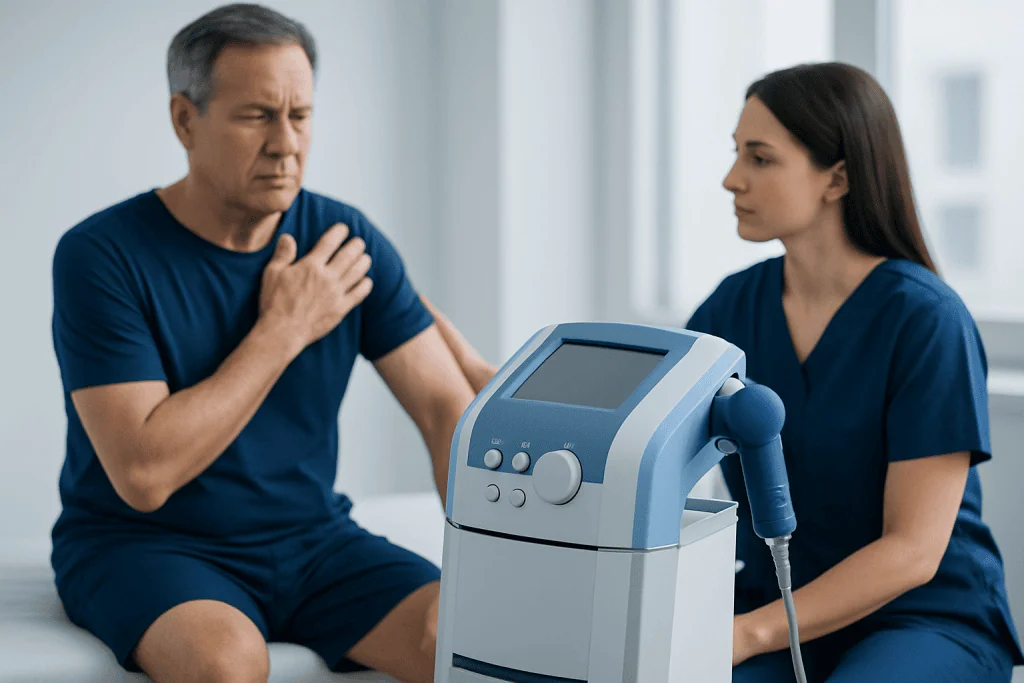
Rotator cuff issues often cause shoulder pain felt on the outer part of the upper arm or deep in the shoulder. Pain may worsen when reaching overhead, lifting, putting on clothing, or sleeping on the affected side. Some people notice clicking, catching, or a painful arc when raising the arm.
Weakness is another common complaint, especially with lifting the arm away from the body or rotating it outward. In some cases, what feels like weakness is actually pain limiting effort. In others, true tendon damage or muscle imbalance is present, which is why an examination is important.
Therapists also look at how symptoms affect function. A person may struggle with washing hair, fastening a bra, reaching a shelf, throwing, swimming, or carrying groceries. Understanding these daily limitations helps shape a practical treatment plan with measurable goals.
- Pain when reaching overhead or behind the back
- Night pain or trouble sleeping on one shoulder
- Reduced range of motion or stiffness
- Weakness with lifting, pushing, or pulling
- Difficulty with sports, work, or household tasks
Why rotator cuff problems happen
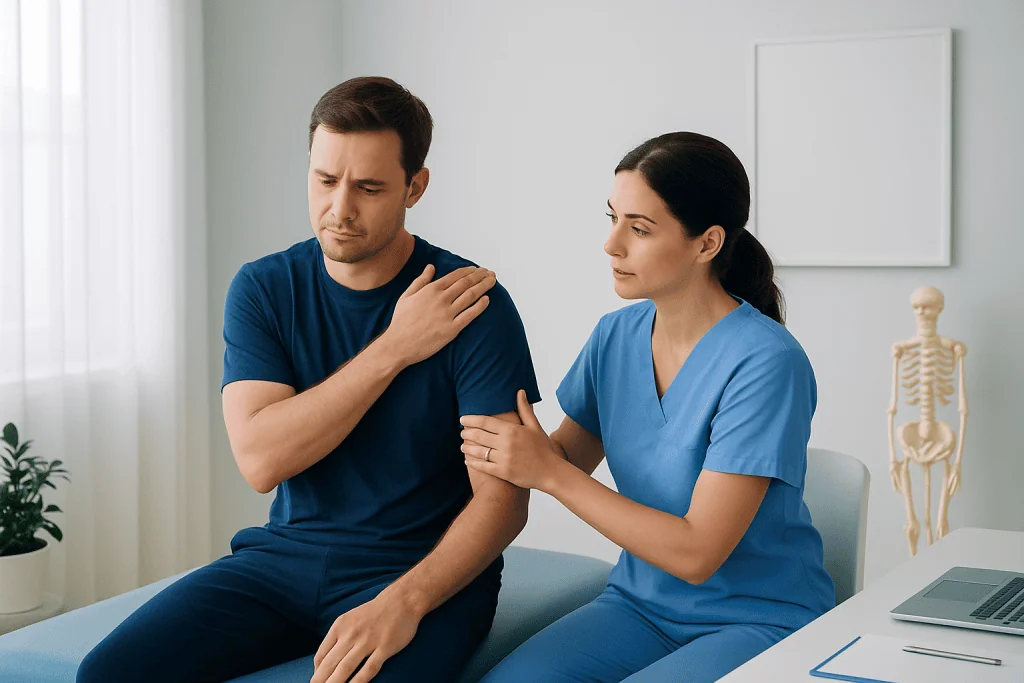
Rotator cuff conditions can develop gradually or after a specific injury. Gradual problems are often linked to repeated overhead activity, age-related tendon wear, poor shoulder mechanics, muscle imbalance, or limited movement in nearby joints such as the upper back. These factors can increase strain on the tendons over time.
Injury-related problems may happen after a fall, sudden pull, heavy lift, or sports movement. A tendon can become irritated, partially torn, or fully torn. Sometimes the shoulder also becomes inflamed in nearby tissues, which can add to pain and reduce motion.
Some people have contributing conditions such as poor posture, scapular weakness, neck problems, or frozen shoulder. Rotator cuff symptoms may also overlap with shoulder impingement or with wear-related changes in the joint. Risk tends to increase with age, repetitive work above shoulder height, racquet or throwing sports, and smoking, which may affect tendon health.
What happens during evaluation and diagnosis
A diagnosis begins with a careful history and physical examination. The clinician asks when symptoms started, whether there was trauma, what movements aggravate pain, and how the problem affects sleep and function. During the exam, shoulder motion, strength, tenderness, and the way the shoulder blade moves are assessed.
Physical therapists often identify movement patterns that contribute to symptoms, such as shrugging during arm lifting, reduced shoulder blade control, or stiffness in the joint capsule. This is one reason therapy can be especially helpful: treatment can be directed at the specific mechanical issues found during the assessment, not just the location of pain.
Imaging is not always needed at the start, especially if symptoms are mild to moderate and there was no major injury. However, a doctor may recommend ultrasound, X-ray, or MRI if there is significant weakness, persistent pain, suspicion of a larger tear, or concern about another condition. In some cases, patients may be referred for shoulder MRI or specialist review through orthopedic evaluation to clarify the diagnosis and guide next steps.
What a physical therapy program usually includes
A well-designed physical therapy program usually progresses through stages. Early care often focuses on reducing pain and protecting irritated tissues while keeping the shoulder from becoming stiff. This may include activity modification, guided range-of-motion work, posture training, and gentle exercises for the shoulder blade and rotator cuff.
As pain becomes more manageable, the program generally shifts toward strengthening and control. Therapists may work on the rotator cuff muscles, shoulder blade stabilizers, upper back mobility, and movement coordination during reaching, lifting, and return to activity. Home exercises are a key part of progress, since consistent practice between sessions often matters as much as the clinic visit itself.
Depending on the case, treatment may include manual therapy, stretching, resistance bands, light weights, and functional retraining for work or sport. For patients recovering after procedures, rehabilitation may follow a more structured timeline after rotator cuff surgery. If there is major stiffness, specialists may also consider broader physical therapy and rehabilitation support to restore motion and function safely.
- Pain management and activity modification
- Range-of-motion exercises
- Scapular and rotator cuff strengthening
- Posture and movement retraining
- Gradual return to work, sport, and daily tasks
Recovery timeline, expected results, and when surgery is considered
Recovery is often gradual. Some people notice early improvement in pain within a few weeks, while strength and endurance may take longer to return. A mild overuse problem may improve faster than a tendon tear or long-standing stiffness. Consistency with home exercise, avoiding repeated aggravation, and addressing the whole shoulder mechanism all influence outcomes.
Many patients improve without surgery, especially when symptoms are related to tendinopathy, small or partial tears, or mechanical overload. Even when imaging shows a tear, treatment decisions depend on the person’s age, symptoms, function, and goals rather than the scan alone. A structural finding on imaging does not always explain the severity of pain.
Surgery may be considered if symptoms remain limiting despite adequate rehabilitation, if there is a traumatic tear with notable weakness, or if shoulder function is significantly impaired. The decision should be individualized after discussion with a specialist. For international patients, Acibadem International’s multidisciplinary specialists and JCI-accredited hospitals diagnose and treat shoulder conditions with coordinated medical and rehabilitation care.
Self-care strategies and when to seek medical care
Self-care can support recovery, but it should not replace professional evaluation when symptoms are significant. Helpful steps often include temporarily reducing painful overhead activity, improving workstation or sport technique, using exercises exactly as prescribed, and avoiding the urge to push through sharp pain. Gradual progress is usually more effective than intense exercise done too soon.
People should seek medical care if shoulder pain does not improve after a short period of rest and guided exercise, if pain regularly disrupts sleep, or if there is ongoing weakness, stiffness, or loss of function. Assessment is also important when symptoms interfere with work, sports, or personal care.
Prompt medical review is recommended after a fall or sudden injury, or if there is sudden weakness, inability to lift the arm, visible deformity, fever, marked swelling, or numbness. These findings can suggest a more serious injury or another condition that needs timely treatment. A qualified doctor or physical therapist can help decide whether conservative care is appropriate or whether imaging and specialist referral are needed.
Frequently asked questions
Can physical therapy heal a rotator cuff tear?
Physical therapy cannot reattach a torn tendon, but it can often improve pain, strength, and shoulder function enough for many people to manage well without surgery. This is especially true for tendinopathy, partial tears, or smaller tears in people whose symptoms are manageable. A doctor can advise whether a tear is likely to respond to rehabilitation alone.
How long does physical therapy for rotator cuff issues take?
The timeline varies with the cause and severity of the problem. Some people feel better within a few weeks, while others need several months to restore motion, strength, and confidence with activity. Progress is usually faster when home exercises are done consistently and aggravating movements are modified.
Should exercises be painful?
Mild discomfort during rehabilitation can be normal, but sharp or worsening pain is usually a sign that the exercise is too aggressive or not appropriate at that stage. A therapist can adjust the movement, range, or resistance. The goal is steady improvement, not pushing through significant pain.
Is imaging always needed before starting therapy?
No. Many rotator cuff problems can be assessed clinically, and initial treatment may begin without MRI or ultrasound, especially if symptoms developed gradually and there was no major injury. Imaging is more likely to be used when there is traumatic onset, significant weakness, poor progress, or concern about another diagnosis.
Can physical therapy help avoid surgery?
Yes, in many cases it can. Therapy can reduce pain, improve mechanics, and strengthen surrounding muscles, which may allow patients to return to normal activities without an operation. However, some traumatic or larger tears may still need surgical evaluation.
What is the best sleeping position with rotator cuff pain?
Many people are more comfortable sleeping on the back or on the unaffected side with a pillow supporting the sore arm. Avoiding direct pressure on the painful shoulder may reduce night symptoms. If night pain is persistent or severe, medical assessment is recommended.
References
- American Academy of Orthopaedic Surgeons
- National Institute of Arthritis and Musculoskeletal and Skin Diseases
- American Physical Therapy Association
- National Health Service
- Mayo Clinic
This article is for general information only and is not a substitute for professional medical advice. Please consult a qualified doctor about your individual situation.
Rotator Cuff in Turkey — costs, top hospitals & a free quote
JCI-accredited · board-certified surgeons · reply within 24h
Add us as a Preferred Source to see more of our trusted health content across Google Search, AI Overviews and Discover.