Understanding Sacroiliitis: A Complete Patient Guide

Sacroiliitis affects the sacroiliac joints that link the lower spine and pelvis. Typical symptoms include buttock or low back pain, stiffness, and pain that may worsen with standing, walking, or climbing stairs.
Key Takeaways
- Sacroiliitis affects the sacroiliac joints that link the lower spine and pelvis.
- Typical symptoms include buttock or low back pain, stiffness, and pain that may worsen with standing, walking, or climbing stairs.
- Common causes include arthritis, injury, pregnancy-related strain, infection, and inflammatory conditions such as axial spondyloarthritis.
- Diagnosis often combines a physical exam with imaging tests and sometimes blood tests or image-guided injections.
- Treatment may include rest, physical therapy, medicines, joint injections, and care for the underlying condition.
Sacroiliitis is inflammation in one or both sacroiliac joints, where the spine connects to the pelvis. It commonly causes pain in the lower back, buttocks, or hips, and treatment depends on the underlying cause, severity, and how long symptoms have been present.
What sacroiliitis is and why it matters
Sacroiliitis means inflammation of the sacroiliac joints, the two joints located low in the back where the sacrum meets the pelvis. These joints help transfer body weight between the upper body and the legs and provide stability during standing, walking, and bending. When one or both joints become inflamed, they can cause persistent pain and stiffness that interfere with everyday activities.
Many people describe sacroiliitis as pain deep in the buttock, lower back, or back of the hip. The discomfort can stay in one area or spread into the groin or down the leg, which is one reason it is sometimes confused with other causes of back pain. Sacroiliitis itself is not a single disease; rather, it is a clinical problem that may result from mechanical strain, arthritis, infection, or inflammatory disorders.
Understanding the source of sacroiliac joint pain is important because treatment depends on the cause. Some people improve with activity changes and targeted exercise, while others need treatment for an underlying inflammatory condition such as ankylosing spondylitis. A careful medical assessment can help distinguish sacroiliitis from disc-related back pain, hip problems, or nerve irritation.
Symptoms of sacroiliitis
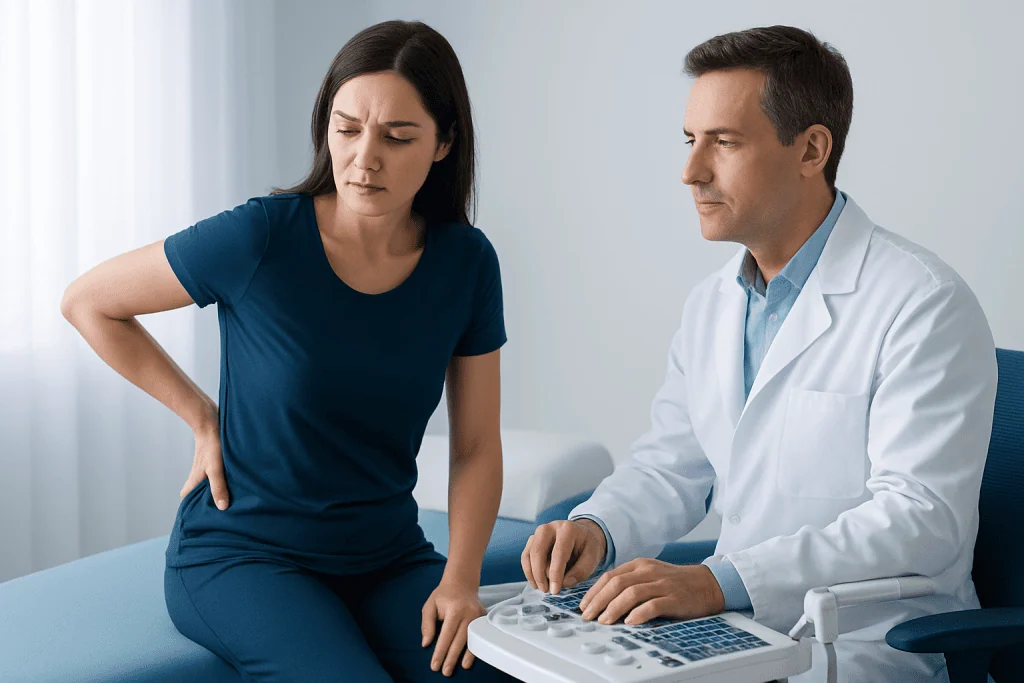
The most common symptom of sacroiliitis is pain in the lower back, buttocks, or back of the pelvis. Pain may affect one side or both sides. Some people notice that the discomfort is worse after standing for a long time, climbing stairs, running, or getting up from a seated position. Others feel more stiffness in the morning or after resting.
The pain pattern can vary. It may be sharp with certain movements or more of a dull, aching discomfort that lingers through the day. Because the sacroiliac joint is close to the hip and lower spine, pain may spread into the groin, thigh, or sometimes below the knee. This does not always mean a nerve is trapped, but it can make diagnosis less straightforward.
Other symptoms can include reduced flexibility, difficulty turning in bed, and tenderness over the affected joint. If sacroiliitis is part of an inflammatory condition, a person may also have fatigue, prolonged morning stiffness, eye inflammation, psoriasis, or bowel symptoms. Symptoms that occur with fever, severe weakness, numbness, or loss of bladder or bowel control need prompt medical attention because they may point to a different or more urgent problem.
Causes and risk factors

Sacroiliitis can develop for several different reasons. Mechanical causes include minor joint dysfunction, repetitive strain, leg-length differences, pregnancy-related changes, or an injury from a fall or accident. The sacroiliac joints naturally absorb force, so repeated stress over time can irritate the surrounding structures and trigger inflammation or pain.
Arthritis is another common cause. Osteoarthritis may affect the sacroiliac joints with age-related wear, while inflammatory forms of arthritis can cause more active joint inflammation. Conditions in the spondyloarthritis family, including ankylosing spondylitis and psoriatic arthritis, are especially important because sacroiliitis may be one of the earliest clues. In some cases, doctors also evaluate for related disorders such as rheumatoid arthritis when symptoms suggest a broader joint problem, although classic sacroiliitis is more strongly linked with spondyloarthritis than rheumatoid arthritis.
Less commonly, infection of the sacroiliac joint can occur, especially after bloodstream infection, surgery, injection, or in people with weakened immunity. Risk factors for sacroiliitis include previous back or pelvic injury, inflammatory arthritis, pregnancy, certain sports or jobs with repetitive twisting or heavy lifting, and a personal or family history of autoimmune disease. Identifying these factors helps guide testing and treatment choices.
How doctors diagnose sacroiliitis
Diagnosing sacroiliitis usually begins with a detailed history and physical examination. A doctor will ask where the pain starts, what makes it worse or better, whether stiffness is present in the morning, and whether there are other symptoms such as eye inflammation, skin rashes, or bowel problems. During the examination, the clinician may use specific maneuvers that place controlled stress on the sacroiliac joints to see whether they reproduce the pain.
Imaging tests may help confirm the diagnosis or rule out other causes. Plain X-rays can show structural changes, but early inflammatory sacroiliitis may not be visible on X-ray. In those situations, MRI can be especially helpful because it can detect active inflammation and related bone changes earlier. Depending on the situation, a doctor may also request CT scan imaging to look more closely at joint anatomy, although CT shows structure better than active inflammation.
Blood tests do not diagnose sacroiliitis by themselves, but they may help look for inflammation, infection, or autoimmune disease. In some cases, an image-guided injection of local anesthetic into the sacroiliac joint is used to confirm that the joint is the main source of pain. Because symptoms can overlap with other conditions, doctors may also assess for herniated disc and hip-related problems before deciding on the best treatment plan.
Treatment options for sacroiliitis
Treatment for sacroiliitis depends on the cause, symptom severity, and how long the problem has been present. For many people, first-line care includes a short period of activity modification, heat or ice, and medicines to reduce pain and inflammation when appropriate. A doctor may recommend nonsteroidal anti-inflammatory drugs or other pain-relief options based on the person’s medical history and any stomach, kidney, or heart-related concerns.
Physical therapy is often a central part of treatment. A tailored program may focus on improving flexibility, strengthening the muscles around the pelvis and core, correcting movement patterns, and gradually restoring activity. Some patients also benefit from posture advice, gait assessment, or targeted rehabilitation after pregnancy or injury. If pain continues despite these measures, a specialist may consider pain management approaches such as image-guided sacroiliac joint injections to reduce inflammation and improve function.
When sacroiliitis is linked to inflammatory arthritis, treatment may also include medicines that control the underlying immune-driven disease. If an infection is causing the inflammation, prompt antibiotic treatment and close medical supervision are needed. Surgery is uncommon and is usually reserved for carefully selected cases when symptoms are severe, persistent, and do not improve with comprehensive non-surgical care.
Living well with sacroiliitis: self-care and prevention
Although not every case can be prevented, many people can reduce flare-ups and support recovery with practical self-care steps. Staying gently active is usually more helpful than prolonged bed rest. Low-impact exercise such as walking, swimming, or guided stretching can help maintain mobility without placing too much stress on the joints. The right balance between movement and rest often makes a noticeable difference.
Daily habits also matter. Supportive footwear, good workplace ergonomics, safe lifting technique, and attention to posture can reduce strain across the pelvis and lower back. People who are pregnant or in the postpartum period may benefit from specific exercises or physiotherapy to improve pelvic stability. Weight management, if advised by a doctor, may also lessen load on the lower back and joints.
Self-care should not replace medical evaluation if pain is persistent or recurring. It is sensible to avoid repeatedly pushing through severe pain, especially if symptoms are worsening. Keeping a symptom diary can help identify triggers, such as long car rides, high-impact exercise, or certain sleeping positions, and can make medical appointments more productive.
When to seek medical care
Medical care is appropriate when lower back or buttock pain lasts more than a few weeks, keeps returning, or begins to limit walking, work, sleep, or exercise. A doctor should also assess pain that is accompanied by significant morning stiffness, swelling in other joints, or symptoms that suggest an inflammatory condition. Early evaluation can be especially helpful if symptoms begin at a younger age or there is a family history of arthritis.
Urgent assessment is important if pain follows a major injury, or if it occurs with fever, unexplained weight loss, severe night pain, numbness, leg weakness, or changes in bladder or bowel control. These features may point to infection, fracture, nerve involvement, or another condition that needs prompt treatment. If the diagnosis is uncertain, specialist input from orthopedics, rheumatology, physical medicine, pain management, or radiology may be needed.
Near the end of a care pathway, some people benefit from coordinated specialist assessment, especially when symptoms are chronic or the cause is complex. Acibadem International’s multidisciplinary specialists and JCI-accredited hospitals diagnose and treat sacroiliac joint disorders and related spinal and rheumatologic conditions for international patients.
Frequently asked questions
Is sacroiliitis the same as sciatica?
No. Sacroiliitis is inflammation or irritation of the sacroiliac joint, while sciatica refers to symptoms caused by irritation of the sciatic nerve, often from the lower spine. The pain patterns can overlap, so a medical evaluation may be needed to tell them apart.
Can sacroiliitis go away on its own?
Some cases improve with rest, activity changes, and time, especially if the problem is related to temporary strain or minor injury. However, persistent or recurrent symptoms should be assessed because ongoing pain may reflect arthritis, joint dysfunction, or another treatable cause.
What kind of doctor treats sacroiliitis?
Evaluation may begin with a primary care doctor, orthopedist, or physical medicine specialist. If inflammatory arthritis is suspected, a rheumatologist often plays an important role. Pain specialists and physical therapists may also be involved in treatment.
Does sacroiliitis always show up on an X-ray?
No. Early inflammation may not be visible on standard X-rays. MRI can be more useful when symptoms strongly suggest sacroiliitis but X-rays are normal or unclear.
What exercises are good for sacroiliitis?
Gentle stretching, core-strengthening, and low-impact activities are often helpful, but the best program depends on the cause of the pain. Exercises should be guided by a qualified clinician or physical therapist, especially if symptoms are severe or have been present for a long time.
Can pregnancy cause sacroiliitis?
Pregnancy can contribute to sacroiliac joint pain because hormones and body-position changes affect pelvic stability and joint loading. Not all pregnancy-related pelvic pain is true inflammatory sacroiliitis, but it can still benefit from medical assessment, supportive care, and targeted exercise.
References
- National Institute of Arthritis and Musculoskeletal and Skin Diseases
- American Academy of Orthopaedic Surgeons
- National Health Service
- Mayo Clinic
- Arthritis Foundation
This article is for general information only and is not a substitute for professional medical advice. Please consult a qualified doctor about your individual situation.
Joint and spine care in Turkey — expert assessment & treatment
JCI-accredited · board-certified surgeons · reply within 24h
Add us as a Preferred Source to see more of our trusted health content across Google Search, AI Overviews and Discover.