Understanding Stage 3 Lung Cancer Survival Rate: A Complete Patient Guide

Stage 3 lung cancer includes a wide range of disease, so survival rate varies significantly from person to person. The exact outlook depends on factors such as stage 3A, 3B, or 3C, cancer cell type, lymph node involvement, and response to treatment.
Key Takeaways
- Stage 3 lung cancer includes a wide range of disease, so survival rate varies significantly from person to person.
- The exact outlook depends on factors such as stage 3A, 3B, or 3C, cancer cell type, lymph node involvement, and response to treatment.
- Treatment often combines chemotherapy, radiation therapy, surgery in selected cases, targeted therapy, immunotherapy, or a combination of these.
- Asking about the goal of treatment, expected benefits, side effects, and follow-up plan can help patients understand their individual prognosis.
- Early discussion with a lung cancer specialist team can help identify the most appropriate treatment pathway.
Stage 3 lung cancer survival rate does not have one single number for every person, because outlook depends on whether the cancer is stage 3A, 3B, or 3C, the tumor type, overall health, and how well treatment works. In general, survival is better when the cancer can be treated with a carefully planned combination of therapies and when care begins promptly.
Overview: what stage 3 lung cancer survival rate means
The phrase stage 3 lung cancer survival rate refers to the percentage of people who are alive for a defined period, often five years, after being diagnosed with stage 3 lung cancer. These numbers are based on large groups of patients treated in the past, so they are useful for general understanding but cannot predict exactly what will happen for one individual.
Stage 3 lung cancer is considered locally advanced. This usually means the cancer has spread beyond the original lung tumor into nearby tissues or lymph nodes, but not to distant organs such as the liver, bones, or brain. Because stage 3 includes several different patterns of spread, prognosis can vary widely even among people who share the same overall stage.
For many patients, the most helpful question is not only “What is the survival rate?” but also “What is my outlook based on my exact diagnosis?” Doctors consider the cancer subtype, the location and size of the tumor, lymph node involvement, genetic features, general health, and whether treatment can be given with curative intent.
Why survival rates vary so much in stage 3 lung cancer
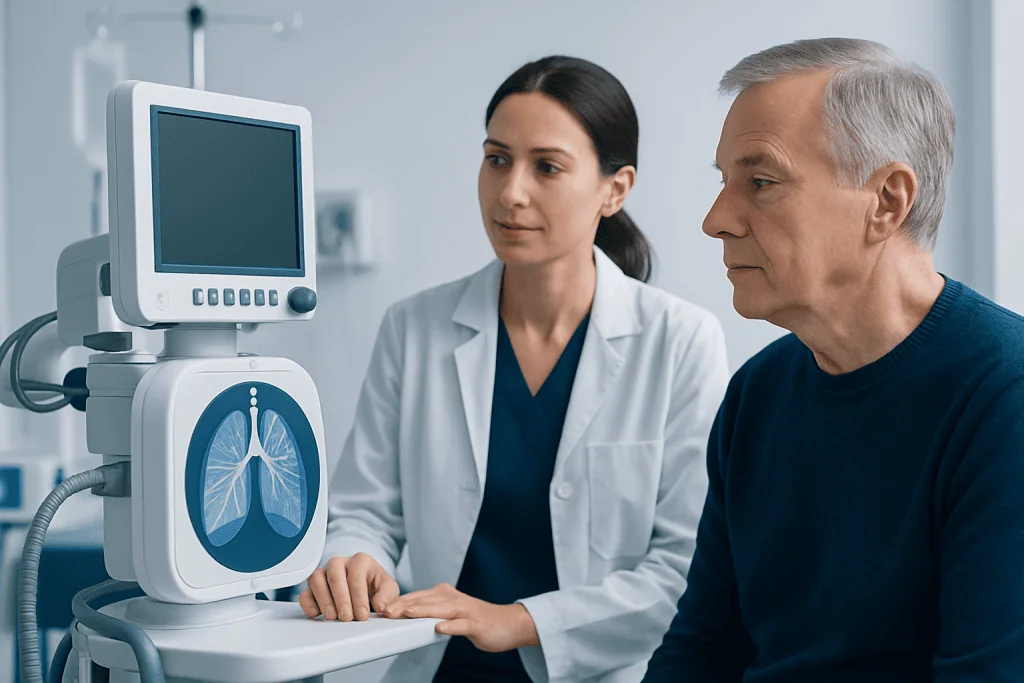
Stage 3 lung cancer is divided into stage 3A, 3B, and 3C. In general, stage 3A may involve less extensive local spread than 3B or 3C, and some people with stage 3A may be candidates for surgery as part of treatment. Stage 3B and 3C are often managed with combinations of chemotherapy, radiation therapy, and newer systemic treatments rather than surgery alone.
Another major factor is the type of lung cancer. Most stage 3 cases are non-small cell lung cancer, but small cell lung cancer is treated and staged differently in many settings. Within non-small cell disease, adenocarcinoma, squamous cell carcinoma, and other subtypes may behave differently and may have different treatment options.
Survival also depends on overall fitness and whether a person can safely complete the recommended treatment plan. Some patients can receive combined therapy, while others may need a modified approach because of age, lung function, heart disease, or other medical conditions. These differences strongly affect outcome and explain why a single survival figure never tells the whole story.
Modern treatment has improved outlook for many patients. Advances in imaging, precise radiation techniques, chemotherapy, radiotherapy, immunotherapy, and molecular testing have changed care in important ways, so older survival estimates may not fully reflect current treatment results.
Symptoms and signs that may lead to diagnosis
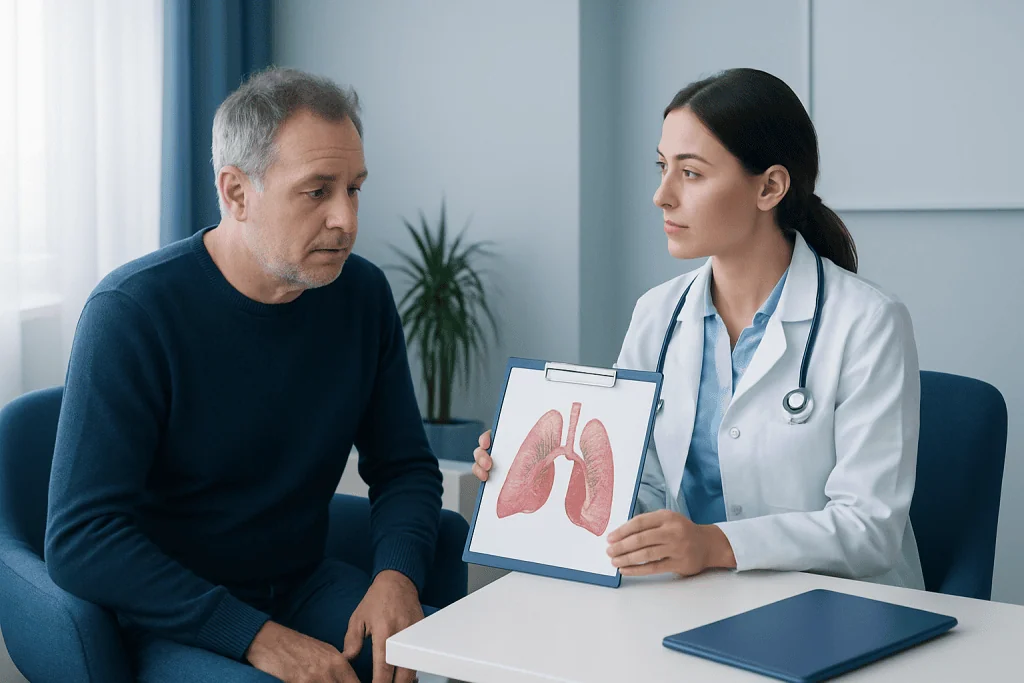
Stage 3 lung cancer may cause symptoms, but some people are diagnosed after imaging is done for another reason. Common symptoms include a persistent cough, coughing up blood, chest pain, shortness of breath, wheezing, repeated chest infections, hoarseness, and unexplained weight loss. Fatigue is also common.
Symptoms often depend on where the tumor is located and whether lymph nodes are enlarged. A tumor near the airway may cause cough or wheeze, while involvement near nerves can lead to hoarseness or shoulder discomfort. Some people notice reduced exercise tolerance long before they feel acutely unwell.
It is important to remember that these symptoms can also occur with non-cancer conditions such as infection or chronic lung disease. Still, symptoms that are new, persistent, or worsening deserve medical assessment, especially in people with a history of smoking, occupational exposures, or a prior lung condition.
- Persistent cough lasting several weeks
- Coughing up blood, even in small amounts
- Shortness of breath or chest tightness
- Unexplained weight loss or ongoing fatigue
- Repeated pneumonia or bronchitis
Causes, risk factors, and features that influence prognosis
The main risk factor for lung cancer is tobacco exposure, including current or past smoking. However, stage 3 lung cancer can also occur in people who have never smoked. Other recognized risk factors include secondhand smoke, radon exposure, air pollution, occupational substances such as asbestos, and some inherited factors.
Once lung cancer is diagnosed, prognosis is influenced by several disease-related features. These include tumor size, whether the cancer has reached nearby lymph nodes, whether it invades nearby structures, and whether there are specific gene changes that may guide treatment. Pathology results and biomarker testing help doctors better understand how the cancer may behave.
Patient-related factors matter as well. Lung function, nutritional status, other medical conditions, and day-to-day physical activity can all affect treatment choices and outcome. A person who is able to tolerate combined treatment may have more options than someone whose health limits therapy.
People seeking more background on the disease itself may find it helpful to read about lung cancer and, when relevant, non-small cell lung cancer. These broader topics can make the stage 3 discussion easier to understand.
How doctors assess stage 3 lung cancer and estimate outlook
Diagnosing and staging stage 3 lung cancer usually involves several steps. Imaging may include chest X-ray, computed tomography, PET-CT, and sometimes brain imaging. These tests help show the size of the tumor, whether lymph nodes are involved, and whether the cancer has spread beyond the chest.
A tissue diagnosis is essential. Doctors may obtain a biopsy through bronchoscopy, needle biopsy, endobronchial ultrasound-guided sampling of lymph nodes, or another procedure. The biopsy confirms the cancer type and allows molecular and biomarker testing when appropriate.
To estimate prognosis, the multidisciplinary team looks at more than the stage label alone. They evaluate:
- Whether the cancer is stage 3A, 3B, or 3C
- The exact tumor location and lymph node pattern
- Cell type and pathology findings
- Biomarker and genetic test results
- Overall health, lung function, and performance status
- Whether treatment can aim for cure or long-term control
This is why two people with stage 3 lung cancer may receive different prognostic information. Personalized assessment is more meaningful than relying only on average survival statistics found online.
Treatment options and how they affect survival
Treatment for stage 3 lung cancer is individualized and often involves more than one therapy. The main goals may be cure, long-term disease control, symptom relief, or a combination of these. The treatment plan depends on whether the cancer can be removed surgically, whether lymph nodes are involved in one or several areas, and whether the person is fit enough for combined therapy.
For selected patients, especially some with stage 3A disease, surgery may be considered after careful staging and sometimes after treatment given before the operation. This approach may include lung cancer surgery as part of a larger plan that can also include chemotherapy or radiation therapy.
Many patients with stage 3 disease are treated with chemotherapy and radiation given together or in sequence. For some, immunotherapy may follow chemoradiation if the cancer has not progressed and the person is an appropriate candidate. In other situations, targeted therapy may be considered when tumor testing shows an actionable mutation and the overall treatment strategy supports it.
Response to treatment is one of the most important factors in survival. Patients often ask whether treatment can “improve the survival rate.” In practice, the aim is to improve individual outcomes by shrinking or controlling the cancer, reducing recurrence risk, and helping the person stay well enough to complete therapy and follow-up care. A multidisciplinary team can explain which parts of treatment are intended to be curative and which are intended to control symptoms or disease progression.
Living with stage 3 lung cancer: self-care, follow-up, and support
Supportive care is an important part of treatment from the time of diagnosis. Good symptom management can help patients feel better and may also improve their ability to complete treatment. Common supportive needs include help with breathlessness, cough, pain, fatigue, nutrition, sleep, and emotional stress.
Stopping smoking, if relevant, remains valuable at every stage. Quitting can improve breathing, reduce treatment complications, and support recovery. Gentle physical activity, a balanced diet, and asking early for nutritional or rehabilitation support may also help maintain strength during treatment.
Follow-up care is essential after initial therapy. Doctors may arrange repeat imaging, clinic visits, and blood tests to monitor response, look for recurrence, and manage side effects. Patients should keep a clear record of symptoms, medications, and appointment results so questions can be discussed at each review.
Near the end of the care pathway, some international patients may wish to know that Acibadem International’s multidisciplinary specialists and JCI-accredited hospitals diagnose and treat lung cancer using coordinated oncology, thoracic surgery, and radiation oncology services.
When to seek medical care
Medical advice should be sought promptly for a cough that does not improve, coughing up blood, new or worsening chest pain, unexplained shortness of breath, or unintentional weight loss. These symptoms do not always mean cancer, but they should not be ignored, especially if they persist or recur.
People already diagnosed with stage 3 lung cancer should contact their treatment team if they develop fever, sudden breathing difficulty, severe pain, confusion, dehydration, or side effects that make it hard to eat, drink, sleep, or take medications. Urgent medical review may be needed for signs of infection, blood clots, significant bleeding, or treatment complications.
If there is uncertainty about symptoms, it is safer to ask a qualified doctor rather than wait. Early assessment can help identify treatable problems quickly and may prevent avoidable complications during cancer care.
Frequently asked questions
Is stage 3 lung cancer curable?
Some cases of stage 3 lung cancer can be treated with curative intent, especially when the disease can be managed with a carefully planned combination of therapies. However, not every stage 3 case is curable, and the realistic goal of treatment depends on the exact stage, tumor type, and overall health.
What is the difference between stage 3A, 3B, and 3C lung cancer?
These sub-stages describe how far the cancer has spread within the chest, including tumor size, nearby tissue involvement, and which lymph nodes are affected. In general, stage 3A may be less advanced than 3B or 3C, but only a treating specialist can explain what the sub-stage means for one person.
Can survival rates predict an individual patient's future?
No. Survival rates are averages based on groups of patients and are not designed to predict one person's exact outcome. Individual prognosis depends on many factors, including treatment response, general health, and specific tumor features.
Does treatment improve stage 3 lung cancer survival rate?
Treatment can improve the chance of longer survival and better disease control for many patients. The effect depends on whether the treatment plan is suitable for the cancer stage and whether the person can complete it safely.
Why do doctors order biomarker or genetic tests in stage 3 lung cancer?
These tests look for molecular changes in the tumor that may influence treatment planning. In some patients, the results help determine whether targeted therapies or other personalized approaches may be appropriate.
What questions should a patient ask about prognosis?
Helpful questions include asking about the exact stage, whether treatment aims for cure or control, which therapies are recommended, and what signs show that treatment is working. It is also reasonable to ask how overall health and test results affect the likely outlook.
References
- National Cancer Institute
- American Cancer Society
- National Comprehensive Cancer Network
- American Society of Clinical Oncology
- World Health Organization
This article is for general information only and is not a substitute for professional medical advice. Please consult a qualified doctor about your individual situation.
Lung Cancer in Turkey — costs, top hospitals & a free quote
JCI-accredited · board-certified surgeons · reply within 24h
Add us as a Preferred Source to see more of our trusted health content across Google Search, AI Overviews and Discover.

Medical Oncology Department
Medical treatment of cancer with chemotherapy, immunotherapy and targeted therapies under a multidisciplinary tumor board.
60 specialists in this unit