Understanding Tumors in Spine Cancerous: A Complete Patient Guide

Cancerous spinal tumors can start in the spine or spread there from another part of the body. Common warning signs include persistent back pain, weakness, numbness, and changes in walking or bladder or bowel control.
Key Takeaways
- Cancerous spinal tumors can start in the spine or spread there from another part of the body.
- Common warning signs include persistent back pain, weakness, numbness, and changes in walking or bladder or bowel control.
- Diagnosis usually combines imaging, neurological examination, and sometimes biopsy to identify the tumor type.
- Treatment may include surgery, radiation therapy, chemotherapy, targeted therapy, or supportive care depending on the cause and location.
- Urgent medical review is important if symptoms are worsening or affecting movement, sensation, or bladder and bowel function.
Tumors in spine cancerous refers to malignant tumors that affect the bones of the spine, the spinal canal, or nearby tissues. These tumors may begin in the spine or spread there from another cancer, and timely evaluation helps protect nerve function, mobility, and comfort.
Overview: What cancerous tumors in the spine mean
Tumors in spine cancerous means there is a malignant growth involving the spine. This may happen because a cancer starts in the spine itself, which is less common, or because cancer from another area of the body spreads to the spine, which is more common. The spine includes bones called vertebrae, discs, the spinal canal, and the spinal cord and nerves, so tumors can affect several important structures.
Doctors usually describe spinal tumors by where they are located. Some grow in the vertebral bones, some in the tissues around the spinal cord, and some inside the coverings of the spinal cord. The location matters because it affects symptoms, treatment choices, and how urgently care is needed.
Not every spinal tumor is cancerous. Some are benign and may grow slowly. However, cancerous tumors can damage bone, press on nerves, or compress the spinal cord, so they need careful evaluation. Patients who already have a known cancer elsewhere should tell their doctor promptly if new back pain or neurological symptoms appear.
A clear diagnosis often involves a team that may include oncology, neurosurgery, orthopedic spine surgery, radiology, radiation oncology, and rehabilitation specialists. This team approach helps balance tumor control with pain relief, movement, and quality of life.
Symptoms and how they may feel
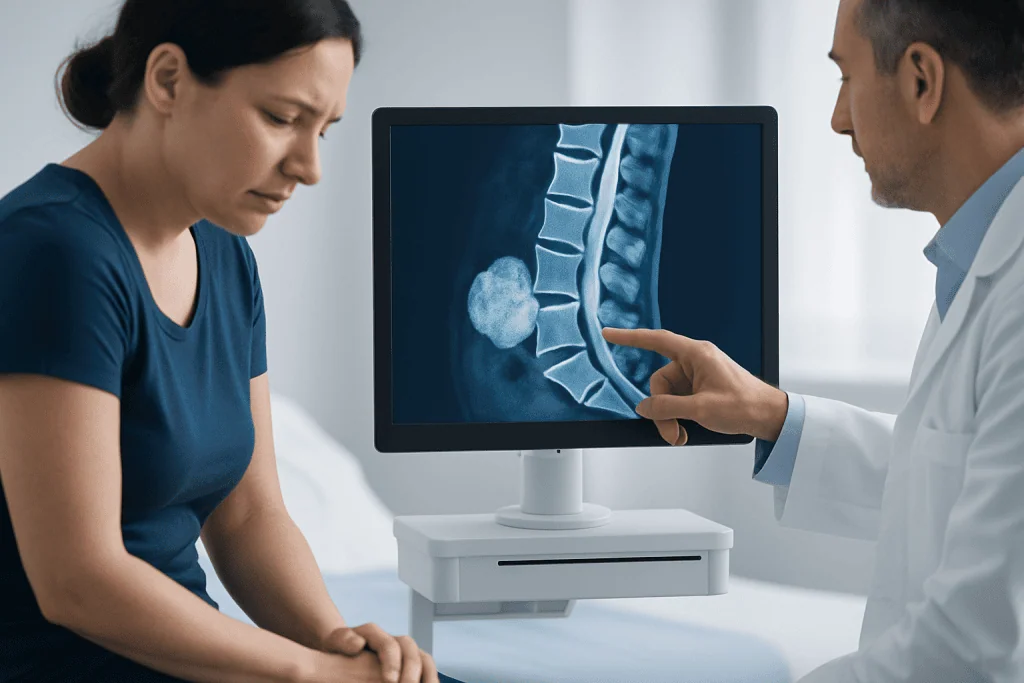
The most common symptom of a cancerous spinal tumor is back or neck pain that does not improve as expected. The pain may be constant, may become worse at night, or may increase with movement. Some people notice tenderness over part of the spine, while others describe a deep aching pain that gradually becomes more noticeable.
Symptoms can also happen when a tumor presses on the spinal cord or spinal nerves. This can cause numbness, tingling, weakness in the arms or legs, trouble walking, poor balance, or pain that travels along a nerve path. The exact pattern depends on which level of the spine is involved.
If the spinal cord is significantly compressed, symptoms may become more urgent. A person may develop increasing difficulty walking, feel that the legs are heavy, or notice reduced control of bladder or bowel function. These symptoms need prompt medical attention because early treatment can help reduce the risk of lasting nerve damage.
- Persistent back or neck pain
- Pain that wakes a person at night
- Numbness or tingling in the limbs
- Muscle weakness or difficulty walking
- Loss of balance or coordination
- Changes in bladder or bowel control
Causes and risk factors

Cancerous tumors in the spine fall into two broad groups: primary tumors and metastatic tumors. Primary spinal cancers begin in the spine or nearby tissues. These are relatively uncommon. Metastatic spinal tumors begin in another organ and spread to the spine through the bloodstream or nearby structures.
Cancers that more often spread to the spine include breast, lung, prostate, kidney, and thyroid cancers, as well as some blood cancers such as myeloma and lymphoma. In these cases, the spine may be the source of new symptoms even when the original cancer was diagnosed earlier or was being treated.
Risk factors depend on the tumor type. A personal history of cancer is one of the most important clues when considering spinal metastases. Some rare primary tumors are linked with genetic conditions, previous radiation exposure, or other specific risk factors, but many people with spinal tumors have no obvious cause they could have prevented.
Because spinal symptoms are common in everyday life, it can be difficult to know when back pain is more serious. Pain that is persistent, progressive, unexplained, or accompanied by weight loss, weakness, or neurological changes deserves medical evaluation. In some patients, spinal symptoms are the first sign that leads to the diagnosis of cancer.
How doctors diagnose cancerous spinal tumors
Diagnosis starts with a detailed medical history and physical examination. The doctor asks about the pattern of pain, when symptoms began, whether they are getting worse, and whether there is a personal history of cancer. A neurological exam checks strength, sensation, reflexes, walking, and coordination to look for signs that nerves or the spinal cord are under pressure.
Imaging plays a central role. Magnetic resonance imaging is often the most helpful test because it shows the spinal cord, nerves, soft tissues, and bone marrow in detail. Computed tomography may also be used to evaluate bone changes, while X-rays, bone scans, or PET-CT can help assess the extent of disease in selected cases. These tests may be part of a broader diagnostic imaging plan.
Blood tests may support the assessment, especially if doctors suspect a blood-related cancer or want to look for effects on overall health. In many cases, a biopsy is needed to confirm exactly what type of tumor is present. The biopsy result helps distinguish between a primary spinal tumor, a metastasis, or another condition that can mimic cancer.
Once the diagnosis is clear, doctors may describe the tumor as stable, causing spinal instability, or compressing the spinal cord. This helps guide treatment decisions. If a known cancer has spread to the spine, the care team also evaluates the original cancer, the number of areas involved, and the person’s general health.
Treatment options and goals of care
Treatment depends on where the tumor is, whether it is primary or metastatic, how quickly symptoms are progressing, and the person’s overall health. The main goals are to control the cancer, relieve pain, protect the spinal cord and nerves, and maintain mobility and daily function. Treatment plans are individualized rather than one-size-fits-all.
Surgery may be recommended if there is spinal cord compression, spinal instability, severe pain from bone damage, or a need for tissue diagnosis. Depending on the case, surgery can remove tumor tissue, decompress the spinal cord, and stabilize the spine. This may be discussed as part of spine surgery or, in selected cases, neurosurgery.
Radiation therapy is commonly used for many cancerous spine tumors, especially metastatic disease. It can help shrink tumors, ease pain, and treat areas that are difficult to remove surgically. Chemotherapy, targeted therapy, hormone therapy, or immunotherapy may also be used when the tumor type is likely to respond, often alongside local treatment to the spine.
Supportive treatment is also important. Pain management, corticosteroids in selected urgent situations, rehabilitation, and bone-strengthening approaches may help maintain comfort and function. For people with widespread cancer, the focus may be symptom control and quality of life, while still addressing urgent problems such as cord compression. Patients with related conditions such as spinal tumor or bone cancer may need similar multidisciplinary planning.
Living with the condition: recovery, self-care, and prevention
There is no guaranteed way to prevent all cancerous spinal tumors, especially when they result from cancer spread. However, early attention to new symptoms can make a meaningful difference. People with a history of cancer should report persistent back pain, weakness, numbness, or balance changes promptly rather than assuming they are due to strain or aging.
Self-care during treatment often focuses on safety, comfort, and preserving independence. Gentle movement, physical therapy, and assistive devices may be recommended to reduce falls and support mobility. Patients should follow their doctor’s advice about lifting, activity level, and spine protection if the vertebrae are weakened.
Good nutrition, rest, and medication adherence can support recovery. Emotional health matters too, as a spinal tumor diagnosis can affect mood, sleep, and confidence in daily activities. Counseling, support groups, and rehabilitation services may help patients and families cope with the practical and emotional effects of treatment.
Near the end of treatment planning or when seeking a second opinion, some patients benefit from care in centers that bring multiple specialties together. Acibadem International’s multidisciplinary specialists and JCI-accredited hospitals diagnose and treat spinal tumors for international patients, with care plans shaped by the tumor type, spinal stability, and neurological findings.
When to seek medical care
Medical care should be sought if back or neck pain is severe, persistent, unexplained, or steadily worsening. A person should also arrange prompt evaluation if pain is accompanied by numbness, weakness, difficulty walking, unexplained weight loss, or a personal history of cancer. These symptoms do not always mean a spinal tumor is present, but they should not be ignored.
Urgent medical attention is especially important when there are signs of possible spinal cord compression. These include rapidly worsening weakness, new trouble walking, loss of sensation, or changes in bladder or bowel control. In these situations, timely treatment can be important for protecting nerve function.
Patients already receiving cancer care should contact their oncology team if they develop new spinal symptoms. Even if pain seems mild at first, early reporting allows faster imaging and treatment if needed. Waiting to see if symptoms resolve on their own may delay care in cases where the spinal cord is under pressure.
Frequently asked questions
Are all spinal tumors cancerous?
No. Spinal tumors can be benign or malignant. A cancerous spinal tumor is malignant, while a benign tumor is not cancer, though it can still cause symptoms if it presses on the spinal cord or nerves.
What cancers commonly spread to the spine?
Cancers of the breast, lung, prostate, kidney, and thyroid commonly spread to the spine. Some blood cancers, including myeloma and lymphoma, can also involve the spine and cause pain or neurological symptoms.
Is back pain usually a sign of spine cancer?
Usually, no. Most back pain is caused by common non-cancerous conditions such as muscle strain or degenerative spine problems. However, persistent or worsening pain, especially with weakness, numbness, night pain, or a history of cancer, should be medically assessed.
How is a cancerous spinal tumor confirmed?
Doctors often use MRI and other imaging tests to identify the location and effect of the tumor. In many cases, a biopsy is needed to confirm the exact tumor type so that treatment can be chosen appropriately.
Can cancerous spinal tumors be treated successfully?
Many can be treated, and treatment may help control the tumor, ease pain, and protect nerve function. The outlook depends on the type of cancer, whether it started in the spine or spread there, the extent of disease, and how quickly treatment begins.
When is a spinal tumor an emergency?
It may be an emergency if symptoms suggest spinal cord compression. Warning signs include rapidly worsening weakness, trouble walking, numbness that is spreading, or new loss of bladder or bowel control.
References
- National Cancer Institute
- American Cancer Society
- National Institute of Neurological Disorders and Stroke
- American Association of Neurological Surgeons
- National Comprehensive Cancer Network
This article is for general information only and is not a substitute for professional medical advice. Please consult a qualified doctor about your individual situation.
Joint and spine care in Turkey — expert assessment & treatment
JCI-accredited · board-certified surgeons · reply within 24h
Add us as a Preferred Source to see more of our trusted health content across Google Search, AI Overviews and Discover.